
CURC 2026 Presentations Gallery

Category: Research Poster
Author(s): Sofie Handwerker, Abigail Clarkin, Jordan Young
Presenter(s): Sofie Handwerker, Abigail Clarkin, Jordan Young
Mentors(s): Greta LeDoyen
Prolonged, elevated levels of stress in college students can lead to both adverse physical and psychological health outcomes, as well as poor academic performance. By better understanding the internal and external stressors experienced by a diverse range of adult learners, both educators and support staff could make better informed course management and curriculum decisions which may mitigate sources of academic stress. Interestingly, little is known regarding potential differences in personal, social, and environmental stressors in students according to course modality (e.g. in-person, asynchronous). Therefore, the purpose of this qualitative study is to explore common perceived stressors in undergraduate college students attending either an asynchronous online (ASO) or traditional, in-person (IP) format. Methods: This qualitative design utilized existing data from an open-ended self-reflection assignment completed in a 300-level Health and Exercise Science course, the Theory of Health Behavior, offered in two different modalities, IP (n=44), and ASO (n=44). A content analysis was conducted to identify the frequency of commonly mentioned stressors across the data set and within groups. Results: Preliminary analyses suggest overwhelming responsibilities, poor time management skills, and inadequate sleep are common stressors across groups. ASO students reported overwhelming responsibilities, screen time, and substance use more frequently than in-person students. Implication: By better understanding perceived sources of stressors across students as well as those specific to students in each course format, educators and curriculum managers could consider these differences when planning curriculum. Future research could consider developing intra-curricular interventions to help manage sources of stress within the two course formats.

Category: Research Poster
Author(s): Annie Hartshorn
Presenter(s): Annie Hartshorn
Mentors(s): Alexandra Taylor
Leaks from natural gas (NG) distribution pipelines are important safety hazards and contribute to climate change as NG is primarily composed of methane (CH4), a potent greenhouse gas. NG distribution pipelines, which provide gas in residential areas, are known emission sources. They are routinely surveyed for leaks by technicians using handheld methane sensing equipment, and the maximum concentration of the leak, measured in parts per million (ppm), indicates leak severity. However, potential error between instrument measurements and true NG leak flow rates is largely unquantified. This study aims to evaluate how well measured gas concentrations estimate true leak flow rates. In this study, I simulated NG pipeline leaks by drilling very fine holes into closed-system PVC pipes. I ran high-purity CH4 through these pipes at a variety of flow rates and measured the ‘leaks’ using an IRwin SX Gas Leak Detector. Then, I quantified the differences between expected and observed measurements. In theory, measured methane concentration should increase proportionally with flow rate, but gas leak dispersion is unpredictable, potentially complicating this relationship. In my presentation, I will discuss the results of this work, highlighting the strengths and limitations of this approach for estimating gas leak flow rate.

Category: Research Poster
Author(s): Nina Miller, Emma Sullivan
Presenter(s): Nina Miller, Emma Sullivan
Mentors(s): Michael Thomas, Sierra Swenson
Prior research using functional magnetic resonance imaging (fMRI) has demonstrated cognitive load-dependent changes in engagement within the executive control network (ECN). This study seeks to determine whether functional near-infrared spectroscopy (fNIRS), a low-cost, portable neuroimaging method, can detect subtle modulation in the executive control network during a working memory task. Doing so would support the use of more accessible tools for cognitive neuroscience research beyond traditional laboratory and medical settings. This project aims to confirm the effects of working memory task performance on load-dependent changes within the ECN. Specifically, we aim to determine how task load moderates brain activity of this network using fNIRS. This study has just begun data collection and is still in progress. Our current sample contains four, cognitively healthy, college aged participants. Participants completed a Sternberg working memory task with varying task difficulty achieved through differing memory loads. Preliminary data analysis was conducted on our current sample. We found that as task load increased, accuracy decreased, confirming that our load conditions were more cognitively demanding. fNIRS recordings were also analyzed to assess activity between two cortical regions associated with the ECN, the dorsolateral prefrontal cortex and the inferior parietal lobule. We found increased activation within the ECN while memory load increased. These results are promising and consistent, finding what fMRI literature has demonstrated. Establishing fNIRS as an effective measure of the ECN could have wide-ranging applications in clinical assessments for psychiatric and neurological populations with disrupted brain activity.

Category: Research Poster
Author(s): Hayley Stern, Bradley Nelson, Katie Sikes, Kelly Santangelo
Presenter(s): Hayley Stern
Posttraumatic osteoarthritis (PTOA) is a degenerative disease that affects 630 million people worldwide. Lage animal models, specifically in sheep, can take extensive periods of time to develop PTOA following surgical induction, which can delay preclinical testing and technology development for human treatment. The goal of this study was to evaluate a novel surgical model that involves transection of both the anterior cruciate ligament (ACL) and the long digital extensor (LDE) tendon, relative to previously established PTOA models including ACL transection alone and destabilization of the medial meniscus (DMM). After 12-weeks post-surgery, histological analysis demonstrated significant pathological between the three different models suggesting divergent degeneration pathways. Transection of both the ACL and LDE allows for a novel method for the study of PTOA disease progression for use in preclinical evaluations.
Category: Research Poster
Author(s): Lily Alderfer, Jamie Raupp, Jenna Brager, Morgan Hertel, Veronica Yovovich
Presenter(s): Lily Alderfer
Mentors(s): Morgan Hertel, Stephanie Moreira, Veronica Yovovich
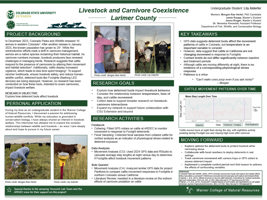
Large carnivore reintroduction in northern Colorado has renewed challenges for livestock producers, and deterrent tools are being deployed to reduce depredation and human–wildlife conflict. While visual deterrents such as flashing light devices are increasingly used to discourage carnivores, little is known about how these tools affect livestock behavior and welfare. Our project investigated the behavioral and physiological responses of cattle exposed to light-based deterrents, known as Foxlights, within a controlled research setting. Cattle were fitted with GPS collars to quantify movement patterns, with analyses focused on differences between daytime and nighttime activity as the deterrent tools only activate at night. Movement data were analyzed to assess changes in average step length associated with deterrent deployment. Fecal samples were collected from collared individuals to measure cortisol as an indicator of physiological stress. Results indicate that cattle exhibited increased nighttime movement during deterrent use, with elevated activity persisting briefly after removal. However, fecal cortisol concentrations did not differ significantly between baseline and treatment periods, suggesting that altered movement was not associated with increased physiological stress. Our findings emphasize the importance of considering livestock welfare alongside carnivore deterrence when developing conflict mitigation strategies and the need for further research in this area to support human-carnivore coexistence.
Category: Research Poster
Author(s): Serena Carrasco
Presenter(s): Serena Carrasco
Mentors(s): Scott Burley
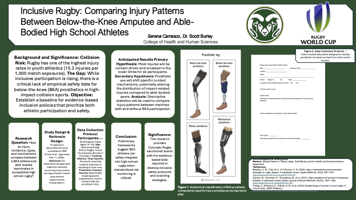
Abstract Rugby is a high-intensity collision sport with one of the highest injury rates among team sports, especially in adolescent players, yet little is known about how injury patterns may differ for below-the-knee (BKA) amputee athletes competing alongside able-bodied peers. This study aims to document and compare injury incidence, types, and mechanisms in male high school rugby players aged 14–19, including a BKA athlete using a prosthetic limb and age-matched able-bodied teammates. Using a prospective observational design, research staff will record injuries during competitive matches in Northern Colorado with a standardized injury surveillance form, noting total injuries and those suspected to involve contact with a prosthetic limb. Data will be summarized using descriptive statistics, and patterns will be compared between matches with and without prosthetic participation. It is expected that most injuries will result from contact events and involve the lower limbs, though prosthetic use may influence how and where injuries occur. By establishing preliminary data on injury patterns for BKA athletes in a collision sport, this research will provide insight into potential safety considerations and support the development of inclusive practices. Findings could guide evidence-based strategies for injury prevention, safe prosthetic use, and policy recommendations in youth rugby.
Category: Research Poster
Author(s): Tess Baur
Presenter(s): Tess Baur
Mentors(s): Catherine DiCesare
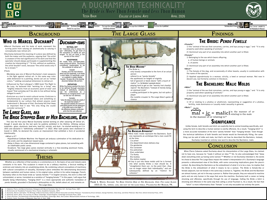
Marcel Duchamp, one of the most influential artists of the 20th century and the father of conceptual art, is as revered by the art world as he is misunderstood. Duchamp’s The Bride Stripped Bare by Her Bachelors, Even, also known as The Large Glass, can’t be deciphered without his notes on the piece, nor intuited from the work itself. In his notes, Duchamp refers to the titular bride as “pendu femelle,” and in English versions this term is often left untranslated, or, worse, translated as a variant of “hanging female.” In this essay, I will argue that “hanging bitch” is a more appropriate, accurate, and authentic translation of pendu femelle, grounded in Duchamp’s philosophies on life, beliefs about art, and remarks on The Large Glass. The piece is meant to be a celibacy machine, a farcical melding of eroticism and industry into an unsatisfying whole. By combining cultural conceptions of machinery with cultural conceptions of sexuality, Duchamp embodies the dehumanizing disconnect between capitalism and human nature. Furthermore, weaponizing obscenities to disrupt social norms was a dominant motif in Duchamp’s work. As a result, the fact that “bitch” is more inflammatory than “female” is not only excusable but entirely the point.

Category: Research Poster
Author(s): Analiese Brown
Presenter(s): Analiese Brown
Mentors(s): Imke Steffen, James Terry
Orthoflaviviruses are vector-borne viruses which include major emerging pathogens such as West Nile virus (WNV), Dengue virus (DENV), tick-borne encephalitis virus (TBEV) and Powassan virus (POWV), all of which pose a significant threat to global health. A central player in Orthoflavivirus infection is non-structural protein 1(NS1), a secreted glycoprotein found in multiple oligomeric forms and suppresses the host immune system through diverse mechanisms. Secreted NS1 (sNS1) from WNV and DENV have been shown to interfere with the complement cascade, particularly through interactions with C1s and C4. These are key proteins in forming the C3 convertase; sNS1’s interaction with C4 and C1s inhibits complement-mediated cell lysis by the membrane attack complex (MAC) and opsonization. Despite the recognized importance of complement inhibition in mosquito-borne Orthoflavivirus infection, the capacity of tick-borne Orthoflaviviruses to manipulate complement remains unexplored. We compared sNS1 proteins from mosquito-borne (WNV, DENV) and tick-borne (TBEV) Orthoflaviviruses for their ability to bind to C1s and C4. We recombinantly expressed and purified WNV, DENV, TBEV and POWV sNS1 from the supernatant of transfected cells. Preliminary results from a binding ELISA found that DENV and WNV sNS1 bound to C1s and C4, consistent with prior studies. Strikingly, we found that TBEV sNS1 bound to C1s and C4. POWV sNS1 will be included in future experiments. Ongoing experiments include co-immunoprecipitation of sNS1 with C1s and C4 and a hemolysis assay to analyze sNS1’s ability to inhibit MAC formation. These findings will expand our understanding of how diverse Orthoflaviviruses exploit sNS1 in immune evasion.
Category: Research Poster
Author(s): Bianca Anderson
Presenter(s): Bianca Anderson
Mentors(s): Antony Cheng
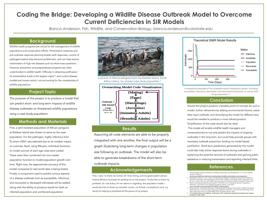
Historically, human-centric Susceptible-Infectious-Recovered (SIR) disease models produce inaccurate predictions of outbreak impacts on wildlife populations, leaving wildlife health programs under-resourced for preemptive outbreak management. This is because current models fail to account for the wider range of mortality cases facing wildlife populations – including predation, plus higher rates of fatal abandonment, disease, and starvation – compared to humans. The goal of this project is to create a model that overcomes these deficiencies by incorporating age-class-based mortality data and other population dynamics. I chose the relatively isolated African penguin colony at Robben Island, South Africa, as my model-testing population, and the highly pathogenic avian influenza strain H5N1 as the disease. Individual age-class functions were coded, including age-based mortality rates and “advancement odds” to the next age class in multi-year transitory stages, like juveniles. A set of nested loops was then created with these functions inside to establish annual time progression for an input amount of years. A sensitivity analysis using known breeding-pair data is being conducted to assess the population model’s accuracy. Finally, an SIR component with transmission, mortality, and recovery rates will be added, along with code to plot the unaffected population against outbreak-affected population outcomes. When completed, I expect the model will show negative short- and long-term impacts on the study colony, with notable longer-term effects on colony survival. Next steps for this project include adding migratory effects, incorporating environmental dynamics, further refining and testing the model using real-world empirical data, and producing a mammal-focused equivalent to this avian-focused model.
Category: Research Poster
Author(s): Emmanuelle Knecht, Emma Blount
Presenter(s): Emmanuelle Knecht
Mentors(s): Gabriel Spalink, Thomas Santangelo
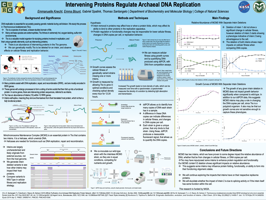
DNA replication is fundamental for cellular division and genome integrity, where errors result in disease states, including cancer. Given the importance of replication, an array of various proteins form a replication apparatus we call the replisome. The replisome is responsible for orchestrating DNA replication efficiently and resolving the associated errors. In this DNA regulating complex, essential proteins are encoded in replication, repair, and recombination (RRR) genes. Many of these genes also encode special intervening proteins known as inteins, which function by removing themselves from their host protein, and originated from unknown external sources rather than the host genome. Our organism of study, Thermococcus kodakarensis (Tko), is an archaeon, in a different domain than eukarya (humans, plants, etc.) and bacteria, and is adapted to extreme, oxygen-lacking and hyper-thermal environments. We know that in the genome of Tko, an abundance of inteins are encoded within RRR genes. Despite their abundance, the function of these inteins remains largely unknown. To better understand how Thermococcus kodakarensis may use inteins, we are constructing genetically modified variants with individual intein deletions to see the effects on replication strategy and cellular fitness. We have already successfully generated several intein-deleted strains of Tko and have observed resultant impacts to overall cellular fitness, replicative strategy behavior, and total DNA content. While inteins have traditionally been regarded as merely genetic parasites, we are challenging this long-held paradigm with a growing body of evidence demonstrating the beneficial role between inteins and their host organisms.
Category: Research Poster
Author(s): Mussa Hassen
Presenter(s): Mussa Hassen
Mentors(s): Emily King
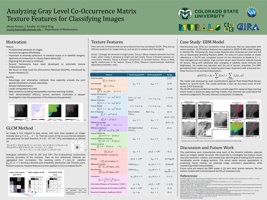
Gray Level Co-occurrence Matrix (GLCM) texture features, or Haralick texture features, are used to quantify the texture of an image. A GLCM takes a gray scale image and looks at how often pairs of pixel values appear next to each other. It counts these pairs for a chosen distance and direction to create a matrix of all pixel pair combinations. These matrices are then aggregated and normalized. This normalized co-occurrence matrix is then used to compute several statistical texture features that summarize the image’s texture. This preliminary work introduces the varieties of GLCM constructions; some characteristics of these features; and interpretations of the features through their corresponding optimal GLCM. Then it finalizes with a useful application of this mathematical tool as inputs for an interpretable machine learning model.
Category: Research Poster
Author(s): Aidan Flanagan, Abdullatif Alsulami, Carolyn Dobkins
Presenter(s): Aidan Flanagan
Mentors(s): Julie Moreno, Stephanie McGrath
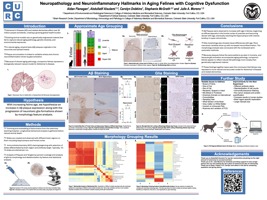
Neurodegenerative disorders like Alzheimer’s Disease (AD) are an increasing problem affecting 55 million people worldwide. Current animal models rely on genetically engineered rodents that mimic AD symptoms. What these models fail to account, are differences in environmental exposures, genetics, and natural aging pathology, main contributors to AD. Aging presents with aggregation of amyloid beta (Aβ) plaques primarily accumulating in the neocortex, spreading inward to the cerebellum. These buildups are associated with oxidative stress and inflammation seen through activation of glial support cells throughout the CNS. Specifically, microglia and astrocytes are important for upholding homeostasis, decreasing plaque buildup, and supporting the blood-brain barrier. Because of natural aging pathology, genetic diversity, and environmental exposures similar to humans, the use of companion felines is thought to be an accurate model for AD research. We hypothesize, at different age stages, and with increasing plaques, felines will show heightened levels of neuroinflammation. IHC staining was performed on coronal sections of feline brains, with histopathology used to identify brain regions. Cells were counted using software trained to differentiate cells in IHC, including QuPath and ImageJ. Glial morphology was identified using 40 variables including radius, circularity, and branching. These were grouped into four categories based on the main glial conformations. Glia grouping paralleled that of other organisms and significance was observed between plaque coverage and age. Some aged animals did not show many symptoms, paralleling humans who often do not show clear signs of brain aging.
Category: Research Poster
Author(s): Steven Payne, Ariana Dolce, Dakota Peart, David Crosby, Thomas LaRocca
Presenter(s): Steven Payne
Mentors(s): Daniel Lark
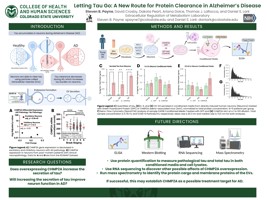
Alzheimer’s disease (AD) is a neurodegenerative disorder affecting over 7 million Americans. Tau is a neuronal protein that supports normal cellular function. In AD, tau becomes abnormally modified and accumulates in aggregates that contribute to cognitive impairment. We believe that clearing pathogenic tau from neurons may slow the progression of AD. The brain has transport machinery that clears proteins from cells through endosome formation. Endosome formation is heavily dependent on ESCRT proteins, like CHMP2A. CHMP2A gene expression in neurons is lower in donors with AD than in age-matched donors without AD. Restoring CHMP2A levels using an adeno-associated virus (AAV) in directly induced neurons (iNeurons) decreases intracellular tau by ~50% by increasing tau release. However, this treatment does not have a significant effect on the amount of inflammation marker IL-6 protein or extracellular vesicle (EV) marker CD63 protein in the extracellular conditioned media. These findings show that restoring CHMP2A expression increases tau release by neurons. However, this increased release of tau may be independent of endosome formation because EV concentration (CD63) is unchanged. To investigate the mechanism of this release, we will measure tau found in EVs released by iNeurons after restoring CHMP2A expression. We will also measure cellular gene expression using RNA sequencing to identify other pathways that could explain how these cells are able to release more tau protein.

Category: Research Poster
Author(s): Eric Rhoades, Conner Harte
Presenter(s): Eric Rhoades
Mentors(s): Chandrasekaran Venkatachalam
High-altitude balloons (HABs) provide a low-cost platform for the calibration and testing of space hardware, atmospheric measurement, and near-space experimentation. However, accurately predicting HAB trajectories remains challenging due to uncertainties in numerical weather prediction models and mission parameters. Reliable prediction tools are essential for payload recovery, launch planning, and mission design. This work presents a modular High-Altitude Balloon Software Development Kit (HAB-SDK) for trajectory simulation and mission planning. The HAB-SDK implements a three-degree-of-freedom flight dynamics model using the 1976 U.S. Standard Atmosphere as a thermodynamic baseline and wind fields from numerical weather prediction datasets such as the Global Forecast System and High-Resolution Rapid Refresh. Users define balloon, payload, and launch parameters directly, enabling exploration of design trade-offs such as payload mass, helium fill volume, ascent rate, and burst altitude. Parameter sweeps and Monte Carlo simulations evaluate sensitivity to environmental conditions and mission configuration. Preliminary comparisons with flight data reproduce ascent, descent, and landing behavior while highlighting wind model uncertainty in landing prediction. Future development will incorporate additional wind models, uncertainty propagation, and real-time telemetry to further improve prediction reliability and de-risk payload recovery.
Category: Research Poster
Author(s): Emma Hinchliffe, Victoria Aragon
Presenter(s): Emma Hinchliffe
Mentors(s): Seonil Kim
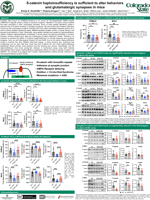
δ-catenin (also known as CTNND2) functions as an anchor for the glutamatergic AMPA receptor (AMPARs) to regulate synaptic activity in excitatory synapses. Alteration in the gene coding δ-catenin has been implicated in many neurological disorders. Some of these genetic alterations exhibit a profound loss of δ-catenin functions in excitatory synapses. We have shown that δ-catenin deficiency induced by the homozygous δ-catenin knockout (KO) and autism-associated missense glycine 34 to serine (G34S) mutation significantly alters AMPAR-mediated synaptic activity in cortical neurons and disrupts social behavior in mice. Importantly, many genetic disorders are caused by haploinsufficiency. Indeed, δ-catenin haploinsufficiency contributes to severe autism and learning disabilities in humans. However, previous studies have used only homozygous δ-catenin deficiency models. Therefore, it is important to examine the effects of δ-catenin haploinsufficiency on animals’ behaviors and excitatory synapses. Here, we use heterozygous δ-catenin KO and G34S mice as a δ-catenin haploinsufficiency model to examine this idea. Multiple behavioral assays, a social behavior test, contextual fear conditioning, and an open field test, reveal that both δ-catenin KO and G34S haploinsufficiency significantly disrupt animals’ social behavior and fear learning and memory. Interestingly, only KO haploinsufficiency mice show anxiety-like behavior. A biochemical assay using brain extracts demonstrates that δ-catenin haploinsufficiency significantly affects the levels of synaptic δ-catenin and AMPARs. Our findings thus suggest that δ-catenin haploinsufficiency affects animals’ behaviors via altering glutamatergic synaptic activity
Category: Research Poster
Author(s): Emerald Cordova, Emma Harris, Kalani Williams, Natalie Wickenkamp, Rebekah Kading
Presenter(s): Emerald Cordova
Mentors(s): Kalani Williams, Rebekah Kading
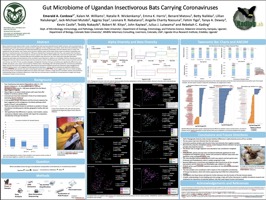
Many insectivorous bat species harbor viruses, including those that may have potential human health concerns, such as coronaviruses. A link between gut health and immune capacity has been suggested via the endogenous microbiota, making investigations into the relationship between the gut microbiome composition and viral infection status critical. We hypothesize that bat species, cave, season and coronavirus infection status will impact the composition and diversity of the gut microbiome. Fecal samples (n=178) were collected from insectivorous bats from four cave systems from the Mount Elgon region of Eastern Uganda across both dry and wet seasons from 2022 to 2023. Extracted bacterial DNA was PCR-amplified using 16S primer sets, then sequenced using Next-Generation Sequencing. Alpha and beta diversity of the microbiome were examined in relation to our variables. Shannon Diversity and Faith’s Phylogenetic Diversity indices observed alpha diversity (comparison within individual groups). Phylogenetic diversity of the gut microbiota was significantly different for each of our four variables. Interestingly, bats that tested positive for coronaviruses exhibited a higher diversity than those that tested negative. Beta diversity (comparison between groups) was examined using unweighted and weighted UniFrac metrics, which indicated that significant differences in diversity were present only in bat species and season. These results suggest that, from our tested variables, the primary drivers of compositional differences are species and season. However, a large amount of variation remains unaccounted for. Understanding gut microbiome differences in bats carrying coronaviruses is essential for uncovering future insights into the gut microbiome’s impact on bat immunity.
Category: Research Poster
Author(s): Alyssa Walker
Presenter(s): Alyssa Walker
Mentors(s): Takamitsu Kato
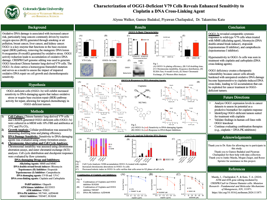
OGG1 (8-oxoguanine DNA glycosylase 1) is a critical enzyme for DNA repair that removes oxidized guanine from DNA. OGG1 functions in the base excision repair (BER) pathway by removing 8-oxoguanine, a mutagenic DNA lesion occurring from reactive oxygen species (ROS). Oxidative stress originates from endogenous mitochondrial respiration and exogenous stimuli such as ionizing radiation leading to DNA damage accumulation. Reduced activity in the OGG1 gene has been linked to an increased risk in developing various cancers, such as lung cancers, commonly driven by ROS generated through smoking or air pollution. Chinese hamster lung-derived V79 cells were used to establish OGG1 knockout clones using CRISPR/Cas9 genome editing. OGG1-3s, a clone, harbors a homozygous 62 base-pair insertion resulting in a frameshift mutation. OGG1-3s cells were characterized in terms of cellular proliferation and cytotoxic responses to various DNA-damaging agents. OGG1-3s cells exhibited severe growth defects with reduced plating efficiency compared to their isogenic parental V79 cells. Baseline levels of 8-oxodG were significantly elevated in OGG1-3s cells, consistent with impaired repair of oxidative DNA damage. OGG1-3s cells displayed comparable cytotoxic responses to methyl methanesulfonate (alkylating agent), bleomycin (DNA double-strand break inducer), etoposide (topoisomerase II inhibitor), and camptothecin (topoisomerase I inhibitor), however they showed hypersensitivity to cisplatin (DNA crosslinking agent). Results suggest that tumors with reduced OGG1 expression may exhibit enhanced sensitivity to cisplatin and related antitumor agents, emphasizing a potential therapeutic vulnerability associated with OGG1 deficiency.
Category: Research Poster
Author(s): Kelly Kramer, Brittany Bobb, Matthew Sammon, Sophia Barnett
Presenter(s): Kelly Kramer
Mentors(s): Ally Lewis, Daniela Cusack
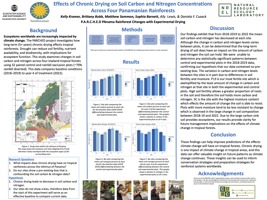
Ecosystems worldwide are being affected by global climate change. The PARCHED project (PAnama Rainforest CHanges with Experimental Drying) aims to contribute to global research by understanding how long-term (5+ years) of chronic drying affects tropical rainforests. Long-term droughts can indirectly result in lower soil fertility, nutrient availability, and biodiversity. This study investigates how soil carbon and nitrogen levels have responded to chronic drying, interannual variation, and wet-dry season cycles across four distinct lowland tropical forests. The project uses 32 10 x 10 m forest plots, with paired control and rainfall exclusion plots (~70% of rainfall diverted). The forests vary in rainfall and soil fertility. The data presented are for baseline conditions (2018 and 2019) in comparison with year 4 of the experiment (2022). Our analyses to date show that soil carbon has significantly declined with chronic drying in two of the four forests, with no seasonal effect. We are now analyzing the baseline data to determine if there was a pre-existing bias among the plots, or if the apparent soil carbon decline is real. This will ensure the data being used can provide the most accurate predictions for the future. We expect that our preliminary results will provide deeper insights into how chronic drying will affect the tropical ecosystems responsible for significant carbon sequestration globally. This knowledge can be used to inform conservation efforts as climate change continues to affect tropical rainforests and biomes around the globe.
Category: Research Poster
Author(s): Sami Kupfner
Presenter(s): Sami Kupfner
Mentors(s): Darcy Hunstiger
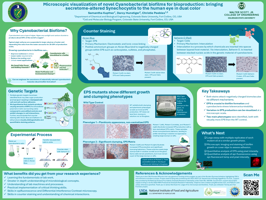
Unicellular photosynthetic microbes, like cyanobacteria, are not visible to the naked eye. Microscopy analysis of cell-cell and cell-surface interactions supports the development of ecologically and financially sustainable algal bioproduction systems. Industrial algal cultivation grows cells in large volumes of water. While algae produce carbon-neutral products, growth incurs high separation and water-use costs that biofilm cultivation can reduce. This project focuses on the characterization of secretome-engineered mutants of a model industrial cyanobacterium Synechocystis PCC 6803 (S. 6803) which does not readily form biofilms. Biofilms consist of cells and various extracellular polymeric substances (EPS), impacting how cells aggregate. The Peebles lab has engineered a library of S. 6803 mutants with altered EPS and cell adhesion properties. In planktonic culture, mutants show altered adhesion suggesting biofilm cultivation. We hypothesize that mutants produce varying amounts of EPS compared to unmodified controls and exhibit changes in cell interactions. Data presented highlights progress toward a quantitative microscopy pipeline for characterizing S. 6803 mutants using techniques like Differential Interference Contrast (DIC) with dual-staining of cells and EPS to assess EPS content and morphology. Developing this microscopy analysis reveals the impact of altered EPS on adhesion, supporting development of sustainable, biofilm-based cyanobacterial production strains.
Category: Research Poster
Author(s): Raiyaa Huntress, Jacob MacWilliams, Jinlong Han
Presenter(s): Raiyaa Huntress
Mentors(s): Punya Nachappa
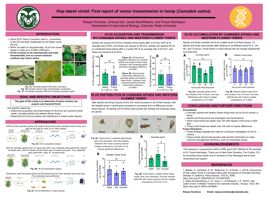
Since the 2018 U.S Farm Bill reintroduced industrial hemp (Cannabis sativa L., < 0.3 % dry weight THC) back into the agricultural landscape, the crop has faced an influx of pests and pathogens. Among them, hop latent viroid (HLVd) has risen to the highest threat level. HLVd is a single-stranded, 256 bp circular RNA molecule causing leaf chlorosis, stunted growth, and reduced yield and quality of cannabinoids and terpenes. Losses due to HLVd in C. sativa (hemp and marijuana, >0.3% THC) are estimated to be upwards of $4 billion per year. HLVd is known to be transmitted mechanically, but there is currently no information regarding any possible insect vectors. Here we evaluated vector transmission by two common hemp pests, cannabis aphids (Phorodon cannabis) and western flower thrips (Frankliniella occidentalis). We hypothesize that P. cannabis and F. occidentalis can acquire and transmit HLVd to hemp. In this study, we aimed to determine the acquisition and transmission of HLVd by these insects, and to assess HLVd accumulation and distribution in the insect vector tissues. Our results reveal that cannabis aphids and western flower thrips acquire and transmit HLVd at low rates. Aphids and thrips maintain HLVd in all their tissues at a stable level; aphids show the highest viroid levels in their guts compared to carcasses and thrips show no significant differences across tissues. Knowledge of insect vectors will provide hemp growers with a better understanding of this disease and develop targeted management strategies to avoid economic losses.
Category: Research Poster
Author(s): Nora Tayefeh
Presenter(s): Nora Tayefeh
Mentors(s): Ambika Basu
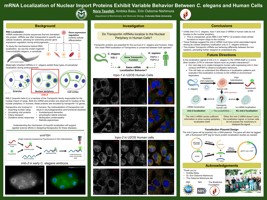
Gene expression regulation controls the translation of genes into proteins both spatially and temporally. An important yet relatively understudied mechanism of gene expression control is subcellular mRNA localization, with major roles in developmental and cellular functions. Previous research from our lab has discovered that imb-2 (Importin beta-2) mRNA concentrates around the nuclear periphery during Caenorhabditis elegans embryogenesis in a translation-dependent manner. To investigate if nuclear periphery mRNA localization is important in human biology, we investigated the localization of human homologs of imb-2. Two homologs of imb-2 exist in humans, tnpo-1 and tnpo-2 (transportin-1/2), whose proteins serve similar roles of importing cargo to the nucleus. Therefore, the mRNA would also be expected to localize to the nucleus like in C. elegans. To determine the location of these mRNAs, we used fluorescence microscopy on fixed human cells. Both tnpo-1 and tnpo-2 did not concentrate around nucleus therefore nuclear periphery localization is not a conserved phenomenon. This suggests that the imb-2 mRNA must have some associated signal that is driving its nuclear periphery localization in C. elegans embryos. We speculate this localization is either directly or indirectly linked to its encoded protein function. Our next step is to create transgenic human cells expressing imb-2 and observe if the mRNA has sufficient information to drive nuclear periphery localization itself.
Category: Research Poster
Author(s): Yvette Cruz
Presenter(s): Yvette Cruz
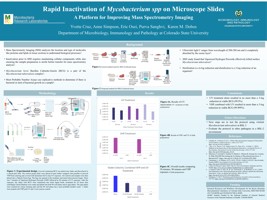
Molecular Imaging using Mass Spectrometry (MSI) enables identification of the changes in diseased versus healthy neighboring cells within a tissue sample, including demonstrating delays in drug delivery to sites of need for effective treatment. Despite this, MSI for infectious disease research is hampered by the need to inactivate pathogens within tissue samples before analysis. Current inactivation techniques utilize a stepwise process of freezing excised tissues, inactivation via UV, X-ray, or gamma irradiation, then processing samples for MSI. This is a laborious and time-consuming process and is not efficient for studying dynamic cellular interactions during time of tissue harvest. We hypothesize that alternate inactivation strategies can be conducted "on-slide" reducing the delay from tissue sample collection to MSI and improving the capture of dynamic interactions. In this study, we used Mycobacterium bovis Bacillus Calmette-Guérin (BCG), an attenuated M. bovis strain that can be manipulated in standard laboratory conditions to test our hypothesis. We tested UV radiation and Vaporized Hydrogen Peroxide (VHP) on slide inactivation methods and found that UV and VHP treatment sterilized the prepared slides. Our aim is to expand its application using virulent M. tuberculosis-infected tissue samples and ultimately other high containment pathogens.

Category: Research Poster
Author(s): Cristina Nava Rios, Amelie Guinee, Jordan Strack
Presenter(s): Cristina Nava Rios
Mentors(s): Emily Merz
Episodic memory, stored memory of personal events, is crucial for learning and academic achievement. Episodic memory improves with age during childhood. Socioeconomic disadvantage and stress may influence episodic memory development in children. Children from lower socioeconomic status (SES) backgrounds or exposed to high levels of stress may exhibit altered trajectories of episodic memory development. Levels of cortisol, a stress hormone, can be reliably measured in hair, reflecting cortisol output across months. The goal of this study was to examine how SES and hair cortisol concentration (HCC) may influence the development of episodic memory in children. This study focused on children aged 5 to 13 years (N = 108). SES was measured using parental education and family income. Episodic memory was measured using the NIH Toolbox picture sequence memory task. Child HCC was assessed using 3 cm of hair closest to the scalp to reflect 3 months of hair growth. Multiple linear regression analyses were conducted. Covariates included child age, child sex, and parental education. As expected, children’s episodic memory significantly improved with age. Furthermore, HCC was found to significantly moderate the association between age and episodic memory while controlling for parental education and child sex. SES did not significantly moderate the association between age and episodic memory. Thus, age-related differences in episodic memory may vary as a function of HCC in children. Episodic memory development may vary in children depending on their level of physiological stress.

Category: Research Poster
Author(s): Zachary Araujo-Lovato
Presenter(s): Zachary Araujo-Lovato
Mentors(s): Terry Engle
Four hundred eighty crossbred Angus steers were ranked by body weight (BW) and randomly assigned to one of two experiments designed to evaluate the effects of Lysoforte supplementation with or without added dietary fat. Experiment 1 included 240 steers and two dietary treatments: 1) a control diet containing no added fat and no Lysoforte, and 2) the same control diet supplemented with Lysoforte at 4.25 g head−1 day−1. Experiment 2 also used 240 steers and consisted of two treatments: 1) a control diet containing 1.75% added tallow and no Lysoforte, and 2) the same diet containing 1.75% added tallow supplemented with Lysoforte at 6.0 g head−1 day−1. In both experiments, cattle were fed a steam-flaked corn based diet formulated with the appropriate treatment and delivered daily to allow ad libitum access to feed across a 24 hour period. Steers were housed in feedlot pens containing 15 steers per pen with eight replicate pens per treatment within each experiment. Body weights and feed refusals were recorded every 28 days throughout the feeding period. When steers reached a finished BW of approximately 695 kg, after about 150 days on feed, equal numbers of pens from each treatment were transported to a USDA inspected commercial abattoir where cattle were harvested and carcass measurements were collected. In Experiment 1, Lysoforte supplementation had no measurable effect on live animal performance or carcass characteristics. In Experiment 2, initial and final BW and feed efficiency were similar between treatments; however, steers receiving Lysoforte had greater overall ADG.
Category: Research Poster
Author(s): Ryder Hunt
Presenter(s): Ryder Hunt
Mentors(s): Steven Fassnacht
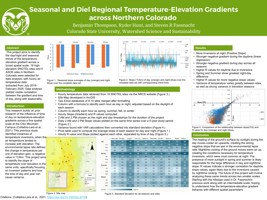
Air temperature decreases with increased elevation, and physics dictates that the change in temperature of free air is a function of the moisture in the air, called the lapse rate. For wet air, this is about 5.5 degrees Celsius per kilometer, and for dry air, it is about 9.8 C/km. However, for air temperature near the ground, this change in temperature with elevation can vary very locally, and even regionally. We used the hourly temperature data from 20 Natural Resources Conservation Service (NRCS) SNOTEL stations for six years (2019 to 2025) to assess the temperature-elevation gradient (Γ) over Northern Colorado. We also examined the fit of the Γ correlation from the Pearson correlation coefficient (ρ) as a function of time of day and time of year. It was found variability in the gradient (Γ) and in the fit (ρ) for day versus night (diel) and seasonally. Spring exhibited the strongest correlation (R²) in a regression model of mean seasonal temperatures and elevation. Further, certain stations were persistent outliers from the Γ correlation. We examined the specific location and magnitude of those outlier stations. Further examinations using ASOS stations are applied to compare areas affected by more air pollution and its relation to inversions.

Category: Research Poster
Author(s): Sami Conca
Presenter(s): Sami Conca
Mentors(s): Kimberly Nichols
Analysis of early Eocene (56-52 Ma) fossils from the Bighorn Basin, Wyoming demonstrates the presence of a rich, tropical environment inhabited by a variety of small, faunivorous vertebrates comparable to modern taxa. This ancient environment included two species of the primate genus Tetonius, analogous to modern tarsiers (Carlito, Cephalopachus, Tarsius). In addition, this environment supported the extinct lizards Xestops and Suzanniwana, which have adaptations similar to extant small terrestrial squamates with crushing dentition and arboreal iguanians, respectively, and inhabit environments alongside each other today. Specimens of Tetonius, Xestops, and Suzanniwana were identified in the CSU Primate Origins Lab Paleontology Field School fossil collection and form the basis for: (1) the examination of dietary niche overlap; and (2) possible predation between the three genera. Evidence of the relationship, and potential overlap, in dietary and feeding environments of Tetonius, Xestops, and Suzanniwana, including the possibility that Tetonius preyed upon the lizards, is supported by topological dentition analysis, paleoenvironmental modelling, and review of modern tarsier-squamate interactions. Examination of overlapping dietary niches and similar, but morphologically distinct, adaptations provides insight into prehistoric analogs for extant primate and squamate interactions and how that relationship has been maintained. This research has applications to primatology, as well as conservation efforts involving reintroduction of different, but adaptively similar, species.

Category: Research Poster
Author(s): Sami Conca
Presenter(s): Sami Conca
Mentors(s): Kimberly Nichols
In the early Eocene (56-52 Ma), the Bighorn Basin of Wyoming supported a rich, tropical environment and variety of small, faunivorous vertebrates comparable to modern taxa. This ancient environment included the primate genus Tetonius, analogous to modern tarsiers. In addition, this environment supported the extinct lizards Xestops and Suzanniwana, which have adaptations similar to extant small terrestrial squamates with crushing dentition and arboreal iguanians, respectively, and inhabit environments alongside each other today. Identification of specimens of Tetonius, Xestops, and Suzanniwana in the CSU Primate Origins Lab Paleontology Field School fossil collection form the basis for: (1) the examination of dietary niche overlap; and (2) possible predation between the three genera. Analysis of topological dentition, paleoenvironmental modelling, determination of modern morphologically similar genera, and review of modern tarsier-squamate interactions provides evidence of the relationship, and potential overlap, in dietary and feeding environments of Tetonius, Xestops, and Suzanniwana, including the possibility that Tetonius preyed upon the lizards. Examination of overlapping dietary niches and similar, but morphologically distinct, adaptations provides insight into prehistoric analogs for extant primate and squamate interactions and how that relationship has been maintained. This research has applications to primatology, functional morphology, and conservation.
Category: Research Poster
Author(s): Sarah Goerold
Presenter(s): Sarah Goerold
Mentors(s): Alyssa Hughes
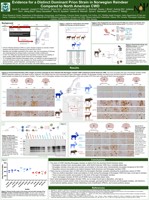
Chronic wasting disease (CWD) is a fatal neurodegenerative disorder that affects cervids, including deer, elk, moose, and reindeer. This disease is caused by prions, misfolded forms of the cellular prion protein that spread by converting PrPC into an abnormal, harmful form. While CWD is endemic to North America (NA), it was first detected in Europe in 2016 in a wild reindeer, raising the question of whether NA and Norwegian CWD have the same origin. To prevent this outbreak from becoming endemic like in NA, it is important to characterize the Nordic CWD isolates. To investigate this question, we transmitted NA and Norwegian reindeer CWD isolates to gene-targeted (Gt) mice expressing reindeer PrP and examined the resulting clinical, biochemical, and neuropathological properties. The time to clinical disease onset for Norwegian reindeer CWD isolates was slower than NA reindeer CWD and displayed an incomplete attack rate. Additionally, prions from Norwegian CWD showed less accumulation in the brain and affected different brain regions. Despite this, Western blots revealed the prion protein had similar molecular weights and banding patterns across the Norwegian and NA CWD isolates. These findings suggest that CWD affecting Norwegian reindeer may represent a distinct strain of the disease. Understanding these differences is important for predicting how CWD may spread in wildlife populations, transmit to humans, and guide monitoring efforts in emerging cases in Europe.
Category: Research Poster
Author(s): Jessica Gamble
Presenter(s): Jessica Gamble
Mentors(s): Candace Mathiason, Erin McNulty, Nathaniel Denkers
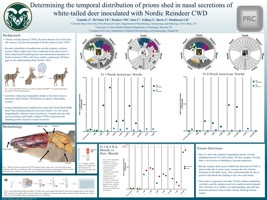
Chronic wasting disease (CWD), the prion disease of cervids (deer, elk, and moose), was first documented in North America in the 1970’s. The disease was more recently identified in Scandinavian cervids (reindeer, red deer and moose) in 2016. Many studies have been conducted in the native host to better understand the pathogenesis and transmission dynamics of North American CWD, with fewer studies conducted to date to fill these gaps in our understanding about Nordic CWD. Of particular interest is determining how and when prions are shed from Nordic CWD-infected cervids throughout disease course. Our previous studies of North American CWD have determined that the infectious agent is shed in saliva, urine, feces and blood, all of which contribute to efficient horizontal transmission of the disease from one cervid to the next. It was previously understood that blood inhibited nasal sample positivity when testing for CWD; with more recent analyses providing evidence to the contrary. We are currently conducting longitudinal studies in the native host to reveal prion shedding profiles of Nordic CWD prions, including the assessment of bloody vs non-bloody nasal sections. Longitudinally-collected nasal secretions (bloody and non-bloody), collected at 3-month intervals after oral inoculation, will be assessed for the presence of prions using the established prion amplification assay Real Time Quaking-Induced conversion (RT-QuIC) in combination with Iron Oxide Bead (IOB) extraction (IQ). Findings from this study will: (i) enhance our understanding of Nordic CWD shedding, and (ii) derive more information on the testing capabilities of bloody vs non-bloody nasal sample collections from CWD- infected cervids that will lead to enhanced diagnostics and surveillance for this and other protein misfolding diseases.

Category: Research Poster
Author(s): Elizabeth Williams
Presenter(s): Elizabeth Williams
Mentors(s): Delaney Worthington, Nicole Kelp-Sullivan
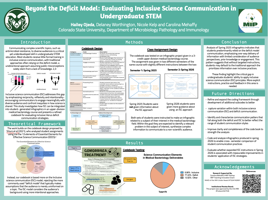
The deficit model has long been the primary method of communication between scientists and the public. However, the deficit model is ineffective and upholds harmful standards for young scientists-in-training. A new model of communication, known as inclusive science communication (ISC), is being implemented more often throughout the scientific community. ISC allows for diverse perspectives to be highlighted through a network of communication, while also combating barriers that young, underrepresented scientists face when entering their fields. This project takes a unique focus on ISC and its specific purpose within virology. Integrating ISC into undergraduate virology is crucial due to the complex, controversial topics these students must discuss outside of the classroom such as vaccines. The goal of this project is to evaluate undergraduate virology students’ baseline knowledge about ISC practices to help design a virology-focused science communication course. As part of the curriculum design process, 30-minute interviews were conducted with previous virology students (n=4). Thematic analysis was used to generate themes from the interviews, through identifying patterns in the interviewees' responses and categorizing them into overarching ideas. Our analysis revealed that the students most often engage with science communication when presenting their research posters and have a desire to learn more about ISC for their future career aspirations. Overall, our data suggests that virology students have a desire to learn more about ISC to tackle subjects with high levels of scientific uncertainty or controversy.

Category: Research Poster
Author(s): Ryleigh O'Donnell, Emily Dann, Killian Garnand, Sarah Staples
Presenter(s): Ryleigh O'Donnell, Emily Dann, Killian Garnand, Sarah Staples
Mentors(s): Susan Hepburn
Alexithymia describes difficulties identifying and describing emotions. Research suggests alexithymia could be a transdiagnostic risk factor for those with emotion regulation challenges, particularly for individuals with autism, and has relied on parent report measures. Therefore, we wanted to discover what could be learned by interviewing youth directly. Aims: (1) Evaluate the inter-observer reliability using a coding system to evaluate youths’ emotional communication. (2) Examine whether verbally fluent children with autism show more impaired emotion communication than their peers without autism, matched by chronological age and verbal IQ. Methods: This study uses existing data from a complex longitudinal study of autism. 115 youth (ages 5-12) completed a videotaped interview about their experiences with four basic emotions (happy, scared, angry and sad). Our team developed a coding scheme to capture the quality of the youths’ emotional communication, focusing identifying triggers and internal physiological sensations they associate with those emotions. Results: (1) 45 samples were coded by 2 observers independently. Overall mean percent agreement exceeded 85%, suggesting strong reliability. (2) There was a significant difference in emotion communication quality based on diagnostic group, F(2, 112) = 4.89, p<.009; Wilk’s Lambda = .92; partial eta squared = .081. Diagnostic group had a significant effect on the quality of report of physiological sensations associated with emotions, F(1, 112) = 8.58, p<.004; partial eta squared = .071. There were no significant group differences in the quality of descriptions of external triggers associated with emotions, F(1, 112) = 3.31, p<.072; partial eta squared = .021.
Category: Research Poster
Author(s): Hailey Coyle
Presenter(s): Hailey Coyle
Mentors(s): Maryam Afzali
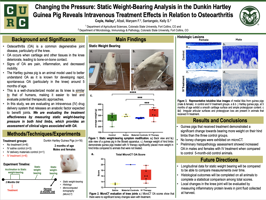
Osteoarthritis (OA) is a common degenerative joint disease affecting individuals over 60, especially in the knee joints. OA occurs when cartilage and synovial fluid in the knee deteriorate, eventually leading to bone-on-bone contact. This results in pain, inflammation, and decreased mobility. Many studies aim to better understand OA using animal models. The Hartley guinea pig is known for developing rapid, spontaneous OA (particularly in the knee) around 5 months of age. This is a well-characterized model as its knee joint and structure are similar to those of humans, making it easier to test and evaluate potential therapeutic approaches. In this study, we are evaluating an intravenous (IV) drug delivery system that releases an anabolic factor expected to benefit joints. Animals at 2 months of age, prior to development of OA, were randomly assigned into one of four treatment groups (no treatment, IV saline control, IV delivery system control, and IV treatment), to determine whether the IV therapy could delay or halt the progression of disease. We are currently evaluating the treatment effectiveness by measuring the static weight-bearing pressure in both hind limbs, which provides an assessment of clinical signs associated with OA. To date, animals that received IV administration are bearing significantly more weight on their hind limbs than the three control groups. Final outcomes will determine whether any structural improvements (via microcomputed tomography and joint histopathology) are associated with this potential therapy. If successful, this proprietary approach may enter Phase 1 clinical trials within the next two years.

Category: Research Poster
Author(s): Pavneet Kaur
Presenter(s): Pavneet Kaur
Mentors(s): Martha Mehaffy
Studying and test-taking are often perceived as purely intellectual tasks; however, emotions significantly shape students’ experiences surrounding exams. This study examines how students' perceive their emotions to be before, during, and after a test. Metacognitive reflection assignments from 26 students in an upper-level microbiology course were analyzed following two midterm exams. Using MAXQDA qualitative analysis software, an inductive thematic analysis was conducted to identify and categorize emotional patterns. Responses were coded according to whether they expressed positive or negative emotions and when those emotions occurred in relation to the exam. Emotional expressions were marked and organized into thematic categories. Results revealed a clear emotional trajectory. Even though the reflection assignment occurred after the exam, students often defined emotions felt before, during and after the exam. Before the exam, anxiety and self-doubt were most common. During the exam, students described focused determination as well as moments of confusion and uncertainty. After the exam, many reported relief, while others continued to experience lingering worry. These findings suggest emotional experiences surrounding exams are dynamic and situational rather than static. According to control-value theory, students’ emotional responses to exams are shaped by their perceived control over the task and the value they assign to its outcomes. Feelings like anxiety, pride, or frustration emerge from beliefs about one’s ability to succeed and the importance of the exam. Incorporating structured reflection and mindfulness practices can help students regulate these emotions, normalize their experiences, and reduce the stigma around expressing emotions in academic settings

Category: Research Poster
Author(s): Jay Bates Domenech
Presenter(s): Jay Bates Domenech
This study investigates representations of autism in television, focusing on how race and gender influence stereotypical patterns. Because most U.S. adults watch television every day, media remains a key site for shaping understandings of marginalized groups. Despite this, research on autistic television characters, overwhelmingly center White, cisgender men and rarely examines how race and gender intersect in shaping these representations. In this study, I examine explicitly labeled autistic characters who appeared in at least three episodes of scripted fictional television shows aimed at adult audiences, produced in the U.S., and that aired between 2000 and 2024. The analysis included 30 characters across 22 television shows. For each show, one to three episodes featuring the character were selected to ensure observational depth for systemic coding. Characters were coded for gender, race, and stereotypical traits: savant abilities, abrasive behavior, and lack of romantic or sexual interest. 25% of the sample was double-coded, and disagreements were discussed until consensus was reached. Results indicated that White (n=23) and male (n=22) characters dominated the sample, while men of color (n=6), women of color (n=1), and transgender characters (n=0) were nearly or completely absent. All characters of color were portrayed as abrasive, and 5 of 6 men of color were depicted as having savant abilities, making it the highest percent of any group. These findings suggest that U.S. television represents autism through a narrow lens that centers White, cisgender men while reinforcing racialized and gendered stereotypes.
Category: Research Poster
Author(s): Hailey Ojeda
Presenter(s): Hailey Ojeda
Recent years have seen increasing calls to expand interdisciplinary training in undergraduate science education. This approach is particularly important in courses such as medical bacteriology, where students must master scientific content and develop the skills to communicate effectively with diverse communities about complex topics like antimicrobial resistance. Such communication skills are essential throughout a student’s career, especially when addressing misunderstandings or misinformation in public health contexts. It is crucial that students learn about more effective communication models that emphasize engagement to understand audience perspectives, needs, and concerns, rather than the deficit model, which assumes the public simply lacks knowledge and requires factual information. This study aims to optimize a codebook for evaluating how students incorporate inclusive science communication (ISC) into an infographic project across two semesters of an upper-division medical bacteriology course. The codebook systematically differentiates between deficit and inclusive communication models in student infographics. One semester received no guidance on ISC, while the other received a brief description of ISC and ISC reflection questions in their assignment instructions. Student work was analyzed using both deductive and inductive coding approaches. Deductive coding provided an initial coding framework, while inductive coding allowed for emergent codes or unexpected insights. Results from this study will assess how integrating ISC into an upper-division medical bacteriology course can enhance student learning experiences and equip students with the skills needed to engage diverse audiences thoughtfully. Ultimately, this approach supports the development of scientifically literate professionals capable of addressing public health challenges with both knowledge and empathy.

Category: Research Poster
Author(s): Colten Blake
Presenter(s): Colten Blake
Mentors(s): Meenakshi Santra
A decline in soil fertility and general ecosystem health over time can often be attributed to farming practices. Synthetic fertilizers, for example, can be linked to microbiome damage and a decline in nutrients in the soil, which are essential for crop growth. In this project, the effects of two general categories of fertilizer were compared by growing winter wheat in field soil in a greenhouse environment, watering lightly and frequently, and mixing in appropriate amounts fertilizer. Common synthetic fertilizer curated for field soil and a biofertilizer prepared with diluted manure and nitrogen-fixing bacteria concentrated to the appropriate titer according to available literature based on relevant biofertilizer studies. The resulting winter wheat seeds were then vernalized and germinated, and all seeds germinated well. The individual plants were all similar in both quality and quantity across all groups, including the control group, which received no fertilizer. The soil was tested for composition and presence of essential nutrients, both before and after planting and harvest, with fertilization occurring in between. The results suggested a difference in the soil between the fertilizer categories.
Category: Research Poster
Author(s): Kylee Pham, Paul Soma, Shashmeera Shriganeshan, Skylar Gregersen, Suad Elmegerhi
Presenter(s): Kylee Pham
Mentors(s): Rushika Perera
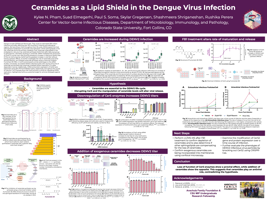
Dengue viruses (DENVs) are flaviviruses responsible for ~400 million infections each year across more than 100 countries in tropical and subtropical regions. We have previously demonstrated that DENVs exploit host sphingolipid metabolism throughout their life cycle to promote replication. Among sphingolipids, ceramides serve as the central metabolic hub. Ceramides are synthesized in the endoplasmic reticulum by ceramide synthases (CerS), which catalyze the addition of a fatty acyl group to a sphingoid base. Lipidomic analyses revealed that ceramide levels increase over the course of DENV infection in human liver cells (Huh7), suggesting a potential role for ceramides in viral replication. Therefore, we hypothesized that ceramides are required for virus replication. To test this, we inhibited ceramide synthesis in Huh7 cells using Fumonisin B1 (FB1). FB1 treatment led to an accumulation of intracellular virus particles between 24 and 48 hours post-infection (hpi), followed by a pronounced release into the supernatant. This “purge” correlated with extracellular titers that rose ~2.5-fold between 48 and 72 hpi compared to untreated controls. These findings indicated that the reduction in ceramide levels created a cellular environment beneficial for DENV2 replication. Strikingly, supplementation with exogenous ceramides resulted in a 4.5-log reduction in viral titer. Moreover, siRNA-mediated knockdown of CerS1 and CerS2 increased infectious DENV2 titers, indicating that ceramides exert an antiviral—rather than proviral—effect during infection. Together, these findings reveal that ceramides play a critical role in restricting the DENV life cycle in Huh7 cells.
Category: Research Poster
Author(s): Emily Gasowski, Kaitlyn Forrest
Presenter(s): Emily Gasowski
Mentors(s): Candace Mathiason
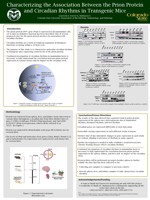
The prion protein (PrPC; gene Prnp) is expressed in all mammalian cells, yet to date no definitive function has been described. One of several proposed roles for the prion protein involves its association with circadian rhythms. Yet, few molecular studies have been performed to assess this hypothesis. Circadian rhythms are a form of temporal regulation in biological functions occurring within a 24-hour cycle. Molecularly, a family of circadian transcription factors drive the expression of these rhythms as well as the expression of downstream targets that impact cellular function. Interestingly, the casein kinase 2 (CK2) protein is known to interact independently with both the molecular clock and the prion protein. The purpose of this study is to characterize molecular circadian rhythms in transgenic mice expressing varied levels of the prion protein (C57bl6/j (wildtype 1x expression), FVB-KO (Prnp knockout 0x expression), and Tg (CerPrP-E226 5037 (Prnp 4-8x expression). The levels of Prnp and molecular clock genes (Clock, Bmal1, Period (1,2), Cryptochrome (1,2), Rev-erb (a,b) expression were analyzed for each transgenic mouse line by qPCR. Additionally, Casein Kinase II alpha (Ck2a), Casein Kinase II Beta (Ck2b) and Prnp and molecular clock gene expression were analyzed by western blot. Continued investigation of circadian rhythms in mammalian hosts is necessary to fully understand the correlation between prion protein expression in various tissues and its impact on the circadian clock. This work will help provide understanding of functional losses in molecular circadian regulation due to the progression of prion disease.
Category: Research Poster
Author(s): Kaitlyn Murphy
Presenter(s): Kaitlyn Murphy
Mentors(s): Abbie Reade
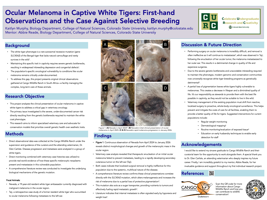
The white tiger, a variant of Panthera tigris, is often bred in captivity because of its striking appearance. However, maintaining this rare recessive trait requires intense selective breeding, which leads to severe inbreeding depression and numerous physiological problems. During my clinical wildlife internship at Cango Wildlife Ranch in Oudtshoorn, South Africa, I observed a concerning pattern of malignant melanoma in the facility’s white tigers, mostly affecting the eye area, including the eyelids. This research explores how the lack of protective melanin in the skin and mucous membranes of the white tigers makes them especially vulnerable to UV-induced melanomas. Here, I present observations made during my internship with an analysis of the tumors’ pathophysiology. This poster highlights the serious and often fatal health consequences linked to the white tiger’s unique coloration. Ultimately, this work calls for an end to the deliberate breeding of white tigers, emphasizing the importance of prioritizing animal welfare and true conservation over public spectacle.
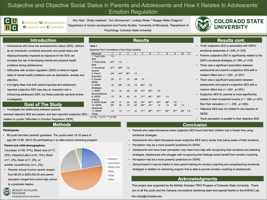
Category: Research Poster
Author(s): Khu Hser, Shelley Haddock, Toni Zimmerman
Presenter(s): Khu Hser
Mentors(s): Reagan Miller-Chagnon
Adolescents with low socio-economic status (SES) are at high risk for developing mental health problems, in part, due to dysregulations in emotion regulation that can occur after chronic stress exposure. Despite a robust body of literature that demonstrates consistent associations between objective indicators of SES (e.g., income and parent educational attainment) and difficulties with emotion regulation (DERS), less is known about the impact of subjective indicators of SES, defined as how people view themselves and their resources in relation to others in their community and society. This study aims to investigate the relationship between parents-reported objective SES and parent- and teen-reported subjective SES in relation to youths' DERS. Participants were 68 youth (10-18 years-old; 57% boys/men; 57% non-Hispanic White) and their guardians who participated in a site-based mentoring program. Bivariate correlations revealed that adolescent and parent-reported subjective SES, but not parent-reported income and education were associated with DERS. More specifically, adolescents reported greater difficulties with emotional awareness when their parents also perceived themselves as having lower SES. Adolescents also reported greater difficulties using emotion regulation strategies when parents reported lower perceptions of SES. These results highlight that subjective indicators of SES may be more closely associated with adolescent difficulties with emotion regulation than more objective indicators. Within future research it will be important to investigate how DERS may meditate associations between subjective SES and adolescent mental health problems. It will also be helpful to investigate these relationships within a larger and more diverse sample.
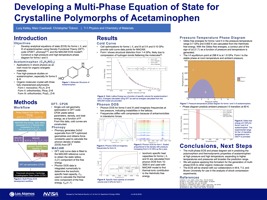
Category: Research Poster
Author(s): Lucy Kelley
Presenter(s): Lucy Kelley
LA-UR-25-26549 Acetaminophen, most widely known as a pharmaceutical, is an organic molecular crystal with applications in shock physics as an inert mock for energetic materials. In this work we develop analytical equations of state for forms I, II, and highly metastable form III of acetaminophen, as well as a pressure-temperature phase diagram for forms I and II. Density Functional Theory (DFT) code CP2K is used to optimize the single unit cell geometries at zero temperature and pressures of 0-10 GPa as well as to calculate the cold curves for each polymorph. The cell geometries optimized by DFT are then used with Python package phonopy to develop the phonon density of states (DOS). This cold curve and DOS data is fitted to the MACAW reference curve to obtain EOS and thermodynamic parameters in addition to the Helmholtz and Gibbs free energy in order to predict the polymorphism and thermodynamic properties of acetaminophen at high pressure and high temperature.
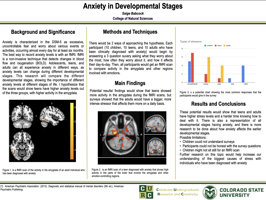
Category: Research Poster
Author(s): Saige Babcock
Presenter(s): Saige Babcock
Anxiety is when someone has constant worry or fear that affects their day-to-day life. fMRI is a non-invasive technique that detects changes in blood flow and oxygenation (BOLD). Adolescents and adults can experience anxiety in different ways, and anxiety can increase during development. In this presentation their will be 10 children, 10 teens, and 15 adults who participate in a survey about their anxiety levels, and also get an fMRI scan to compare anxiety levels and see how the anxiety levels can potentially change. Scans would show that anxious children have a hyper - connectivity between the amygdala and regions involved with emotions, and adults would be more transparent with survey responses. Surveys will also show that teens experience high anxiety and their fMRI scans are similar to those of adults.
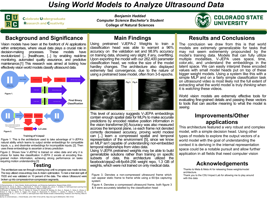
Category: Research Poster
Author(s): Benjamin Haddad
Presenter(s): Benjamin Haddad
Mentors(s): Nathaniel Blanchard
Computer vision, as a subsection of machine learning, has taken a massive spotlight both in the current literature and everyday interaction. Exploring new facets in the field has led to major advancements which bridge the gap between theory and practice. Innovation with world models, Facebook’s V-JEPA (& V-JEPA2) notably, allow practitioners of computer vision to implement solutions to versatile problems via access to public models and pretrained weights. The objective of many vision researchers is to utilize these high power world models to create pipelines which perform well in distinct situations. The aim was to implement an architecture which could, with high probability, predict compression and decompression of an ultrasound probe on humans. Automated detection of ultrasound probe compression has clinical implications for healthcare professionals globally. The architecture, built on Pytorch, implements V-JEPA2 with the ‘large’ set of pretrained weights as an encoder and processor, then uses a two-layered neural network as a classification head for compression and non-compression of ultrasound image data. The dataset contains 22 ultrasound videos with separate manually labelled csv files containing the times of compressions vs non-compressions. The set is broken into a 90/10 train-test split and then is further split into separate compression vs non compression clips based on the labelled csv files. The model is then trained in a 10 epoch cycle using the ADAM optimizer and Cross Entropy loss. For reproducibility, torch is set with a manual seed of 42.

Category: Research Poster
Author(s): Jolie Fasullo
Presenter(s): Jolie Fasullo
Mentors(s): Michael Thomas, Sierra Swenson
Transcranial Magnetic Stimulation (TMS) is a non-invasive brain stimulation technique that produces a magnetic field which penetrates the scalp to depolarize neuronal membranes and trigger action potentials. Theta burst stimulation (TBS) is a specialized TMS protocol that produces rapid pulses, mimicking natural neural patterns. TBS is believed to affect cognitive processing through excitation (intermittent TBS) and suppression of neural activity (continuous TBS). The purpose of this study is to examine the effects of TBS protocols on cognitive task performance. Using a single-blind design, we investigated the impact of TBS on task performance by stimulating the dorsolateral prefrontal cortex (dlPFC). Healthy adults aged 18-65 who were right-handed and fluent in English were recruited via an online prescreening survey. Eligible participants provided health and demographic information, completed a the Sternberg task prior to and following a single offline TBS session with neuronavigation determined the target location of the dlPFC. The participants were randomly assigned to stimulation condition and task administration order. We hypothesize that participants receiving iTBS will show improved task performance following stimulation compared to participants receiving cTBS. Our analysis will consist of a 2x2 t-test to determine the effects of stimulation condition (i.e., iTBS and cTBS) on pre- and post-stimulation cognitive performance outcomes. Our findings may provide evidence for utilization of iTBS intervention for cognitive impairment.
Category: Research Poster
Author(s): Marley Delaney
Presenter(s): Marley Delaney
Mentors(s): Graham Peers
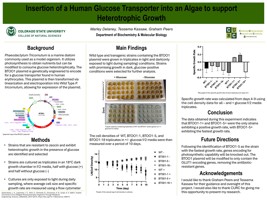
The goal of this project is to convert a photosynthetic algae into heterotrophic cells that can grow in the dark. This project involves designing a plasmid named the BTOO1 plasmid that contains GLUT1, a gene that encodes glucose transporters in human erythrocytes. BTOO1 is then transformed into the diatom P. Tricornutum, allowing for the organism to uptake glucose. This method has potential for mass cultivation and growth of P. Tricornutum, by allowing for larger cell densities, and will also facilitate the discovery of new genes required for photosynthesis.
Category: Research Poster
Author(s): Natalie Filbey
Presenter(s): Natalie Filbey
Mentors(s): Sophia D'Agostino
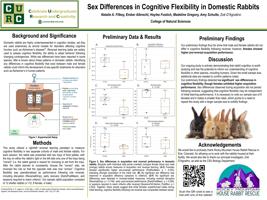
Domestic rabbits (Oryctolagus cuniculus domesticus) are frequently used as animal models for disorders affecting cognitive flexibility such as Alzheimer’s disease, yet important gaps remain in our understanding of rabbit cognition, including potential sex differences. Identifying whether sex differences exist in rabbit cognitive flexibility can inform future rabbit-model work and improve how we interpret outcomes across studies. This pilot study explores sex differences in rabbit cognitive flexibility using a reversal learning task. In this study, male (n = 5) and female (n = 5) rabbits housed at a local rabbit rescue choose between two food trays placed to their right and left; one side is deemed the “correct” side and is rewarded. After the rabbit achieves ≥80% accuracy for three consecutive sessions (6-10 trials/session), the rewarded side is reversed (i.e., the rabbit is rewarded for choosing the tray that was previously on the “incorrect” side). Based on previous research on sex differences in cognitive flexibility, it is anticipated that any differences in cognitive flexibility will appear post-reversal and will likely be context dependent. Although data collection is ongoing, any preliminary trends pointing to sex differences in cognitive flexibility, or lack thereof, will be presented.
Category: Research Poster
Author(s): Via Lawson
Presenter(s): Via Lawson
Mentors(s): Juan Argueso, Ruth Watson
We are examining the rate at which a specific genetic event, called a Half Crossover Cascade (HCC), occurs when normal genome maintenance is compromised. An HCC occurs when DNA is broken on one chromosome outside a homologous sequence and uses a homologous sequence on another chromosome to attempt to repair. The broken chromosome will have a ssDNA piece, that is clipped by a protein called Rad1. We wanted to determine if this removal of the ssDNA tail is required for HCC to proceed. To determine this, we engineered 2 kb homology regions on three chromosomes (Chr6, Chr9, and Chr10) in the Saccharomyces cerevisiae genome, then used CRISPR/Cas9 to induce single-ended DSBs four and ninety bases away from the homology sequence on Chr6, thus shunting cells toward HCCs. Cells carrying the ensuing chromosomal translocations were positively identified through the restoration of an auxotrophic gene (LYS2). Clones recovered through this assay were then quantified then phenotypically characterized by patching onto various media for auxotrophic and drug resistance markers. We examined changes in the frequency of Lys+ formation and the mutational spectra of Lys+ colonies when the RAD1 gene is knocked out as compared to WT. In clones where the break occurred 90 bases away from the homologous sequence we observed a significant decrease in rad1Δ clones which survived and produced HCC as opposed to the WT. In contrast, when the break occurred 4 bases away from the homologous sequence, we found there was not a significant decrease in Lys+ frequency.

Category: Research Poster
Author(s): Taylor Gelpi
Presenter(s): Taylor Gelpi
Mentors(s): Mark Stenglein
Galbut virus is a segmented double-stranded RNA virus that ubiquitously infects wild Drosophila melanogaster. Little is known about the biology of insect infecting partitiviruses like galbut virus, but this natural infection of a premier model organism provides an excellent opportunity to study persistent virus-host interactions. The role of galbut virus RNA segment 3 is currently unknown. We hypothesize that RNA 3 encodes a viral suppressor of RNAi (VSR), possibly a helicase-like protein that allows the virus to downregulate the insect’s innate immune response and remain dominant in wild D. melanogaster populations. RNA interference (RNAi) in insects serves as an innate anti-viral defense mechanism triggered by dsRNA. When dsRNA is detected, it is cleaved by Dicer-2 into small interfering RNAs which are incorporated into the RNA-induced silencing complex (RISC). Argonaute-2 (Ago-2) can then recognize complementary RNAs to cleave and therefore interfere with viral replication. We aim to test our hypothesis by expressing galbut virus proteins in stably transfected cells and use GFP as a reporter system. GFP fluorescence will decrease in the presence of GFP dsRNA when RNAi is activated. However, any RNAi inhibiting activity of the galbut proteins would inhibit the inhibition, resulting in the persistence of fluorescence. If results suggest suppression of RNAi, additional assays and experiments can be done to determine which step of the RNAi pathway is being targeted. This study ultimately allows for better understanding of how viral infections can modulate the host immune response and remain persistent during lifelong infection.
Category: Research Poster
Author(s): Keera Payne, Benjamin Giese, Ralf Sudowe
Presenter(s): Keera Payne
Mentors(s): Ralf Sudowe
Naturally occurring radionuclides are found ubiquitously in the natural environment as a result of various anthropogenic activities such as nuclear weapons testing and reactor accidents such as Ra-226 and Ra-228 resulting from the decay of U-238 and Th-232. Specific radionuclides, such as Sr-90 and Ra-226, are often found in large aqueous systems and are difficult to accurately measure in lower quantities due to the large sample volume of water needed. Current sampling technology involves collecting large sample volumes of water and by means of evaporation or precipitation, reducing the volume, and measuring the radionuclides present. This project aims to reduce the lengthy processes currently used in favor of a more efficient collection and measuring system. To do so, detonation nanodiamonds (DNDs) were coated with a manganese compound that was chosen based on its affinity for divalent ions. In this experiment the nanodiamonds were baked to isolate carboxylate compounds on the surface. The nanodiamonds were then coated with manganese to achieve a coating that would effectively remove specific radioisotopes in target matrices. FTIR spectroscopy was used to verify the manganese species on the nanodiamonds and a series of batch acid tests were conducted to verify the strength of the coating. Interference studies were completed to determine the impact of Na+, K+, Mg2+, and Ca2+ concentrations on Sr2+ and Ba2+ uptake.
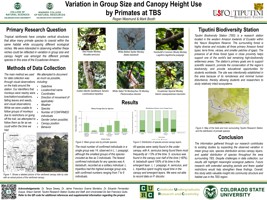
Category: Research Poster
Author(s): Regan Wasmund, Mark Booth
Presenter(s): Regan Wasmund
Mentors(s): Tanya Dewey
Tropical rainforests have complex vertical structures, including the under canopy, canopy, and emergent layers. These layers allow many primate species to coexist within the same habitat while occupying different ecological niches. It was hypothesized that these niches could be reflected in differences in group size and canopy height use among species. This project examined variation in group size and canopy height use among primates at Tiputini Biodiversity Station in the Ecuadorian Amazon within the Yasuní Biosphere Reserve. Field observations were conducted by following and observing groups and recording species, number of individuals, and approximate canopy height, as well as gender and behaviors when possible. Six different primate species in the area were observed throughout the 7 days. Observations suggested noticeable differences in group size, ranging from a single White-Bellied Spider Monkey to as many as 14 confirmed Humboldt’s Common Woolly Monkeys. Canopy height differences were less pronounced but still present, with White-Bellied Spider Monkeys consistently observed in the emergent layer and Humboldt’s Common Woolly Monkeys and Golden-Mantled Tamarins ranging between the upper canopy and emergent layer. These observations suggest that primate species may use different vertical levels of the rainforest to occupy distinct ecological niches and reduce competition, allowing multiple species to coexist within the same ecosystem.
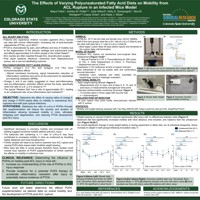
Category: Research Poster
Author(s): Maya Falick, Ashley Potter, Casey Gries, Julia Hilliard, Katie Sikes
Presenter(s): Maya Falick
Mentors(s): Ashley Potter
ACL ruptures cause chronic inflammation leading to post traumatic osteoarthritis (PTOA), resulting in pain, reduction of motion, and possibly knee replacements. Post-repair bacterial infections, commonly from S. aureus, are rare but cause debilitating outcomes. Polyunsaturated fatty acids (PUFAs) are dietary fatty acids naturally released by cell membranes to combat inflammation. Omega 6’s are generally considered to have pro-inflammatory properties and Omega 3’s are considered more pro-resolution. In this study, the effects of varying omega diets on mobility were examined on mice with mechanically ruptured ACLs and post-rupture infections. Mice were fed either a 20:1 (unbalanced) or 1:1 (balanced) ratio of Omega 6 and 3. The unbalanced diet supported a more pro-inflammatory environment while the balanced diet supported a more pro-resolution environment. Mobility and static weight bearing were measured throughout the study. 7 days post rupture, the ruptured joint was locally infected with S. aureus. Weight bearing reduced significantly after injury with no differences between diets. Mobility overall decreased with injury but increased in 1:1 diet with more distance and time traveled compared to those on the 20:1 diet. Future studies will draw greater conclusions about the supplementation of PUFAs to treat PTOA and S. aureus infection after acute ACL injury.
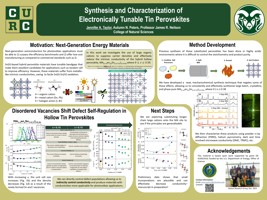
Category: Research Poster
Author(s): Jenni Taylor
Presenter(s): Jenni Taylor
Mentors(s): Autumn Peters, James Neilson
Tin-based hybrid organic inorganic perovskites have emerged as next-generation semiconductors for photovoltaic applications. However, Sn(II)-based hybrid perovskites have high intrinsic carrier concentrations, limiting their applications. We have successfully synthesized the hybrid perovskite family, MA(1-x)en(x)Sn(1-0.7x)I(3-0.4x) (MA=methylammonium, en=ethylenediammonium, 0 ≤ x ≤ 0.38) using neat, mechanochemical synthesis. We see that en is able to in part substitute onto the MA site, resulting in tin and iodide vacancies to charge and size accommodate the larger cation. Consequently, we demonstrated through dark and time-resolved microwave conductivity experiments that when x ≤ 0.15 the carrier concentration is decreased by order of magnitude, resulting in decreased conductivity values more reasonable for photovoltaic applications. Thus, we have resolved a technique to effectively reduce the intrinsically high carrier concentration in this Sn(II)-based perovskite and can intentionally control defects to indirectly manipulate conductivity. Currently, we are using this synthetic technique to trial 3 new large cations in this system: DAP=1,3-diaminopropane, BDA=1,4-butanediamine, and PDA=pentane-1,5-diamine. When these are substituted onto the MA site, preliminary studies have shown that small incorporations (x ≤ 0.05) can effectively reduce conductivity.
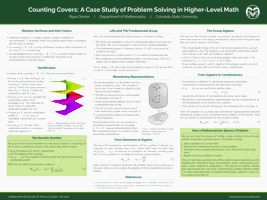
Category: Research Poster
Author(s): Ryan Grimm
Presenter(s): Ryan Grimm
Mentors(s): Renzo Cavalieri
The Hurwitz number counts, up to isomorphism, the number of covers of a Riemann surface of a certain genus, holding constant the ramification profile of such a cover. With this information alone, the Hurwitz number is effectively incalculable beyond simple examples. However, through translating the problem first to monodromy representations, then representation theory, Hurwitz numbers become significantly more practical computations. Examining Hurwitz numbers as a case study provides insight into much of the modern approach of mathematics: analyzing the intersections of fields to gain insight. Higher-level math today conducts research by translating problems through different fields to gain the advantages those other fields provide. This research was conducted through review of relevant literature and academic interviews with mathematics faculty. The results of this case study solidify knowledge related to Hurwitz number computations. Additionally, these results improve understanding of the expectations surrounding higher-level mathematical research and learning. Further analysis can identify how similar patterns of translating problems across fields emerge in other areas of mathematical research, and how this perspective benefits such research.
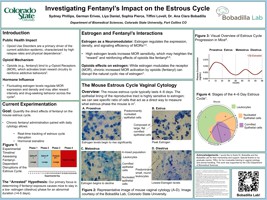
Category: Research Poster
Author(s): Sydney Phillips
Presenter(s): Sydney Phillips
Mentors(s): Ana Clara Bobadilla, Tiffini Lovell
Researching psychedelic therapy for Substance Use Disorder (SUD), female models are often excluded due to outcome variability across the reproductive cycle. Our research indicates that psilocin, psilocybin’s active metabolite, has therapeutic benefit for SUD exclusively in females. Psilocin’s effects occur through brain serotonin receptor activation. Since estrogen levels alter receptor expression, preserving natural reproductive cycles is essential for accurate therapeutic modeling. Invasive vaginal lavages provide precise, real-time cycle identification, but physical handling triggers a significant stress response, impacting the hormonal cycle. Using a non-invasive fecal monitoring protocol, we tested an alternative to traditional invasive lavages and handling. Fecal collection is stress-free but provides a 12-24 hour delayed view of the cycle. Female C57BL/6J mice were randomly assigned to either an invasive monitoring group, involving sham surgery and routine physical restraint (scruffing and handling), or a non-invasive group monitored through fecal collection with no restraint. Upon completion of the 12-day collection phase, all mice were tested for anxiety via Elevated Plus Maze and hormone levels were tracked using Liquid Chromatography-Tandem Mass Spectrometry. We hypothesize that unlike invasive stress, which suppresses estrogen-driven serotonin receptors, our non-invasive method preserves natural hormone cycles to better evaluate psilocin’s therapeutic efficacy.

Category: Research Poster
Author(s): Ray Hernandez, Austin Mohler, Bennett Alterman
Presenter(s): Ray Hernandez
Mentors(s): Jaclyn Stephens
Brain activity is impacted by sports-related concussion (SRC) in young adults. Prior research has demonstrated that SRC can have long-lasting effects and alter neural activity during dual task performance, showing decreased activation compared to never-injured athletes. The purpose of this study is to replicate these findings. We hypothesized that during dual task performance, athletes with rSRC would have decreased activity in the bilateral prefrontal cortices compared to never-injured athletes. 20 athletes with rSRC, and 20 never-injured controls completed single motor, single cognitive, and dual task conditions with simultaneous portable functional near-infrared spectroscopy (fNIRS) measurement. Between-group contrasts revealed the rSRC group had significantly lower neural recruitment than controls in the left prefrontal cortex. Our findings replicate the conclusions of prior studies, showing decreased neural recruitment in athletes with rSRC. As these atypical recruitment patterns may reflect incomplete neurophysiological recovery after rSRC, future work will consider how altered brain activity may impact behavioral performance.
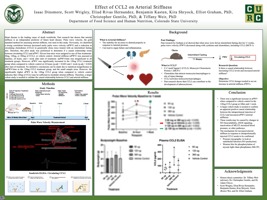
Category: Research Poster
Author(s): Isaac Dinsmore, Benjamin Kasten, Christopher Gentile, Eliud Rivas Hernandez, Elliot Graham, Kira Shryock, Scott Wrigley, Tiffany Weir, Yuren Wei
Presenter(s): Isaac Dinsmore
Mentors(s): Christopher Gentile, Tiffany Weir
Heart disease is the leading cause of death worldwide. Past research has shown that arterial stiffness is an independent predictor of future heart disease. Pulse wave velocity, the gold standard method for assessing arterial stiffness, was used in this study. Previously, we identified a strong correlation between decreased aortic pulse wave velocity (aPWV) and a reduction in circulating chemokines (CCL2) in genetically obese mice treated with an intermittent fasting diet. Therefore, this pilot study was performed to determine if a causal relationship exists between circulating CCL2 and aPWV. Eleven lean mice were assigned to one of four treatments: 60ug, 120ug, or 360ug of CCL2, or vehicle control. Arterial stiffness (aPWV) was assessed at baseline, 24 hours, and 1 week after start of treatment. ΔaPWV/time was insignificant in all treatment groups. However, aPWV was significantly increased in the 120ug CCL2 treatment group when compared to vehicle control at 24 hours (p.adj = 0.045) and 1 week (p.adj = 0.024) after start of treatment. No definitive conclusions can be made due to statistical insignificance in ΔaPWV/time in the 120ug CCL2 treatment group, and the small sample sizes. However, the significantly higher aPWV in the 120ug CCL2 group when compared to vehicle control indicates that 120ug of CCL2 may be sufficient to modulate arterial stiffness. Therefore, a larger cohort study is needed to validate the causal relationship between CCL2 and arterial stiffness.
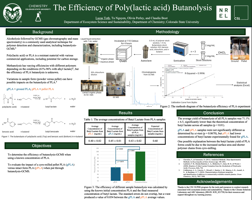
Category: Research Poster
Author(s): Lucas Toth
Presenter(s): Lucas Toth
Mentors(s): Claudia Boot, Nhat Minh Tu Nguyen
Butanolysis is a commonly used analytical technique designed to quantify the ester-containing polymers in a sample. The polymer undergoes acid-catalyzed butanolysis, breaking down into shorter chains and forming butyl esters. The resulting monomers are quantified using gas chromatography in line with mass spectrometry (GC-MS). In applying butanolysis for biologically produced esters in the polyhydroxyalkanoate class (PHA)s, there is uncertainty about the efficiency of the transformation and if final product is comparable to polymer concentrations in the biological matrix. This study serves to determine the efficiency of conversion of a type of PHA, polylactic acid (PLA), to butyl lactate using butanolysis-GC-MS with two forms of 4060D PLA. By doing so, the results obtained by the procedure can be referenced with increased accuracy in regard to the true PLA output from biological sources. The PLA is combined with n-butanol in an acidic environment with benzoic acid as an internal standard in an autoclave at elevated temperatures, esterifying the PLA to butyl lactate. Then, acid is removed from the butanol solution with a water wash before the sample of PLA is injected into the GC-MS for Skyline butyl lactate quantification. This process produces an average yield of 71.11% ± 6.52 of the samples from expected concentrations. These results indicate that the initial polymers don’t entirely break or that there may be monomer loss during esterification.
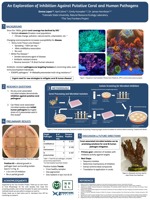
Category: Research Poster
Author(s): Emma Lopez
Presenter(s): Emma Lopez
A multitude of factors are severely threatening coral populations around the world. Anthropogenic disturbances, like climate change and pollution, are notable contributors. Changing the natural environmental conditions in which coral grows increases its susceptibility to disease. Thus, developing novel strategies to mitigate coral disease is becoming more and more urgent. Coral-associated microbes may present promising solutions to this disease threat. In this study, we aim to discover coral-associated microbial isolates that may exhibit antimicrobial activity against suspected coral pathogens. Furthermore, this threat of disease is translatable to the rising development of antibiotic-resistant pathogens targeting human populations. Given this, our study also evaluates inhibition against a surrogate strain for a clinically-relevant human pathogen, Klebsiella pneumoniae. We have developed an antimicrobial screening methodology, involving a microbial spotting technique, to visualize isolates that exhibit inhibition against the select pathogen target. Inhibition will be determined by an observable alteration in the target growth directly surrounding the isolate spot. Ultimately, by exploring possible microbial strategies for disease mitigation, this work will open doors to future experimental developments to protect coral and human health.
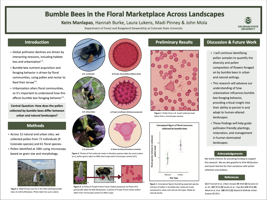
Category: Research Poster
Author(s): Keirs Manlapas, Hannah Burke, John Mola, Laura Lukens
Presenter(s): Keirs Manlapas
Mentors(s): Hannah Burke, John Mola
Bumble bees are generalist foragers that collect nectar and pollen from a wide range of flowers, often making distinct nutritional choices within what is available. Natural landscapes typically provide native floral communities, while urban areas contain a mix of cultivated and non-native plants that may differ in nutritional value. How bumble bees adjust their behavior in developed landscapes dominated by ornamental and invasive species remains unclear. Understanding these patterns is important for determining how urban floral communities can support pollinators and guide conservation strategies. We designed a study to examine bumble bee foraging across 12 sites in Fort Collins, Colorado, including residential areas, natural spaces, and managed gardens. To evaluate floral use relative to availability, we collected corbicular pollen from nine Colorado bumble bee species and compared pollen composition with floral surveys conducted at each site. All pollen and flower samples have been mounted on microscope slides for analysis. We will identify pollen grains based on size and morphology to determine plant species present in corbicular loads. By comparing collected pollen with available floral resources across land-use types, this study assesses how bumble bees interact with urban floral communities and supports pollinator-friendly management in human-dominated landscapes.
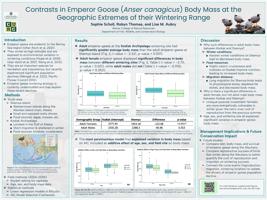
Category: Research Poster
Author(s): Sophie Scholl
Presenter(s): Sophie Scholl
Mentors(s): Lise Aubry, Robyn Thomas
The emperor goose (Anser canagicus) is a waterfowl species with unique wintering ecology as they migrate only slightly south of their summer breeding grounds in the Yukon-Kuskokwim Delta to non-breeding wintering grounds at relatively high latitudes along the Aleutian Islands and the Kodiak Archipelago. Recent declines in emperor goose populations highlight the importance of developing a more comprehensive understanding of emperor goose wintering ecology. This study explores differences of body mass as a proxy for individual fitness between two wintering sites that represent the geographic extremes of the emperor goose wintering distribution: Shemya Island and the Kodiak Archipelago. Amongst all adult geese, specifically adult females, the geese on Shemya had significantly lower body mass than those on Kodiak. Additionally, variation in body mass among emperor geese could be explained by additive effects of age class, sex, and field site. These findings indicate that differences in environmental conditions, food source availability, and migration distance to the different wintering sites between Shemya and Kodiak could explain why some demographic groups of emperor geese displayed lower body masses, and therefore lower fitness, at Shemya. Dedicating more resources to explaining variability in fitness experienced by emperor geese at their wintering sites is critical for understanding the best conservation and management strategies to prevent further population declines.
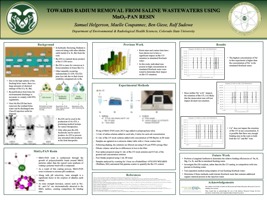
Category: Research Poster
Author(s): Samuel Helgerson, Benjamin Giese, Maelle Coupannec
Presenter(s): Samuel Helgerson
Mentors(s): Ralf Sudowe
Hydraulic-fracturing flowback wastewaters contain high concentrations of dissolved salts and alkaline-earth metals, including radium from the decay of naturally occurring uranium. The radium in this waste stream presents a potential hazard to human and environmental health and is required to be removed until its concentration is below EPA release limits before discharge . One potential removal pathway is by using a chromatographic resin with a high affinity for radium. Manganese dioxide–PAN (MnO₂-PAN) resin is widely used for radium sorption due to the strong affinity of manganese oxides for alkaline-earth metals. Radium and barium sorption onto MnO₂-PAN occurs primarily through precipitation and electrostatic interactions with macroporous resin substrate. These interactions are strongly influenced by pH and ionic strength. Optimal uptake occurs between pH 4 and 8. High ionic strength solutions, however, introduce significant competition from Na⁺, K⁺, Ca²⁺, and other cations. In this research, the radioactive isotope Ba-133 is used as an analogue of Ra-226 due to the high cost and low availability of Ra-226 tracers. While MnO₂-PAN can extract Ba-133 from water, its performance under highly saline conditions,₂-PAN can extract Ba-133 from water, its performance under highly saline conditions, which include hydraulic-fracturing flowback, batch experiments were conducted using simulated flowback water containing Ba-133. Resin mass and contact time were varied, and Ba-133 uptake was quantified by gamma spectrometry. Results showed that sorption was more dependent on resin quantity than contact duration, with a maximum recovery of roughly 8% under highly saline conditions. These findings suggest significant sorption inhibition in complex brines. Current research will investigate the effects of NaCl, KCl, and CaCl₂ concentrations and determine the resin’s maximum Ba adsorption capacity to better define the conditions under which MnO₂-PAN is effective for radium absorption.
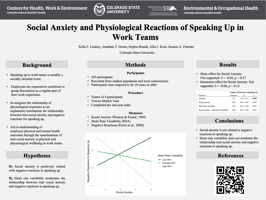
Category: Research Poster
Author(s): Sofia Lindsey
Presenter(s): Sofia Lindsey
Employees are expected to participate in and contribute to group discussions as a regular part of their work experience (Marks et al., 2002). Notably, speaking up in group discussions is a socially stressful event, and socially anxious individuals are particularly sensitive to stress reactions (Dickerson & Kemeny, 2004; Gramar et al., 2012). Previous research indicates that higher levels of trait social anxiety contribute to more negative reactions to socially stressful events (Gramar et al., 2012). One potential explanation for this relationship is a heightened physiological response when speaking up. Our current study investigates physiological stress responses as an explanatory mechanism for the relationship between trait social anxiety and negative reactions when speaking up. We collected EKG data from 126 four person teams while they completed a structured decision making task designed to reach a collective consensus. With this data, we will analyze individual heart rate variability (i.e., a physiological indicator of arousal, which can indicate changes in stress levels) to attempt to explain the relationship between trait social anxiety and negative reactions while speaking up in a team. This research contributes to our understanding of how trait social anxiety manifests in both physiological and psychological well being, specifically in the context of group dynamics. As teams are ubiquitous in the workplace (Devine et al., 1999), this research will aid in understanding employee physical and mental health outcomes.
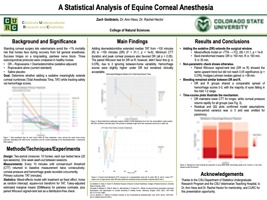
Category: Research Poster
Author(s): Zach Goldstein
Presenter(s): Zach Goldstein
Mentors(s): Ann Hess
Effective local anesthesia of the equine cornea is essential for standing ophthalmic procedures and helps avoid the ~1% mortality risk of general anesthesia in horses. Ropivacaine is a long-acting local anesthetic that produces regional sensory loss. Dexmedetomidine, an α₂-adrenergic agonist with sedative and analgesic properties, was evaluated as an adjunct to determine whether it prolongs ropivacaine’s effect. In a randomized two-period crossover study, ten healthy adult horses (one eye excluded for cataract) received dexmedetomidine plus ropivacaine (DR), ropivacaine (R), or saline (S) in each eye under light sedation, with treatments switched after a one-week washout. Corneal touch threshold (CTT) was measured using a Cochet–Bonnet esthesiometer, and corneal pressure was measured by tonometry at baseline and every 10 minutes until two consecutive baseline CTT readings defined recovery. Total time under anesthesia (TTA) was defined as the interval from injection to return to baseline sensitivity. Injection-site hemorrhage was scored on a 0–4 scale. Linear mixed-effects models with horse as a random intercept were fit to √TTA, duration of minimum CTT, and maximum corneal pressure. Treatment significantly affected √TTA (F(2,29)=31.09, p=5.9×10⁻⁸), with DR>R (Δ=3.42; p=0.028), DR>S (Δ=8.43; p=6.9×10⁻⁸), and R>S (Δ=5.01; p=0.0002). DR prolonged maximal numbness and increased maximum corneal pressure. Hemorrhage scores were higher with active drugs than saline but did not differ between DR and R. These findings support dexmedetomidine as an adjunct to ropivacaine for prolonged corneal anesthesia.
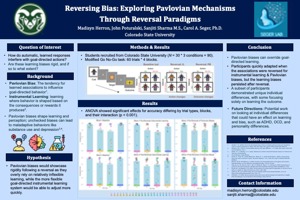
Category: Research Poster
Author(s): Madisyn Herron, John Poturalski
Presenter(s): Madisyn Herron
Mentors(s): Carol Seger, Sanjiti Sharma
Our decision-making processes are often shaped by Pavlovian Biases, however these responses have traditionally been understood as suboptimal in new and dynamic environments. These biases may lead to actions that can hinder an individual's ability to adjust to situations which can ultimately lead to suboptimal decisions leading to maladaptive behaviors. This study uses task reversal in order to explore the interaction between these biases and goal-directed learning. We hypothesized that Pavlovian biases would showcase rigidity following a reversal as they overly rely on relatively inflexible learning, while the more flexible goal-directed instrumental learning system would be able to adjust more quickly. The experimental design used a Go No-Go task, consisting of two phases: a replication of existing findings from Raab and Hartley (2020), followed by a task reversal paradigm to assess cognitive flexibility. The results indicated that instrumental learning showcased flexibility, as participants were able to successfully adjust their behavior after the reversal. In contrast, Pavlovian biases, or inflexible learning, caused a decrease in accuracy following the reversal followed by a slow adaptation, especially when conflict with instrumental goals arose. These results highlight the relatively rigid nature of Pavlovian biases, especially during reversal and their negative impact on decision-making and cognitive flexibility.Our decision-making processes are often shaped by Pavlovian Biases, however these responses have traditionally been understood as suboptimal in new and dynamic environments. These biases may lead to actions that can hinder an individual's ability to adjust to situations which can ultimately lead to suboptimal decisions leading to maladaptive behaviors. This study uses task reversal in order to explore the interaction between these biases and goal-directed learning. We hypothesized that Pavlovian biases would showcase rigidity following a reversal as they overly rely on relatively inflexible learning, while the more flexible goal-directed instrumental learning system would be able to adjust more quickly. The experimental design used a Go No-Go task, consisting of two phases: a replication of existing findings from Raab and Hartley (2020), followed by a task reversal paradigm to assess cognitive flexibility. The results indicated that instrumental learning showcased flexibility, as participants were able to successfully adjust their behavior after the reversal. In contrast, Pavlovian biases, or inflexible learning, caused a decrease in accuracy following the reversal followed by a slow adaptation, especially when conflict with instrumental goals arose. These results highlight the relatively rigid nature of Pavlovian biases, especially during reversal and their negative impact on decision-making and cognitive flexibility.
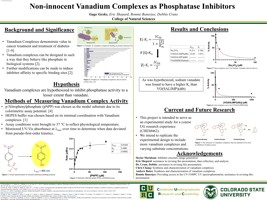
Category: Research Poster
Author(s): Gage Geske, Abhinandan Banerjee, Eric Shepard
Presenter(s): Gage Geske
Mentors(s): Debbie Crans
Vanadium complexes are potent transition state inhibitors for phosphatases; this effect is important in the treatment of diseases such as diabetes and cancer. We are developing an undergraduate teaching lab experiment based on the inhibition of phosphatase by a class of non-innocent vanadium complexes to be used in the inorganic instructional laboratory after the synthesis and characterization of the selected vanadium complexes.

Category: Research Poster
Author(s): Hope Thomas, Mia Ter Kuile-Miller
Presenter(s): Hope Thomas, Mia Ter Kuile-Miller
Mentors(s): Tanya Dewey
The Tiputini Biodiversity Station in the Amazon rainforest contains an incredible amount of biodiversity, and a lot of it is structured within the forest canopy levels. There are many differences between the canopy levels that could affect bird diversity between them. This study investigated how bird species diversity differs among different canopy levels, with an additional comparison of effort levels using acoustic monitors versus observational data. It was hypothesized that bird diversity would be greater at the top canopy level. Point counts were conducted daily for six days at each level of the canopy, including the river, middle, and top levels, for 30 minutes. Acoustic monitors were set up at each level and recorded continuously for 24 hours a day for six days. The results were statistically analyzed for species diversity. Results indicated a significant difference in bird diversity among the canopy levels. When it comes to point counts, the most diverse was the river, while the least was the middle, and based on the audio monitors, the least diverse was the river, with the most diverse being the top. These findings highlight the importance of vertical forest structure in maintaining avian biodiversity. Protecting intact canopy layers is critical for conserving tropical bird communities.

Category: Research Poster
Author(s): Porter Blei, Avery Lessard, Jacob Smoot, Luke Montrose, Madison Johnson, Rose Reiter
Presenter(s): Porter Blei
Mentors(s): Jacob Smoot, Luke Montrose
Wildland firefighters are an underrepresented occupational group exposed to numerous occupational health hazards that can negatively impact long-term health. Substantial literature has demonstrated that cardiopulmonary effects occur following chronic exposure to smoke particulates, including increased blood pressure, altered breathing patterns, and increases in cardiopulmonary inflammation. Recent observational data suggests wildfire smoke can also affect the neuroendocrine and reproductive systems. However, a large knowledge gap continues to exist regarding mechanisms. There has been evidence to indicate that PM2.5 and ultrafine particulate matter can cross the blood-testis barrier and blood-brain barrier, having a direct, indirect, or collaborative effect on the male reproductive system, but more data is still needed. To gain knowledge on this issue, we conducted a chronic smoke exposure study using a male mouse model over a three-month period to see how smoke particulate from burnt Douglas fir impacts these processes, specifically spermatogenesis in males. Mice were subjected to 40 mg/ml of burnt Douglas fir for 5 days a week over three months in a smoke exposure chamber at the Colorado State University campus. After the exposure, the mice were sacrificed, and we extracted tissues to examine different endpoints. We performed morphology assays, spermatozoa concentration, and H&E stains to grasp how spermatogenesis may be impaired. Preliminary findings are suggesting low levels of morphological abnormalities and low concentration in sperm from exposed mice. A possible explanation for this could be the high dosage and prolonged exposure could have selected for healthy spermatozoa with the ability to swim out of the epididymis.
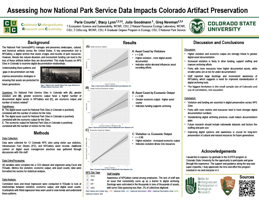
Category: Research Poster
Author(s): Paris Counts
Presenter(s): Paris Counts
Mentors(s): Stacy Lynn
We examine how the National Park Service documents and preserves cultural and natural resources through digital archives. Focusing on parks, monuments, recreation areas, and historic sites in Colorado, it aims to evaluate whether financial resources and visitation rates influence the number of documented assets. Threats such as natural disasters and funding instability endanger both physical assets and their preservation within national parks. NPGallery serves as a centralized digital archive that safeguards important documentation, irreplaceable landscapes, artifacts, and community heritage. Our goal is to connect national park economics and visitation patterns with data management practices. We aim to understand long-term conservation and documentation strategies by analyzing property statistics from Infrastructure fact sheets, the number of digital artifacts in NPGallery, and insights from digital data managers. Results indicate that visitation and economic activity are strongly linked to the count of digital assets. Increased funding leads to a higher likelihood of artifacts being preserved through NPGallery. However, many park representatives managing digital archives are unaware of the NPGallery system, which suggests that while more funding improves digital asset preservation, implementing a unified digital database similar to NPGallery could enhance the effectiveness of asset protection.

Category: Research Poster
Author(s): Pi Blehm
Presenter(s): Pi Blehm
Mentors(s): Anthony Roberts
Despite extensive comparative research on immigration attitudes, few studies examine how the structure of global migration patterns shape public opinion about immigration. This study addresses the gap in the literature by analyzing how country-level embeddedness in the global migration network influences individual evaluations of immigration across 80 countries in the twenty-first century. Drawing from longitudinal data from the European Social Survey, World Values Survey, and International Social Survey Programme, we estimate models to test the effect of a country’s centrality, economic homophily and heterophily, and geographic homophily and heterophily on that country’s opinion of migrants. We find that respondents in more central countries express stronger preferences for restrictive immigration policy, encourage greater social distance from immigrants, and have more negative beliefs about immigration’s consequences. In contrast, migration flows connecting economically and geographically similar countries are associated with more favorable views. Our findings show that public opinion about immigration is reflective of a countries’ position within the global migration system, underscoring the importance of macrostructural migration patterns in shaping contemporary immigration attitudes.
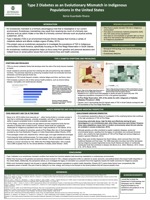
Category: Research Poster
Author(s): Xenia Guardado Rivera
Presenter(s): Xenia Guardado Rivera
Mentors(s): Melissa Raguet-Schofield
An evolutionary mismatch is a formerly advantageous trait that is maladaptive in our current environment. Evolutionary mismatches may result from receiving too much of a formerly rare stimulus such as caloric intake or too little of a formerly common stimulus such as physical activity. The prevalence of Type 2 Diabetes (T2D) has increased globally with disproportionate rates among population groups. Indigenous populations in the United States (U.S.) experience higher rates of T2D than Black and White populations. This paper’s objective is to review existing literature addressing evolutionary mismatch in relation to T2D, and to combine a biological and cultural perspective in understanding the etiology of chronic disease. I first review literature that demonstrates that genetics has been overemphasized as a risk factor in developing T2D. I then examine food insecurity in the Pine Ridge Reservation in South Dakota to better understand what foods are more widely available for Indigenous populations living on the reservation. These areas of focus demonstrate how social inequalities contribute to T2D disparities across populations. I found that the etiology of T2D cannot be determined by ethnoracial groups or genetic predispositions of individuals across populations. When ethnoracial groups were used to determine prevalence of T2D, a number of studies ignored the evidence that differential prevalence of T2D throughout population groups can be substantiated by non-genetic factors. While genetics influence how high the risk factors are for developing T2D, environmental contributors underlie the differences in T2D rates across populations in the U.S. Focusing on dismantling social inequalities can better improve the health outcomes of Indigenous populations in the U.S. rather than channeling resources into looking for genetic explanations that do not exist.
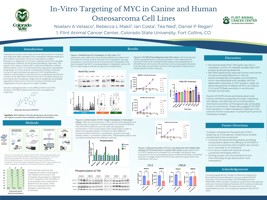
Category: Research Poster
Author(s): Noelani Velasco
Presenter(s): Noelani Velasco
Osteosarcoma (OS) is the most common bone cancer in humans and dogs that often develops into a metastatic disease leading to grim patient outcomes. Dogs naturally acquire OS at a higher frequency than humans, making canine OS a great translational model to study human OS. The protein MYC plays a critical role in cellular proliferation, differentiation, tumor microenvironment regulation, and disease progression in many cancers including OS. Studies in primary human OS demonstrate that genomic MYC amplification is linked to worse patient outcomes. Furthermore, MYC has been shown as a promising new therapeutic target, and its targeting has enabled regulation of the tumor immune microenvironment and suppression of tumor growth in rodent models. We hypothesize that MYC inhibition in OS cell culture will decrease cell viability and proliferation in vitro and modify immunomodulatory chemokine secretion. Primary or metastatic OS cell lines (n=5 per species) were profiled for genomic MYC copy number and protein expression via ddPCR and Western blotting, respectfully. All 10 cell lines were evaluated for viability and survival in response to MYC inhibition with MYCi975 via 2D monolayer drug gradient assays. Confirmation of target modulation (c-MYC and pT58 phosphorylation) and changes to immunomodulatory chemokine secretory profiles (CCL2, CXCL8, and TGFbeta) were evaluated via Western blotting and ELISA. We demonstrate MYC CNV gains are rare in metastatic canine OS, despite variably high MYC protein levels being observed; MYCi975 can effectively reduce viability and proliferation in all OS cell lines, but specific MYC protein reduction occurs in a cell-line dependent manner; and inhibition of MYC can reduce CCL2 and TGFbeta secretion in canine and human OS cell lines. MYCi975 shows promising direct and indirect inhibitory properties through impacting cell viability and altering immunomodulatory chemokine secretion at therapeutically achievable drug concentrations.
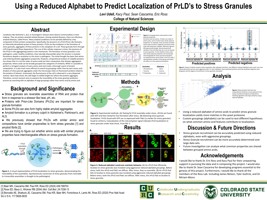
Category: Research Poster
Author(s): Levi Udell
Presenter(s): Levi Udell
Mentors(s): Eric Ross
Conditions like Alzheimers Disese and ALS involve proteins that misfold and aggregate to form stable amyloid fibrils. Prions are a subset of amyloid diseases in which these aggregates are infectious. Many prion proteins contain regions with similar amino acid compositions; these prion domains (regions) are responsible for prion activity. Interestingly, many non-prion proteins contain Prion-Like Domains (PrLDs), which are disordered segments that resemble prions. PrLDs are key mediators in the formation of stress granules, which are assemblies that form in the cytoplasm of cells in response to stress. The formation of stress granules is not pathogenic; under healthy conditions, they naturally disassemble when the stressor is resolved. The persistence of stress granules after the resolution of the stress is pathogenic. Traditionally, the ordering of amino acids within a protein has been considered critical for determining protein activity. However, PrLD recruitment to stress granules is primarily dependent on amino acid composition rather than amino acid order. Searches for proteins that closely match the composition of all 20 amino acids of known stress granule-localized PrLDs have allowed the identification of new stress granule PrLDs. However, certain amino acids have similar physical properties, which suggests that matching the frequency of all twenty amino acids may be overfitting the data; it may be more efficient to group similar amino acids. Therefore, my research aims to test whether the stress granule predictioncan be improved by searching with an alphabet of large groupings rather than amino acid by amino acid.
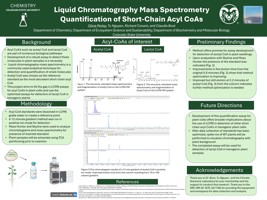
Category: Research Poster
Author(s): Olivia Perley
Presenter(s): Olivia Perley
Mentors(s): Claudia Boot
Acyl CoA’s such as Acetyl CoA are part of numerous biological pathways posing a necessity for the development of a robust assay to detect these molecules in plant samples. Liquid chromatography-Mass spectrometry is an analytical technique that is commonly used for detection and quantification of small molecules and has been previously used in methods for Acyl CoA esters. This project aims to fill the gap in LCMS assays for detection of these molecules in plant cells, as these are largely unresearched in comparison to mammalian cells. Analysis of these low abundance components in plant cells allows for greater understanding of the mechanisms that control various biological pathways. Obtained transgenic and wild type plant lines under-go extraction through partitioning in order to obtain material for the detection and quantification assay. Extracted material is then dissolved in a pH-suitable solvent and introduced to the LCMS system. Use of Acyl CoA standards to create a reference point followed by testing of wild type and transgenic leaves using a suitable LCMS method offers promise for assay development for detection of Acetyl CoA in plant seedlings, allowing for development of a more robust assay to detect these molecules in other plant organs. Development of a quantification assay for Acetyl CoA in plants offers broader implications about the use of LCMS in detection of other short chain Acyl CoA’s in transgenic plant cells.

Category: Research Poster
Author(s): Kylie Bigelow
Presenter(s): Kylie Bigelow
Mentors(s): Cookie Egret
My poster is reviewing a case study on the conservation status of the Nurse Shark and how fishing culture has put this species in danger. There are many different categories of fishing, and each type are prevalent in different countries. Legislation also plays a crucial role in conservation plans. The ties between culture and legislation are important to understand when making effective management plans. To tie everything together, different cultures impact the actions people make every day and tie into topics like conservation. Conservation cannot happen without accounting for human dimensions. People may think that their everyday actions do not have an effect on the environment, but as a society, we have a lot of power in how we shape the world around us. Opening the conservation to the community through public outreach and education about case studies like the Nuse shark can inform us on how to make better conservation plans. Conservation is not achieved through one person, but by the power and cooperation of many.
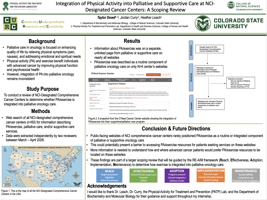
Category: Research Poster
Author(s): Taylor Dowd
Presenter(s): Taylor Dowd
Mentors(s): Heather Leach
Background: Physical activity (PA) and exercise are increasingly recognized as beneficial interventions for individuals with advanced cancer, improving physical function, reducing symptom burden (particularly fatigue and pain), and enhancing psychosocial well-being. These outcomes align with the goals of palliative and supportive care, which aim to optimize quality of life and maintain functional independence. Despite this alignment, integration of PA into palliative oncology services remains inconsistent. Exercise programs are often established for patients receiving curative treatment but are less commonly used in advanced disease due to safety concerns, limited infrastructure, and unclear care pathways. In addition, existing literature is fragmented across trials, program descriptions, and quality improvement reports, making it difficult to understand how PA is implemented in real-world oncology settings. Methods: This scoping review will map evidence on the integration of PA within palliative and supportive care services at National Cancer Institute (NCI)-Designated Cancer Centers in the United States. The review will follow the JBI framework and PRISMA-ScR guidelines. Eligibility will follow the Population–Concept–Context framework: adults with cancer receiving palliative or supportive care, interventions involving physical activity or exercise, and care delivered within or affiliated with NCI-Designated Cancer Centers. Searches will include MEDLINE, Embase, CINAHL, PsycINFO, Scopus/Web of Science, the Cochrane Trials Registry, and grey literature sources. Two reviewers will screen studies and extract data on service models, implementation factors, and reported outcomes. Expected Impact: This review will characterize how leading U.S. cancer centers integrate PA into palliative oncology care and identify gaps to guide future implementation and research.

Category: Research Poster
Author(s): Ben DuMais
Presenter(s): Ben DuMais
Mentors(s): George Wittemyer, Jesse Turner
Passive acoustic monitoring has become an increasingly important tool for studying and conserving African elephants, particularly for detecting and analyzing low-frequency rumble vocalizations that play a central role in elephant communication. Automated rumble identification models have been developed to assist with large-scale acoustic analyses, but their effectiveness can vary across datasets and individuals. This study evaluates the efficacy of existing elephant rumble identification models using acoustic recordings of three adult African elephants (two females and one male) from Samburu National Reserve, Kenya. Audio recordings were manually reviewed and annotated using Raven Pro software, with particular focus on identifying rumble vocalizations. These annotations served as the ground-truth dataset. Model detections generated by previously developed rumble identification algorithms were then compared to the manual annotations. A custom script was used to calculate precision and recall, defining a true positive as any instance where a model detection temporally overlapped with a manually annotated rumble event. False positives and false negatives were identified accordingly. Performance metrics were calculated both for each individual elephant and across the combined dataset. The results provide insight into the strengths and limitations of current elephant rumble identification models and highlight considerations for improving automated acoustic monitoring of elephant communication. These findings contribute to the development of more accurate bioacoustics tools for wildlife research and conservation.
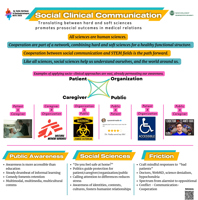
Category: Research Poster
Author(s): Colin Hoffman
Presenter(s): Colin Hoffman
Promoting more prosocial, engaged communication in medical communication is a key component of public health. Identifying key communicating parties as the public, patients, caregivers, and organizations reveals modalities and examples of each of theses communications. Utilizing social sciences as well as STEMM sciences in an interdisciplinary fashion, to be translated to non-professionals is key in patients feeling more secure in engaging with the medical community. I have identified each of these communication modalities with visual examples and a simple matrix illustrating them. I also have sections on effective ways to propagate public awareness of medical relationships. We also have examples of social science practices being put to utility in medical spaces, demonstrating the use of soft sciences. I also identified sources of friction, "bad" patients, science denialism, and ways to overcome conflict into successful communication and cooperation.
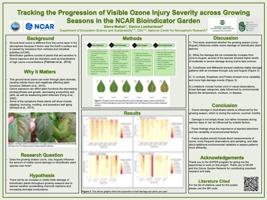
Category: Research Poster
Author(s): Sierra Mattair
Presenter(s): Sierra Mattair
Mentors(s): Danica Lombardozzi
Ozone concentrations in the atmosphere are hazardous to both plant species and animals, as well as humans. Specifically, some plants develop foliar damage when ozone concentrations are high and are called bioindicator plants, which will be the observed plants of this study. We will examine four species observed over different seasons spanning five years. We used data from the NCAR Ozone Garden and used coding within RStudio to show the relationships between year, plant species, and level of damage. The results showed high levels of damage increasing during the summer due to high ozone concentrations and the severity of damage vary by plant species. The severity of damage for each plant type also varied across years due to different ozone concentrations each year. These findings would suggest that seasonal climate, specifically during summer growing seasons, influences and amplifies ozone stress in bioindicator plant species. Understanding season-specific and species-specific vulnerabilities can help monitor efforts as well as have a better ability to predict future climate-driven exposure to ozone.
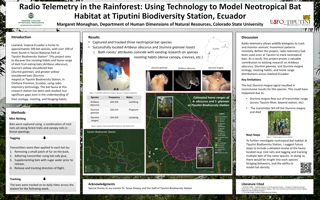
Category: Research Poster
Author(s): Margaret Monaghan
Presenter(s): Margaret Monaghan
Mentors(s): Tanya Dewey
Around the globe, bats play a fundamental role in maintaining ecosystem health through ecosystem services, including pollination, pest control, nutrient cycling, and seed dispersal. Bat species diversity is highest in tropical areas, including Ecuador's Amazon Basin. Lowland, tropical Ecuador is home to approximately 200 bat species, with over 100 of them residing in Yasuni National Park at Tiputini Biodiversity Station. The bat fauna at this research station has been well-studied, but significant gaps exist in understanding of their ecology, roosting, and foraging habits. This project aims to understand the roosting and foraging habits of dark fruit-eating bats (Artibeus obscurus), Gianna’s yellow-shouldered bats (Sturnia giannae), and greater yellow-shouldered bats (Sturnira magna) at Tiputini Biodiversity Station, in Orellena Province, Ecuador. Before this project, only two studies had used radiotelemetry to study bats at this station, highlighting a gap in research on bats in the neotropics.
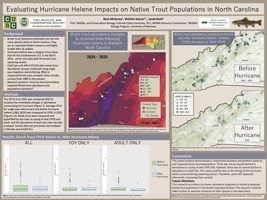
Category: Research Poster
Author(s): Rose McVaney
Presenter(s): Rose McVaney
Mentors(s): Yoichiro Kanno
The purpose of this study is to analyze the impacts of Hurricane Helene on native trout populations in North Carolina. Hurricane Helene was a category 4 hurricane that swept through the Southeastern United States in the Fall 2024, impacting many local rivers and ecosystems in the western North Carolina mountainous region. Historic and current fish population surveys have been conducted in western North Carolina by the North Carolina Wildlife Resources Commission. Using a Before-After-Control-Impact (BACI) design, the objective of this project is to evaluate impacts on native brook trout Salvelinus fontinalis populations before and after the hurricane and assess whether population impacts differed spatially across western North Carolina due to varying precipitation levels and downstream effects. This analysis will inform recovery and restoration efforts of aquatic species and populations impacted by Hurricane Helene.
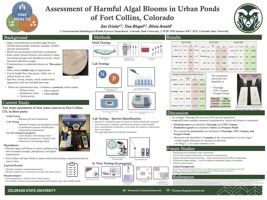
Category: Research Poster
Author(s): Tina Blugel, Savannah Crisler
Presenter(s): Tina Blugel
Mentors(s): Olivia Arnold
Harmful algal blooms (HABs) are an increasing global concern due to their potential to produce toxins that threaten human, animal, and environmental health. This study evaluated four urban ponds in Fort Collins, Colorado (Pine Ridge, Prospect Ponds, Edora Lake, and the CDC Campus pond) to investigate relationships among opportunistic cyanobacteria, nutrient enrichment, and toxin presence. Field measurements of temperature and pH were collected, and laboratory analyses were conducted to determine total nitrogen and total phosphorus concentrations. Microscopic evaluation of water samples was used to identify cyanobacterial taxa and assess morphology indicative of potential toxin production. Rapid immunoassay test kits were employed to detect the presence of microcystin. Dolichospermum spp. were identified in Pine Ridge and CDC Campus samples, while Planktothrix agardhii was observed at Prospect Ponds and Edora Lake. Microcystin was detected in three of the four ponds, with concentrations ranging from 5 µg/L to 19 µg/L. These results exceed the U.S. Environmental Protection Agency’s recreational water quality guideline of 5 µg/L for microcystin, indicating potential public health risks associated with recreational exposure. The findings suggest that eutrophication and nutrient enrichment may promote HAB occurrence in Fort Collins’ urban waters. Future directions include expanding the sample size, conducting ELISA assays to quantify specific cyanotoxin concentrations, performing seasonal resampling, and implementing in vitro cytotoxicity assays to evaluate health impacts. Overall, this project contributes to understanding local HAB dynamics and supports ongoing efforts to protect public and environmental health in northern Colorado.

Category: Research Poster
Author(s): Mariela Sierra-Monarrez, Heather Leach, Isabella Jurewicz, Jessica Gonzalez-Voller
Presenter(s): Mariela Sierra-Monarrez
Latina cancer survivors experience higher levels of emotional distress and poorer quality of life when compared white cancer survivors. This may be due to cultural, structural or socioeconomic barriers to survivorship services such as mental health counseling or lifestyle interventions like physical activity (PA) programs. While there is strong evidence suggesting that mental health counseling and physical activity (PA) is beneficial during and after cancer treatment, Latina cancer survivors are underrepresented in cancer survivorship. Therefore, the purpose of this study was to examine the initial feasibility and acceptability of a combined mental health and PA interventions specifically designed for Latina women undergoing or recently completing their cancer treatment. Methods: This was a single-arm, pre/post design study to examine feasibility and acceptability of the Latinas Integrating Fitness and Therapy (LIFT) intervention. LIFT consisted of 8-weeks of stepped-care mental health counseling and group-based virtually delivered PA sessions once per week. Participants were Latina cancer survivors residing in Colorado who were currently undergoing or within six months of completing chemotherapy and/or radiation therapy. All study procedures were offered in English and Spanish, based on the participant’s preferred language. Feasibility outcomes consisted of the number of individuals that were accrual, retention and adherence. Acceptability was assessed using a program evaluation questionnaire. Results: At the time of the presentation, results will include recruitment and enrollment outcomes. Reasons for withdrawal if necessary, will also be included. The adherence will be reported as the number of exercise and counseling sessions attended out of the number that were scheduled. Safety will be evaluated through reported adverse events, and we will be assessing participant's acceptability and satisfaction through the post-LIFT evaluation surveys. Conclusions: These findings will help determine the effectiveness of the recruitment strategies, as well as identifying the key barriers that may present to our population of interest.
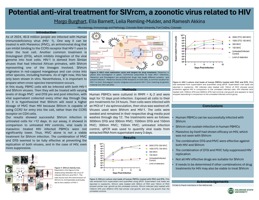
Category: Research Poster
Author(s): Margo Burghart, Ella Barnett, Leila Mulder
Presenter(s): Margo Burghart
Mentors(s): Ramesh Akkina
As of 2024, 40.8 million people are infected with Human immunodeficiency virus (HIV- 1). One way it can be treated is with Maraviroc, an antiretroviral drug that in combination with other medications can inhibit the CCR5 receptor that HIV-1 uses to enter the host cell. HIV-1 is derived from Simian immunodeficiency viruses that had infected African primates, with SIVrcm representing one of the lineages involved. SIVrcm originates in red-capped mangabeys and can cross into other species, including humans. As of right now, this has only ever occurred in vitro. Nevertheless, it is important to prepare if cross-species transmission occurs. In this study, MOLT-4 cells will be infected with both HIV-1 and SIVrcm viruses. Then they will be treated with varying levels of Maraviroc, with supernatant collected every other day through Day 7. It is hypothesized that SIVrcm will need a higher dosage of Maraviroc than HIV because SIVrcm is capable of using CCR2 for entry into the cell, rather than the CCR5 receptor on CD4 cells. In our assay, it showed in comparisonCURC abstract.docx to untreated HIV controls, viral loads in maraviroc treated HIV infected MOLT-4s were lower. However, further investigation is required to determine if maraviroc is a viable treatment against SIVrcm in MOLT-4 cells.
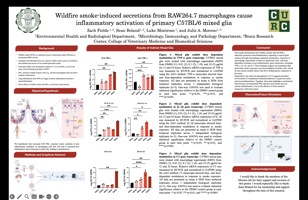
Category: Research Poster
Author(s): Zachary Fields, Julie Moreno, Luke Montrose
Presenter(s): Zachary Fields
Mentors(s): Julie Moreno
Zach Fields 1, 3, Sean Boland 2, Luke Montrose 1, and Julie A. Moreno 1, 3 1Environmental Health and Radiological Department, College of Veterinary Medicine and Biomedical Sciences, Colorado State University, Colorado State University, Fort Collins, Co 80525 2Microbiology, Immunology, and Pathology Department, College of Veterinary Medicine and Biomedical Sciences, Colorado State University, Colorado State University, Fort Collins, CO 80525 3Brain Research Center, College of Veterinary Medicine and Biomedical Sciences, Colorado State University, Fort Collins, CO 80525 Wildfire smoke (WFS) in the environment is a large source of particulate matter (PM) exposure, due to increased wildfire activity. Smoke resulting from these conditions have been associated with respiratory and neurological outcomes derived from increased inflammation in the lungs causing systemic inflammation and leading to neuroinflammation in the brain, but the direct outcomes in the brain remain unclear. To understand the effects of the 2.5m PM fraction (PM2.5) on the inflammatory signaling of the brain we established an in vitro indirect glial exposure method using PM2.5 ¬generated from a 50:50 mixture of Eucalyptus: Manzanita (E/M)—a common wildfire smoke source in California and Australia. We hypothesize that increased E/M PM2.5 exposure elicits secretion of pro-inflammatory mediators in macrophage cells that will lead to increased pro-inflammatory gene transcripts in glial cells. In this experiment supernatants from murine RAW264.7 macrophages exposed to WFS PM2.5 doses ranging from 0.01-10 ug/mL media was collected 24 hours later and stored at –80C for exposure to glia cultures. Using primary C57BL/6 mixed glia, we exposed the cells to the various macrophage supernatants ¬dosed with WFS PM2.5 for 24 hours. Following exposure we collected cell lysates, isolated RNA and performed cytokine gene profiling of IL-1b, TNF-a,, C3, C1QA, CCL2, and CCL5 using quantitative real-time PCR (qPCR) with GAPDH as our loading control. We are also performing immunocytochemistry to observe the expression of the inflammatory signaling pathway transcription factor subunit, p65, in the mixed glial cultures. Our results show how exposure of the macrophage supernatant on mixed glial cultures generated upregulation of proinflammatory gene transcripts such as IL-1b, C3, CCL2, CCL5 and TNF-a at the 24-hour time point. Currently we are analyzing the p65 nuclear translocation in these glial cells. Overall, our findings show that indirect exposure to wildfire smoke PM2.5 macrophage supernatant increases inflammatory pathway activation and protein expression in mixed glia. This foundational in vitro work allows for us to develop hypotheses for potential studies investigating specific neuroinflammatory signaling molecules in vivo to identify the long-term effects of WFS PM2.5.
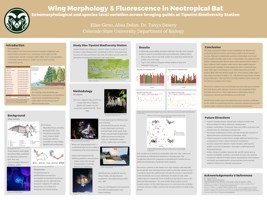
Category: Research Poster
Author(s): Alisa Dolan, Elise Geno
Presenter(s): Alisa Dolan
Mentors(s): Tanya Dewey
This research project investigates the relationship between wing morphology, ecological niche, and fluorescence patterns in bats captured in the neotropical region of the Ecuadorian Amazon at the Tiputini Biodiversity Station. Bats occupy an incredibly diverse range of environmental roles, allowing them to present in one of three main dietary guilds for the purposes of our research: frugivory, carnivory, and nectivory. Some species are ecological specialists, while others exist in a more generalist capacity based on food availability and behavioral/morphological flexibility. The primary objective of this study to determine whether bat species occupying correlating ecological niches exhibit convergent wing characteristics and whether fluorescence patterns show consistent similarities and variations across species and dietary groups. Bats were captured utilizing ground and canopy mist nets during evening sampling windows, and subsequentially identified using physiologic measurements consistent with known species morphological data. Wing membranes and associated skeletal features were photographed on a standardized lightbox to measure structural features such as wing area, aspect ratio, degree of ossification, and any abnormalities in the individual's physiology. From this, we hypothesize that species with similar feeding strategies will display comparable wing structures that reflect shared ecological parameters. Further, captured bats were examined under ultraviolet light to document fluorescence across body regions. Given the limited existing research on this field, fluorescence was recorded qualitatively by presence or absence, anatomical location, and apparent intensity via visual data. We anticipate that certain species or dietary guilds will exhibit consistent fluorescence patterns, while others may show minimal or no fluorescence.
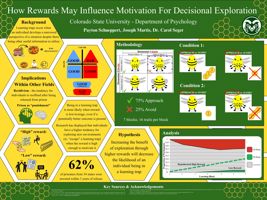
Category: Research Poster
Author(s): Payton Schueppert, Joseph Martis
Presenter(s): Payton Schueppert
Mentors(s): Carol Seger
Learning traps occur when an individual develops a narrowed perspective of a situation despite there being other useful information to utilize. Previous research has characterized traps with overly selective attention as well as quick, yet poorly informed, decision making. Literature on behavioral adaptation has emphasized the importance of reward and punishment intensities on promoting the development of new behavior, ie. “escaping” a learning trap. This can be applied to recidivism, the tendency of an individual to reoffend after being released from prison. It is common for former inmates to go back to a life of crime due to familiarity. In these scenarios, narrowed beliefs may influence this decision-making behavior. I believe learning-traps may be a factor in recidivism and the effectiveness of post-release rehabilitation programs. My study aims to manipulate the amount of reward/punishment that participants receive for correct/incorrect actions. Research has displayed that individuals have a higher tendency for exploring new options/environments when the reward is high enough to motivate it. This research suggests that, unless a high reward is present to motivate individuals to influence behavior, individuals tend to repeat previous behaviors, even if the possibility of a better outcome is present. I hypothesize that by increasing the benefit of exploration through higher rewards, individuals will be less likely to fall into, and stay in, a learning trap.

Category: Research Poster
Author(s): Ruby Correa
Presenter(s): Ruby Correa
Mentors(s): Samantha Conroy
This study examines how gender and motivation to learn interact to predict perceived utility of conflict management training. Drawing from Social Role Theory and Expectancy Theory, the study proposes that motivation to learn influences how individuals evaluate the usefulness of training programs. Results indicate a significant interaction between gender and motivation to learn. When motivation to learn was high, gender differences in perceived training utility disappeared. However, when motivation was low, gender differences emerged, with women perceiving the training more positively than men. Additionally, men with high motivation to learn reported the greatest perceived utility from the training. These findings suggest that women may perceive interpersonal skill training as inherently valuable, whereas men may require higher motivation to engage with and benefit from such training. The results highlight the importance of fostering motivation to learn in training environments, particularly for participants who may not initially perceive interpersonal training as relevant or beneficial.

Category: Research Poster
Author(s): John Zembeck
Presenter(s): John Zembeck
Mentors(s): Colleen Burke
This thesis integrates evidence-based sports nutrition with culinary application to empower athletes through strategic nutrient timing and accessible meal preparation. Drawing on current research and personal experience in athletics and culinary science, it addresses common barriers to optimal fueling such as time constraints, cost, knowledge gaps, and psychological stress. This will also offer practical solutions tailored to collegiate athletes. The framework centers on four critical fueling windows: breakfast, pre-workout, post-workout, and before bed, each supported by physiological rationale and targeted recipes. Emphasis is placed on calculating energy and macronutrient needs using methods such as the Mifflin-St Jeor equation and activity multipliers, while highlighting the importance of consistent eating patterns, micronutrient adequacy, and individualized experimentation. Recipes are designed to be nutrient-dense, budget-conscious, and performance-enhancing, with adaptations for varied schedules and training loads. By merging scientific insight with culinary creativity, this resource aims to foster sustainable fueling habits that enhance performance, recovery, and long-term athlete health.

Category: Research Poster
Author(s): Raihan Zrigan, Ella Barnett, Leila Mulder
Presenter(s): Raihan Zrigan
Mentors(s): Ramesh Akkina
Testing the Efficacy of Tenofovir Alafenamide (TAF) Against SIVrcm, A Potential Zoonotic Disease. Raihan Zrigan, Ella Barnett, Leila Mulder, Ramesh Akkina Department of Microbiology, Immunology, and Pathology, Colorado State University Simian immunodeficiency viruses are viruses that naturally infect nonhuman primates. These viruses gave rise to HIV through multiple cross-species transmission events, eventually crossing into humans. Although SIVrcm’s natural host is the red-capped mangabey, transmission of this virus into humans is possible. Because of this, it is important to know whether HIV drugs can also work against SIVrcm. This project focuses on testing Tenofovir alafenamide (TAF) against SIVrcm. TAF is already known to work well as a pre-exposure prevention drug against HIV-1, HIV-1 will be used as a positive control in this study. Human PBMCs were treated with TAF before being exposed to the virus. Treated cells were compared to untreated cells to see how well the drug inhibited viral growth and protected CD4+ cells. We measured viral loads in treated infected PBMC cultures compared to infected/untreated cultures using qPCR. QPCR analysis showed reduced viral RNA levels in TAF-treated cultures compared to untreated infected PBMC controls. We used flow cytometry to determine the presence of CD4+ T cell depletion in treated infected cells by comparing them with uninfected PBMCs. We observed that in HIV-infected cultures treated with higher doses of TAF, CD4+ T cell levels were comparable to uninfected controls.
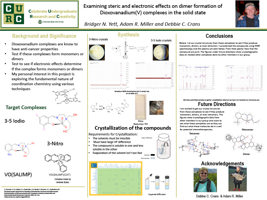
Category: Research Poster
Author(s): Bridger Yett
Presenter(s): Bridger Yett
Mentors(s): Adam Miller, Debbie Crans
Authors: Bridger N. Yett, Adam R. Miller and Debbie Crans Purpose and project: Dioxovanadium(V)(N-(salicylideneaminato)-N’-(2-hydroxyethyl)-1,2-ethanediamine) [VO2(HSHED)] primarily forms dimers in the solid state. There are 26 related structures in the Cambridge Crystal Database, almost all of which are dimers in the solid state. We have previously synthesized a 3-tert-Butyl analogue that formed a monomer in the solid state. We are interested in whether substitution patterns, either through steric or electronic effects, can modify this preference. Approach: We will synthesize complexes to expand upon our library of compounds and examine trends in the solid state. The complexes will be chosen with substituents in the 3 and/or 5 position on the aromatic ring. We are therefore interested in adding some electron withdrawing and sterically bulky groups and examining their effect on dimerization. We propose to synthesize 3-nitro, 3,5-adamantyl, and 3,5-iodo analogues and determine whether these substitutions influence dimerization and compare these to complexes we have already synthesized.

Category: Research Poster
Author(s): Dimitry Volchansky
Presenter(s): Dimitry Volchansky
Mentors(s): Christopher Patrick
Abstract: Guillain-Barré syndrome (GBS) is a rare autoimmune condition affecting 1 in 100,000 people worldwide. While the cause of GBS is still unknown, evidence suggests that symptoms emerge following a specific type of viral or bacterial infection. GBS symptoms occur when the body’s immune system mistakenly attacks the protective coating around the nerves, called myelin, which allows electrical signals to travel quickly between the brain and muscles. Specifically, in GBS, the immune system targets myelin surrounding motor neurons in the peripheral nervous system, disrupting communication between the brain and body. Additionally, in some variants of GBS, the immune system may attack the motor neurons themselves. Whether the myelin or peripheral nerves are damaged, both mechanisms impair the transmission of neural signals to the muscles, resulting in muscle weakness and balance impairment. These impairments place patients with GBS at increased risk of falls and other adverse events. Treatment for GBS typically focuses on suppressing the immune system’s response to allow for recovery. However, in addition to pharmacological intervention, physical therapy is needed to help patients regain balance and return to everyday activities. Given the variety of rehabilitation techniques available and the different forms of GBS, questions remain about which rehabilitation approaches are best suited for each presentation. To address this, this project reviewed the existing literature on balance rehabilitation interventions for GBS to synthesize the available evidence.
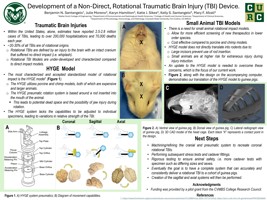
Category: Research Poster
Author(s): Benjamin Santangelo, Julie Moreno, Karyn Hamilton, Katie Sikes, Kelly Santangelo
Presenter(s): Benjamin Santangelo
Mentors(s): Maryam Afzali
Traumatic brain injuries (TBIs) remain prevalent, with roughly 224,000 cases per year across all ages. TBIs are defined as disturbances in brain function caused by extreme motion resulting in the brain contacting the skull, such as a blow to the head or whiplash. TBIs in animal models are divided into two categories: the direct impact model, which has been characterized in a variety of models, and the rotational model, which is less developed, particularly in small mammals. Notably, however, 25–30% of all TBIs are of rotational origin. Currently, our university lacks a device capable of administering a consistent rotationally based TBI in any species. Therefore, the goal of this project involves understanding the existing methodologies for this form of TBI and designing a device that can deliver a clinically relevant injury to rodents (with a focus on guinea pigs) for the progression of basic and translational research. Current models use high-functioning actuators to induce TBIs in porcine and non-human primate models and scaling these systems down for small mammals will require 3D modeling. The designed system will be compatible with three different rotational models—coronal, sagittal, and axial—to offer the full range of possible injuries. The system will initially be tested via computer modeling and cadaver studies to ensure that the skull and neck of the specimen can withstand the applied trauma. The development of this device will lay the groundwork for future studies and advance the understanding of TBIs through the standardization of an additional experimental model.

Category: Research Poster
Author(s): Trey Brauchler, George Brauchler
Presenter(s): Trey Brauchler
Mentors(s): Kelly Santangelo
Trisomy 21, the cause of Down syndrome (DS), is a common chromosomal abnormality, wherein there is an extra copy of chromosome 21. It affects about 1 in 700 live births in the U.S. and is known to influence the musculoskeletal system via decreased muscle and bone strength, hyperflexible joints, and spinal column deformities. One common mouse model of DS is the Dp16 strain, in which a portion of the largest region of HSA2 genes is duplicated. We aimed to determine whether musculoskeletal abnormalities similar to those documented in people are present in this mouse model of DS. To begin understanding which of the genes contribute to the joint abnormalities, we also used the Dp162xIfnrs mouse model, which contains only 2 copies of the interferon receptor (Ifnr) to see if this normalization ameliorates these changes. Briefly, formalin fixed and paraffin embedded, whole knees were sectioned coronally and stained. Knee joints were characterized based on characteristics that were seen across all groups, including displaced patellas, altered growth plate structure, and condylar malformations. The percentage of abnormalities was then compared between individual groups via Fisher’s test. Out of 12 images from the wild-type control group, three showed abnormality (25%). In the 13 images in the Dp16 group, six exhibited abnormality (46%). Only two of the nine images from the Dp162xIfnrs group demonstrated abnormality (22%). While the Fisher’s test did not demonstrate statistical significance between groups, there was sufficient evidence that inclusion of additional animals across age and sex may be warranted.

Category: Research Poster
Author(s): Ember Albrecht
Presenter(s): Ember Albrecht
Mentors(s): Sophia D'Agostino
Most rabbit cognition research focuses on neuroscience and associative learning, with relatively few behavioral studies examining cognitive flexibility via voluntary participation in learning tasks. Reversal learning is commonly used to assess cognitive flexibility by testing whether animals can learn an initial, rewarded cue and adjust after the previously rewarded cue is changed. As part of an ongoing reversal learning study, we exposed a group of domestic rabbits to a color discrimination task followed by a spatial discrimination task and compared their learning performance to a group of rabbits that only participated in the spatial discrimination task. Rabbits exposed to the more variable color discrimination task did not meet criterion but subsequently learned the spatial discrimination rule. Rabbits without prior learning experience showed higher overall pre-reversal performance (p<0.05) in the spatial discrimination task but had a greater drop in performance at reversal disruption than the rabbits exposed to the color discrimination task (p<0.05). Rabbits with a learning history reached reversal criterion in a session range comparable to, and slightly lower than the other group (p=0.0709). Rabbits with prior learning experience showed patterns consistent with greater learning efficiency and flexibility at reversal disruption. Rabbits without prior learning experience had higher performance following rule acquisition but experienced a greater drop in performance at reversal disruption. Our results suggest that learning history may shape distinct aspects of behavior such as rule acquisition, decision-making stability, learning speed, and cognitive flexibility.
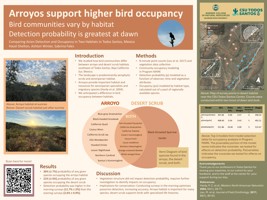
Category: Research Poster
Author(s): Hazel Shelton, Ashton Winter, Sabrina Fales
Presenter(s): Hazel Shelton
Mentors(s): Dana Winkelman
Desert ecosystems vary in vegetation structure, resource availability, and microclimate, which influence avian community composition and habitat use. Studies in the Chihuahuan and Sonoran Deserts have found differences in the breeding bird communities and habitat associations between scrubland and riparian habitats. Our study focuses on how bird occupancy and detection probability vary between surveys in arroyo and upland desert scrub habitats southeast of Todos Santos, a coastal town in Baja California Sur, Mexico. We used a modified point count protocol to survey randomly selected sites in arroyos and desert scrub and collected data about the vegetation structure at each point. We then created models in Program MARK to identify the variables that most significantly influenced detection probability and to quantify the occupancy of each habitat type. We found that the arroyos had higher occupancy than the desert scrub. Detection probability was greater in surveys done within two hours of dawn than those conducted within two hours of dusk. We found that vegetation structure did not meaningfully impact detection probability in either habitat. Arroyos support greater bird diversity, including species that use the arroyo specifically. Desert scrub supports species that we did not detect elsewhere, suggesting that some species rely on that habitat specifically. Thus, arroyo and desert scrub habitats should both be protected, despite the relatively low species richness in the desert scrub. Future studies would benefit from prioritizing morning surveys if the desired outcome is to maximize passerine detection.
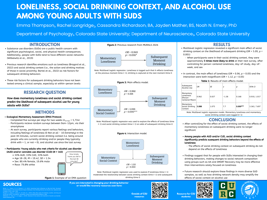
Category: Research Poster
Author(s): Emma Thompson, Cassandra Richardson, Jayden Mather, Noah Emery, Rachel Longridge
Presenter(s): Emma Thompson, Rachel Longridge
Mentors(s): Cassandra Richardson, Noah Emery
Substance use disorders are a public health concern with significant psychological, social, and physical health consequences (Witkeiwitz et al., 2019). Previous research identifies loneliness (Bragard et al., 2022) and peer drinking behaviors (Bartell et al., 2022) as risk factors for subsequent drinking. However, these relationships have not been tested among individuals with alcohol use disorder (AUD) or cannabis use disorder (CUD). This study uses ecological momentary assessment to examine within-person associations between momentary loneliness, social drinking context (i.e., being around people an individual typically drinks with and/or around people currently drinking), and subsequent alcohol use. Young adults who met criteria for AUD, CUD, or both (N=163) completed 5 surveys daily for 2 weeks (observations=5,720) where they reported feelings of loneliness in the past 30-minutes, current social context, and alcohol use since the previous survey. Multilevel logistic regression revealed a significant main effect of social drinking context on the likelihood of subsequent drinking (OR=5.09, p<.001), such that when participants were in their social drinking context, they were approximately 5 times more likely to drink in the following hours. In contrast, the main effect of loneliness (OR=0.96, p>.05) and the interaction were both insignificant (OR=1.12, p>.05). These results demonstrate that, among people with AUD and/or CUD, social drinking context significantly predicts subsequent drinking behavior beyond the effects of loneliness. Findings suggest that interventions targeting social networks may be more effective than those focused solely on negative affect.
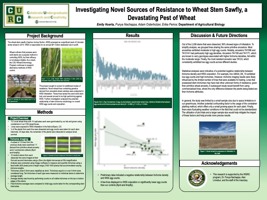
Category: Research Poster
Author(s): Emily Huerta, Adam Osterholzer, Punya Nachappa
Presenter(s): Emily Huerta
Mentors(s): Punya Nachappa
The wheat stem sawfly (Cephus cinctus, WSS) is a major wheat pest that reduces yields by damaging stem tissues and causing lodging. It is estimated that WSS damage results in a $41 million loss every year in CO. Its larvae are stem-boring and well-protected from insecticides, making them difficult to manage. Currently, the best options for growers are wheat cultivars with semi-solid stems. These lines exhibit increased pith expression, which hampers larval survival. However, this trait is not always reliable and there has been interest in supplementing the resistance mechanisms available to growers. The CSU Wheat Entomology Program sought to address this issue by screening wheat lines with potentially novel sources of resistance. These lines utilize genetics from primitive wheatgrass ancestors and do not possess the semi-solid stem trait. Over the course of this study, the experimental plants were grown in a greenhouse and then exposed to WSS infestation at Byers, CO. Egg counts and subsequent larval survival were recorded for each line in the screening. Several lines were high-performing and merited future study to investigate their underlying resistance mechanisms. Our lab also imaged select lines with stem trichomes, hypothesizing that increased trichome density would result in lower WSS egg counts. While we observed a negative correlation between trichome density and oviposition, further screening is required for verifying the effect of this trait.

Category: Research Poster
Author(s): Kate Kimball
Presenter(s): Kate Kimball
Mentors(s): Emily Gallichotte
St. Louis encephalitis virus (SLEV) is an orthoflavivirus that infects birds and is transmitted by Culex mosquitoes. However, vector competence (ability of a vector to transmit a virus) varies by species, virus strain and other factors. SLEV was first detected in 1933 in St. Louis, Missouri. It then spread and became endemic throughout the U.S. until the early 2000s. In 2025 SLEV was detected in Fort Collins, re-emerging after over 20 years, posing a risk to both animal and human health. With this re-emergence and likely establishment in Colorado, it is critical to better understand SLEV transmission by mosquitoes, especially locally abundant species. We sought to identify all published experimental SLEV vector competence studies, standardize results, conduct meta-analyses, and define variables impacting outcomes. We conducted a search and identified 109 papers, which were screened using study criteria, resulting in 29 papers. Raw metadata was extracted and standardized, allowing for comparisons. The earliest paper was from 1935 (2 years after SLEV’s discovery), and the most recent was from 2024, spanning almost 100 years. In these papers, SLEV was experimentally tested in 33 mosquito species. Future analyses will compare infection and transmission rates across mosquito species and other variables, to gain a clearer understanding of SLEV vector competence and help inform local transmission risk.
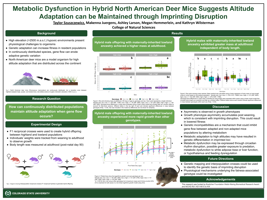
Category: Research Poster
Author(s): Taylor Szuszczewicz
Presenter(s): Taylor Szuszczewicz
Mentors(s): Kathryn Wilsterman
High elevation hypoxic environments present physiological challenges to organisms, which have often resulted in genetic adaptation for resident populations. Part of understanding the process of genetic adaptations to high elevations is understanding how that adaptive genetic variation is maintained in the face of gene flow when species are continuously distributed. In high altitude populations of the North American deer mouse (Peromyscus maniculatus), we know there is a narrow transition zone between highland-adapted and lowland alleles around ~1500 m.a.s.l. (Colorado's elevation) and that deer mice can be found across the front range and Midwest. One of the things that could maintain adaptive genetic variation in the high altitude population is a genetic incompatibility between highland and lowland genotypes. We investigated this by creating interpopulation reciprocal crosses (F1 reciprocal hybrids) and tracking individuals’ weights from weaning to adulthood to observe growth. We found that the hybrid male offspring with maternally-inherited lowland ancestry experienced more rapid growth and achieved a higher mass for their body size. This suggests metabolic dysregulation and/or dysfunction, which may be the result of the dysregulation of imprinted genes. Our findings point to genetic incompatibilities as a mechanism that could inhibit gene flow between adapted and non-adapted mice populations by altering metabolism.
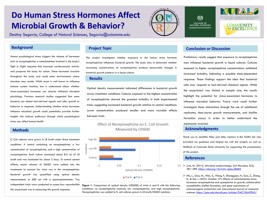
Category: Research Poster
Author(s): Destiny Segovia
Presenter(s): Destiny Segovia
Psychological stress in humans triggers the release of multiple hormones, including catecholamines such as norepinephrine, which play a central role in the body’s fight-or-flight response. These stress-associated hormones circulate throughout the body and can enter environments where microbes reside. Stress has been shown to influence immune system function; however, less is understood about whether stress-associated hormones can directly alter microbial physiology and behavior. In this study, I investigate how exposure to norepinephrine influences bacterial growth and behavior using a non-pathogenic bacterial model. Bacterial cultures grown in liquid media were exposed to increasing concentrations of norepinephrine, alongside untreated control conditions. Growth was quantified over time using optical density measurements to generate growth curves and assess changes in growth dynamics. In addition, bacterial attachment behavior was evaluated using a biofilm formation assay to determine whether norepinephrine exposure alters surface adherence. Growth rates and behavioral responses were compared across hormone conditions to assess whether norepinephrine produces measurable, dose-dependent effects on microbial physiology. By examining bacterial responses to stress-associated chemical signals, this project explores whether human stress chemistry can function as an environmental cue that modulates microbial behavior. Understanding these interactions may provide insight into indirect biological pathways through which psychological stress influences health and disease outcomes.
Category: Research Poster
Author(s): Jessica Scripter, Ashley Anderson, Calli Mawdsley
Presenter(s): Jessica Scripter
Mentors(s): Sonali Diddi
Fashion supply chains struggle to have transparency and communication across tiers. This becomes an issue when tackling the industry's sustainability problems. Without transparency and clear communication in product manufacturing, brands lack the proper sustainability practices that are needed for integration into the age of eco-friendly products. One solution to this problem is textile certifications. These can create pathways to reduce opacity, and OKEO- TEX is a leading corporation in doing so. The brand offers certifications and standards that center around safe work environments, the use of harmless chemicals in products, and environmentally forward processes. These elements help brands to create safer products and build trust with their consumers, and suppliers. These characteristics in turn can help a brand build value. This research aims to answer the question How can brands integrate OEKO-TEX into their brand story? The group conducted research around this question through reviewing academic literature, industry reports, certification standards, and media articles. After research was finished, industry, consumer, and supply chain impacts were analyzed. This diverse selection of research gives insights into the implications of value creation in the fashion industry supply chain. Overall, our research aims to understand how OEKO-TEX can assist in creating brand value, because in an eco-forward world, value can bring positive feedback to brands and enable them to incorporate sustainability in a meaningful way that benefits both consumers and corporations.

Category: Research Poster
Author(s): Jillian Montella, Molly Fairbrother, Sydney Kane
Presenter(s): Jillian Montella, Molly Fairbrother, Sydney Kane
The fashion and textile industry has adopted sustainability certifications to support responsible sourcing and verify environmental claims. However, growing consumer demand for sustainable products has also led to concerns about misleading marketing and greenwashing. The Recycled Claim Standard verifies the presence and chain of custody of recycled materials within products. As brands incorporate recycled fibers into their apparel lines, ensuring the authenticity of these materials and communicating claims accurately has become critical for maintaining transparency and consumer trust. This research investigates the role and effectiveness of the Recycled Claim Standard in the fashion industry. This project is guided by two research questions: How effective is the Recycled Claim Standard in ensuring the authenticity of recycled materials? and What role does the Recycled Claim Standard play in helping brands communicate recycled content responsibly, thus avoiding greenwashing? These questions will help better understand how certification systems contribute to supply chain accountability and credible sustainability communication. To answer these questions, the research will involve reviewing academic articles and industry reports related to recycled material standards and supply chain verifications. Additional sources will include sustainability reports and specific case examples from apparel brands that utilize the Recycled Claim Standard, as well as media articles discussing certification practices and challenges. All of these materials will help evaluate how the standard operates, how companies implement it, and how it supports verified sustainability claims. The research aims to clarify both the effectiveness and credibility of the Recycled Claim Standard as a tool for improving transparency and accountability in recycled textile sourcing. Understanding the role of certification systems like the Recycled Claim Standard can provide insight into how the fashion industry can more responsibly verify recycled materials, reducing the risk of greenwashing, while strengthening sustainability communication.
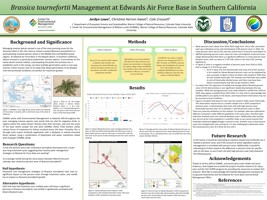
Category: Research Poster
Author(s): Jordyn Lowe
Presenter(s): Jordyn Lowe
Mentors(s): Christina Herron-Sweet, Cole Crossett
Managing invasive species spread is one of the most pressing issues for the American West in the 21st century. Sahara mustard, or Brassica tournefortii, is a quick-growing mustard species native to the Middle East and Mediterranean regions. At Edwards Air Force Base in the Mojave Desert in Southern California, Sahara mustard is one of the most prevalent invasive species. To minimize invasive species spread, management areas were split into 50 by 50-acre cells, surveyed, and treated with a pre-emergent herbicide blend. The analysis determined whether or not management has decreased percent cover of Sahara mustard, and if rainfall in the previous year is a viable indicator of predicting the following year’s growth. Data was analyzed in Excel and ArcGIS Pro to answer these questions. Based on preliminary results, cells treated multiple treatment cycles in a row had a trace to none percent cover, and in 2025, all cells were within the 1-5% and trace (<1%) percent cover. Additionally, there appears to be some correlation between rainfall in the rainy season (October to March) and percent cover. Since management is successfully decreasing Sahara mustard percent cover, it should be evaluated how the amount of active ingredient in the herbicide mix changes percent cover in a yearly analysis.

Category: Research Poster
Author(s): Ana Lucia Ferguson, Claire Mittel
Presenter(s): Ana Lucia Ferguson
Mentors(s): Sonali Diddi
The fashion and textile industry has faced increasing criticism for its reliance on linear production systems that generate waste, use hazardous chemicals, and place pressure on natural resources. In response, sustainability frameworks have emerged to guide companies toward safer and more circular production practices. One of the most prominent of these frameworks is Cradle to Cradle Certified, a third-party product certification that evaluates products based on material health, circularity, renewable energy use, water stewardship, and social fairness. Developed by William McDonough and Michael Braungart, the certification promotes a design philosophy in which materials are treated as nutrients that circulate safely in biological or technical cycles rather than becoming waste. This research examines the role of the Cradle to Cradle Certified Product Standard in promoting sustainability and transparency within global supply chains. The study is guided by two key questions: How does Cradle to Cradle Certified influence product design and supply chain decision-making in the fashion and textile industry? To what extent does the certification contribute to more sustainable and circular production practices? To address these questions, the research analyzes academic literature, industry reports, and official documentation related to the Cradle-to-Cradle Certified Product Standard. It also reviews examples of companies that have implemented the certification to understand how it is applied in practice. By synthesizing these sources, the project evaluates how the certification can improve material safety, encourage circular design, and increase supply chain accountability in the fashion and textile industry.
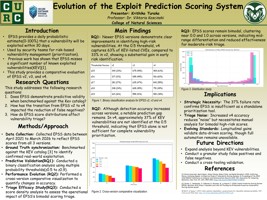
Category: Research Poster
Author(s): Krithika Turaka
Presenter(s): Krithika Turaka
Mentors(s): Viktoria Koscinski
The Exploit Prediction Scoring System (EPSS) is commonly used by security teams to prioritize the patching (fixing) of vulnerabilities by estimating how likely it is that a vulnerability will be exploited in the wild. Earlier EPSS versions underpredicted approximately 80% of vulnerabilities in the Cybersecurity and Infrastructure Security Agency’s Known Exploited Vulnerabilities (KEV) catalog. Since then, newer releases introduced improvements, but as organizations depend more on EPSS scores to make patching decisions, it is important to assess how well newer versions actually improve performance. This study conducts a comparative analysis of EPSS versions using the KEV catalog as the basis for observed exploitation. We evaluate scores from multiple EPSS versions to compare top scores, scoring trends, score distributions, average predicted probabilities, and the percentage of known exploited vulnerabilities that surpassed significant scoring thresholds. By examining changes across versions, this study assesses whether the alleged model improvements result in tangible benefits in identifying high-risk vulnerabilities and reducing overlooked exploited cases. The results aim to offer an evidence-based evaluation of EPSS reliability and to guide practitioners on how confidently they should use EPSS scores to inform their real-world vulnerability prioritization processes.
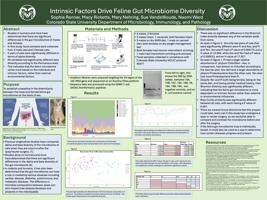
Category: Research Poster
Author(s): Sophie Renner
Presenter(s): Sophie Renner
Mentors(s): Macy Ricketts
The feline gut microbiome remains an understudied area of microbiome research. Current data supports that diet and environment are the largest factors influencing differences in the composition of the feline microbiome, but there is little research detailing the impact of sex. This study serves to establish a baseline in the differences between the male and female feline gut microbiome. This information could aid in determining how spay and neuter surgeries affect the gut microbiome, as well as provide insight on sex-based differences in the presentation of gastrointestinal diseases mediated by microbiome dysbiosis. DNA was extracted in triplicate from the fecal samples of 4 adult males, 1 of whom was neutered, and 2 intact females, all of whom were single housed, then sequenced for the 16S rRNA gene. The fecal samples were taken twice a day for 5 days. The Shannon diversity index, measuring alpha diversity, demonstrated that the cats had similar microbiome diversity and species richness, but significantly different relative abundance, or beta diversity when comparing sex, diet, and medical history. The beta diversity of the microbiome was more heavily influenced by diet and medical history. Though there was a significant difference in the composition of the microbiome between sexes, the female cats were on a different diet and had recent medical history compared to their male counterparts, making it difficult to determine if sex was the determining factor. This study demonstrated that the gut microbiome composition in felines is variable between individuals, and that composition depends on multiple factors.
Category: Research Poster
Author(s): Jesse Wolf
Presenter(s): Jesse Wolf
Mentors(s): Mario Jimenez Chacon
Beneath the Surface: Child Labor and Policy Failure in the Mines of Potosí, Bolivia Potosí has been associated with silver since 1545, when the Spanish began extracting vast amounts of wealth from Cerro Rico, the “Rich Mountain.” For centuries the mines have shaped the region’s economy and identity. What receives less attention today is that children still work in these mines. Some are as young as six years old, entering tunnels before sunrise to haul rock and work in conditions filled with silica dust that can permanently damage the lungs. This poster looks into why child labor in the mines of Potosí has been very hard to eradicate. One factor was the Bolivian Child and Adolescent Code of 2014, which reduced the legal working age to ten and received significant international criticism. Even though the legislation was abolished in 2018, the abolition did not have a profound effect on the situation on the ground. Children still work in the mines mostly due to the same reasons: abject poverty, lack of state support, and the regional economy that is still largely dependent on mining. The problem also lies outside Bolivia. Minerals extracted from Cerro Rico move through global supply chains and eventually appear in consumer electronics and jewelry sold around the world. The economic system related to these mines is, in that way, a global one. Addressing child labor in Potosí will probably require action at multiple levels, such as stricter implementation of labor regulations in Bolivia and more extensive inspection of mineral supply chains by international companies that profit from these resources.

Category: Research Poster
Author(s): Ali Verschueren
Presenter(s): Ali Verschueren
Mentors(s): Bradley Conner
Previous research has found that eating disorders increase the likelihood of engaging in a variety of risky behaviors, such as self-injurious behaviors. Extensive research has also found that individuals who experience greater difficulties in emotion regulation are more likely to engage in risky behaviors. Given that anorexia nervosa has the highest suicide rate among mental disorders, eating disorder symptoms may place individuals with emotion regulation difficulties at greater risk for engaging in maladaptive coping strategies, such as risky behaviors. The present study aims to better understand the role of eating disorder symptoms in the relation between emotion dysregulation and engagement in risky behaviors (e.g., substance use, high-risk sexual behavior). Participants were undergraduate students who completed the Difficulties in Emotion Regulation Scale, Eating Attitudes Test, and Risky Behavior Inventory. A moderated regression analysis will be conducted to test whether eating disorder symptoms influence the strength of the relationship between difficulties in emotional regulation and engagement in risky behaviors. Findings from this study may help inform interventions aimed at reducing risky behaviors.
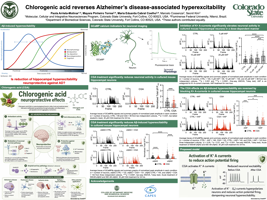
Category: Research Poster
Author(s): Paola Arrieta-Molinar
Presenter(s): Paola Arrieta-Molinar
About 5.7 million Americans currently have Alzheimer’s disease (AD); that figure is projected to reach 14 million people by 2050. In 2020, the direct costs to American society of caring for those with AD and related dementias are a total of an estimated $305 billion, which makes AD the most expensive disease in America. However, there is no known cause and cure for AD. Therefore, understanding the neural mechanisms of AD pathogenesis is of the utmost importance for better diagnostic and therapeutic development. Both preclinical and clinical studies have shown that cortical and hippocampal hyperactivity is found in the early stages of AD. In patients, hyperexcitability is strongly linked to cognitive decline. Hyperactivity in the brain is thought to be a driver of AD pathology and cognitive impairment. Importantly, beta-amyloid peptide (Aβ) is a major trigger of hyperexcitability. Therefore, targeting to reverse Aβ-induced hyperexcitation can be a novel therapeutic strategy. Chlorogenic acid (CGA) is a major compound in coffee, often reported to offer neuroprotective benefits. However, the direct mechanisms are unknown. In our preliminary study, we found that CGA treatment significantly reduced neuronal activity. Therefore, we hypothesize that CGA reverses Aβ-induced hyperexcitation. To test this idea, we used live Ca2+ imaging in cultured mouse hippocampal neurons to directly measure neuronal activity. As shown previously, Aβ treatment was sufficient to induce neuronal overactivity. Importantly, CGA treatment reversed the Aβ-induced toxic effects in hippocampal neurons. Our findings thus suggest that CGA in coffee can offer neuroprotective benefits in AD via preventing neuronal hyperexcitation.
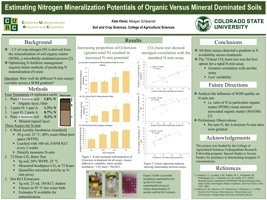
Category: Research Poster
Author(s): Kate Kleist
Presenter(s): Kate Kleist
Mentors(s): Meagan Schipanski
Nitrogen (N) is an essential crop nutrient that can be yield-limiting in agricultural settings. Annually, about half of crop N is derived from the mineralization of soil organic matter, while the rest is supplemented with fertilizer, of which the excess application has various environmental and economic consequences. Thus, optimizing nitrogen management requires an improved ability to predict the soil’s capacity to supply N via mineralization (N-min), which currently is challenging to do. Aerobic incubations are often considered the standard for measuring soil N-min potential, making them a good comparison for more rapid, accessible assays. This study examined the correlation between three different methods of estimating N-min potential—a 6-week aerobic incubation, a 72-hour CO2 burst test, and a hot KCl extraction. These methods were analyzed for four soil treatments — pure O-horizon soil, pure A-horizon soil, and 2:1 and 1:2 O:A horizon soil mixtures— to see how the varying N quantity and quality of the two horizons influence N-min potential. Preliminary results from the 72-hour CO2 Burst Test showed that as total nitrogen content in the soil increased (increasing proportion of O-horizon), so did the soil respiration rate, a proxy for N-min. When respiration rate was standardized by soil N content, the A-horizon significantly surpassed the mineralization rate of the other treatments. This suggests that N quality (e.g., the lower quantity of N in particulate organic matter (POM) versus mineral-associated organic matter (MAOM) in the A-horizon) and not just quantity influences potential N-min. Analysis of results is ongoing.
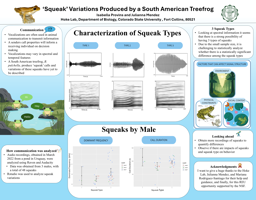
Category: Research Poster
Author(s): Isabella Provins, Julianna Mendez
Presenter(s): Isabella Provins
Mentors(s): Julianna Mendez
Vocalizations are commonly used as signals by a variety of animals to communicate. An animal’s call properties will vary depending on the perceived receiver of the signal and the environment in which it is produced in. Together, these factors influence call characteristics, as signals lose their initial structure while traveling to a receiver. Signals that propagate will experience degradation, such as changes to its frequencies and attenuation, and the loss of the signal's amplitude. Understanding not only the behavioral mechanisms that drive calls but also the temporal and spectral properties of calls, can allow a more holistic and deeper understanding of social interactions. South American treefrog (Boana pulchella) can produce several call types. Among them is a squeak call type. Through preliminary work, I have identified variations of the squeaks, which has not yet been described. By analyzing these variations, we can begin to further understand the function of each call type and the effects of both the temporal and spectral variations on shaping social interactions and behavioral dynamics.
Category: Research Poster
Author(s): Giovanna Perrault
Presenter(s): Giovanna Perrault
I would like to give an overview of how the Japanese author, Osamu Dazai, is portrayed in the West compared to how he is learned in Japan. Over time, Dazai's image in the West has deteriorated from one of an author of major fame from Japan that led social change and gave explicit insight into the lives of the common Japanese civilians living in Wartime Japan, to now being a fun cartoon character in anime or videogames. I would like for my audience to leave my presentation thinking about what the appropriate ways to represent historical figures are and if or if not putting them into popular entertainment is harmful, since they can lose their professional guise, or helpful, since modern entertainment can lead to fans doing independent research and learning who such historical figures really were. To back my claims, I will be using research that I have compiled over the past year and a half from my time living in Japan to transferring to CSU.

Category: Research Poster
Author(s): Riley Schlender, Kelbi Hall, Magdalene Marcelo
Presenter(s): Riley Schlender
The Global Recycled Standard (GRS) is a widely used certification designed to verify recycled material content, ensure supply train traceability, and promote responsible social and environmental practices in textile production. Sustainability claims are increasingly used in marketing within the apparel industry, so certifications such as GRS play an important role in building transparency and consumer trust. However, questions remain about whether such standards can effectively prevent misleading sustainability claims. The guiding research question for this study is: What are the limitations of the Global Recycled Standard (GRS) in preventing greenwashing within the apparel industry? The research focuses on evaluating how this certification’s verification processes and communication practices may allow brands to make misleading claims about sustainability that are technically compliant, but possibly misleading to consumers. To investigate this question, the study will analyze the structure, requirements, and verification processes of the GRS certification. The research will involve a review of academic literature, industry reports, certification documents, and media sources discussing recycled material standards. It is also important to consider critiques from scholars and industry experts regarding certification credibility. Reviewing a multitude of sources will help identify gaps between the certification requirements and how sustainability claims are communicated in both marketing and product labeling. This research seeks to contribute a better understanding of the effectiveness of third-party sustainability certifications, like GRS, within the apparel industry. By identifying these limitations and challenges, this study helps clarify broader issues, like greenwashing, related to the role of third-party certifications and their transparency.
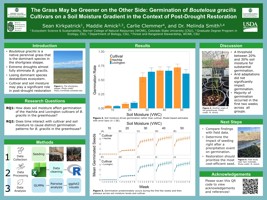
Category: Research Poster
Author(s): Sean Kirkpatrick, Carlie Clemmer
Presenter(s): Sean Kirkpatrick
Mentors(s): Madelyn Amick, Melinda Smith
Drought severity and frequency are expected to increase in Colorado’s drylands in the coming years, including in the shortgrass steppe ecosystem. Bouteloua gracilis, the native dominant species in the shortgrass steppe, was found to severely decline in abundance during and after drought. The decline of B. gracilis greatly disrupted ecosystem services and functioning. We investigated how key environmental factors and seeding decisions influenced post-drought restoration by conducting a controlled greenhouse study analyzing the impacts of soil moisture and cultivar selection on germination. We hypothesized that soil moisture (10/20/30/40/50%) would be the major driver of germination up to a threshold, and that the xeric-adapted Hachita cultivar would perform better under water stress compared to the mesic-adapted Lovington cultivar. Findings demonstrate that soil moisture is the primary driver of B. gracilis germination until a threshold of 30% volumetric water content (VWC) is reached (10% = 3.59% vs. 30% = 64.82%, p < 0.01); however, they also indicate that cultivar selection did not have a significant impact on germination rate (p ≥ 0.46). The soil moisture level, not cultivar choice, drove germination. Pairing these results with existing field-based data can strengthen the understanding of key factors pertaining to post-drought B. gracilis seeding.
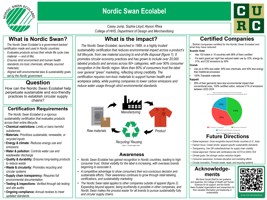
Category: Research Poster
Author(s): Casey Jump, Alyson Rhea, Sophia Lloyd
Presenter(s): Casey Jump
The Nordic Swan Ecolabel is a certification that is awarded to companies that apply for it and achieve it through addressing sustainability and environmental impacts throughout their production. The certification is challenging; however, it shows a company's desire to be conscious of environmental impacts and demonstrates a long-term commitment to responsible manufacturing practices and forming relationships. We are looking into what it takes to achieve this certification and possible ways for more brands and companies to achieve this certification. By examining companies that have obtained this certification and comparing them with those that attempted but were unable to, we can identify the steps required to complete the process successfully. Earning the Nordic Swan Ecolabel represents a company's sustainable practices and how they are limiting their emissions of production, harmful chemical use, and natural materials. Ecolabels also create a life-cycle criteria for production as it gets reworked and recycled back through the supply chain and production, encouraging a more circular economy model. There are important aspects to consider when applying for the certification, particularly how much waste is being produced and what can be reused and made into the same product. Additionally, for compliance, supply chain transparency and material sourcing play a critical role in meeting certification standards. If access to safer, more reusable products becomes easier, more companies will be able to achieve ecolabels such as Nordic Swan and reduce their CO2 footprints, ultimately contributing to broader global sustainability goals.

Category: Research Poster
Author(s): Mason Kimberlin, Ed Hall
Presenter(s): Mason Kimberlin
Mentors(s): Ed Hall
Sulfur is an essential element for life and key part of microbial catabolic and anabolic processes that drive marine biogeochemistry. The existing literature on ecological stoichiometry has primarily focused on carbon (C), nitrogen (N) and phosphorus (P) with less attention being paid to sulfur (S). As such, direct measurements of S in marine microbes are few and far between. Quantitative methods for S have really lagged in oceanography, and those that do exist have analytical challenges. In this study we use energy dispersive spectroscopy (EDS) to assess S content in single bacterial cells from natural marine microbiomes. We first created a calibration constant for sulfur and compared it to existing and similarly derived conversion factors for N and P. We then compare our cell quotas for S and C:S ratios derived from EDS to published values derived from independent methods. Single cell spectroscopy, although laborious, provides the opportunity to better link the ecology of individual bacteria with the environment that drives their biochemical composition and ultimately global biogeochemical cycles.
Category: Research Poster
Author(s): Arianna Joob
Presenter(s): Arianna Joob
Mentors(s): Laura Pulscher
Bats serve as reservoirs for many viruses, including paramyxoviruses, including the henipaviruses Hendra and Nipah viruses, which can cause fatal diseases in humans and other animals. In humans, these viruses infect endothelial cells. However, viral replication mechanisms of these viruses in bat endothelial cells are not well understood due to the lack of bat-derived endothelial cell cultures. In this study, we aimed to establish pulmonary microvascular endothelial cell lines (PMECs) from Jamaican fruit bats (Artibeus jamaicensis) and assess their susceptibility to Cedar virus (CedV), a BSL-2 bat-borne henipavirus. We cultured and expanded primary PMECs from an ongoing Jamaican fruit bat study. Flow cytometry was used to identify cross-reactive endothelial cell markers. To test susceptibility to CedV, duplicate PMECs and Vero E6 cells were cultured and inoculated with CedV encoding a green fluorescent protein (CedV-GFP) at a 0.1 multiplicity of infection (MOI). Flow cytometry results indicated heterogeneous PMEC cell populations with variable susceptibility and permissibility. Using anti-PMEC antibodies, they may enable generation of more homogeneous CedV-permissive cell lines. In silico analysis of endothelial cell marker poly-peptide sequences of CD31, CD104, CD105, and CD144 indicate high homology. Following the in silico analysis, several clones of each marker were screened for cross-reactivity against Jamaican fruit bat PMECs via flow cytometry, and cross-reactive clones for each marker of interest were identified. The generation of a PMEC cell line offers opportunities to study viral replication of and bat immune responses to henipaviruses.

Category: Research Poster
Author(s): Rowan Walker-Gilman
Presenter(s): Rowan Walker-Gilman
Mentors(s): Kimberly Nichols
The human hand is one of the most unique structures among vertebrates. Its morphology, including skeletal, muscular, and nerve anatomy, allows for the creation and utilization of complex tools. Some early humans, such as Homo erectus and Homo sapiens neanderthalensis were known tool-users with some of the same characteristics as modern humans. Based on functional hand anatomy, modern humans make and use sophisticated technologies that evolved from the adaptive behaviors in early humans. However, our modern technology is not necessarily with our inherited hand morphology. I report on my review of scientific literature on human hand functional anatomy. By comparing the hand anatomy of extinct and modern human tool users, I test the problems currently associated with hand health and our use of advanced technologies.

Category: Research Poster
Author(s): Caty Dundas Gordon
Presenter(s): Caty Dundas Gordon
Mentors(s): Steven Fassnacht
Light absorbing particulates (LAPs) can significantly reduce the albedo of a snowpack causing melt to occur more rapidly. In some areas with substantial LAPs, such as dust, the snowpack has been modeled to melt a month sooner. There have been, however, fewer studies examining the influence of LAPs on the snow surface. Since LAPs can be deposited at any time when snow is present, the LAPs can also be readily buried by new snow. But snow surface evolution can occur without melting such as by wind. We assess the effects of LAPs on snow roughness measured using two metrics: the random roughness (RR) and the aerodynamic roughness length (z0). Lower RR means a less rough surface, and considerable changes in z0 over time will impact the turbulent fluxes. Experiments were conducted at Dry Lake near Steamboat Springs, Colorado, USA over two days in early April 2025, after snowmelt had begun. A variety of treatments were applied to three different snow surfaces, with two of the surfaces having roughness features induced. Results demonstrate the differences in both roughness metrics over time and across the varied snow surfaces.
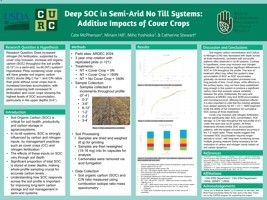
Category: Research Poster
Author(s): Cate McPherson, Miriam Hill
Presenter(s): Cate McPherson
Mentors(s): Catherine Stewart
Soil organic carbon (SOC) is a key indicator of soil health and plays an important role in ecosystem stability. Agricultural management practices heavily influence SOC, particularly under conservation tillage systems where differences in carbon and nitrogen inputs drive SOC changes. Two strategies commonly used in agriculture to support crop productivity and soil health include the use of cover crops and increased nitrogen (N) fertilization. This study examines if increasing C inputs by adding conservation practices such as cover crop and increased N fertilization is more beneficial than no-tillage (NT) along on SOC in semi-arid agroecosystems. This study also examines throughout the soil profile (1-12’) as SOC stability varies by depth, and can be unequally distributed. Soils were collected from plots at ARDEC (Agricultural Research, Development, and Education Center) under a three-year NT irrigated forage crop rotation with replicated treatments of tillage, N rates and cover crop. We sampled from depths throughout the profile (1-12’) and analyzed for SOC, TN d13C using combustion isotope ratio mass spectrometry. Analyses aim to determine whether increased crop inputs with cover crop integration effectively contribute to SOC accumulation throughout soil depths. In understanding these results effective management strategies can be chosen to balance productivity with soil health and carbon storage in semi-arid systems.
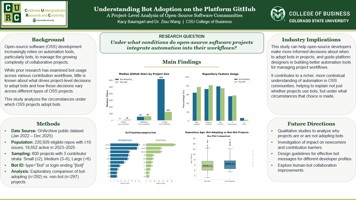
Category: Research Poster
Author(s): Kacy Baumgart
Presenter(s): Kacy Baumgart
Mentors(s): Zisu Wang
Open-source software (OSS) development increasingly relies on automation tools, particularly bots, to manage the growing complexity of collaborative projects. While prior research has examined bot usage across various contribution workflows, little is known about what drives project-level decisions to adopt bots and how those decisions vary across different types of OSS projects. This study analyzes the circumstances under which OSS projects adopt bots in GitHub issues, posts used by users to report bugs, request features, and coordinate project tasks. It investigates the question: under what conditions do projects integrate automation into their issue management workflows? Using a dataset of GitHub repositories, this research identifies which projects use bots in issues and characterizes the contextual factors surrounding adoption. We examine project-level attributes, including project size, number of contributors, and adoption trends over time, to determine what distinguishes projects that adopt bots from those that do not. We situate our analysis within the broader literature on OSS automation to understand how issue management practices evolve as projects grow. This study can help open-source developers make more informed decisions about when to adopt bots for issue management, and guide platform designers in building better automation tools for managing project workflows. This work also advances our understanding of how OSS communities formalize and scale their coordination structures as projects grow in complexity. It contributes to a richer, more contextual understanding of automation in OSS communities, helping to explain not just whether projects use bots in issues, but under what circumstances that choice is made.
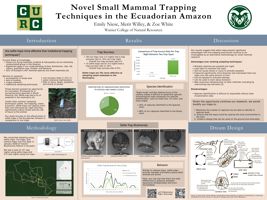
Category: Research Poster
Author(s): Emily Niese, Merit Willey, Zoe White
Presenter(s): Emily Niese, Merit Willey, Zoe White
Mentors(s): Tanya Dewey
Small non-volant mammals are one of the most diverse and simultaneously understudied taxa in the Amazon. The Ecuadorian Amazon has an estimated 180 species of small rodents and marsupials, for which little scientific research exists. Specific knowledge gaps include distribution, diet, life history, population size, and behavior. Our understanding of these animals is limited by accessibility, lack of funding, ineffective trapping techniques, and cryptic behavior. There is a significant need to create or adapt trapping techniques, especially non-invasive techniques, to the Amazon. We compared Sherman and Tomahawk live traps against the “selfie” trap, a baited camera trap which has never been used in the Neotropics. We also experimented with trap placement and with different bait types to determine which methods captured the greatest mammalian diversity. Sampling occurred over five nights in the Ecuadorian lowland Amazon rainforest at Tiputini Biodiversity Station in January 2026. We did identify differences between the two methods; selfie traps captured significantly more biodiversity than live traps, required less maintenance, and presented less risk to the animals. Our results suggest that selfie traps present significant advantages over live trapping and should continue to be investigated as an alternative methodology for small mammal research. While there are limitations to our specific methodology, our experimental design can easily be refined in future research.

Category: Research Poster
Author(s): Avery Gebhart, Abbigail Darnell
Presenter(s): Avery Gebhart
Mentors(s): Claudia Baudoin Farah
Protected Areas (PAs) are central to global environmental conservation efforts. These diverse areas have many different types of governance structures, practices, and conservation priorities that influence political and sociocultural outcomes. Bolivia offers a unique case for analysis due to its biocultural diversity, extensive PA network, array of management types, and historic inclusion of Indigenous peoples in PA management. Despite the existence of public information on Bolivian PAs and their objectives, little research has been done to examine how conservation objectives differ across management levels and over time. Using textual data from Bolivia’s 2024 national and subnational protected areas atlases, we created a database as the groundwork for our interpretive analysis of the language and priorities of objectives to determine how they differ across varying governance levels, geographic regions, and time. Our results identified previously unrecorded patterns in the priorities of PA management, providing a foundation for future research. We recommend future research expands on these interpretations by incorporating empirical data representative of Indigenous livelihoods and lived experiences.
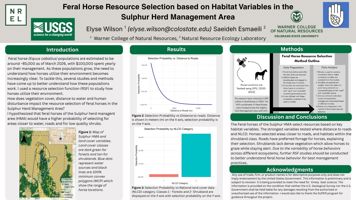
Category: Research Poster
Author(s): Elyse Wilson
Presenter(s): Elyse Wilson
Mentors(s): Saeideh Esmaeili
Resource selection analysis is a critical tool in understanding how animals use their environment. With an estimated population of ~85,000individuals and over $100 million spent per year on their management, the challenge of managing feral horses (Equus caballus) is becoming more apparent. To understand how horses use their habitat, six feral horses were fitted with GPS collars and their locations were collected in the Sulphur Herd Management Area, Utah, during 2020 and 2021.We used habitat variables known to affect feral horses, including elevation, Euclidian distance to water and roads, land cover classes, Enhanced Vegetation Index (EVI), and percentage of bare ground. Resource selection functions compare habitat covariates between locations used by animals and those available to animals through a use-availability design. We compared habitat covariates between X used points and Y available points generated per used point within the 100% minimum convex polygon surrounding individual horses’ GPS locations using binomial logistic regressions. Preliminary results suggest that EVI, representing vegetation greenness, and distance to water were significant factors in feral horse resource selection. These results correspond with similar studies throughout the western United States and Canada. Our findings provide a better understanding of how feral horses use different resources and share the habitat with other native ungulates.

Category: Research Poster
Author(s): Alyssa Singh, Spencer Burkhart
Presenter(s): Alyssa Singh
Mentors(s): Randall Boone, Spencer Burkhart
Rangelands support livestock production but are increasingly affected by climate variability and changes in forage availability. Stocking rate is a key factor influencing forage use, cattle performance, and long-term rangeland sustainability. This study develops an agent-based model (ABM) to simulate cattle weight gain under varying grazing intensities at the Central Plains Experimental Range (CPER) in eastern Colorado. The model incorporates spatial pasture boundaries, initial animal weights, herd size, and grazing duration from the CPER Long-Term Grazing Intensity (LTGI) study, allowing stocking rates to emerge from pasture and herd size. Forage availability is represented using monthly net primary production (NPP) surfaces generated from previously developed L-Range ecosystem model predictions for eastern Colorado and clipped to the CPER pasture boundaries. Cattle consume forage within pastures, and weight gain is simulated using established beef cattle energy balance equations that account for intake and maintenance requirements. Simulation outputs will be compared with observed LTGI data to evaluate the model’s ability to reproduce treatment-level differences in weight gain. This framework demonstrates how forage productivity models can support spatially explicit modeling of cattle performance in rangeland systems.

Category: Research Poster
Author(s): NicK Manire
Presenter(s): NicK Manire
Mentors(s): Rowan Hilend
Focal firms operating extended supply chains increasingly expose their consumers to the risk of counterfeit incidents originating beyond their direct operational control. Although the locus of a counterfeit incident within the supply chain — whether internal to the focal firm or attributable to a tier-1 supplier — may meaningfully shape how consumers respond, its impact on consumer perceptions and behavior remains poorly understood. Drawing on the concept of chain liability (Hartmann & Moeller, 2014) and attribution theory (Kelley, 1967; Weiner, 1985), we develop a scenario-based experiment to examine how supply chain origination influences consumer blame attribution and subsequent repurchase intentions. Specifically, we investigate whether consumers apportion greater blame to focal firms when a counterfeit incident originates internally rather than upstream and explore the extent to which chain liability leads consumers to hold focal firms accountable even when wrongdoing originates at the tier-1 supplier level. We further examine blame as a mediating mechanism linking supply chain origination to repurchase intentions, exploring the potential demand-side consequences of upstream misconduct. These findings contribute to the supply chain ethics, brand management, and consumer behavior literatures, and offer practitioners guidance on the reputational risks of insufficient supply chain oversight.

Category: Research Poster
Author(s): John Poturalski, Madisyn Herron
Presenter(s): John Poturalski
Mentors(s): Carol Seger, Sanjiti Sharma
Pavlovian biases are unconscious decision-making mechanisms that operate in response to rewards (approach)/punishments (avoid); however, these biases are often suboptimal, as the correct response may be in conflict with one’s innate bias. For example, a participant may be required to go (approach) to avoid punishment, which is conflicting. This study investigates whether participants rely more on Pavlovian biases under time constraints; as time decreases, participants will utilize the automatic biases because they use fewer cognitive resources. Using a Go/No-Go task, we applied time pressure ranging from long to very short, in which participants were asked to determine the optimal response to previously learned stimuli. We hypothesized that participants would rely on Pavlovian biases rather than instrumental learning when faced with time constraints. This study found that, in alignment with our hypothesis, in longer conditions, participants relied on goal-directed responses, whereas as time decreased, they relied more on Pavlovian biases. In the long and medium conditions, participants utilized their time to choose the correct response, demonstrating goal-directed instrumental learning. In the very short condition, participants demonstrated reliance on Pavlovian biases rather than instrumental learning. The very short condition revealed a motor constraint floor; our data showed a dramatic decrease in success on any stimulus that required participants to act, likely because they could not physically respond in time. Our study illustrates a tendency towards Pavlovian biases under time-constrained conditions, which could have applied implications in contexts where individuals must make high-stakes choices in time-constrained situations (emergencies, for example).
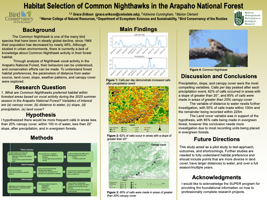
Category: Research Poster
Author(s): Grace Erikson
Presenter(s): Grace Erikson
The Common Nighthawk is one of the many bird species that has been in steady global decline, since 1966 their population has decreased by around 48%. Although studied in urban environments, there is currently little knowledge of Nighthawk activity in their forest habitat. By understanding how nighthawk vocal activity varies in the Arapahoe National Forest, behaviors and habitat preference can become clear, and conservation efforts can begin. In this study, autonomous recording units (ARU) were deployed throughout the Arapahoe National Forest by The Bird Conservancy of the Rockies; the resulting acoustic data for thirteen locations were processed. Recordings from June 5th-July 23rd, 2025, were examined for Nighthawks calls using the Kaleidoscope software from Wildlife Acoustics. This information was then analyzed with the parameters of distance from water source, land cover, slope and canopy closure. It is hypothesized that Common Nighthawks will call more frequently closer to water sources, in coniferous forests, with lower canopy cover, and slope 20% or less. Preliminary results demonstrate more frequent calls near water, and in evergreen forest. More studies will need to be done to fully understand what habitats are most preferred and should encompass an annual cycle to understand how habitat needs change.
Category: Research Poster
Author(s): Carlie Clemmer, Sean Kirkpatrick
Presenter(s): Carlie Clemmer
Mentors(s): Madelyn Amick
Climate change is predicted to alter precipitation regimes, resulting in more frequent severe drought and deluge events. Despite this, we remain unsure about how drylands recover from drought and interact with deluges. Extreme drought events have been shown to decrease the abundance of dominant plant species, as observed in Colorado’s shortgrass steppe with the loss of Bouteloua gracilis. Seeding dominant plant species following drought may improve recovery, however, little data is available. Seeding efforts often use cultivars, such as B. gracilis’ Hachita and Lovington which are used for restoration but lack published data regarding the efficacy of their use for drought recovery. We examined the impact of a post-season deluges on the germination of these cultivars. We seeded our cultivars in April 2025, following a four-year experimental drought that diminished the B. gracilis population at the Central Plains Experimental Range. A post-season deluge event was applied to deluge plots in October 2025. Germination, survival, and established perennial cover were measured in deluge and ambient (control) plots. In previously droughted plots, deluge significantly increased the number of Lovington seedlings that germinated, and non-significantly increased that of Hachita (p < 0.05). Lovington was more successful, with more seeds germinating per plot, on average, than Hachita. Cover of established perennials was positively correlated with the number of seedlings that germinated. These findings suggest that deluge events may increase the efficacy of seeding after drought regardless of cultivar selection. However, we suggest that further investigation into the legacy of these deluge events is required.
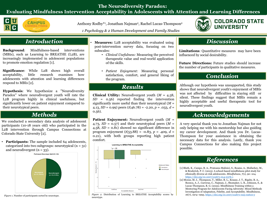
Category: Research Poster
Author(s): Anthony Rodby, Jonathan Najman, Rachel Graham
Presenter(s): Anthony Rodby
Mentors(s): Jonathan Najman
Mindfulness-based interventions (MBIs) teach valuable emotion regulation skills, but standard protocols often need adaptation for neurodivergent youth. This secondary data analysis evaluates the acceptability of the Learning to BREATHE (L2B) curriculum within a mentoring program for adolescents facing adversity. Previous mixed-methods research found that youth with conditions that impact schoolwork (like ADHD) actually reported higher overall acceptability of the program. However, qualitative data from the original study pointed to specific therapeutic barriers, such as difficulty with sustained silent practice. To investigate this clinical paradox, we plan to run independent-samples t-tests to compare neurodivergent and neurotypical subgroups across two specific acceptability subscales: clinical utility ("usefulness") and patient comfort ("enjoyment"). We hypothesize that neurodivergent youth will report high clinical utility but significantly lower enjoyment than their peers. Identifying these specific barriers is an important step for clinical practice. Ultimately, we hope these findings can inform targeted MBI accommodations, such as shorter practice times and integrating movement to make these interventions more accessible and effective for adolescents with attention and learning differences.
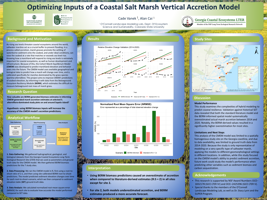
Category: Research Poster
Author(s): Cade Vanek
Presenter(s): Cade Vanek
Mentors(s): Alan Cai
Coastal wetlands are a vital buffer against sea level rise. Marshland grasses growing from the seabed act as a physical buffer, causing sediments in the water to settle on the seabed and slowly raise its elevation. However, if water levels rise too quickly, marsh grass growth can’t keep pace with the changes, and will drown. As climate change leads to rising ocean levels, forecasting how marshlands respond is crucial to predicting what a coastline will look like in the future. One tool used to forecast these changes is the Cohort Marsh Equilibrium Model (CMEM), which incorporates a collection of data to predict how the marsh changes over time. One of these data points is belowground biomass, which is difficult to accurately measure over large areas and time periods. Belowground biomass holds the soil together, stabilizes the aboveground growth, and contributes to beneficial seabed rise. Because belowground biomass data are difficult to attain, we aim to assess how the CMEM model performs when belowground biomass data are predicted using the Belowground Ecosystem Resiliency Model (BERM). Data were compiled from a publicly accessible data catalog for an ecological research site in Georgia, USA. Preliminary results suggest that BERM-informed CMEM modeling produces more accurate results than traditional estimates.

Category: Research Poster
Author(s): Megan Hoover
Presenter(s): Megan Hoover
Mentors(s): Jessica O'Connell
[OO1.1]Wetlands provide critical ecosystem services such as carbon sequestration, with potential to mitigate climate warming. Some wetland carbon is stored within plant biomass, which can be measured via remote sensing. Remote sensing of AGB often relies on vegetation indices (VIs) that are mathematical combinations of spectral reflectance bands within the electromagnetic radiation spectrum. The Normalized Difference Vegetation Index (NDVI), composed of near infrared and red reflectance, is commonly used to track vegetation changes. However, in flooded areas, water absorbs longer wavelengths of light which can lead to less reflectance and low AGB estimates. We need a VI that can track AGB across water depth, for more reliable AGB estimates. We hypothesized that utilizing the VARI or Pheno VI in flooded environments would yield better AGB estimates than NDVI, due to a better combination of wavelengths in the index formula. To evaluate this, we built a Generalized Additive Model (GAM) that predicted AGB from NDVI, VARI, and Pheno VI’s, and compared goodness of fit metrics. We also evaluate these result in context of differences in site characteristics. Methods involved obtaining field and Sentinel 2 satellite data from two wetland types (tidal wetlands and depressional freshwater wetland ponds). We processed those data and models in RStudio and completed a statistical analysis. Results indicated that the Pheno and VARI VI were more reliable to use in wet areas and NDVI in drier conditions. These findings will help to quantify carbon sequestration potential via AGB estimates, which can help to guide land management decisions.
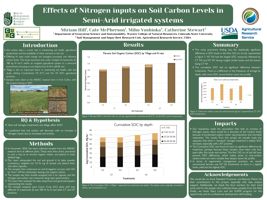
Category: Research Poster
Author(s): Miriam Hill, Catherine McPherson
Presenter(s): Miriam Hill
Mentors(s): Catherine Stewart
Soil carbon plays a crucial role in maintaining soil health, agricultural productivity, and the availability of other nutrients in the soil. Nitrogen (N) fertilizer is essential for crop yield and can increase both inorganic (SIC) and soil organic carbon (SOC) concentrations. Differing N rates could change soil biological processes and decrease inorganic carbon levels. This study examined soils under multiple N fertilizer treatments (0, 160, 180 kg N ha-1) within an irrigated agricultural system in a semi-arid environment, focusing on soil depths from 0-12 in (30.5 cm). To investigate these relationships, soil samples were collected from experimental plots at the ARDEC research farm in northern Fort Collins, Colorado. Samples were processed, ground, and analyzed using mass spectrometry to quantify N, SOC, and SIC concentrations. Preliminary analysis compares SOC , SIC, and TSN concentrations across N fertilizer treatments and soil depths to identify trends in soil carbon storage. I will present results on whether increasing N fertilizer additions correspond with measurable differences in SIC levels. These findings will help inform N fertilizer strategies and improve understanding of how N influences soil carbon dynamics in a semi-arid, irrigated farmland system.
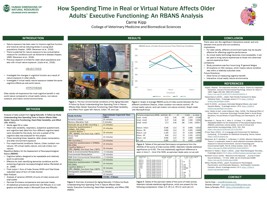
Category: Research Poster
Author(s): Carrie Kipp
Presenter(s): Carrie Kipp
Mentors(s): Sara LoTemplio
Nature exposure is understood to improve cognitive functioning and reduce stress in younger populations, but older populations are less well studied in this regard. There is also little understanding on if virtual reality nature exposure has similar effects on cognitive function as real world nature exposure. This study investigated the effects on cognitive functioning and stress recovery for older adults who experienced real-world nature, outdoor control, indoor control, and virtual reality nature conditions. Cognitive function was measured with the Repetitive Battery for Assessment of Neuropsychological Status (RBANS) task, which was administered three times for each participant. The goal of this analysis was to compare and contrast different environments’ effects on cognitive function and stress recovery in older adults.
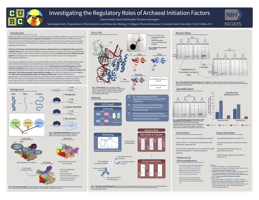
Category: Research Poster
Author(s): Liam Gosnell
Presenter(s): Liam Gosnell
Mentors(s): Jason McDonald, Thomas Santangelo
Regulation of gene expression is central to cellular survival and enables adaptation to a given environment. Transcription serves as a primary regulatory checkpoint, where RNA polymerase (RNAP) and basal transcription factors facilitate promoter recognition and transcription initiation. Eukaryotic transcription initiation requires the coordinated action of numerous general transcription factors, creating a complex regulatory environment. Archaea and Eukarya retain homologous promoter elements that are recognized by the conserved initiation factors TBP and TFB/TFIIB. Because Archaeal transcription utilizes a component simplified and homologous system to the eukaryotic RNAP II initiation machinery, Archaea serve as an effective model system to investigate the core mechanisms of transcription initiation and promoter-dependent transcriptional regulation. Thermococcus kodakarensis (Tko) is a hyperthermophilic anaerobic archaeon that is genetically tractable with established techniques to characterize transcriptional processes. Tko, like many other archaea, encodes multiple paralogs of TFB: TFB1 and TFB2. Given Archaea possess constrained genomes that minimize redundancy, the retention of multiple TFB paralogs indicates a functional differentiation between paralogs that confers fitness advantages through transcriptional flexibility. Deletion of either TFB paralog in Tko produces modest transcriptomic changes, and evidence in halophilic Archaea suggests that alternative paralogs display distinct promoter preferences through BRE-dependent specialization. In this study we use relatively quantitative western blotting to characterize the abundances of TFB1 and TFB2 across variable growth conditions. Archaea may represent a model for primordial transcription systems, and insights into the retention and diversification of TFB paralogs in archaeal extremophiles may illuminate the selective pressures that shape transcriptional regulatory complexity.
Category: Research Poster
Author(s): Hutch Schumacher, Alex Peirce, Alexander Lott
Presenter(s): Hutch Schumacher
Mentors(s): Abhinandan Banerjee
Nanobioprobes allow us to map disease pathways, monitor treatment responses, and observe regenerative processes in real-time. To fully understand these biological systems, we require imaging agents that can bridge the gap between different scales - from single molecule interactions to whole-organism physiology. Magnetic Resonance Imaging (MRI) is a cornerstone of medical diagnostics, providing high-resolution, deep-tissue anatomical data without ionizing radiation [1]. However, MRI often suffers from low molecular sensitivity. In contrast, fluorescence imaging offers high sensitivity and molecular specificity but is limited by its shallow penetration depths. The development of theragnostic nanoprobes—agents that combine both imaging and therapeutic capabilities - is the next frontier in precision medicine [2]. In this study, we encapsulated the fluorescent dye fluorescein isothiocyanate (FiTC) within spherical silica nanobeads (FiTC-SiO2) of ca. 100 nm in diameter, and decorated their surfaces with sub-8 nm iron oxide (Fe3O4) nanodots [3]. The resultant composite material showed superparamagnetism while retaining fluorescence. T2 MRI contrast augmentation was observed in the presence of these nanoprobes. Dosing the nematode Caenorhabditis elegans (C. elegans) with our magnetofluorescent bionanoprobes provides us with a cost-effective and accessible biological validation platform for examining biocompatibility and functional properties of the Fe3O4@SiO2-FiTC magnetofluorescent nanoprobes in a living organism.
Category: Research Poster
Author(s): Kalee Salazar, Andrew Schlink
Presenter(s): Kalee Salazar
Mentors(s): Debbie Crans
3D Spheroids As A Biological Testing Model for Anti-Cancer Vanadium Complexes Kalee Salazar, Drew Schlink, and Debbie C. Crans Deadly cancers including Glioblastoma are aggressive and difficult to treat. Glioblastoma is characterized by tumors within the glial cells of the brain, and has a short survival rate. Due to glioblastoma’s invasiveness and organ of origin, anti-cancer drugs are typically ineffective. It’s common to see limitations with crossing the blood-brain barrier, and chemotherapy resistance. Anti-cancer drugs typically consist of metal complexes such as cisplatin. However, these complexes are hindered by toxicity and resistance, so alternatives must be considered. The Crans group has been investigating noninnocent Vanadium Schiff base catecholate complexes as substitutes. Specifically, the effects of [VVO(Cl-SALIEP)DTB](SALIEP=N-(salicylideneaminato)-2-(2-aminoethylpyridine;Cl-SALIE =N-(5-chlorosalicylideneaminato)-2-(2-aminoethyl)pyridine, L= catecholato(2) ligand) and its derivatives are studied. These complexes show promising anticancer activity and are cytotoxic in glioblastoma cells, called “T98G cells”. The difficulty in this seemingly groundbreaking discovery lies in the fact that T98G cells are 2D, and do not accurately represent an in-vivo brain tumor. Therefore, the results can be unrealistic. The Crans group has primarily tested the noninnocent vanadium compounds in these 2D models, and are looking to use 3D spheroids instead for more realistic results. 3D spheroid models offer a more tumor-like structure with more life-like characteristics such as nutrient gradients. In this project, the differences of studying the anti-cancer properties of these vanadium complexes in 2D cell cultures versus 3D spheroid models are explored.
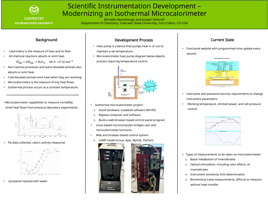
Category: Research Poster
Author(s): Michelle Montelongo
Presenter(s): Michelle Montelongo
Mentors(s): Joseph DiVerdi
Technological advances have often led to older instruments no longer receiving software updates or a change in manufacturing ownership can drop technical support altogether. An isothermal microcalorimeter in our laboratories, a sensitive instrument to measure the amount of heat absorbed or released during chemical reactions, physical changes, or biological processes, became a prime candidate for the (re)development. This project was undertaken to develop student hardware and software programming skills all while ensuring an excellent piece of technology still operates to its capacity. A Linux-based microcomputer, programmed with threaded Python together with a networked, browser-based user interface was developed allowing for a user-friendly remote control of instrument parameters and the acquisition of experimental data.
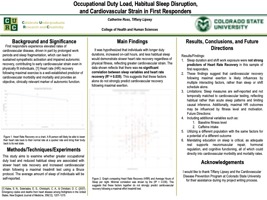
Category: Research Poster
Author(s): Catherine Ross
Presenter(s): Catherine Ross
Mentors(s): Tiffany Lipsey
Heart rate recovery following exercise is an important indicator of cardiovascular function and autonomic nervous system regulation. Firefighters and Emergency Medical Services (EMS) personnel, in particular, face increased rates of sudden cardiac death due to cardiovascular disease. In addition to the physical demands of their work, firefighters face psychological and lifestyle stressors, such as high occupational workload and insufficient sleep, both of which may impair cardiovascular recovery. However, the relationship between sleep duration, occupational duty load, and cardiovascular strain remains unclear. This study aims to examine whether greater occupational duty load and reduced habitual sleep are associated with slower heart rate recovery and increased cardiovascular strain following a maximal treadmill test. Occupational workload will be assessed as a continuous range of factors, including on-call duty duration and job assignment, rather than strict shift categories. Participants will complete a graded exercise test using the Bruce protocol, and heart rate recovery will be measured during the post-exercise period as an indicator of autonomic recovery and cardiovascular stress. It is hypothesized that individuals with longer duty durations, increased on-call hours, and less habitual sleep will demonstrate slower heart rate recovery regardless of physical fitness, reflecting greater cardiovascular strain. By evaluating occupational workload as a spectrum of physiological stressors, this study aims to improve understanding of how sleep and work demands may contribute to early indicators of cardiovascular risk in first responders.
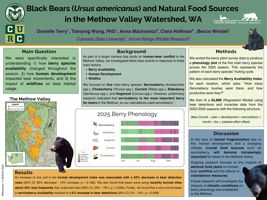
Category: Research Poster
Author(s): Danielle Terry
Presenter(s): Danielle Terry
Mentors(s): Tianying Wang
Human-wildlife coexistence is essential for conservation efforts. This is particularly true in areas where human development adjoins natural areas. The Methow Valley Watershed in Methow, Washington, is a good example of a wild-urban interface landscape where human activities often overlap with wildlife. As part of a larger community-science-driven project, we investigated the impact of natural food sources (represented by five main berry species) on black bear (Ursus americanus) movements within the Methow Valley using camera traps and vegetation transect surveys. We were specifically interested in understanding 1) how berry species availability changed throughout the season, 2) how human development impacted bear movements, and 3) the impact of wildfires on bear habitat usage. We fit a GLMM (General Linear Mixed Model) to understand the associations between each factor and bear detections. We found a strong association between fire history and Serviceberry (Amelanchier spp.) availability and a weaker effect of human development on bear detection rates. This research highlights the importance of coexistence measures such as conflict-reduction tools and public education in fostering collaborative efforts in areas with bear-human population overlap.
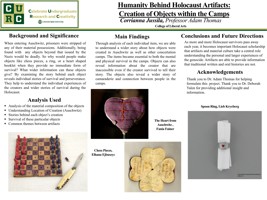
Category: Research Poster
Author(s): Corrianna Jussila
Presenter(s): Corrianna Jussila
Mentors(s): Adam Thomas, Deborah Yalen
This research project seeks to further understand the role of material culture during the Holocaust. Material cultures are the creation of physical objects and understanding the meaning behind the creation of those objects and the specific materials used to create them. While in internment and concentration camps, prisoners created various objects of various kinds to ensure survival. But the objects that stand out are the ones not made more for the purpose of survival, but the objects created for the purpose of preserving humanity. Creating and preserving these objects came at great risk to the makers as being caught with the objects would have likely resulted in death. So why would people make objects like chess pieces, a ring, or a heart shaped booklet when they provide no immediate form of survival? What wider information can these objects give? By examining the story behind each object reveals individual stories of survival and perseverance. They help to understand the individual experiences of the creators and wider stories of survival during the Holocaust.
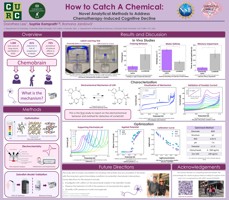
Category: Research Poster
Author(s): Sophie Kamprath, Dorathea Lee, Romana Jarosova
Presenter(s): Sophie Kamprath
Mentors(s): Romana Jarosova
Lorlatinib (LOR) is a newly approved chemotherapeutic that demonstrates unprecedented efficacy. However, over half of patients taking LOR suffer from symptoms of cognitive decline including motor deficits and memory loss. This phenomenon, referred to as “chemobrain”, has a complex and poorly understood mechanism and there is no FDA-approved treatment. Providers are left with limited options and answers, forcing >20% of patients to cease their life-saving chemotherapy. No current framework exists for detection of LOR to facilitate study of this mechanism: until now. We present a sensitive analytical method harnessing high-performance liquid chromatography with electrochemical detection (HPLC-EC) to quantify LOR in situ. These innovative approaches will enable investigation of chemobrain pathology and treatment development. This investigation is the first to report on LOR’s electrochemical behavior and detection. Cyclic and differential pulse voltammetry were utilized to determine the redox mechanism, preferred pH, electrode material, and applied potential. We will discuss the distinct redox mechanism of LOR and our findings on the ideal parameters for quantitation in brain tissue demonstrating the utility of HPLC-ED for rapid, sensitive, and cost-effective analysis. This work strives to benefit not only the translational research community but also progress towards a solution for the millions of chemobrain sufferers worldwide.

Category: Research Poster
Author(s): Rabha Reda, Bradley Conner, Carolyn Lorenzi
Presenter(s): Rabha Reda
Mentors(s): Bradley Conner
Emotion dysregulation is characterized by difficulties in accepting, managing, and understanding emotional responses. It has been linked to addictive eating behaviors, which is a pattern of compulsive consumption of highly palatable foods with difficulty controlling eating behavior. Previous research in populations such as healthcare workers and university students have shown that those with food addiction experience greater difficulties in emotion regulation compared to those without food addiction. Most prior research on gender differences in food addiction suggest that women experience food addiction more often than men; however, one study resulted in men showing greater food addictive behaviors. Few studies have investigated whether gender influences the relationship between emotional dysregulation and food addiction. The present study aims to test the moderating effect of gender in the relation between emotion dysregulation and addictive eating behaviors. The participants for this study are undergraduate students who completed the Difficulties in Emotion Regulation Scale and the Yale Food Addiction Scale. Findings from this study may help clarify the role of gender in maladaptive eating behaviors and help inform interventions aimed at reducing such behaviors.

Category: Research Poster
Author(s): Riley George
Presenter(s): Riley George
Mentors(s): Charlize Geer, Mark Stenglein
Orthobunyaviruses are notable human and animal pathogens causing syndromes ranging from self-limiting febrile illness to hemorrhagic fever. These viruses have a trisegmented, negative sense RNA genome that allows for reassortment when a host cell is coinfected by two related viruses. The resulting reassortant viruses may be more pathogenic than the parental viruses. However, the protein interactions limiting reassortment are not well defined. The interactions between the viral polymerase (L protein) and viral nucleoprotein (N protein) enable transcription of viral RNA and are vital to viral replication. Past experiments show that N proteins function with L proteins of closely related viruses, yet N proteins lacking shared amino acid identity function suboptimally. To determine which N protein residues are important for L-N function, we combined a portion of one high-functioning and one low-function N protein, creating chimeric N proteins. Chimeras from La Crosse Virus (LACV) and Trivittatus virus (TVTV) were tested with the LACV L protein using minigenome assays. This method expresses viral proteins in mammalian cells, measuring their activity through luminescence. We hypothesized that these chimeras would increase the function of the TVTV N protein to the level of the LACV N protein. We found that the location of amino acid changes in the N protein chimeras can increase L-N function, but some lost the ability to function, possibly due to inhibition of N-N interactions.
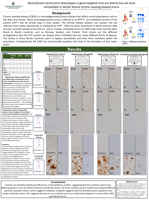
Category: Research Poster
Author(s): Lacey Russell, Carlos Diaz Dominguez, Glenn Telling, Jenna Crowell, Joseph DeFranco, Sehun Kim, Zoe Atkinson
Presenter(s): Lacey Russell
Mentors(s): Joseph DeFranco
Chronic wasting disease (CWD) is a neurodegenerative, infectious prion disease that affects cervid populations such as elk, deer, and moose. Prions (PrPSc) are misfolded infectious proteins derived from the the normal cellular prion protein (PrPC). This conversion can happen sporadically or mediated by PrPSc. CWD has been discovered in North America (NA) and currently has spread across the U.S. and Canada. Unrelated CWD strains have more recently been found in Nordic countries. Prion strains are the distinct conformations that proteins can display when misfolded from PrPC that can cause different forms of the disease. In Nordic countries the strains seem to appear sporadically and have more variations within the population. Comparatively, NA CWD has transmissible qualities that lead to the formation of one major strain. In order to model the naturally occurring CWD patterns-one major strain in NA and diverse sporadic cases in Nordic countries- we inoculated synthetic prions in gene-targeted mice. Here, we studied the brains of infected cervids from NA and Nordic countries and compared them to the brain of the mice inoculated with synthetic prions by studying the prion deposition patterns among different strains. We found significant differences in hind brain profiles suggesting that the synthetic prions have differing patterns from NA and Nordic strains. Within the synthetic prions studied, all of them showed different outcomes and suggest strain instability. These findings highlight similarities and differences between synthetic and natural prions and suggests that synthetic prions are more unpredictable and have significantly different pathological profiles.
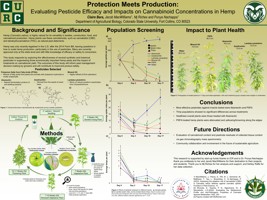
Category: Research Poster
Author(s): Claire Bara, Jacob MacWilliams
Presenter(s): Claire Bara
Mentors(s): Punya Nachappa
Hemp (Cannabis sativa) production is highly valued for its versatility in textiles, construction, food, and cannabinoid production. Legalization of hemp in the U.S. was only recently approved under the 2014 Farm Bill, leaving questions in scaling hemp production- particularly in pesticide use. Currently, minimal federal guidance exists on insecticides approved for use on infested hemp crops, and many are approved only at the state level with little knowledge of efficacy or safety to consumers. This study responds by exploring the effectiveness of several synthetic and botanical pesticides in suppressing three economically important hemp pests and the impact of treatments on cannabinoid yield. Hemp crops infested with cannabis aphids (Phorodon cannabis), two-spotted spider mites (Tetranychus urticae), and western flower thrips (Frankliniella occidentalis) were treated with abamectin, azadirachtin, lambda-cyhalothrin, mineral oil, or fatty acid potassium salts. Plants were sprayed three times over three weeks and pest populations were monitored weekly. Abamectin was identified as the most effective at controlling pest populations. The impact of pesticides on cannabinoid profiles in mature flowers was also measured. The outcomes of this study will inform pest management decision-making by growers and contribute to improved product safety.

Category: Research Poster
Author(s): Abby Boaz
Presenter(s): Abby Boaz
Mentors(s): Claire de La Serre
Maternal obesity increases risk for metabolic disorders in offspring. Gut-innervating vagal afferents terminate in the nucleus of the solitary tract (NTS), conveying post-ingestive cues to regulate meal size. Rat pups born to high fat (HF) diet-fed dams show reduced sensitivity to gut satiety peptides and post-prandial NTS activation linked to altered feeding. A HF-type gut microbiota is necessary and sufficient to alter vagal structure and function. We hypothesized that improving microbiota composition in HF-fed dams will enhance offspring gut-brain communication. Sprague-Dawley dams were fed a chow (LF), HF, or high fat supplemented with prebiotics (resistant starch, RS, HF+12% RS) diet during pregnancy and lactation. Offspring were weaned onto a LF diet. By post-natal day 14 (P14), HF offspring were heavier than HFRS (p<0.05) and LF (p<0.05) pups. Immunostaining of NTS at P21 showed a decrease in vagal innervation in HF pups compared to LF and HFRS offspring. This was inverted in adulthood but did not improve function, as HF offspring failed to reduce food intake in response to gut satiety peptide cholecystokinin (CCK, 1.5ug/ml/kg). This was rescued in HFRS pups, associated with a reduction in meal size and indicating improved vagal function. When challenged with a HF diet, HF pups gained significantly more weight than HFRS offspring (p<0.05), highlighting protective effects of maternal supplementation. This may be limited to gut-originating signals as both HF and HFRS offspring displayed a deficit in NTS leptin signaling compared to LF pups. We concluded that maternal HF diet alters vagal communication in offspring, increasing risk for diet-induced obesity. Some effects appear to be microbiota driven and improved with maternal RS supplementation.

Category: Research Poster
Author(s): Charlotte Olszewski
Presenter(s): Charlotte Olszewski
Mentors(s): Justine Liepkalns, Martha Mehaffy
Sex and gender differences have been seen to illicit different, and even lesser, treatment of patients in healthcare settings. Furthermore, a lack of research and teaching into specifically female and female-presenting health has been a prevalent issue in the medical field. We investigated the perceptions of treatment of women within a population of college students at Colorado State University, as well as their own personal experiences within the realm of healthcare. Here, we show that perceptions of women’s healthcare reflect ideas of lesser treatment of this group in healthcare settings. Additionally, we found that experiences of survey participants within the groups of female and female-presenting match perceptions of mistreatment within healthcare settings. We also found that both perceptions of healthcare and experiences within healthcare differ between women/female-presenting individuals and men/male-presenting individuals.
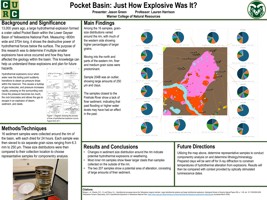
Category: Research Poster
Author(s): Jason Green, Lauren Harrison
Presenter(s): Jason Green
Mentors(s): Lauren Harrison
The Lower Geyser Basin in Yellowstone National Park features many thermal features, including hot springs, geysers, and mud pots. Hydrothermal explosions are violent events when water flashes to steam and brecciates surrounding rock, sending ejecta flying and forming craters. Pocket Basin is a crater ~800 m long and 370 m wide, hypothesized to have formed by a large hydrothermal explosion ~13,000 years ago. A large primary explosion formed the crater, but many smaller explosions have likely occurred based on the oblong crater shape. This project determines the number of potential hydrothermal explosion events using variations in hydrothermal breccia grain size, composition, and geochronology. Sixteen samples were collected around the crater rim and dried for 24 hours before sieving samples into six grain sizes, ranging from 6.3 mm to 250 μm. Grain size distributions showed a variable difference between the amount of clays and larger clasts. Spatial variations in grain-size distribution around Pocket Basin support multiple explosion events, which we will test by selecting representative samples for componentry analysis. Clays will be identified using X-ray diffraction to constrain temperatures of hydrothermal alteration in different explosion pulses. These results will then be interpreted with context provided by optically stimulated luminescence dates. We hypothesize that a series of explosions occurred in Pocket Basin, suggesting a longer-term hazard may be present in explosive hydrothermal areas. Because hydrothermal explosions pose an ongoing threat to human safety in Yellowstone National Park, constraining the probability of future events in historically active regions is critical.
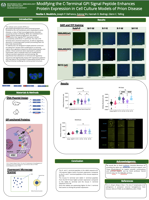
Category: Research Poster
Author(s): Nosiba Boukhris, Glenn Telling, Hannah Bodrogi, Xutong Shi
Presenter(s): Nosiba Boukhris
Mentors(s): Joseph DeFranco
Neurodegenerative disorders, such as Alzheimer’s disease and Parkinson’s disease, involve the misfolding of a host-encoded protein into a misfolded state. For instance, prion disorders involve the conformational change of the cellular prion protein (PrPC) to the disease-associated isoform, PrPSc. The majority of neurodegenerative diseases, including prion disorders, are invariably fatal and lack effective therapeutics. One of the reasons that therapeutic strategies fail in clinical trial phases is due to the lack of models that effectively reproduce disease mechanisms. Numerous studies have demonstrated that elevated levels of PrPC can enhance PrPSc replication. This research aims to increase the expression of PrPC in cell culture to develop better disease models. PrPC is a protein that is expressed on the cell membrane and attached by a glycosylphosphatidylinositol (GPI) anchor, which is programmed by the N- and C-terminal signal sequences. To investigate how modifications to N- and C-terminal sequences can influence PrPC expression, we designed expression plasmids to encode for the yellow fluorescent protein (YFP) with the PrPC N- and C-terminal signal peptide sequences (N-YFP-C). We used these plasmids to generate mammalian cell lines that expressed chimeric N-YFP-C proteins. To evaluate the effects of different N- and C-terminal signal peptide sequences, we analyzed protein expression through western blotting and cell microscopy. We show that protein expression is dictated by different N- and C-terminal signal peptide sequences, which suggests that there are aspects of the non-mature protein that impact expression levels. These findings have implications for developing improved models for neurodegenerative disease research.
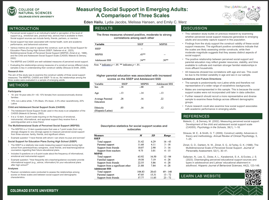
Category: Research Poster
Author(s): Eden Hailu, Emily Merz, Lydia Jacobs, Melissa Hansen
Presenter(s): Eden Hailu
Evaluating the relationships among measures of a construct across different study samples is key in understanding their construct validity (Strauss & Smith, 2009). The current study examined three scales of social support in a larger study of emerging adults: The Multidimensional Scale of Perceived Social Support (MSPSS; Zimet et al., 1988), Child and Adolescent Social Support Scale (CASSS; Malecki & Demary, 2002), and Social Support for Education Plans (SSEP). These scales assess types of support received from an individual's social network (e.g., family, friends, teachers), including emotional, instrumental and informational support. Forty 18–19-year-olds (85% female, 70% non-latine white) from socioeconomically diverse backgrounds completed the three metrics via computerized surveys. Pearson correlations were conducted to assess the relationships among these scales and sample demographics. The three measures showed positive, moderate to strong correlations among each other (r = .43-.54, p < .01). Higher parental education was associated with increased social support, the strongest association being observed for the SSEP (MSPSS: r = .16; CASSS: r = .22; SSEP: r = .28). All measures showed low correlations with age and sex. Overall, our findings support the validity of these measures as useful, but distinct tools for measuring social support among emerging adults. The positive relationship between perceived social support and parental education may reflect greater resources, stability, and time available to cultivate and maintain stronger familial relationships in affluent households. This study provides insights into the measurement of social support, a construct widely recognized as important for healthy adolescent development.
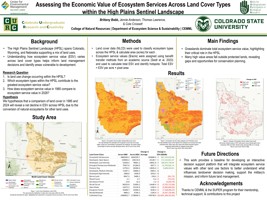
Category: Research Poster
Author(s): Brittany Bobb
Presenter(s): Brittany Bobb
Mentors(s): Cole Crossett, Jennie Anderson, Thomas Lawrence
Ecosystems provide a wide range of services that support human well-being, including water regulation, carbon storage, habitat provision, and recreation. Estimating the value of ecosystem services within the High Plains Sentinel Landscape (HPSL), a multi-state region spanning Wyoming, Nebraska, and Colorado that includes working lands, conservation areas, and military uses, can guide land management decisions and support partnerships that maintain infrastructure compatible with the military mission. The study assesses the economic value of ecosystem services across multiple land cover types within the High Plains Sentinel Landscape using a benefit transfer approach. Land cover data derived from the National Land Cover Database (NLCD) were used to identify dominant ecosystem types including forests, grasslands, wetlands, agricultural lands, and developed areas. Per-acre ecosystem service values from existing valuation studies were applied to each land cover class to estimate the total annual value of ecosystem services provided within the study area. An additional landscape variable, protected land status, was incorporated as contextual multipliers to better reflect conservation opportunities within the area. The results provide an estimate of the total ecosystem service value of the region and highlight how different land cover types contribute to ecological and economic benefits. This analysis demonstrates the importance of natural and seminatural landscapes in supporting ecosystem services and provides a framework for integrating ecological value into land use planning and resource management.
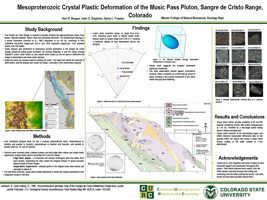
Category: Research Poster
Author(s): Hari Brogan, Dylan Frawley, John Singleton
Presenter(s): Hari Brogan
Mentors(s): Dylan Frawley, John Singleton
In southern Colorado, the Sangre de Cristo Range contains the Mesoproterozoic Music Pass pluton (quartz monzonite ca. 1.43 Ga). A pervasive subvertical ENE-WSW-striking foliation averages 116/81 SSW and suggests folding about a steeply-plunging axis, with an average mineral lineation of 258/64. Microstructural and electron backscatter diffraction analyses of quartz and hornblende indicate grain boundary migration dynamic recrystallization and dislocation creep at high temperature (>500°C) matching amphibolite grade deformation. Minimal rotation of macroscopic foliation across localized shear zones suggests coaxial deformation, but weakly asymmetric fabrics may indicate north/northeast-side-up shear. To evaluate 3D strain geometry, cut and scanned mutually perpendicular faces (XZ, YZ and XY planes) of orientated samples were used for both edge fabric ellipse and shape matrix eigenvector analyses. Lode’s strain symmetry values (v) range from 0.04–0.35, indicating plane strain to slightly oblate strain. Natural strain (ε) values range from 0.38–0.71. U-Pb geochronology of an apatite separate yielded a date of 1338±15 Ma, which records the timing of cooling below ~500–450°C. Deformation in the Music Pass pluton likely involved a period of high-temperature (>500°C), coaxial dominated strain under ~NE-SW directed contraction shortly after pluton emplacement (between ~1.43-1.34 Ga), followed by a late-stage subtle folding of foliation about a steeply west-plunging axis.
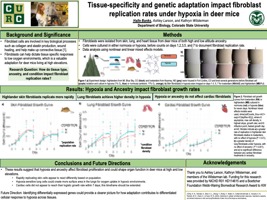
Category: Research Poster
Author(s): Halle Banks
Presenter(s): Halle Banks
Mentors(s): Ashley Larson, Kathryn Wilsterman
High altitudes fundamentally challenge physiology through both low oxygen and cold. Highland-adapted species, including the North American deer mouse (Peromyscus maniculatus), possess genetic adaptations that improve performance in part through altered physiological responses to low oxygen. In most cases, these adaptive responses must be tissue-specific. Here, we asked how tissue identity impacts ancestry-dependent responses to low oxygen by comparing the replication rate of primary fibroblast cells isolated from lung, heart, and skin between adapted and non-adapted deer mice. We found that the density at which the replication of lung fibroblast replication plateaued was greater under hypoxia (P < 0.001), but this did not differ by ancestries. In contrast, skin fibroblast replication rates were greater in highland-ancestry mice relative to lowlanders (P < 0.01), but both ancestries were insensitive to hypoxia. Cardiac fibroblast replication rates did not differ by treatment or ancestry. Our results demonstrate that tissue-specific fibroblast identity persists in vitro in deer mice; however we did not find evidence of ancestry-specific responses to hypoxia at the level of replication rate. Combining these experiments with transcriptomics will provide a clearer picture of how adaptation contributes to differentiated cellular responses to hypoxia across tissues.
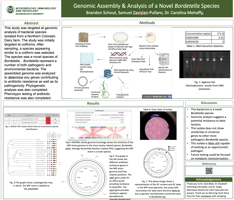
Category: Research Poster
Author(s): Brandon Schout
Presenter(s): Brandon Schout
Mentors(s): Martha Mehaffy
This study focused on whole genome analysis of bacterial species isolated from a Northern Colorado Dairy farm. The main goal of the study was to use whole genome sequencing to evaluate antimicrobial resistant genes present in enteric bacteria isolated from the environment. A cow bedding sample was obtained and followed with isolation of a non-lactose fermenter bacterial colony. A pure culture of this isolate was used to purify high molecular weight DNA extraction followed by long-read nanopore sequencing. Bioinformatic analysis included de-novo genome assembly and functional genomics to identity the isolate genus and species, and to determine any genes contributing to antibiotic resistance as well as its pathogenicity. These analyses revealed that this isolate was a novel species of the genus Bordetella. Bordetella represent a number of both pathogenic and environmental bacteria. The isolate was found to not have any significant potential for pathogenicity when compared to known pathogenic species of Bordetella, such as Bordetella pertussis. Furthermore, the bacterial genome contains genes for a muti-drug efflux pump providing protection against tetracycline and fluoroquinolone. The genome also contained a gene providing protection against a number of chemical disinfectants. Phylogenetic analysis was also completed, which confirmed that the bacterium was a novel species, and showed that Bordetella petrii was the most closely related species. Due to the classification as a novel species, phenotypic testing is underway.

Category: Research Poster
Author(s): Samantha Nauman, Cassandra Lange
Presenter(s): Samantha Nauman, Cassandra Lange
Mentors(s): Steven Fassnacht
Water resources are becoming more scarce across much of the world, especially in semi-arid regions like Colorado, where a majority of the water comes from snow. It has become easier to measure snow depth (ds) using recent technological advances such as sonic and laser depth sensors, snow poles with cameras, lidar, and photogrammetry. However, to accurately represent how much water is in storage for yearly allotment, density (ρs) is necessary to estimate snow water equivalent (SWE). Several studies, such as Mizukami and Perica (2008; https://doi.org/10.1175/2008JHM981.1) and Sturm et al. (2010; https://doi.org/10.1175/2010JHM1202.1), have derived ρs as a function of time for different areas or climates, respectively. The approaches prove good approximations of the seasonal evolution of ρs, but do not account for the daily fluctuations due to fresh snow accumulation and subsequent metamorphism and compaction. This work aims to improve the temporal evolution density estimation methods to consider these shorter-term fluctuations. Here, snow telemetry (SNOTEL) data from various sites across the western United States were used with snow depth data to improve ρs estimates. Daily SNOTEL SWE and depth were used to compute bulk density (ρs-actual) for the period 2005-2020. The Mizukami and Perica (2008) two-part linear snowpack density equations were used to provide an initial estimate of ρs-MP for each day. The difference between ρs-actual and ρs-MP was up to 75 kg/m3. The total snow depth and daily fresh snow accumulation were then used to adjust the ρs-MP estimates, reducing the error in these revised density estimates substantially. The last five years (2021-2025) of data were used to evaluate this new methodology.
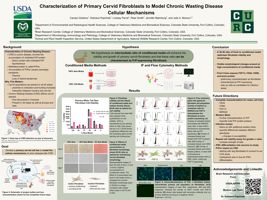
Category: Research Poster
Author(s): Carolyn Dobkins
Presenter(s): Carolyn Dobkins
Mentors(s): Julie Moreno, Katriana Popichak
The United States maintains large cervid populations across all 50 states with a strong hunting culture throughout. Last year Colorado alone handed out over 83,000 hunting tags. Increasing proximity between humans and wild cervids raises concern about zoonotic diseases such as Chronic Wasting Disease (CWD). First identified in captive deer in Colorado, CWD has since spread across the United States and into Europe and Asia. CWD is a prion disease caused by misfolding of the normal cellular prion protein (PrP), which is expressed in the central nervous system and peripheral tissues. Misfolding can occur through interaction with already misfolded PrP (PrPSc) or through poorly understood spontaneous mechanisms. Accumulation of PrPSc leads to progressive neurological decline in cervids, including tremors, poor coordination, drooling, and behavioral changes. The aim of this study is to establish a primary fibroblast cell model isolated from cheek and ear tissue samples from white-tailed and mule deer. Because these cells are not immortalized, growth conditions were optimized by testing fresh-to-conditioned media ratios ranging from 100:0 to 0:100. Cells were incubated for ten days at two different densities and analyzed for morphology and viability. Results showed that 50:50 media ratio predicted optimal growth and viability. Subsequent characterization using immunofluorescence and flow cytometry confirmed fibroblast identity and prion protein expression, supporting the development of a model system to study the mechanisms of prion infection.
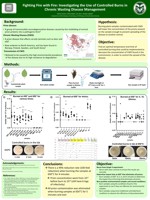
Category: Research Poster
Author(s): Naomi Duran
Presenter(s): Naomi Duran
Mentors(s): Margaret Tyer
A prion disease is a group of transmissible neurodegenerative diseases caused by the misfolding of normal prion proteins into a pathogenic form. These misfolded proteins then cause cell death and malfunction of the brain, leading to things like cognitive and neuromuscular issues. One of these prion diseases that affects cervids (animals such as deer and elk) is called Chronic Wasting Disease, or CWD. This disease has been spreading rapidly over the past 20 years, and it is now endemic to North America. It has also been found in Norway, Finland, Sweden, and South Korea. The spread of CWD is believed to be caused by the high environmental prevalence of the disease, due to its high resistance to degredation. This study is investigating the use of controlled forest fire burning to decrease the concentration of CWD found in the environment, in order to control the spread of the disease. This will be done by experimentally contaminating plant samples with different dilutions with a known positive prion sample, burning them in a furnace for different times and temperatures, and testing the concentration of prion proteins found on the samples after burning using Real-Time Quaking-Induced Conversion. The goal of this study is to find an optimal temperature and time of controlled burning that could be implemented to decrease the amount of CWD in the environment. This research presents a potential way to prevent the spread of CWD across North America.
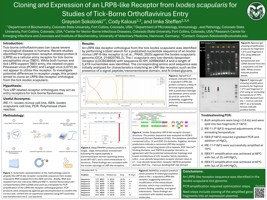
Category: Research Poster
Author(s): Grayson Sokoloski, Cody Kalous, Imke Steffen
Presenter(s): Grayson Sokoloski
Mentors(s): Imke Steffen
Cloning and Expression of an LRP8-like Receptor from Ixodes scapularis for Studies of Tick-Borne Orthoflavivirus Entry Grayson Sokoloski, Cody Kalous, and Imke Steffen Center for Vector-Borne Infectious Diseases, Colorado State University, Fort Collins, CO Tick-borne orthoflaviviruses can cause severe neurological disease in humans. Recent studies identified the lipoprotein receptor-related protein 8 (LRP8) as a cellular entry receptor for tick-borne encephalitis virus (TBEV). While both human and tick LRP8 support TBEV entry, the related viruses Powassan virus (POWV) and Langat virus (LGTV) do not appear to utilize this receptor. To investigate potential differences in receptor usage, this project aimed to clone an LRP8-like receptor orthologue from the tick Ixodes scapularis. Sequence comparison and BLAST analysis identified a putative LRP8 orthologue in the I. scapularis genome. In silico analysis of the predicted protein sequence revealed features characteristic of LRP-family receptors, including an N-terminal signal peptide, a transmembrane domain, and multiple predicted N-glycosylation sites. Total RNA was isolated from tick cell lines derived from Ixodes scapularis (ISE6) and Ixodes ricinus (IRE11), reverse-transcribed into cDNA, and used as a template for PCR amplification with gene-specific primers. Because the receptor coding sequence (~2.6 kb) is relatively large, the gene was amplified in two fragments. Following optimization of PCR conditions, both fragments were successfully amplified and prepared for assembly into an expression plasmid using HiFi cloning. The resulting constructs will be sequence-verified and expressed in HEK293T cells to assess receptor expression by western blot and enable future studies testing whether tick LRP-like receptors support entry of Powassan or Langat viruses.
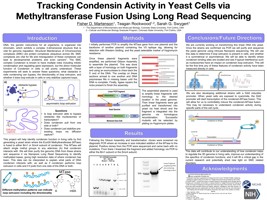
Category: Research Poster
Author(s): Fisher Martenson, Sarah Swygert, Teagan Rockwood
Presenter(s): Fisher Martenson
Mentors(s): Sarah Swygert, Teagan Rockwood
Condensin is a structural maintenance of chromosomes (SMC) protein complex known to alter the three-dimensional structure of chromatin. This protein is essential for compacting chromosomes during mitosis, and condensing chromatin during quiescence. Studies have shown that condensin does this through a process called loop extrusion. However, how loop extrusion functions at the molecular level within cells is unknown. Obtaining greater understanding of SMC complex activity and how it affects chromatin structure has potential to further basic science and medical genetic research. I plan to determine the function of condensin in quiescent cells by fusing it to a methyltransferase (MTase). To construct the condensin-MTase strain in yeast, I will make a plasmid that contains a yeast selectable marker and EcoGII methyltransferase. I will then use PCR to make a linear amplicon of the plasmid containing homology for the condensin subunit SMC4, which will then be transformed into yeast. The condensin-MTase will methylate DNA that becomes incorporated into condensin loops. I will then purify yeast genomic DNA from these strains and use long read Nanopore sequencing to detect methylated DNA to determine the DNA regions condensin interacted with, allowing me to establish the directionality and presence of loop extrusion. These experiments will elucidate the loop extrusion activity in cells, which has previously only been observed in artificial biochemical experiments. Given that mutations in SMC complexes drive a range of human diseases, a mechanistic understanding of loop extrusion in cells represents a critical step forward for basic biology and potential therapeutics.

Category: Research Poster
Author(s): Fiona Bowman, Julie Moreno, Karissa Crozier, Olivia Lowe, Payton Shirley, Rebecca Fultz, Stephanie McGrath
Presenter(s): Fiona Bowman
Mentors(s): Julie Moreno, Payton Shirley
Aged canines spontaneously develop Canine Cognitive Dysfunction (CCD) syndrome, a neurodegenerative disorder sharing similar neuropathological features with Alzheimer's disease (AD) including Amyloid-Beta (Aꞵ) plaques and hyperphosphorylated tau (P-tau). In AD, these pathological proteins misfold and accumulate within the brain leading to synaptic dysfunction and neuronal loss. This aggregation is highly toxic to neurons, impeding cognitive function and accelerating neuronal degradation. What remains unknown is the extent to which neurons are degrading and dying in key regions of the brain involved in neurodegeneration in CCD+ canines. This study examines neuronal degeneration in aged canines with presumed CCD. We hypothesize that there will be a significant increase of neuronal loss in vulnerable brain regions. Cognitive status of canines will be evaluated through the Canine Dementia Scale (CADES) and Aβ pathology, by which they are identified as CCD- or CCD+. Postmortem brain tissue from the cortex, hippocampus, and striatum will be collected for histological analysis. Immunohistochemistry (IHC) staining uses NeuN, a marker for mature neuron nuclei to visualize neuronal loss. Presence of pyknotic neurons and atrophy will be evaluated via H&E staining. H&E analysis revealed shrunken and darkly stained neurons within cortical regions and atrophy within hippocampal regions of CCD+ canines. This will be coupled with Fluoro-Jade C staining to evaluate degenerating neurons confirming pyknosis. Neuronal density analysis is ongoing, but we expect increased neuronal loss in vulnerable brain regions via IHC. Together, these findings aim to evaluate neuronal loss in aged canines with CCD, revealing pathological features shared with AD.
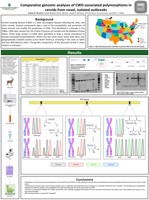
Category: Research Poster
Author(s): Sophia Serwold, Glenn Telling, Hannah Bodrogi, Joseph DeFranco, Zoe Atkinson
Presenter(s): Sophia Serwold
Mentors(s): Joseph DeFranco
Chronic wasting disease (CWD) is a fatal neurological disease affecting elk, deer, and other cervids. Genetic components play a role in the susceptibility and protection of these animals and modify the properties of CWD. First identified in Colorado in the 1960s, CWD later spread into the Prairie Provinces of Canada and the Midwest United States. These large clusters of CWD were identified to have a similar prevalence of disease-associated polymorphisms. Within the last seven years, there have been new geographically isolated clusters across North America, including in the state of Idaho and four Mid-Atlantic states. The genetic composition of the diseased cervids in these clusters is unknown. We collected presumptive CWD-positive lymph node samples and confirmed disease using real-time quaking induced conversion. We extracted genomic DNA, amplified the PrP open reading frame by polymerase chain reaction (PCR), and used nanopore sequencing to determine the PRNP sequence of the CWD-positive isolates. We found that these polymorphisms were equivalent to the previously identified sequences in other clusters. These data suggest that these novel clusters are due to horizontal transmission to new regions, not a distinct strain of CWD. We also used genomic DNA to assess the prevalence of female and male cervids that were determined to be positive for CWD and discovered a higher percentage of male CWD-positive cases. These results improve our understanding of the genetic factors contributing to CWD cases in North America.
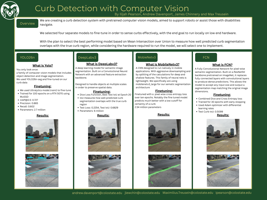
Category: Research Poster
Author(s): Ilijah Pearson, Andrew Davenport, James Chinnery, Maximilius Treusein
Presenter(s): Ilijah Pearson
Mentors(s): Nathaniel Blanchard
Curbs are an everyday spatial obstacle and a key factor in determining accessibility; whether it is for the visually impaired, users of mobility devices, or robots. This is why we will build a real-time curb detection system for outdoor video that is reliable enough to provide an early warning when a curb is in frame. This system would help with the navigation of outdoor environments. A system like this would also be useful to automate accessibility audits and allow city planners to see where the biggest accessibility gaps are for their area
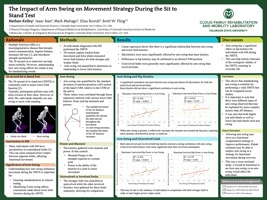
Category: Research Poster
Author(s): Nathan Kelley, Brett Fling, Isaac Bast
Presenter(s): Nathan Kelley
Mentors(s): Isaac Bast
Multiple Sclerosis (MS) affects nearly 1 million individuals across the country. This neurodegenerative disease degrades the myelin sheath around axons, impairing neural communication. This can cause balance issues and increases the risk of falling. Standing up and sitting down are when many of these falls occur as rapid postural adjustments are frequently needed. The 30 second sit to stand test (30STS) requires participants to rise and sit as many times as possible over 30 seconds and is used to assess an individual’s ability to perform these transfer movements. Participants are instructed to perform the test with their arms crossed over the chest. However, individuals often swing their arms to assist with this movement in daily life. The purpose of this study was to determine whether arm swing alters 30STS transfer technique in individuals with MS. In this study, 34 participants with MS performed the 30STS while 3D motion capture and force data were collected. Relationships between arm swing and lower limb kinetic variables were assessed. Anterior/Posterior arm swing was significantly correlated with select lower limb kinetic variables, indicating altered movement strategies between participants. These findings highlight the importance of standardizing arm position to enable valid comparisons across populations. Conversely, the altered lower-limb kinetics observed as arm swing increased suggests that incorporating arm movement may be useful for clinicians to facilitate chair-rise performance.

Category: Research Poster
Author(s): Evan Smith, Luke Namesnik
Presenter(s): Evan Smith
Mentors(s): Phillida Charley, William Schountz
Bats are reservoir hosts of many viruses of human concern such as SARS-CoV-1, Nipah, Hendra, and Marburg viruses. These viruses can cause high fatality rates in human populations, but the bats themselves do not show signs of disease. Researchers have been interested in determining the effects of bat virus infections in humans. Although, little research has been done on the effects of human viruses on bats. Human coronavirus OC43 (OC43-CoV) is a positive sense RNA virus belonging to the genus Betacoronavirus and is one of the human common cold viruses. In this experiment, we inoculated a Jamaican fruit bat (Artibeus jamaicensis) kidney cell line, Ajk6-8, at an MOI of 0.01 and collected supernatant at 1, 24, 72, 120, and 168 hours post infection. Viral RNA was detected in the time points supernatants by qPCR. OC43-CoV is known to not cause distinguishable cytopathic effect (CPE) in many common cell lines; however, the Ajk6-8 cell line shows clear CPE at 72hpi. This study identifies a bat cell line as a useful tool for researching OC43-CoV; furthermore, it suggests that in vivo challenge studies of Jamaican fruit bats may provide a new animal model for OC43-CoV.
Category: Research Poster
Author(s): Braelyn Maze, Carlos Diaz Dominguez, Glenn Telling, Jenna Crowell, Joseph DeFranco, Sehun Kim, Zoe Atkinson
Presenter(s): Braelyn Maze
Mentors(s): Joseph DeFranco
Chronic wasting disease (CWD) is an infectious, neurodegenerative prion disease impacting cervid populations, including deer and elk. Prion diseases are characterized by the misfolding of the normal cellular prion protein (PrPC) to its diseased form (PrPSc). CWD impacts cervid populations in North America (NA) and Nordic countries, but present through different strains. The NA strain is highly contagious and transmissible among the wild and free ranging cervid populations; whereas the Nordic reindeer CWD strains appear to be contagious and circling in free-ranging populations, and the Nordic moose prions are hypothesized to be of sporadic origin. Recently, a laboratory technique has been developed that can generate synthetic prions from cervid PrPC. We hypothesize that transmissions of Nordic moose CWD prions and synthetic cervid prions will produce the same disease outcome. Here, we looked at strains from NA, Norway, and synthetic prions to compare deposition patterns within the brains of gene-targeted mice. Synthetic prions are used to model what could occur in the wild with natural prions, which would provide helpful insight into the strain characteristics of the emerging Nordic CWD strains such as the potential for transmissibility within cervid species and possibly across species such as to humans. Our conclusions were that the three strains (synthetic, NA, and Nordic) had varying intensities in the hindbrain. These results demonstrate that the cervid prions are unstable and could reflect the emergence of novel CWD prions in the wild.
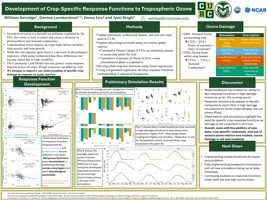
Category: Research Poster
Author(s): Will Selvidge, Danica Lombardozzi
Presenter(s): Will Selvidge
Mentors(s): Danica Lombardozzi
Tropospheric ozone (O3) is a major pollutant, formed through chemical reactions with nitrogen oxides (NOx), volatile organic compounds (VOCs), and sunlight. This ozone damages plant physiological processes when present in high enough concentrations. While literature suggests plant photosynthesis and stomatal conductance are negatively impacted by O3 exposure, there are limited studies that examine these physiological impacts using compiled datasets. Studies that have done so have had limited success in determining conclusive physiological damage in crops and often do not differentiate by individual crop types. Here we compiled a dataset from multiple published studies to examine O3 exposure on different crop types used within the Community Land Model (CLM). Using site level simulations in CLM, we tested multiple response functions using various modeling techniques and predictor variables, evaluating changes in crop productivity and yield. We find that individual crop responses vary to increased O3 exposure and that significant variability in stomatal conductance responses can mask ozone damage relationships. The results illustrate the importance of crop-specific response functions to improve model accuracy and better assess future agricultural impacts.
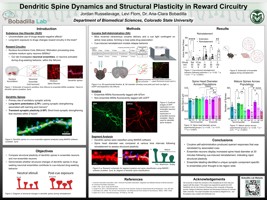
Category: Research Poster
Author(s): Jordan Russelavage, Levi Flom
Presenter(s): Jordan Russelavage
Mentors(s): Ana Clara Bobadilla
Substance use disorder (SUD) affects millions of individuals globally. Long-term exposure to drugs causes changes in the reward circuitry in the brain, specifically impacting dendritic spines. Dendritic spines are small, dynamic protrusions on neuronal dendrites that form excitatory synapses in the brain, allowing neurons to communicate and support learning. The shape and density of dendritic spines change in response to experience and learning during drug-seeking events; therefore, making them key structural indicators of neuroplasticity. The Bobadilla Lab investigates how dendritic spines within drug seeking neuronal ensembles, also known as groups of neurons activated together during cocaine-seeking, undergo structural and functional plasticity. In this project, cocaine seeking ensembles in mice are tagged using the Targeted Reactivation of Active Populations (TRAP) system, a genetic method that permanently labels neurons active during cocaine-seeking behavior, allowing selective visualization of these neurons with confocal microscopy. Spine morphology and density are then quantified using IMARIS to assess structural remodeling following cocaine exposure and reinstatement of cocaine seeking. This approach reveals how cocaine alters synapses within behaviorally relevant ensembles. Understanding spine level plasticity in reward circuitry may help identify ensemble specific mechanisms that contribute to drug seeking and could inform future therapeutic strategies.
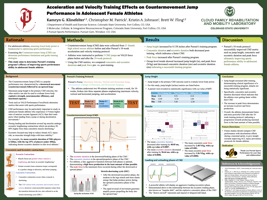
Category: Research Poster
Author(s): Kamryn Klinefelter
Presenter(s): Kamryn Klinefelter
Mentors(s): Christopher Patrick
For adolescent athletes, assessing lower-body power is fundamental to optimizing sports performance. The countermovement jump (CMJ) is a widely used performance test, characterized by a rapid downward movement followed by an upward vertical jump. Maximum jump height is the primary CMJ outcome, but other metrics can also be used to evaluate lower-body explosive strength, neuromuscular efficiency, and functional capacity. Specifically, examining contributions of the eccentric and concentric phases within a CMJ can determine performance limitations and guide training strategies. An accelerated eccentric phase may increase stored energy, contributing to greater peak force production while minimizing metabolic demand and fatigue. Improving eccentric lengthening may enhance explosive concentric phase of the CMJ. Pursuit Sports Performance (Pursuit) program, focusing on velocity and acceleration, aims to improve such eccentric muscle lengthening efficacy. However, little is known about the effectiveness of such programs in improving eccentric phase characteristics during CMJ performance. The purpose of this study was to evaluate the effectiveness of Pursuit’s 10-week acceleration and velocity training protocol to improve CMJ performance metrics. CMJ data were collected from 21 female high school soccer athletes before and after the training program. The training program was structured into three phases, emphasizing maximum velocity, vertical and horizontal jumping, and acceleration. Eccentric and concentric phase durations and peak power metrics were analyzed pre- and post-training to determine the magnitude a direction of changes resulting from the training program. These findings may help inform the use of phase-specific CMJ metrics to guide individualized programs and optimize athlete development.
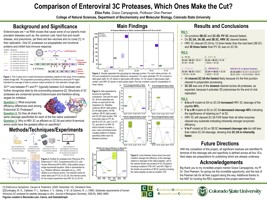
Category: Research Poster
Author(s): Eliza Fuhs
Presenter(s): Eliza Fuhs
Mentors(s): Olve Peersen
Enteroviruses of the Picornaviridae family largely lack cures and primarily affect children often with fatal consequences. These positive sense ssRNA viruses utilize viral 3C proteases to cleave large polyproteins translated from the virus genome, specifically at Q:G junctions, into smaller functional proteins and interfere with host immune system proteins. I utilized fluorescence polarization assays to observe the interactions between 3C and polypeptide cleavage junctions through protein purification and design of native and mutant 14 nucleotide fluorescently labeled peptides. I found that the 3Cs of four picornaviruses had different enzymatic efficiency and cleavage specificity patterns. Poliovirus 3C and Human Rhino Virus - B14 3C were generally the most enzymatically efficient, and the most efficient enzyme peptide combination was this HRV-B14 3C on the 2C:3A junction. All four enzymes were found to have the greatest specificity for junction 2C:3A followed by 3B:3C while being relatively nonspecific for the other three junctions. Single point mutations in peptides with HRV-B14 3C revealed two nucleotide identities N-terminal to the Q:G junction that were key determinants of protease cleavage specificity with the junction. These findings provide context on picornaviral 3C function and biochemistry that may increase potential for the creation of multi-viral inhibitors.
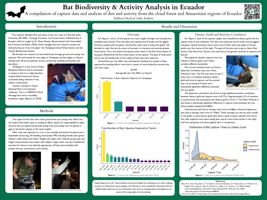
Category: Research Poster
Author(s): Sofia Ambriz, Mary Nord
Presenter(s): Sofia Ambriz, Mary Nord
Mentors(s): Tanya Dewey
This study was conducted at two research stations in Ecuador: Tiputini Biodiversity Station, located in Yasuní National Park in the Amazon rainforest and Tandayapa Cloud Forest Station, which is in the Chocó Andino Biosphere Reserve. The aim was to use mist net and canopy net captures to gain a better understanding of bat diversity and the relationship between diet and foraging times in these understudied yet ecologically important regions. Twelve individual bats across six different species were caught at Tandayapa and fifty-four individuals in eighteen species were caught at Tiputini, which is only a small fraction of the known species richness of Chiropterans in this area (Tirira, 2017). Utilizing the catch data, we aimed to make an inference about foraging activity via dietary guild, frugivorous or insectivorous, of bats caught and capture time. Through statistical analysis, a large significant positive correlation between dietary guild and time of capture was found (r=0.715). Approximately 51% of variation in activity times was associated with dietary guild (r^2=0.511). Along with this, a statistically significant difference in capture times was seen between dietary guilds (p<0.0001). While there are limitations in our findings due to our small dataset and short time duration, these preliminary results can inform future research and be critical in continuing to learn about and conserve these species in this extremely biodiverse region.
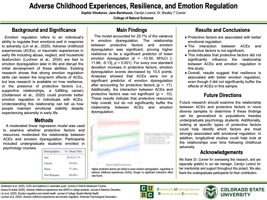
Category: Research Poster
Author(s): Jane Barnhouse, Sophie Vinokurov
Presenter(s): Jane Barnhouse, Sophie Vinokurov
Mentors(s): Bradley Conner, Carolyn Lorenzi
Adverse childhood experiences (ACEs) have been priorly linked to many negative long term behavioral outcomes. Exposure to adversity in childhood, including but not limited to abuse, neglect, and household dysfunction, can disrupt the typical timeline of an individual to develop emotional coping strategies, impairing their abilities to effectively manage emotional experiences later in life. Emotional regulation, which refers to the ability to manage and understand emotional responses, is especially affected by ACEs, however not all individuals who have experienced adversity in their childhood experience the same level of emotional dysregulation. Many individuals have demonstrated resilience despite exposure to significant stress early in life. This suggests that protective factors such as resilience may help limit and cushion the impact of those experiences. To examine the relationship between adverse childhood experiences and emotional regulation, ACEs were measured using the Adverse Childhood Experiences questionnaire and emotional regulation difficulties were measured using the Difficulties in Emotional Regulation Scale (DERS). Additionally, to explore the role resilience plays in emotional regulation following ACE’s, the Resilience Protective Factors Checklist (RPFC) was used to measure any resources that may have benefited emotional regulation despite early adversity. The goal is to identify if more extreme levels of childhood adversity are associated with increased difficulties with emotional regulation later in life, and the role resilience plays into it. Understanding how resilience impacts individuals who have experienced early adversity can provide insight into future directions to strengthen emotional regulation.

Category: Research Poster
Author(s): Sierra Nordwald, Megan Kelly
Presenter(s): Sierra Nordwald
Mentors(s): Timothy Hansen
Many residents of Fort Collins, Colorado remain unaware of the time-of-day pricing model utilized by Fort Collins Utility, leaving them undereducated on how peak and off-peak electricity rates impact their monthly bills. To address this gap, we propose an agentic AI system designed to provide residents with accurate, accessible guidance on the most cost-effective times to operate major household appliances. This study investigates the extent to which a Large Language Model (LLM) based AI agent can accurately and effectively educate household residents about the operational costs of major home appliances, with the goal of reducing both energy consumption and unnecessary expenses. Our research centers on the adaptation of Large Language Models through fine-tuning and Retrieval-Augmented Generation (RAG), trained on large data sets sourced directly from Fort Collins Utility alongside question-based data sets developed to support model evaluation. We anticipate that an AI agent built using these combined approaches will outperform a baseline LLM in improving accuracy to assist residents' in understanding the operational costs of running in home appliances. Resulting in a measurable increase in energy cost awareness and a reduction of unnecessary electricity expenses. Ultimately, this work aims to produce an AI chatbot capable of serving as a personal assistant embedded in smart home devices. Bridging the gap between educational barriers and the unnecessary costs that are associated with the Fort Collins time-of-day pricing structure.

Category: Research Poster
Author(s): Evan Harris, Christopher Vaaga, Raven McGann
Presenter(s): Evan Harris
Mentors(s): Christopher Vaaga
The cerebellum has traditionally been viewed as a motor structure, but recent evidence suggests that it may play a significant role in emotion, autonomic, and cognitive function. These new developments highlight an emerging need to understand early circuit development within the cerebellum, as disruptions may contribute to neurodevelopmental disorders, such as autism spectrum disorder (ASD). At the circuit level, Purkinje cells (Pkj cells) provide the sole output of the cerebellar cortex, synapsing onto neurons in the cerebellar nuclei (CbN). In adult tissue, the cortico-nuclear synapse (Pkj cell to CbN cell) is strongly inhibitory (GABAergic), but recent anatomical and functional data suggest that early in postnatal development, Pkj cells also co-release an excitatory neurotransmitter (glutamate). In many inhibitory circuits, developmental glutamate release plays an important role in early synaptogenesis. Here, we sought to elucidate the synaptic development of the cortico-nuclear synapse using immunohistochemical approaches. First, we quantified the density of Pkj cell synaptic terminals within the cerebellar nuclei across development by co-staining for calbindin (a Pkj cell-specific marker) and synaptophysin (a presynaptic terminal marker). We next sought to characterize developing synapses as glutamatergic or GABAergic using antibodies against cell-type specific presynaptic proteins (GABA: vGAT; Glutamate: vGLUT3). These results will define the synaptic development of both glutamatergic and GABAergic synapses at the cortico-nuclear synapse; laying a foundation to understand how neurodevelopmental disorders may disrupt early cerebellar circuit formation.
Category: Research Poster
Author(s): Laura Richards, Spencer Lenius, Stefania Miranda
Presenter(s): Laura Richards
Mentors(s): Yulia Maximenko
Atomically thin materials are an important building block for technology. From sensors and computing applications to exploring the effects of 2D materials on the quantum level, these materials can contribute significantly to many fields, including small efficient transistors for touchscreens and displays, highly efficient batteries, and many more applications. Atomically thin materials are the most useful when they are thin and uniform, and larger flakes with good uniformity are desirable. A common method for creating atomically thin materials is exfoliation of crystalline structures, such as graphite. This project proposes adding charge to the exfoliation process by creating a parallel plate capacitor out of crystal. The charge build-up of the capacitor creates more space within the crystal lattice, due to coulombic repulsion. allowing for more ease in removing the surface plane of the crystal. The capacitor was created by designing a platform to hold the sample with conductive materials on both sides. Wire runs from each of the conductive plates to a breadboard that applies the voltage. The sample is secured in the device, then the top conductive plate is lowered to touch the sample, with tape between to create the capacitor and perform the exfoliation. A scale was later added to facilitate consistency in applied pressure. So far, the project shows visibly larger flakes as well as a greater quantity of flakes when exfoliated with charge and viewed under an optical microscope. Next steps include further testing with various crystal types and quantitative measurements using atomic force microscopy.
Category: Research Poster
Author(s): Lauren OBrien
Presenter(s): Lauren OBrien
Mentors(s): Mark Stenglein
Galbut virus, a persistent RNA virus that infects the model organism Drosophila melanogaster, is believed to have a tri-segmented genome. Nonetheless, recent studies have identified a 4th RNA segment associated with infection named chaq virus. But it's not clear what this RNA is. This uncertainty is reflected in the name chaq, which means "maybe" in Klingon. We hypothesized that chaq virus is instead an independent satellite virus of galbut virus capsids. Satellite viruses rely on their helper virus to allow their own replication and transmission, which means chaq virus could be influencing galbut virus ecology, virulence, and evolution. In this project, I isolated viral capsid particles of chaq and galbut virus from infected Drosophila via filtration-based purification and density gradient ultracentrifugation. The presence of chaq and galbut virus particles was identified by Western blot and imaged via electron microscopy to visualize putative capsid proteins. To confirm the identity of the putative chaq capsids, further testing via RT-qPCR will confirm the presence of Chaq RNA. This work will provide insight into the functional relationship between chaq and galbut virus and provide new information to the understanding of virus-virus interactions.
Category: Research Poster
Author(s): Omar Eltayeb
Presenter(s): Omar Eltayeb
Mentors(s): Jenniffer Riley
As research on the gut microbiota has progressed, growing evidence has reflected its significant influence on body functions. The question arises of the microbiota-gut-brain axis, a communication pathway between gut microbes and the nervous system. Although research has recognized that gut bacteria affect the nervous system, the mechanisms driving these effects remain unclear. By recognizing the role of gut microbes in neurological health, it becomes essential to advance microbiome-targeted therapeutic strategies for neurodegenerative disorders. Probiotic bacteria such as Lacticaseibacillus casei have been associated with improved cognitive function in organisms, but the direct effects of probiotic strains remain insufficiently characterized. This project investigates whether exposure to varying concentrations of L. casei influences locomotion and chemotaxis behaviors in Caenorhabditis elegans. Caenorhabditis elegans is a commonly used model organism because of the advantages it has over other animal models, creating a foundation for understanding how probiotic bacteria influence neuro-driven behaviors and potentially enhance cognitive or behavioral resilience, ultimately guiding the development of microbiome-targeted therapies. Specifically, this study tests whether increasing L. casei concentration in the diet alters C. elegans behavior compared to a standard E. coli control diet. It is hypothesized that higher L. casei concentrations will increase locomotion (body bends per minute) activity and chemotaxis performance. The gap in current research lies in the mechanistic and dose-dependent analysis of how probiotic strains influence measurable neurobehavioral output. This study aims to establish foundational evidence linking microbial concentration to behavioral modulation, contributing to a greater understanding of the microbiota-gut-brain axis.
Category: Research Poster
Author(s): Megan Kelly, Sierra Nordwald
Presenter(s): Megan Kelly
Mentors(s): Timothy Hansen
Many residents of Fort Collins, Colorado remain unaware of the time-of-day pricing model utilized by Fort Collins Utility, leaving them undereducated on how peak and off-peak electricity rates impact their monthly bills. To address this gap, we propose an agentic AI system designed to provide residents with accurate, accessible guidance on the most cost-effective times to operate major household appliances. This study investigates the extent to which a Large Language Model (LLM) based AI agent can accurately and effectively educate household residents about the operational costs of major home appliances, with the goal of reducing both energy consumption and unnecessary expenses. Our research centers on the adaptation of Large Language Models through fine-tuning and Retrieval-Augmented Generation (RAG), trained on large data sets sourced directly from Fort Collins Utility alongside question-based data sets developed to support model evaluation. We anticipate that an AI agent built using these combined approaches will outperform a baseline LLM in improving accuracy to assist residents' in understanding the operational costs of running in home appliances. Resulting in a measurable increase in energy cost awareness and a reduction of unnecessary electricity expenses. Ultimately, this work aims to produce an AI chatbot capable of serving as a personal assistant embedded in smart home devices. Bridging the gap between educational barriers and the unnecessary costs that are associated with the Fort Collins time-of-day pricing structure.
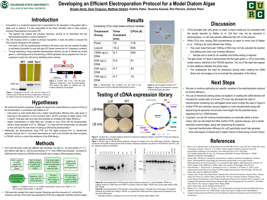
Category: Research Poster
Author(s): Brooke Sturtz, Dane Ferguson, Matthew Herbert
Presenter(s): Brooke Sturtz, Dane Ferguson, Matthew Herbert
Mentors(s): Andrew Paton, Graham Peers
Diatoms like Phaeodactylum tricornutum utilize a brown light-harvesting carotenoid pigment called fucoxanthin to best absorb wavelengths of blue-green light in the ocean. Knockouts of the Phaeodactylum gene vdl2 lose the ability to produce fucoxanthin and are bright green in color; one specific strain of the vdl2 mutant has spontaneously reverted back to the brown color and has restored synthesis of fucoxanthin (named the fuc1 suppressor mutation). Our lab has begun using a newly published electroporation protocol to identify the gene associated with this mutation via expressing cDNA libraries from the fuc1 strain into a vdl2 background. We will report our efforts into improving the efficiency of this protocol. This includes testing the transformation efficiency with cells with grown in liquid or on plates, varying amounts of cDNA, and changing recovery tube sizes. This will aid in the development of tools used in other diatom-related molecular biology projects.
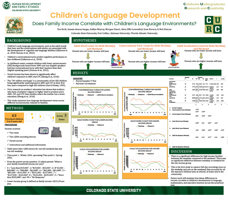
Category: Research Poster
Author(s): Zoe Koch, Ashlyn Murray, Morgan Stuart
Presenter(s): Zoe Koch, Ashlyn Murray, Morgan Stuart
Mentors(s): Daniela Alvarez-Vargas, Robert Duncan
Children's exposure to language and vocabulary has been positively associated with their ability to learn and develop specific language, mathematic and executive functioning skills (Anderson et al., 2025; Gilkerson et al., 2018). The study that we are actively conducting is focused on the difference of Conversational Turn Counts (CTC) and Adult Word Counts (AWC) that are observed during the weekday compared to the weekend day for preschoolers. We are using the data collected from the audio recording devices the Language Environment Analysis (LENA) and parent surveys to find the association between parent income and children's exposure to CTC’s and AWC’s. Multiple studies have shown that parents who have higher education and higher socioeconomic status (SES) tend to interact more with their children and have higher counts of Conversational Turns (CTC) and Adult Word Counts (AWC) (Zheng et al., 2025). Previous work has shown that children from families with higher income experience preschool language environments with higher AWC and CTC (Duncan et al., 2022). This work is imperative for the 72% of children living in poverty, these children spend about equal amounts of time in the classroom as they do at home (de Brey & Donaldson, 2018). The goal of this study is to understand how family income correlates to the language experiences children encounter in the home and at preschool. We hope to determine if there are differences in language affordances for low-income children and if they receive different supports in the home or in the school.
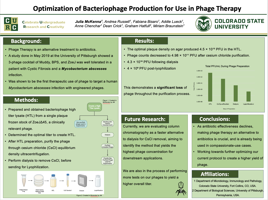
Category: Research Poster
Author(s): Julia Mckenna, Addison Lueck, Andrea Russell, Dean Crick, Fabiana Bisaro
Presenter(s): Julia Mckenna
Mentors(s): Miriam Braunstein
Multi-drug resistant Mycobacterium abscessus is a nontuberculous mycobacterium (NTM) that represents a global threat to patients with pulmonary disease. Bacteriophages are viruses that infect and kill bacteria. Therapeutic use of bacteriophages (i.e., Phage therapy) offers a promising alternative to antibiotics and is being used in compassionate use cases. To prepare phages, we do the following: 1) amplify them in bacteria on agar plates to produce a high-titer lysate (HTL), 2) purify the phage through cesium chloride (CsCl) equilibrium density ultracentrifugation, 3) remove CsCl by dialysis, and 4) lyophilize the phages. Here, we aim to optimize the protocol, ensuring that our phage preparation is pure and at a high concentration suitable for in-vitro and in vivo phage therapy studies. We prepared HTL of ZoeJΔ45, a clinically relevant phage, from a single phage plaque. Next, we optimized/identified the number of plaques on an agar plate that produced the highest yield of total phage in the HTL, which was 4.5×10^12 plaque formation units (PFU) of phage. After CsCl purification, the total number of phages decreased to 4.98×10^11 PFU, and it dropped further to 4.3x10¹⁰ PFU after dialysis. After lyophilization, there were 4x10^9 PFU remaining. The results show loss of phage throughout the purification process, We are evaluating column chromatography as an alternative to remove CsCl more quickly than dialysis, potentially increasing phage yield. Our goal is to compare purification strategies to identify the method that produces the highest phage yield for downstream applications.
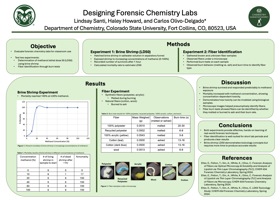
Category: Research Poster
Author(s): Lindsay Santi, Haley Howard
Presenter(s): Lindsay Santi, Haley Howard
Mentors(s): Carlos Olivo-Delgado
Developing practical forensic laboratory exercises helps students learn evidence analysis techniques. This project evaluated potential forensic chemistry laboratory experiments to use in a recently developed course. Two experiments were tested: one to determine the lethal dose 50 (LD50) of methanol using brine shrimp and another experience about fiber identification . In the brine shrimp experiment, shrimp were exposed to different concentrations of methanol to observe mortality and estimate the LD50 within a three-hour lab period. The brine shrimp were successfully hatched and tested. The mortality of the shrimp increased as the methanol concentration increased, demonstrating the experiment’s usefulness in illustrating toxicological concepts. The fiber experiment used microscopy and a burn test to compare and identify unknown fibers. Identification was based on burn times and whether the fibers produced ash or melted. Natural fibers produced ash, while synthetic fibers melted. Overall, both experiments provide students with useful experience in evidence analysis and can be completed within a three-hour class period. However, the brine shrimp experiment may be less practical because accurate LD50 analysis requires more than three hours of exposure.
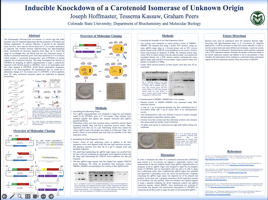
Category: Research Poster
Author(s): Joey Hoffmaster
Presenter(s): Joey Hoffmaster
Diatoms are a type of photosynthetic algae that live in aquatic ecosystems. To capture the blue-green light that penetrates through water, diatoms adapted to be able to synthesize fucoxanthin, a brown carotenoid that effectively absorbs this light. Carotenoid biosynthesis in diatoms is not well understood, and our focus is to discover the novel genes involved in this pathway. One of such genes is crtisol, a carotenoid isomerase-like gene of unknown function. In this project, we use CRISPRi to target and knock down this gene in Phaeodactylum tricornutum to better understand the role this gene has in photosynthesis.
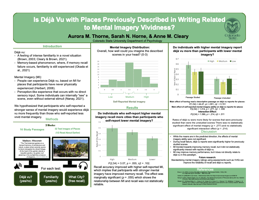
Category: Research Poster
Author(s): Aurora Thorne
Presenter(s): Aurora Thorne
Déjà vu is defined as a feeling of intense familiarity in a novel situation (Brown, 2003; Cleary & Brown, 2021). Previous research has demonstrated that reports of it can be elicited using virtual reality paradigms meticulously designed to recreate spatial configurations similar to previously studied environments (Okada et al., 2023). Also, numerous pieces of anecdotal evidence point to the idea that déjà vu with a place can arise from a vivid description previously read in a literary work (Herbert, 2008). To examine whether déjà vu with a place can be brought on by having previously read a vivid description of the place, we analyzed how the frequency of self-reported déjà vu in Google Earth scenes from cities around the world was associated with participants’ reported vividness of mental imagery. Participants (n = 58) were instructed to listen to and simultaneously read a series of AI-generated literary passages describing a scene from a specific city from around the world. In a later phase, the participants saw Google Earth images, half of which corresponded to a previously studied passage. While in a scene, participants were asked to indicate if they felt déjà vu, indicate if it felt familiar, and attempt to identify the city. At the end of each study-test block, they were asked to self-report their mental imagery vividness on a four-point Likert scale (0 = very poorly, 3 = very well). We hypothesized that participants who self-reported a stronger sense of mental imagery would experience déjà vu more frequently than those who self-reported less vivid mental imagery.

Category: Research Poster
Author(s): Ashlyn Murray, Isabel Pineda, Tea Benzenberg, Trinity Yamagata
Presenter(s): Ashlyn Murray
Mentors(s): Janelle Viera
Abstract In the United States, the majority of foster parent families are white, married women over the age of 30. In contrast kids in foster care come from various diverse backgrounds with Black and American Indian and Alaska Native children continuing to be overrepresented. This leaves little room for diversity in race, gender, and social class to be represented in a huge federal system. This study highlights the importance of intersectionality and how race, gender, and class shape the foster care experience. Our research highlights how systematic inequalities extend far beyond a child's experience. Systematic inequalities in the foster care system reach into the idea of the placement process, access to resources for children in foster care, the role of children's identities and disabilities affecting their foster care placement process and journey. This topic is important to address the inequalities that children in the foster system face due to their intersectional identities. We chose to present this information in poster format to fully illustrate the disparities across various identities. We want to show clear statistics and past research that illustrate these systematic inequalities. By centering the lived experiences of marginalized youth, the research highlights the ways social identities create challenges for all of those involved in the foster care system. Furthermore, this research also highlights the intersectional framework in policies and institutional systems.
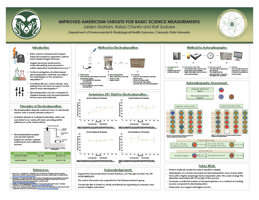
Category: Research Poster
Author(s): Jaiden Graham, Ralf Sudowe
Presenter(s): Jaiden Graham
Mentors(s): Raissa Chunko
Electrodeposition was studied as a method for producing targets for neutron capture experiments. Two electrolyte-buffer systems – ammonium sulfate and sodium bisulfate - were used to plate americium-241. Each buffer was tested using varying amperage and time allowed to plate on 2 cm stainless steel discs. The effectiveness of plating in each electrolyte system was assessed by alpha spectrometry and compared to a stippled reference sample with identical geometry. Surface plate homogeneity was also assessed with autoradiography. Preliminary results indicated that the highest yields were obtained in sodium bisulfate buffer and ammonium sulfate buffer, at an amperage of 0.5 to 0.6 and a plate time of 120 minutes. These findings may be used to optimize the americium-241 targets for neutron capture experiments and may be applicable to smaller steel substrates.
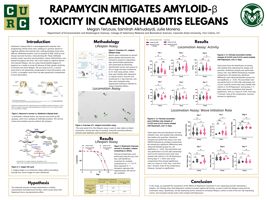
Category: Research Poster
Author(s): Megan TerLouw
Presenter(s): Megan TerLouw
Mentors(s): Julie Moreno, Samirah Alkhudaydi
Alzheimer’s disease (AD) is a neurodegenerative disorder that progressively shrinks brain cells, leading to a gradual decline in cognitive abilities and memory loss, making everyday living more difficult. Misfolded proteins, such as amyloid-β (Aβ), build up and disrupt neuronal function, characterizing AD. AD is also linked to cognitive decline and reduced lifespan. We are using Caenorhabditis elegans as a model to study AD because of their genetic similarity to humans and short lifespan. I have been performing lifespan assays and locomotion assays to study the therapeutic potential of rapamycin (RAP) on C. elegans, which already exists as a pharmaceutical compound and has had neuroprotective effects in other models. The assays evaluate the functional and physiological effects of the treatment. The expected outcome of these experiments is motility improvement and behavioral function, which would show a neuroprotective effect. This could then support the potential of RAP being used in a therapeutic aspect for AD.
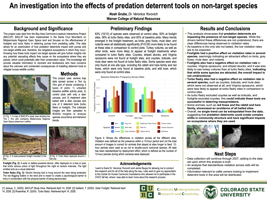
Category: Research Poster
Author(s): Noah Grube
Presenter(s): Noah Grube
Mentors(s): Veronica Yovovich
This study is an investigation into the effects of predation deterrents on non-target species in California’s Central Coast. This project is being completed for the Undergraduate Research Experience within the Yovovich Lab and builds off of the data set being used for the Bay Area Carnivore-Livestock Interactions Project (BACLIP). This project has been implemented in the Santa Cruz Mountains and focuses on the effectiveness of turbo fladry and foxlights in deterring mountain lions. Data collection began in March of 2023 and will continue through 2027. This project uses camera trap data spread across a 7km by 7km grid of blocks containing 3 types of plots: 1) unbaited baseline wildlife activity plots, 2) control plots with only a deer carcass, 3) treatment sites baited with a deer carcass and one of 2 deterrent tools (turbofladry or foxlight). This data allows for an examination of how predation deterrents impact wildlife and, therefore, the ecosystems in which they occur. Knowing how these tools impact ecosystems as a whole will provide valuable information to land owners who have concerns about unknown and unwanted results of installing deterrent tools to mitigate human-wildlife conflict.

Category: Research Poster
Author(s): Rebekah Ramirez
Presenter(s): Rebekah Ramirez
This study aims to investigate the growth of Arabidopsis thaliana on lunar regolith simulant to understand the challenges of growing plants on lunar regolith. We hypothesize that lunar regolith simulant will inhibit seed germination of Arabidopsis and early growth stages compared to control conditions. Insights from this research could develop strategies to advance efforts toward successful lunar agriculture.
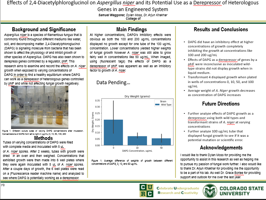
Category: Research Poster
Author(s): Samuel Waggoner
Presenter(s): Samuel Waggoner
Aspergillus niger is a species of filamentous fungus that is commonly found throughout different mediums like water, soil, and decomposing matter. 2,4-Diacetylphloroglucinol (DAPG) is signaling molecule from bacteria that has been shown to affect the physiology of and inhibit growth of other species of Aspergillus. DAPG has also been shown to derepress genes controlled by a regulator, phlF. This research aims to examine and record the effects on A. niger growth when exposed to varying concentrations of DAPG in order to find a healthy equilibrium where DAPG can work as a derepessor of heterologous genes controlled by phlF and while not affecting fungal growth negatively.
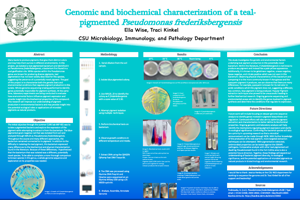
Category: Research Poster
Author(s): Ella Wise
Presenter(s): Ella Wise
Mentors(s): Traci Kinkel
Many bacteria produce pigments that give them distinct colors and may help them survive in different environments. In this project, we isolated a teal-pigmented bacterium and identified it as Pseudomonas frederiksbergensis, a bacterium first found in a coal gasification site. While species within the Pseudomonas genus are known for producing diverse pigments, teal pigmentation has not been widely described for this species, suggesting the presence of a potentially novel pigment. The goal of this project is to characterize both the genetic basis and environmental conditions that regulate pigment production in this isolate. Whole-genome sequencing is being performed to identify genes potentially responsible for pigment synthesis. At the same time, laboratory experiments are being conducted to evaluate how environmental factors influence pigment expression and provide insight into the biochemical properties of this compound. This research will improve our understanding of pigment production in environmental bacteria and may provide insight into the potential ecological roles or applications of microbial pigments as natural products.

Category: Research Poster
Author(s): Uziel Beltran, Braedon McGuire, Joseph Muhlenhaupt, Julia Moreno, Victoria Entwistle, William O'Brien, Zaqueo Carchi Easterly
Presenter(s): Uziel Beltran
Mentors(s): Anura Jayasumana
The Canine Exoskeleton for Rehabilitation is a mechatronic system designed to assist dogs with limited hindlimb motor function by providing controlled, repeatable hindlimb motion. Developed in collaboration with the Colorado State University Veterinary Teaching Hospital, the device integrates actuators, sensors, and control software to guide canine gait in a clinical setting. The current design builds on prior generations by improving safety mechanisms, refining actuation and control strategies, and enhancing comfort and adjustability across different canine anatomies. The project emphasizes interdisciplinary collaboration between engineers and veterinary professionals to ensure that the system operates safely, effectively, and ethically during rehabilitation testing. Degenerative neurological and orthopedic conditions can significantly reduce mobility and quality of life for dogs, often leaving owners with limited rehabilitative options. Existing solutions, such as carts or manual therapy, do not actively restore natural gait patterns and can place strain on both animals and clinicians. This project addresses a critical gap in veterinary rehabilitation by developing a controlled, assistive exoskeleton that prioritizes safety, repeatability, and clinical usability to improve outcomes for canine patients while advancing ethical biomedical engineering practice.
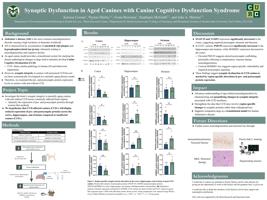
Category: Research Poster
Author(s): Karissa Crozier, Fiona Bowman, Julie Moreno, Payton Shirley, Stephanie McGrath
Presenter(s): Karissa Crozier
Mentors(s): Julie Moreno, Payton Shirley
Alzheimer’s disease (AD) is a neurodegenerative disorder causing a high incidence of dementia worldwide. Aging being a primary risk factor for AD, an aged canine model provides a translational system for studying the disease’s pathological changes. This model is an efficient tool for studying age-related neuropathology as dogs naturally develop Canine Cognitive Dysfunction (CCD), a condition with pathological characteristics similar to human AD, including accumulation of misfolded proteins and neuroinflammation. Clinical manifestations of CCD are observed antemortem using the Canine Dementia Scale (CADES). CCD is confirmed postmortem through analysis of brain tissue and the presence of amyloid-beta (Aβ) and tau pathology. A CADES score above 8 with confirmed Aβ pathology provides evidence that the canine has CCD (CCD+). However, the effects on synaptic proteins, function, and synapse numbers in CCD+ canines remain unknown. To identify synaptic alterations associated with CCD, synaptic protein expression was investigated in homogenized brain tissue from the frontal cortex, hippocampus, and striatum, regions commonly affected in neurodegeneration. Hypothesizing that CCD-affected canines would show reduced expression of pre- and postsynaptic proteins compared to unaffected canines (CCD-). To test this hypothesis, we used western blotting to measure presynaptic proteins SNAP-25 and VAMP2, postsynaptic proteins PSD-95 and HOMER1, normalized to GAPDH. Analysis of blot band intensity quantified protein expression levels. Results show that in CCD+ canines, PSD-95 and HOMER1 expression increased in the hippocampus and striatum, suggesting postsynaptic scaffolding mechanisms were enhanced during neurodegeneration. However, SNAP-25 and VAMP2 were not significantly changed, likely due to conservation of presynaptic proteins.
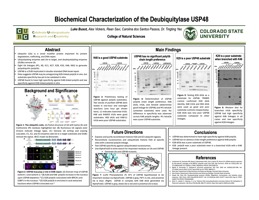
Category: Research Poster
Author(s): Luke Busot
Presenter(s): Luke Busot
Mentors(s): Tingting Yao
Ubiquitin is a small modifier protein used by cells for various processes, including protein degradation, trafficking, and as a signal for DNA repair. Once ubiquitin is added to a target substrate, deubiquitylating enzymes (DUBs) can remove the ubiquitin signal. Ubiquitin can be added to substrates as monoubiquitin or polyubiquitin chains, where ubiquitin polymers are added to the target. Eight unique linkages exist through conjugation of the C-terminus of ubiquitin and a lysine (K) or N-terminal methionine residue on a separate ubiquitin. These linkages can be combined to generate diverse polyubiquitin signals, and DUBs have varying specificity against certain linkage types. USP48 is a DUB that has been implicated in roles such as double-stranded DNA break repair. Various reports state that USP48 has specificity against numerous ubiquitin linkages, but its overall specificity has not been well characterized. Our data suggests that USP48 may be antagonizing K29-linked polyubiquitin chains involved in DNA double-stranded break repair in vivo, but its substrate specificity has yet to be validated in vitro. Here, we expressed and purified USP48 to evaluate its specificity against various polyubiquitin linkages. USP48 was found to have high specificity against K48-linked polyubiquitin and low specificity against K29-linked polyubiquitin. This may indicate USP48 is performing a different role in cells than previously hypothesized.
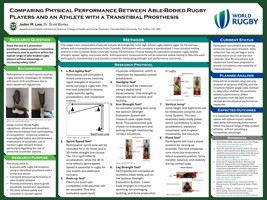
Category: Research Poster
Author(s): Jaden Law
Presenter(s): Jaden Law
Mentors(s): Scott Burley
Athletes with lower-limb prostheses face unique hurdles when trying to participate in rugby and other contact sports due to strict equipment regulations and player safety concerns. Under existing World Rugby regulations, athletes with prosthetic limbs are prohibited from participating in sanctioned rugby competitions. Consequently, there is insufficient research evaluating the safety of protective prosthetic sleeves to facilitate participation in able-bodied contact rugby for these athletes. This single-case comparative study seeks to determine if a transtibial prosthesis equipped with a protective sleeve facilitates safe and functional engagement in rugby while sustaining comparable physical performance to that of able-bodied athletes. Thirty biologically male high school rugby players, aged 14 to 19, will be tested using a standardized physical testing program to evaluate performance metrics pertinent to rugby. This population includes one athlete with a transtibial prosthesis. Data will be collected in the Colorado State University Human Performance Clinical Research Laboratory. Afterward, the Crawford-Howell method will then be used to analyze the data and determine whether the prosthetic athlete is a statistical outlier compared to able-bodied athletes. We propose that the protective sleeve will mitigate impact risks and enable the prosthetic athlete to compete within the standard range of able-bodied counterparts without providing a discernible advantage. The findings from this study will provide preliminary performance data for rugby athletes with a transtibial prosthesis and may contribute to evidence-based discourse on prosthetic equipment regulations. This research has important implications for athlete safety and the mainstream inclusion of athletes with limb deficiencies in contact sports.
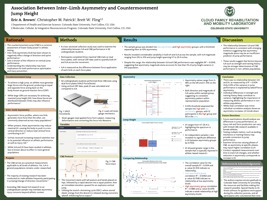
Category: Research Poster
Author(s): Eric Brown
Presenter(s): Eric Brown
Mentors(s): Christopher Patrick
The countermovement jump (CMJ) is a commonly used assessment in athletic testing to measure lower-body power. The movement starts with tall posture and hands placed on hips, followed by a rapid descent into a squat position, then an immediate transition upward for an explosive vertical jump. To achieve a high jump, an athlete must generate large forces into the ground, which produces an equal and opposite force acting back on the body known as ground reaction force (GRF). While large GRFs are necessary for achieving maximal jump height (JH), how those forces are distributed between the limbs during a bilateral task such as the CMJ may also influence performance. Asymmetric force profiles, where one limb generates more force than the other, are commonly observed across many populations. When present, these asymmetries may reduce maximal JH, causing the body to push in a non-vertical direction or reducing total vertical force contributing to JH. Inter-limb asymmetry (ILA) has received increasing research attention due to its potential influence on athletic performance, as well as injury risk. While ILA and JH have been studied in athletes, less is known about its effect in more general populations. In this study, 62 undergraduate students performed three CMJ tests using force plates (VALD ForceDecks), a specialized platform equipped with four strain-gauge load cells to quantify vertical GRF. Using vertical GRF data, peak JH was calculated and compared to ILA, quantified as the percentage difference in force production between limbs at different phases of the jump.

Category: Research Poster
Author(s): Sera Goering
Presenter(s): Sera Goering
Mentors(s): Scott Burley
In the world of rugby, there is an extreme research gap regarding prosthetic eligibility in gameplay, specifically for below-the-knee prosthetics. This gap exists largely because World Rugby regulations explicitly prohibit the use of prosthetic equipment in contact play. One perceived hurdle keeping prosthetics out of traditional rugby competition is public opinion. Possible backlash from players, coaches, parents, referees, policy makers, and other stakeholders may play a significant role in preventing regulatory change. This study examines how psychological perceptions, safety concerns, and governance considerations influence community attitudes toward allowing below-the-knee prosthetic-wearing athletes to participate in standard rugby competition, particularly at the youth level within Colorado. A quantitative, cross-sectional survey will be conducted to assess levels of support, conditional support, or opposition. Once data collection is complete, statistical analysis will determine percent of support/conditional/oppose, top three primary concerns, top concern per role, and mean comfort level. A chi-square test will be used to analyze differences in support by role, and a t-test will measure risk, fairness, and youth concern scores, as well as identify main barriers. It is expected that public opinion may present some level of pushback due to the topic’s unfamiliar nature. Major areas of concern will be identified to help lessen the existing research gap and potentially inform future discussions regarding inclusion within World Rugby competition.
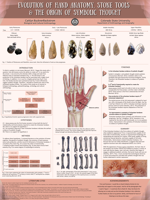
Category: Research Poster
Author(s): Caitlyn BucknerBackstrom
Presenter(s): Caitlyn BucknerBackstrom
Mentors(s): Kimberly Nichols
Artistic expression shapes every aspect of our modern lives, from the art we enjoy to the buildings we live in and the technology that we use. The question is, where in human evolution did artistic expression start? This work proposes that symbolic thought gave rise to artistic expression, and one of the first examples of symbolic thought in human existence is the Acheulean handaxe created by Homo erectus. This was the first human ancestor to have evolved both the brain capacity and the hand anatomy necessary to create the handaxe. In this poster, I compile information about hand anatomy, symbolic thought, and the Acheulean handaxe. Which is then combined to explain how the evolution of hand anatomy in Homo erectus enabled these human ancestors to engage in a level of creative activity that demonstrates symbolic thought. This research focuses primarily on the evolution of hand anatomy and will only briefly touch on the required brain capacity so as to take a holistic approach. This results in the finding that the artistic expression humans possess today may have arisen from evolutionary developments in the brain and hands of Homo erectus, which enabled symbolic thought and the manufacture of the Acheulean handaxe. By understanding how and why artistic expression first arose among early human ancestors, we can better understand both the trajectory of human evolution and development as well as modern human symbolic thought, how it functions in culture, and why it matters.
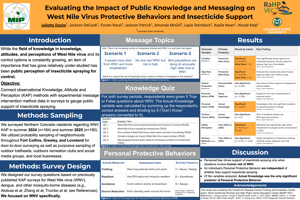
Category: Research Poster
Author(s): Juliette Dashe, Amanda McGill, Foram Raval, Jackson DeCook, Kaylie Kwan, Layla Steinbock, Nicole Kelp-Sullivan
Presenter(s): Juliette Dashe
The sustained presence of West Nile Virus (WNV) in Front Range communities necessitates effective public health strategies to encourage personal protection and support vector control. This study utilized two cross-sectional Knowledge, Attitude, and Practice (KAP) surveys conducted in 2024 (N=167) and 2025 (N=136) to compare public response and identify predictors of protective behavior. Data analysis, utilizing two-sample t-tests, revealed no statistically significant change between the two years in either objective knowledge of WNV transmission (Mean Score): 4.73/5 4.74/5; p=0.9159) or perceived susceptibility (personal risk/worry; p=0.1051). A Multiple Linear Regression (MLR) model predicting Personal Protective Behavior (PPB) Scores (range 4–12) found that Actual Knowledge was the strongest and only significant psychological predictor of action (β=0.343, p<0.001), while neither perceived susceptibility nor perceived severity significantly motivated PPB (p>0.48). The MLR also showed that PPB usage was significantly higher in the 2025 group (β=0.364, p=0.038), indicating a notable year-over-year increase in community vigilance. An experimental message test comparing four distinct message types on support for insecticide spraying (pre- vs. post-message) found no statistically significant difference in the ability of any single message to shift public opinion (Chi-Squared p=0.34). This research suggests that helping community members better understand WNV may help contribute to personal protective behaviors. Furthermore, the small, observed shifts in support suggest that the messages tested did not significantly overcome existing baseline attitudes toward vector control.

Category: Research Poster
Author(s): Sophia Caunt
Presenter(s): Sophia Caunt
Mentors(s): Phillip Kondracki
Hydrothermal explosions occur when pressurized liquid water in the subsurface flashes to steam due to rapid depressurization. On July 23, 2024, Black Diamond Pool in Biscuit Basin of Yellowstone National Park violently exploded, depositing siliceous sinter, obsidian-rich sandstones, gravels, clays, conglomerates, and breccias around the pool and damaging the boardwalk. This investigation aims to characterize the degree of alteration and petrologic textures of obsidian-rich sandstones ejected by this hydrothermal explosion. Additionally, thin sections of hydrofractured breccia and an intensely silica-sealed unit, informally known as “the cork”, will be analyzed using a polarized light microscope to determine mineral assemblages and textural relationships. Furthermore, scanning electron microscopy and electron probe microanalysis (EPMA) will assist in further identifying mineralogy, alteration phases, and quantifying silica deposition. The hypothesized trigger for the 2024 explosion involves priming by progressive silica precipitation within a confining sedimentary unit which reduces porosity and permeability and promotes the buildup of pressurized hydrothermal fluids within the subsurface. Eventually the pressure builds to a point where it overcomes the strength of the confining rock and the system explodes. Thus, mineral alteration and silica deposition along veins and fractures may provide insight into the evolution of system sealing prior to the explosion. By researching the development of geologic units via hydrothermal deposition and alteration, the conditions that cause hydrothermal explosions may be better constrained, assisting development of predictive models and geothermal hazard management for visitors, stewards, and scientists in Yellowstone.
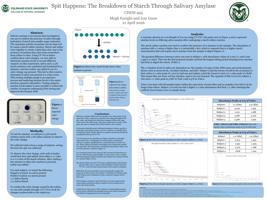
Category: Research Poster
Author(s): Megh Enright, Isabella Gunn
Presenter(s): Megh Enright
Mentors(s): Carlos Olivo-Delgado
Salivary amylase is an enzyme that investigators can use to confirm the presence of saliva through hydrolysis of starch into smaller sugar molecules. The enzymatic activity of amylase can be observed by using a starch-iodine reaction. Starch and iodine react together to create a dark blue color, but in the presence of amylase that color turns somewhere from yellow to clear. Using UV-Vis to better confirm these color changes, we were able to determine amylase levels in several different suspects. In this experiment, saliva and a 0.5% starch solution were combined and incubated for 5 minutes, and then iodine was added to see if a color change was present. This test is often used to determine if saliva was present at a crime scene. DNA testing multiple people is an expensive process and analyzing amylase levels is the easier and less expensive alternative. Testing suspects' amylase levels makes it more possible to reduce the number of suspects undergoing DNA testing and improves the forensic field.
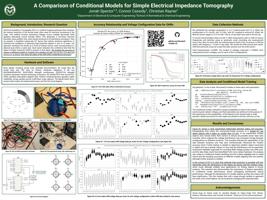
Category: Research Poster
Author(s): Jonah Spector, Christian Rayner, Connor Cassidy
Presenter(s): Jonah Spector, Christian Rayner, Connor Cassidy
Mentors(s): Laura Soumastre de Olivera
Electrical Impedance Tomography (EIT) is a medical imaging technique that visualizes the internal resistivity of the human body, often used for real-time monitoring of the lungs. This method involves measuring voltages across multiple electrodes while applying alternating current through others. This generates a non-linear, ill-posed boundary value problem that, when solved, produces a 2D admittance tomogram. Here we present a simplified 4-electrode EIT device that utilizes empirical algorithms to estimate the confidence of detecting high-resistivity objects in one of 16 sectors. Our approach visualizes the results as a circle of sixteen sectors, each corresponding to a physical area within a water tank. Each sector indicates the confidence level that the object of higher resistivity (OHR) is present in that region. We evaluate the accuracy of conditional models on 5 plastic PLA cylinders of radii: 3.0, 6.0, 8.0, 12.5, and 15.0 mm (curc_e to a) to determine how the radius of the OHR effects Simple EIT accuracy.
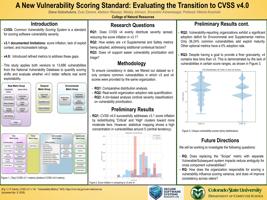
Category: Research Poster
Author(s): Diana Goloshubina
Presenter(s): Diana Goloshubina
Mentors(s): Viktoria Koscinski
The Common Vulnerability Scoring System (CVSS) is an open industry standard for assessing, ranking, and prioritizing the severity of software vulnerabilities. It helps organizations identify which threats to prioritize by ranking them on a scale from 0 to 10. CVSS version 3.1, while currently being the most widely adopted version, has received various critiques, such as a tendency toward ranking most vulnerabilities as “High” or “Critical” (a score of 7.0+), a lack of representation for contextual information such as exploit status, and ambiguity which leads to scoring inconsistencies. CVSS version 4.0, released in 2023, seeks to address these gaps by introducing refined metrics groups and modified scoring logic to enhance consistency. This study conducts a large-scale empirical analysis of CVSS v3.1 and v4.0 by applying both frameworks to thousands of vulnerabilities within the National Vulnerability Database (NVD). We aim to quantify the scoring shift between versions for the same vulnerabilities and to evaluate whether v4.0 provides a more granular and accurate distribution of risk that better correlates with real-world exploitability.
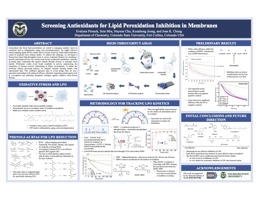
Category: Research Poster
Author(s): Evalynn Pirnack
Presenter(s): Evalynn Pirnack
Antioxidants that block lipid peroxidation are central to managing oxidative stress in conditions such as inflammation, aging, and neurodegeneration. Yet, highly effective radical-trapping agents (RTAs) remain elusive because reactivity within lipid membranes cannot be predicted from solution studies. To address this challenge, we developed a fluorescence-based high-throughput assay to screen compound libraries for membrane-specific antioxidant activity. Our current work focuses on phenolic metabolites, naturally occurring plant compounds that quench radicals through electron or hydrogen atom transfer. Preliminary results reveal broad variability in activity, underscoring the complexity of structure–activity relationships in bilayer environments. To define the molecular features governing potency, we integrate machine learning models with experimental data. This combined approach aims to reveal design rules for next-generation antioxidants with enhanced efficacy, ultimately surpassing natural agents such as α-tocopherol and informing therapeutic strategies against oxidative stress–driven diseases.
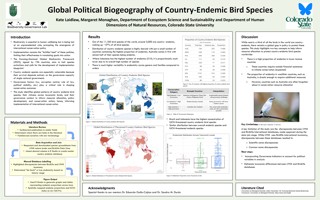
Category: Research Poster
Author(s): Kate Laidlaw, Margaret Monaghan
Presenter(s): Kate Laidlaw, Margaret Monaghan
Mentors(s): Eduardo Gallo Cajiao, Sandra Duran Mancipe
Of all known bird species on Earth, an estimated third occur within single countries. These species are known as country-endemic. Such species are of special conservation concern as they are reliant on the governance context of single countries, which has been dubbed as the doctrine of ultimate national responsibility. These species are of high conservation concern because they are subject to high irreplaceability, conservation capacity deficits, and threat intensity. Against this backdrop, no study has yet assessed the spatial patterns of country-endemic bird species to identify areas of conservation priority to inform resource mobilization internationally. The goal of this study is to develop a baseline of understanding of where these country-endemic bird species are concentrated, what their conservation status is based on the International Union for Conservation of Nature’s Red List of Threatened Species, what governance context they occur in, and the extent to which these species' geographic ranges are covered by protected areas using different spatial analysis tools. Our preliminary results indicate that 3,314 bird species are country-endemic, which corresponds to roughly a third of all known bird species in the world. Of these country-endemic species, a third occur within only five countries: Indonesia, Australia, Brazil, the Philippines, and Peru. Establishing areas of conservation priority for country-endemic bird species can help direct resource allocation, research, policy, and other tools to conserve biodiversity, habitats, and critical evolutionary processes.
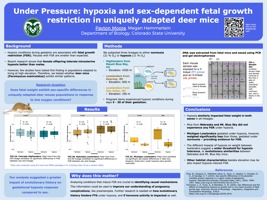
Category: Research Poster
Author(s): Payton Moore
Presenter(s): Payton Moore
Mentors(s): Megan Hemmerlein
Chronic low oxygen levels – like those experienced at high altitudes – reduce fetal weight in mammals with lowland ancestry. Interestingly, highland adapted populations protect fetal weight from the consequences of limited oxygen. Previous studies have shown that males and females respond differently to hypoxia while in utero, however, this has yet to be empirically tested in a comparative model system. To understand ancestry-specific sex-based differences in fetal mass in response to gestational hypoxia, we subjected three lineages of deer mice (Peromyscus maniculatus) to either normoxia (21% O2) or hypobaric hypoxia (12% O2, simulated 4,300 m above sea level) from days 5 – 20 of their gestation. The lineages included two lowland derived populations (Kearney, NE and Ann Arbor, MI) and one highland population (Mount Blue Sky, CO). We weighed, collected, and extracted DNA from Nebraska lowland (N = 69), Michigan lowland (N = 21) and Colorado highland (N = 68) pups and determined their sex using PCR techniques. We were able to distinguish between sex using two primer sets that amplified DNA segments specific to the X and Y chromosomes. We found that fetal mass did not differ between sexes within the same groups (i.e., ancestry and treatment). However, we observed that lowland mice derived from Michigan reduced fetal size under hypoxia in comparison to other groups. These findings deepen our understanding of the impact of geographical origin on fetal size and offer a unique system for untangling factors contributing to differences in susceptibility to hypoxia.
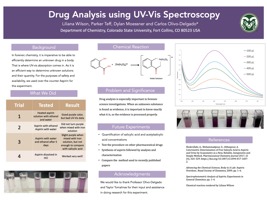
Category: Research Poster
Author(s): Liliana Wilson, Dylan Moessner, Parker Teff
Presenter(s): Liliana Wilson
Mentors(s): Carlos Olivo-Delgado, Taylor Tomalinas
In forensic investigations, being able to identify unknown substances is crucial to solving drug-related cases. In this experiment, UV-Vis spectroscopy was used to determine the concentration of salicylic acid in an unknown powdered sample. A controlled amount of ferric nitrate (1.2 mL) was added to six different cuvettes with varying amounts (100-600 𝜇𝐿) of the salicylate ion provider. These solutions turned a purple color, which was nicely analyzed and quantified by the UV-Vis spectrometer. The absorbance of each standard was measured at a wavelength of 530 nm, and a calibration curve of absorbance versus salicylic acid concentration was constructed. The absorbance from the unknown sample was compared to the calibration curve, and a concentration was found. In this work, a simple yet reproducible method was developed for future use in the forensic chemistry lab.
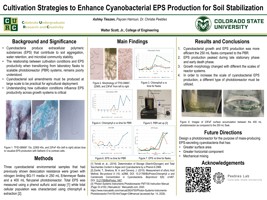
Category: Research Poster
Author(s): Ashley Tieszen
Presenter(s): Ashley Tieszen
Mentors(s): Paycen Harroun
Cyanobacteria produce extracellular polymeric substances (EPS) that contribute to soil aggregation, water retention, and microbial community stability. These properties make cyanobacteria promising candidates for applications in soil restoration and bioengineered soil systems. However, the relationship between cultivation conditions and EPS productivity, particularly when transitioning from laboratory flasks to scalable photobioreactor systems, remains poorly understood. Because cyanobacterial soil amendments must be produced at large scale to be practical for agricultural deployment, understanding how cultivation conditions influence EPS productivity across growth systems is critical. This study investigates how nitrogen availability and cultivation format affect EPS production in filamentous cyanobacteria. Cultures were grown under nitrogen-replete and nitrogen-limited conditions in both shake flasks and a bench-scale photobioreactor system. Biomass accumulation was monitored using optical density and chlorophyll a extractions, while EPS production was quantified using the phenol–sulfuric carbohydrate acid assay. Understanding these interactions will inform scalable cultivation strategies for EPS-producing cyanobacteria and support their development as bioengineered soil stabilization technologies.
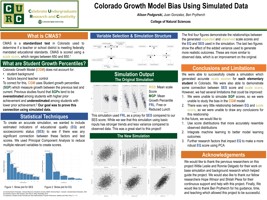
Category: Research Poster
Author(s): Alison Podgorski, Juan Gonzalez
Presenter(s): Alison Podgorski
Mentors(s): Benjamin Prytherch
The Colorado growth model is used by several states to analyze standardized test scores to evaluate whether a district is meeting federally set educational targets. We looked to see if this model was biased against low income school districts by simulating test scores in R. Using data collected from the Colorado state technical manual, we set accurate parameters for test score distribution for the years 2021 to 2025. We then created a dataset including standardized test scores and summary statistics for each school in Colorado to use as simulation inputs. Two more datasets were then put together using US census data and Colorado school district data, which then was put through a principal component analysis to generate a socioeconomic status and educational quality score for each school district. These then transformed the input data, adding variance to account for individual differences, to simulate the next year's expected standardized testing scores for each student in each school. We then generated an observed score that added variance to simulate individuals performances on the day of testing. We compared our results with collected data to determine whether the correlation between generated data and output scores were accurate to real life observations. We found that the simulation we created was successful in accurately modeling general standardized testing trends including bias against schools that had low socioeconomic status and educational quality.
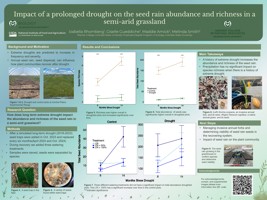
Category: Research Poster
Author(s): Giselle Gueddiche, Izabella Rhomberg
Presenter(s): Giselle Gueddiche, Izabella Rhomberg
Mentors(s): Madelyn Amick
Long term extreme droughts are predicted to increase in frequency and severity in semi-arid regions. Thus, understanding how such ecosystems recover from these climate disturbances is essential. Seed rain plays an integral role in plant community recovery by reintroducing locally extinct individuals and species. We aimed to assess how seed rain responded to extreme drought by examining how the diversity and abundances of species changed over time. At the end of the first growing season, after the cessation of an extreme 4-year experimental drought (October 2018 – May 2023), seed traps were placed in the field (October 2023) in a semi-arid grassland in NE Colorado. Six months later they were replaced (May 2024) and then recollected after another six months (October 2024). Seeds were then collected from the traps in the lab, sorted, and identified to species. We found that plots exposed to extreme drought had significantly more seeds deposited than the control (156.32 vs 28.58). Previously droughted plots contained significantly more species (6.18 vs. 4.35) initially and increased over the course of a year (8.46 vs. 4.49) when compared to controls. This may be attributed to seasonality, as the first sample was placed shortly after the growing season ended. Evenness was significantly lower in previously droughted plots (0.45 vs. 0.69) and continued to decrease with time (0.35 vs. 0.64). Extreme drought, and time after drought significantly alters seed deposition dynamics, potentially altering passive mechanisms of recovery. By monitoring seed deposition, we can understand how species in the seed rain interact with grassland recovery after extreme, prolonged drought.
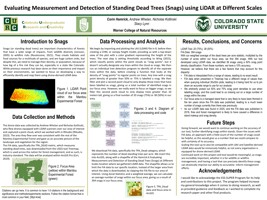
Category: Research Poster
Author(s): Corin Hamrick
Presenter(s): Corin Hamrick
Mentors(s): Andrew Whelan, Nicholas Kotlinski
Standing Dead Trees (snags) are imperative for biodiversity and wildlife, as they create habitats, food sources, and shelter, but they also pose hazards to humans: they burn quickly, stoke wildfires, they fall, can block trails, and injure hikers. They can be difficult to map over large areas, posing a roadblock to forest management. We are using a tool to develop a method to detect snags at three different scales of interest (drone-derived LiDAR, state-wide aerial LiDAR, and nationwide FIA TreeMap Data), helping inform plans for fire and wildlife management. We gathered our data by drone over the Manitou Experimental Forest, yielding a point cloud from which we developed code to identify snags within. This tool labels points on the trees as snags, and by filtering for the trees that contain a certain number of snag points, we can map out the snags within the point cloud. RESULTS SECTION. The tool we developed can accurately identify snags from a point cloud, allowing the Forest Service to easily map and plot them. Further tinkering could be required on the code, depending on the scale of LiDAR data, but this tool will allow more accurate forest management measures for the Forest Service.
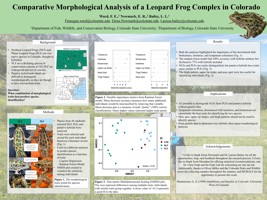
Category: Research Poster
Author(s): Finn Ward
Presenter(s): Finn Ward
Hybridization is a unique conservation issue that can lead to reduced fitness and loss of local adaptations which directly inform management practices, especially for species of conservation concern. The ability to distinguish hybrids with only morphology is very helpful for wildlife managers, but often requires genomic analysis. The Northern Leopard Frog (Lithobates pipiens; NLF) and Plains Leopard Frog (Lithobates blairi; PLF) are two native species of leopard frog in Colorado which have been shown to hybridize in areas where their ranges overlap in the southeastern region of the state. NLFs are listed as a Tier 1 species of conservation concern in Colorado, with significant population declines throughout the state but especially on the Front Range, whereas PLFs have stable populations and are not of conservation concern. Morphologically, NLFs and PLFs are very similar, but there is previous characterization of hybrids. The goal of this study is to determine the morphological characteristics that distinguish between NLFs, PLFs, and hybrids. We collected tissue samples and morphological photographs of leopard frogs throughout Colorado, and randomly sampled 20 individuals of each species and 4 putative hybrids. These randomly sampled individuals were categorically scored on a variety of traits that are hypothesized to distinguish between species. Traits will be modeled with a logistic regression curve and the fit of the models will be assessed with a chi-squared test. Eventually, we will be able to incorporate genetic data to assess the reliability of identifying hybrids morphologically and establish the best combination of traits for identifying species.

Category: Research Poster
Author(s): Olivia Kreutzer
Presenter(s): Olivia Kreutzer
Mentors(s): Huey Yi Loh, Terry Engle
Copper is an essential element required by sheep for enzyme function, cellular homeostasis, and growth. Previous research has demonstrated that dietary copper requirements vary by breed. Therefore, it is important to understand the optimum dietary copper concentrations for different breeds of sheep to appropriately meet their needs. Hence, 26 rams were utilized in this experiment to determine the effects of breed and copper supplementation dose on animal performance and copper status. Sheep were assigned to treatment according to a 2 ´ 3 factorial arrangement. Factors included: 1) sheep breed (Lincoln and Rambouillet) and 2) copper dose (0.0, 15, or 30 mg Cu/kg diet DM). Rams were housed in individual pens and fed once daily with their respective dietary treatments. Initial body weight (BW), final BW, and average daily gain (ADG) were recorded throughout the experiment. After receiving their respective diets for 60 days, all animals were transported to a USDA-inspected abattoir and harvested. Following harvest, hot carcass weight (HCW) was recorded, and liver samples were obtained. Breed, Cu dose, or their interaction did not impact (P > 0.05) final BW, ADG, or HCW of the sheep. Hepatic liver concentration was impacted by breed (P < 0.05) and Cu dose (P < 0.01), but not their interaction (P > 0.10). Sheep that received 30 mg/kg of supplemental copper had greater hepatic copper concentration than sheep that received 15 and 0 mg/kg of supplemental copper. Lincoln rams had greater (P < 0.05) hepatic copper concentration compared to Rambouillet.

Category: Research Poster
Author(s): Jaiden Wechter
Presenter(s): Jaiden Wechter
Mentors(s): Haley McCoy, Matthew Rhodes
Neuropsychological assessments are increasingly administered using digital platforms; however, it remains unclear whether the testing format influences individuals' memory performance and ability to accurately evaluate their own cognitive performance, known as metacognitive calibration. This study examines how paper-based versus digital memory testing affects recall, recognition, and metacognitive calibration. Using a pretest-posttest design, participants will complete memory assessments designed to measure recall and recognition of previously presented information, administered in traditional paper and computerized formats. Following each task, participants will rate their own performance using confidence ratings indicating how certain they are that their response was accurate. It is hypothesized that computerized testing will increase metacognitive calibration and performance by reducing extraneous cues and decreasing cognitive load. Findings from this study will inform the validity of computerized neuropsychological assessments and contribute to understanding how digital platforms influence metacognitive monitoring and performance in cognitive tasks.
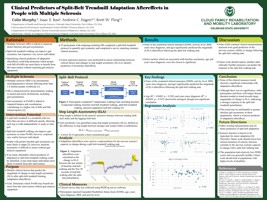
Category: Research Poster
Author(s): Colin Murphy, Brett Fling, Isaac Bast
Presenter(s): Colin Murphy
Mentors(s): Isaac Bast
Multiple sclerosis (MS) is a neurodegenerative disease characterized by demyelination of neurons, causing impaired neural communication and sensorimotor dysfunction. Many people with MS (PwMS) develop gait asymmetries due to unilateral weakness, which increases fall risk. A recent study found that walking on a split-belt treadmill, a device with two belts that can move at different speeds, can induce locomotor adaptation and temporarily alter gait symmetry. Although PwMS can adapt their gait, the adaptation response varies across individuals. The purpose of this analysis is to assess which clinical factors predict the magnitude of adaptation aftereffects during split-belt treadmill walking. Thirty-five PwMS completed a split-belt treadmill protocol including baseline tied-belt walking, a split-belt phase, and a return to tied-belt walking. Participants completed a survey reporting common clinical measures before the task. Gait asymmetry was quantified using step length asymmetry (SLA), the difference in step length between stronger and weaker limbs. Adaptation aftereffects were calculated as the change in SLA between the second half of baseline tied-belt walking and the first 30 seconds of tied-belt walking after the split-belt perturbation. These values were compared to clinical measurements. No significant associations were observed between the clinical measures and the adaptation aftereffect. However, age and years since diagnosis had the strongest, though non-significant, associations with aftereffect magnitude and may reflect baseline gait asymmetry differences. Future work should focus on identifying clinical metrics associated with aftereffect magnitude to help determine which individuals with MS may benefit most from this rehabilitation intervention without requiring treadmill testing.

Category: Research Poster
Author(s): Molly Turner
Presenter(s): Molly Turner
Mentors(s): Anne Marie Casper
There are various narratives present in undergraduate biology courses that impact students, including that of science as unbiased, or the "neutrality narrative.” This problematically situates science as separate from the social contexts it is performed in and the scientists who do it. In prior research with our sample of students with queer genders in biology-related majors from across the U.S. (n=54), some found the neutrality narrative to be harmful, while others found it to be affirming. In this study, we aim to identify the factors that influence this difference. We hope that our findings will help biology instructors to effectively teach how science is a socially/culturally situated form of knowledge in a way that supports student belonging. We used collaborative Reflexive Thematic Analysis, which allows the researcher(s) to identify salient themes in their data while still acknowledging the unique value of researcher positionality, with master narrative theory as our theoretical lens to analyze our aforementioned interviews, focusing on students who specifically discuss neutrality-related narratives (n=28). Our results will inform the teaching of content in a way that supports these students. The narratives within biology courses, lack of support from professors, discrimination from peers, and increased stressors outside of academics can all create an environment where it’s much harder for students with queer genders to succeed. This research may provide another means to support their journeys in biology, and science more broadly.

Category: Research Poster
Author(s): Caden Anderson
Presenter(s): Caden Anderson
Mentors(s): Tiffany Lipsey
Cardiovascular disease (CVD) has remained the leading cause of mortality among firefighters in the United States over the past couple decades. CVD is also at a higher prevalence rate in firefighters as compared to the general populous [1]. Many occupational hazards have been linked to this increased risk of CVD in the profession, such as poor sleep and occupational stress, as well as repeated exposure to hazardous particulates, smoke, and extreme heat [2,3]. Exposure to these stressors has been linked with chronic inflammation in firefighters, which is linked to increased chances of developing chronic disease. Specifically atherosclerosis and other cardiovascular conditions, which lead to cardiac events [4]. Occupational fire suppression activities have been shown to increase levels of biological inflammation markers such as leukocytes, otherwise known as white blood cells (immune response cells) and high sensitivity C-reactive protein (hsCRP). Recent evidence has shown that elevated levels of these biomarkers may lead to chronic inflammation, leading to dysregulation in the body’s immune response [5]. While exposure to inflammation in isolation has been examined, psychosocial and behavioral factors may influence inflammatory profiles in conjunction with the firefighting occupational exposures. One such behavioral factor is nicotine use which has a high prevalence in the firefighting industry. While smoking in the firefighting profession is lower in the general population, the use of smokeless tobacco is much higher compared to the general populous [6]. Nicotine is frequently used as a coping strategy for stress and anxiety. It also has well documented effects on autonomic regulation and immune function, leading to increased levels of inflammatory activity. Although inflammatory stress response is well documented[7,8], the interaction between stress induced and nicotine induced inflammation in firefighters has limited research. Even though occupational stress is underlying in all firefighters, psychological stress may represent an important link between inflammation response and nicotine use. Nicotine use may be a response to the occupational stressors, which may in turn amplify inflammatory response through dysregulation of sympathetic nervous system activity. Clarification on the association between psychological stress of firefighters and nicotine use could close the gap on behavioral and psychosocial pathways. Occupational stress may act as a mediator for the interaction between nicotine use and inflammatory biomarkers, contributing to high inflammatory burden in an already high-risk occupation. Therefore, the purpose of this study is to explore the relationship between nicotine use, perceived stress, and inflammatory biomarkers in firefighters. Specifically, this study will examine if perceived stress acts as a mediator in the association between nicotine use and markers of systemic inflammation including CRP and white blood cell count subpopulations, while controlling demographic and health related covariates.

Category: Research Poster
Author(s): Katelyn Meyer
Presenter(s): Katelyn Meyer
Mentors(s): Marc Nishimura, Samuel Ogden
Plant immunology research is critical for protecting global food supplies because it helps scientists understand how plants defend themselves against pathogens. By identifying the genetic determinants of plant–pathogen interactions, researchers can reduce the need for chemical pest control and support more sustainable agriculture. Characterizing how pathogens spread within host tissues is especially important for developing long term disease management strategies and engineering resistant cultivars. Previous work in the Nishimura lab has shown that Pseudomonas syringae can infect the vasculature of the model plant Nicotiana benthamiana, providing a system to investigate these mechanisms. This project investigates whether the Type II secretion system (T2SS) is required for this aspect of infection. To test our hypothesis, we made a T2SS knockout (KO) strain and evaluated bacterial spread using fluorescence microscopy. We assessed the impact of T2SS disruption on virulence through growth assays and examined its role in hyponasty, a visible upward leaf curvature observed only in plants infected with a specific strain. By comparing the T2SS mutant to the wild type strain, we determined whether this system is necessary for vascular colonization, pathogen growth, and induction of disease symptoms. With this work, we have begun to dissect the role of an understudied secretion system in Pseudomonas syringae virulence and disease progression. By clarifying how this system influences spread, growth, and symptom development, we strengthen our understanding of the genetic determinants driving infection. This work contributes to the broader field of plant–microbe interactions and may inform strategies to improve crop resilience and reduce agricultural losses.
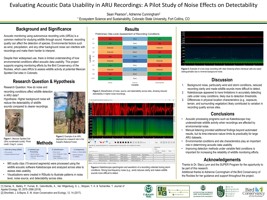
Category: Research Poster
Author(s): Sean Pearson
Presenter(s): Sean Pearson
Acoustic monitoring using autonomous recording units (ARUs) is an increasingly common way to study wildlife. Differences in recording quality can affect which species are detected. This study examines how environmental conditions and physical location characteristics influence acoustic data collected at ARU locations within potential Mexican Spotted Owl habitat in the Arapaho National Forest in Colorado. Even though ARUs produce valuable data, there is still a gap in understanding how background noise impacts recording usability and detection of wildlife sounds. Audio recordings from 10 locations collected during the 2024 field season were processed in Kaleidoscope and reviewed through manual listening. The recordings were sorted based on the amount of background noise and sound clarity, then compared across locations. There were clear differences in recording quality; wind, precipitation, and other miscellaneous noises made it harder to detect wildlife sounds at several locations. Locations with clearer recordings generally had more noticeable sounds of wildlife, therefore making it easier to identify individual species. Overall, physical and environmental conditions at the recording locations had a strong influence on how the data was interpreted. Accounting for acoustic data quality can help improve wildlife monitoring and lead to more reliable conclusions.

Category: Research Poster
Author(s): Colin Mcnamee, Jesus Asencio Gallegos, Nathan Perini
Presenter(s): Colin Mcnamee
Mentors(s): Sonali Diddi
The global textile and apparel industry relies on complex supply chains involving fiber processing, dyeing, finishing, and garment assembly. Hazardous chemicals used to achieve specific colors, textures, and performance features have raised serious concerns about environmental pollution, worker safety, and consumer health. In response, certification systems such as OEKO-TEX have been established to promote safer chemical management and supply chain transparency. This study examines how STANDARD 100 by OEKO-TEX and OEKO-TEX STeP establish testing protocols and monitor production facilities to keep harmful substances within legal limits. Drawing on existing research and trade reports, it explores how these certifications drive safer chemical practices among manufacturers, dye houses, and suppliers. Findings indicate that third-party certifications effectively reduce environmental and health risks while increasing accountability across the apparel supply chain.
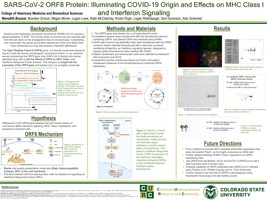
Category: Research Poster
Author(s): Ashlee Burns, Brandon Schout, Katherine Flores
Presenter(s): Ashlee Burns, Brandon Schout, Katherine Flores
Mentors(s): Alan Schenkel, William Schountz
The Open Reading Frame 8 (ORF8) gene is highly conserved across many strains of the SARS-CoV-2 virus. The ORF8 protein is hypothesized to be involved in suppression of the antiviral immune response. ORF8 prevents MHC I from reaching the cell surface and blocks interferon response factor signaling via IRF3 binding. Verification of the presence of the ORF8 protein in infected cells is still in progress using Western Blot assays and immunofluorescence. Repeated attempts failed to produce the desired results in blots so we began troubleshooting the reagents. Blotting reagents directly onto a nitrocellulose membrane showed issues with secondary antibodies, but did not provide any answer about issues with the ORF8 recognition by the primary antibodies There was a potential signal indicating that the reagents interacted with a synthetic ORF8 protein, although the signal was weak. A more thorough test was then performed with the 96-well plate, which did not confirm the presence of the ORF8 protein, but did work as expected with positive controls. Once troubleshooting is completed and the presence of the protein is able to be verified, we will begin analyzing cell expression of the ORF8 protein, as well as MHC Class 1 and IRF3 in human and bat cell.

Category: Community Engagement Poster
Author(s): Evalynn Pirnack
Presenter(s): Evalynn Pirnack
Antioxidants that block lipid peroxidation are central to managing oxidative stress in conditions such as inflammation, aging, and neurodegeneration. Yet, highly effective radical-trapping agents (RTAs) remain elusive because reactivity within lipid membranes cannot be predicted from solution studies. To address this challenge, we developed a fluorescence-based high-throughput assay to screen compound libraries for membrane-specific antioxidant activity. Our current work focuses on phenolic metabolites, naturally occurring plant compounds that quench radicals through electron or hydrogen atom transfer. Preliminary results reveal broad variability in activity, underscoring the complexity of structure–activity relationships in bilayer environments. To define the molecular features governing potency, we integrate machine learning models with experimental data. This combined approach aims to reveal design rules for next-generation antioxidants with enhanced efficacy, ultimately surpassing natural agents such as α-tocopherol and informing therapeutic strategies against oxidative stress–driven diseases.
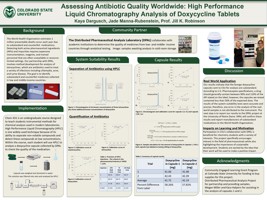
Category: Community Engagement Poster
Author(s): Kaya Dargusch, Jade Manna-rubenstein, Jill Robinson
Presenter(s): Kaya Dargusch, Jade Manna-rubenstein
Mentors(s): Jill Robinson
Substandard and falsified medicines pose a significant global health threat, particularly in low- and middle-income countries (LMICs), where poor-quality antibiotics contribute to treatment failures, antimicrobial resistance, and preventable deaths. To address this challenge, students in an analytical chemistry laboratory course at Colorado State University participated in the Distributed Pharmaceutical Analysis Lab (DPAL), a global citizen-science initiative. In this project, students developed and validated a high-performance liquid chromatography (HPLC) method to quantify several antibiotics in pharmaceutical tablets. Method validation included meeting strict criteria for linearity, accuracy, precision, and matrix spike recovery to ensure reliable quantification of the active ingredient. After validation, students analyzed doxycycline tablets supplied by DPAL from LMICs such as Kenya, Uganda, Tanzania, India, Nepal, and Malawi. Analytical results were evaluated against certified reference standards to identify potential quality deficiencies. Results are submitted to DPAL for further review, and any suspect samples may undergo confirmatory analysis and be reported to regulatory authorities or the World Health Organization. This work provides students with authentic research experience while contributing to an international effort to identify poor-quality antibiotics and improve access to safe, effective medicines. Through engagement in method development, quality control, and collaborative data sharing, students gain practical analytical chemistry skills and participate in meaningful scientific inquiry with real-world impact.
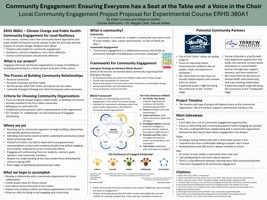
Category: Community Engagement Poster
Author(s): Elijah Currans, Adrianna Steffen
Presenter(s): Elijah Currans, Adrianna Steffen
Mentors(s): Danyel Addes, Maggie Clark
How are community centric entities in Fort Collins engaging their communities? How can we as people trained in CE come alongside them? What projects can we come together for? We are coming up with a proposal to a few different community groups in Fort Collins with hopes of partnering them with ERHS380A1 for future collaboration and community engagement.
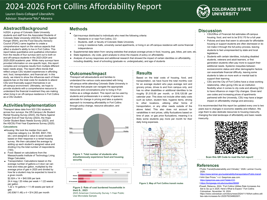
Category: Community Engagement Poster
Author(s): Lauren Davis
Presenter(s): Lauren Davis
Mentors(s): Stephanie Moreira
From 2024 to 2026, a group of students from ASCSU, Rams Against Hunger, and the Food Security Advisory Council came together to create a comprehensive list of the various aspects that affect a student's ability to live in Fort Collins. This report takes quantitative information from the results of three surveys sent out to both on and off-campus students in the 2023-2024 academic year. While many surveys have provided information on one specific topic, this report compiles and compares results from multiple different basic needs areas. We offer trends that reflect unique CSU student experiences in affording rent, food, transportation, and financial aid. In this study we intend to show the influences each aspects of basic needs has on the total costs for students to attend CSU and financially support themselves in an off-campus environment. Ultimately, we hope to provide students with a comprehensive resource to understand the financial investment they are making when living in an off-campus residence in Fort Collins as a CSU student.
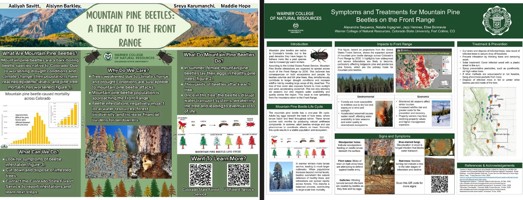
Category: Community Engagement Poster
Author(s): Sloane Stewart, Aaliyah Savitt, Aislynn Barkley-griggs, Alexandra Sequeros, Elise Bonnevie, Libby Hennes, Madeline Hope, Natalie Ingegneri, Sreya Karumanchi
Presenter(s): Sloane Stewart, Aaliyah Savitt, Aislynn Barkley-griggs, Alexandra Sequeros, Elise Bonnevie, Libby Hennes, Madeline Hope, Natalie Ingegneri, Sreya Karumanchi
Mentors(s): Jana Raadik Cottrell, Stuart Cottrell
Mountain Pine Beetles (MPB) are back in Colorado with a focus on ponderosa pine in the Front Range. Warmer winters, dry conditions, and dense, stressed forests create ideal conditions for beetles to thrive. A group of CSU Honors students have studied the bio-physical and socio-political implications of MPB this semester with a focus on public outreach needs. Public perceptions among homeowners and residents along the Front Range are important to understanding what communication approaches encourage community engagement to manage for MPB. Decreased property values, increased fire threat and losing mature trees are some of the common concerns. Misconceptions about MPB creates myths about what is happening and this presentation will address some of those concerns for the Colorado State Forest Service to consider for public education outreach.

Category: Community Engagement Poster
Author(s): Charlotte Lobben
Presenter(s): Charlotte Lobben
Mentors(s): Lisa Morgan
This poster’s central aim is to raise awareness about dance as a legitimate educational and therapeutic tool, equip educators and families with accessible resources, and support the integration of adaptive dance into PreK–5 classrooms, inclusive education plans, and extracurricular programs. The project outlines three strategic goals: raise awareness, encourage integration of adaptive dance, and provide practical implementation tools. Through presentations, workshops, and digital outreach, the poster highlights the value of dance in inclusive education and shares success stories from established programs like The Dream Project (National Dance Institute), DanceAbility International, and Rhythm Works Integrative Dance. These programs illustrate how adaptive dance promotes inclusion by bringing together students of all abilities in collaborative, expressive environments. To ensure accessibility, the poster will provide a suite of user-friendly resources: visual handouts with QR codes and plug-and-play lesson plans. An online hub is also in development, offering downloadable toolkits, expert interviews, and instructional material. The broader goal of the project is to shift perceptions of dance from an “extra” to an essential component of inclusive education. By showing that dance is not only therapeutic but also academically and socially enriching, this poster calls on schools, educators, and families to rethink how they support neurodiverse learners. Dance becomes a bridge between therapy, learning, and expression, accessible to all, regardless of ability. In doing so, this project envisions classrooms and communities where movement is embraced as a powerful, everyday tool for growth, inclusion, and connection.
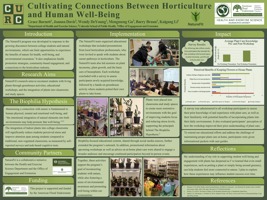
Category: Community Engagement Poster
Author(s): Grace Barnett, Barry Braun, Joanna Davis, Mengmeng Gu, Wendy DeYoung
Presenter(s): Grace Barnett
Mentors(s): Kaigang Li
College students spend much of their academic lives indoors, moving between classrooms, lecture halls and study spaces that often separate them from their natural environments. This limited interaction with nature may reduce the benefits that natural elements provide for health, well-being, and environmental awareness. The biophilia hypothesis suggests that humans have an evolutionary and innate inclination to seek connections with nature. Building on this concept, the NatureFit program at Colorado State University was developed to reconnect students with living plants while increasing awareness of the floriculture industries. Funded by the American Floral Endowment, this program is led collaboratively by the Departments of Health and Exercise Science (HES) and CSU’s Office of Engagement and Extension (EE). NatureFit integrates biophilic design into academic spaces by cultivating and displaying plants grown in a NatureFit-sponsored indoor greenhouse within the HES building. Through greenhouse engagement, plant propagation, and the distribution of plants to approximately 200 undergraduate participants, students gain hands-on experience with plant care. Additionally, the placement of 100-150 plants in shared departmental spaces and classrooms extends indirect engagement with plants to over 1,000 students. NatureFit also provides workshops, coursework integration, and seminars with professionals from the floriculture industry and the CSU EE to explore career pathways and highlight the connections between floriculture, health, and environmental sustainability. By combining experimental learning, student-led outreach, and interactive engagement opportunities, the program encourages students to rediscover the value of plants in their daily lives and recognize their potential role in creating healthier, more sustainable communities.

Category: Community Engagement Poster
Author(s): Bella Chiango, Alexa Holmes
Presenter(s): Bella Chiango
Mentors(s): Tobi Jacobi
The primary mission of CSU’s Community Literacy Center (CLC) is to create and facilitate literacy opportunities that invite community members—particularly people experiencing confinement or in recovery—to engage in innovative and supportive writing spaces and to value the writing and art that emerges through conversation and circulation. We aim to make space for diverse stories and to listen actively as a way to promote community action and social change. We seek to create opportunities for people to write individually and in collaboration with others as they strengthen their reading, writing and critical thinking skills. In this presentation, we aim to showcase the above values through the work we have done as CLC interns this year. This includes but is not limited to: pop-up story walls around the greater Fort Collins area, writing workshops at Larimer County Community Corrections, publication of the annual SpeakOut! journal, and production of a deck of writing prompts titled “Write Here.” We plan to use these examples to highlight the importance of promoting community literacy, especially within spaces that lack resources, while also creating opportunities for collaboration between different identities and literacy levels. In doing so, not only are we providing and participating in writing spaces, but also creating conversation that sustains these relationships for the future.
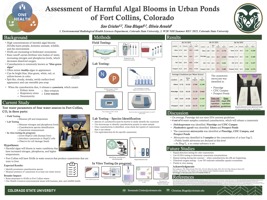
Category: Community Engagement Poster
Author(s): Tina Blugel, Savannah Crisler
Presenter(s): Tina Blugel, Savannah Crisler
Mentors(s): Olivia Arnold
Harmful algal blooms (HABs) are an increasing global concern due to their potential to produce toxins that threaten human, animal, and environmental health. This study evaluated four urban ponds in Fort Collins, Colorado (Pine Ridge, Prospect Ponds, Edora Lake, and the CDC Campus pond) to investigate relationships among opportunistic cyanobacteria, nutrient enrichment, and toxin presence. Field measurements of temperature and pH were collected, and laboratory analyses were conducted to determine total nitrogen and total phosphorus concentrations. Microscopic evaluation of water samples was used to identify cyanobacterial taxa and assess morphology indicative of potential toxin production. Rapid immunoassay test kits were employed to detect the presence of microcystin. Dolichospermum spp. were identified in Pine Ridge and CDC Campus samples, while Planktothrix agardhii was observed at Prospect Ponds and Edora Lake. Microcystin was detected in three of the four ponds, with concentrations ranging from 5 µg/L to 19 µg/L. These results exceed the U.S. Environmental Protection Agency’s recreational water quality guideline of 5 µg/L for microcystin, indicating potential public health risks associated with recreational exposure. The findings suggest that eutrophication and nutrient enrichment may promote HAB occurrence in Fort Collins’ urban waters. Future directions include expanding the sample size, conducting ELISA assays to quantify specific cyanotoxin concentrations, performing seasonal resampling, and implementing in vitro cytotoxicity assays to evaluate health impacts. Overall, this project contributes to understanding local HAB dynamics and supports ongoing efforts to protect public and environmental health in northern Colorado.
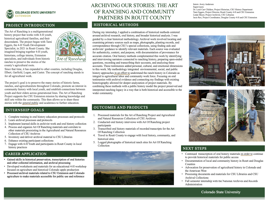
Category: Community Engagement Poster
Author(s): Avery Anderson
Presenter(s): Avery Anderson
Mentors(s): Leisl Carr Childers
This project documents and interprets Colorado’s agricultural and ranching heritage through the public history initiative The Art of Ranching, a collaboration among 4-H youth, historical agricultural families, CSU Extension, and Colorado State University Libraries. The project originates in Routt County and began in 2021. Since then, the project has expanded to multiple counties across Colorado and uses ranching as a lens to understand agricultural labor, land use, and community identity. During my internship, I utilized a mixed historical methodology through participating in archival research, oral history interviews, and environmental and social history. My archival work involved processing, organizing, and evaluating materials including photographs, maps, planting records, and correspondence within the Agricultural and Natural Resources Collection at CSU Libraries. Oral history practices complemented this work through the identification, interviewing, recording, and transcription of project participants. I was able to capture personal narratives that situate agricultural practices within real lived experience. This work allowed for a deeper analysis of how ranching traditions shape intergenerational knowledge, community memory, and regional identity in Colorado. My project outcomes included the processing of archival materials, transcription of oral histories, photographic documentation of historic ranch sites, and direct engagement with local communities in Routt County. The project advances public history by preserving agricultural narratives and fostering youth and community participation. Future work will continue transcription efforts, expand documentation, and support long-term access to agricultural history through CSU archival collections and public education.

Category: Oral Presentation
Author(s): Ashley Morris
Presenter(s): Ashley Morris
Mentors(s): Thomas Johnson
Significant studies have been conducted on the medical effects of radiation, but the social impacts remain less studied. The societal impacts on the residents and evacuees following the tsunami caused by the Great East Japan Earthquake and resulting explosion involving the Fukushima Daiichi reactors is seldom emphasized in non-scientific literature. The medical effects of radiation from the accident have been minimal but the scientific communication regarding this has not been properly expressed to the public. Radiation can be dangerous, but there are known parameters which must be exceeded to express cellular damage, as well as regulatory limits, shielding and proximity. Additionally, non-scientific media tend to exaggerate radiation dose effects, even when radiation doses resemble natural background radiation levels. However, the social effects of radiation in Japan after this accident have lasted into the present day. Research indicates both psychological distress following the incident and a harmful misunderstanding of radiation stemming from the belief that individuals exposed to radiation are radioactive, damaged, or infectious. Psychological and social effects have been measured through the use of surveys of the general populus, as well as interviews, focus groups, and longitudinal studies including those directly affected. Contrary to popular belief, the physical effects of radiation from this incident are non-existent compared to the social effects that remain to this day. Exposure to radiation and the resultant evacuation changed Fukushima Prefecture lives forever. The majority of lingering effects stem from scientifically unsubstantiated fears regarding radiation, impacting individuals and communities.

Category: Oral Presentation
Author(s): Ashley Zwick, Anthony Vorster, Emily Francis
Presenter(s): Ashley Zwick
Mentors(s): Emily Francis
Wildfire activity across the western United States has become more intense, frequent, and is occurring outside of the typical western fire season. Yet, in western coastal regions influenced by seasonal fog, it remains unclear whether wildfire trends follow the same patterns. These regions receive vital atmospheric moisture from coastal fog during the dry season through harvesting processes like fog drip and foliar uptake. This fog-derived moisture enhances live and dead fuel moisture, reduces ignition potential, and suppresses fire spread. However, fog distribution is highly localized and shaped by marine layer dynamics, temperature inversions, and coastal orography, causing differing ecosystem dynamics and composition, which creates unique microclimates compared to inland regions. This unique climatological pattern is likely to lead to a unique fire regime in fog-influenced regions, but studies examining the influence of fog on wildfire activity on the coast of the western US, either conceptually or experimentally, are lacking. In this study, we review literature on the influence of fog on vegetation and wildfire activity in fog-influenced regions in the western US. From this review, we develop a conceptual model to describe potential impacts of fog on wildfire activity on the western US coast. The conceptual model highlights several potential pathways of fog influences on wildfire activity.
Category: Oral Presentation
Author(s): Mia Krause
Presenter(s): Mia Krause
Mentors(s): Yawen Guan
Traffic accidents remain one of the most preventable sources of injury and death in American cities, disproportionately affecting neighborhoods that receive the least amount of attention and resources. This study examines the spatial and temporal patterns of traffic crashes in Denver, Colorado, from 2014 to 2024, investigating the relationship between accident hotspots and the socioeconomic and environmental characteristics of the surrounding areas. To evaluate these influences, this study utilizes spatial autocorrelation analysis, cluster detection, and regression modeling to identify where crashes concentrate, how neighborhood demographics such as income, race, and education relate to crash risk, as well as the impact of environmental factors like weather, road conditions, lighting, and road type on crash frequency and severity. This study hypothesizes that lower-income areas experience disproportionately higher crash rates, especially those involving pedestrians, reflecting inequitable road safety infrastructure and investment. The patterns observed in Denver likely reflect similar outcomes in cities across the country, where constant urban growth often outpaces investment in safe transportation systems. By identifying potential correlates of traffic hotspots, city planners will be better equipped to implement targeted interventions to improve road safety and equity in Denver and similarly structured cities.

Category: Oral Presentation
Author(s): Jocelyn Howard, Isabella Hamner
Presenter(s): Jocelyn Howard
Mentors(s): Carleigh Fedorka
Pituitary pars intermedia dysfunction (PPID) is an age-related endocrinopathy associated with elevated systemic inflammation, and specifically an upregulation of interleukin-8 (IL-8). It is unknown if PPID is concomitant with reproductive tract inflammation. This is a pertinent question, as chronic inflammation of the endometrium and ovary would impede fertility. Therefore, the objective of this study was to evaluate the impact of PPID on the reproductive tract of the mare. PPID was diagnosed via thyrotropin releasing-hormone (TRH) stimulation test, where PPID was diagnosed as ACTH>120pg/mL post-stimulation, and controls were diagnosed as ACTH<60pg/mL. In the first study, seven PPID mares and four age-matched control mares had endometrial biopsies taken when in diestrus. In the second study, seven PPID mares and ten age-matched control mares had follicular fluid aspirated from preovulatory follicles using transvaginal aspirations. Analysis included qPCR analysis of select targets associated with endometrial inflammation in addition to immunochemistry for leukocytes. Finally, immunoassay was used to assess the production of systemic and follicular fluid cytokines. Statistics were performed using SAS 9.4 with significance set to p<0.05, and trends noted at p<0.1. Only endometrial IL-8 was found to increase in expression in the PPID population (p=0.02). There was a positive correlation between ACTH and the endometrial expression of IL-8 (p<0.001;R2=0.80). A weak correlation was also noted between ACTH and expression of IL-6 (p=0.04;R2=0.41) and IFN? (p<0.01;R2=0.63). PPID mares had more endometrial leukocytes than control animals (p=0.03), which was also positively correlated with ACTH (p=0.03;R2=0.47). An increase in IL-8 was also noted in the follicular fluid (p<0.01) of PPID mares. In conclusion, the systemic inflammation in the PPID animal was also observed within the mare reproductive tract, and this was found as both expression and production of pro-inflammatory cytokines in addition to presence of leukocytes. Furthermore, this inflammation was noted within the uterus in addition to the preovulatory follicle. Future research is warranted to determine if this increase in inflammation of the reproductive tract is detrimental to the fertility of PPID mares.
Category: Oral Presentation
Author(s): Lydia Jenkins, Emily Perkins, Julie Moreno, Quinn Pogge
Presenter(s): Lydia Jenkins
Mentors(s): Katriana Popichak, Mark Zabel
Chronic pain (CP) affects 20% of people worldwide. While current understanding of pathological pain revolves mostly around neuronal mechanisms, supporting peripheral cells are often overlooked in CP studies. Macrophages regulate peripheral inflammation, while microglia—the central nervous system (CNS) resident macrophages—protect neurons. Along with astrocytes, these non-neuronal cells drive neuroinflammation through NF-κB signaling, as shown in recent CP and other pathological pain studies. Current in vivo studies demonstrate Complete Freund’s Adjuvant (CFA) to be an effective model for CP, however, there are no established in vitro models. Thus, we hypothesize that an in vitro CP model utilizing CFA will demonstrate increased inflammatory signaling and oxidative stress, promoting neuronal cell death regulated by both macrophages and glial cells. To test this hypothesis, we measured cell viability of N2A cells, an immortalized neuronal cell line, treated with CFA, and saw a dose-dependent decrease in viability upon exposure. Contrary to the above hypothesis, N2A cells exposed to glial-and macrophage-conditioned media failed to demonstrate cell death, suggesting an early mechanism of neuroinflammation. Thus, we measured NF-kB-regulated inflammatory gene expression of N2A cells exposed to conditioned media and direct treatment to reveal how peripheral immune response to CP alters neuronal behavior. Taken together, these data elucidate cellular mechanisms behind CP-associated inflammatory signaling pathways, and potential targets for more effective therapeutic treatments.

Category: Oral Presentation
Author(s): Isabella Hamner, Genevieve Denison, Jocelyn Howard
Presenter(s): Isabella Hamner
Mentors(s): Carleigh Fedorka
Persistent breeding-induced endometritis (PBIE) is a major cause of subfertility in mares and is characterized by prolonged neutrophilic inflammation, dysregulated cytokine signaling, and failure of timely uterine immune resolution following breeding. Current therapies focus largely on mechanical clearance and pharmacologic intervention, highlighting the need for non-invasive, mechanism-based approaches that directly modulate uterine immune function. Pulsed electromagnetic field (PEMF) therapy is widely utilized in equine medicine for its anti-inflammatory and tissue-modulating effects, yet its impact on reproductive inflammation has not been evaluated. We hypothesized that a single post-breeding PEMF treatment would attenuate uterine inflammation and reprogram endometrial immune signaling in PBIE-susceptible mares. Six mares classified as PBIE-susceptible completed control and treatment cycles. During estrus, mares were inseminated with 500 × 10⁶ freeze-killed spermatozoa. Six hours post-insemination, mares received a single PEMF treatment (40 Hz, 30 minutes) applied over the haunches using a butterfly coil. Uterine fluid accumulation, neutrophilia (low-volume lavage and cytobrush), luminal cytokines, and endometrial transcriptomics were evaluated at 24 hours post-insemination. PEMF therapy did not alter uterine fluid accumulation (p=0.46) significantly reduced neutrophilia assessed by low-volume lavage (p<0.01). A trend toward increased luminal IL-6 was observed (p=0.08), consistent with restoration of early pleiotropic signaling previously shown to be deficient in susceptible mares. RNA sequencing revealed 1,172 differentially expressed genes (761 upregulated, 411 downregulated) following PEMF treatment. Enrichment analyses identified modulation of immune-related pathways including cytokine–cytokine receptor interaction, Toll-like receptor signaling, JAK/STAT, MAPK, interferon, and chemokine signaling. Notably, PEMF decreased expression of neutrophil chemokines CXCL1 (p=0.06) and CXCL8 (p=0.04) and reduced nitric oxide signaling (NOS1; p=0.05) while increasing expression of its inhibitor (NOSIP; p=0.05), aligning with the observed reduction in neutrophilic inflammation. Additional enrichment in cell cycle and metabolic pathways suggests coordinated restoration of tissue homeostasis following inflammatory challenge. Collectively, a single post-breeding PEMF treatment reduced uterine neutrophilia and reprogrammed the endometrial transcriptome toward a less chemotactic, resolution-permissive immune phenotype. These findings support PEMF as a novel, non-invasive adjunct therapy for managing PBIE-susceptible mares and highlight its potential to improve reproductive efficiency through immunomodulation rather than mechanical clearance. Further investigation incorporating fertility outcomes and optimization of treatment parameters is warranted.

Category: Oral Presentation
Author(s): Bianca Anderson
Presenter(s): Bianca Anderson
Mentors(s): Antony Cheng
This project complements my poster presentation project focused on sharing the current results of my wildlife disease model creation project. The entire course of this work has been oriented towards overcoming the deficiencies of human-centric Susceptible-Infectious-Recovered (SIR) models when applied to wildlife populations and disease outbreaks. Such deficiencies include a lack of accommodation for predation, the chances of advancing from one life stage to another, and the fact that, unlike humans, most animals in a population aren’t vaccinated. From the beginning, documentation of the process and thinking through each decision with the model have been critical in order to maximize potential accuracy and factor in population dynamics as much as possible. Ensuring future interchangeable parameter values between different species and diseases was also a critical design feature that had to be accounted for. Important steps in this process have been creating code visualizations, testing individual code segments outside of the main code, and finding adequate data to make the model usable via literature synthesis. The oral presentation side of this project highlights my reasoning behind these decisions, evaluates the challenges I’ve encountered during model development, and outlines the next steps for this model.
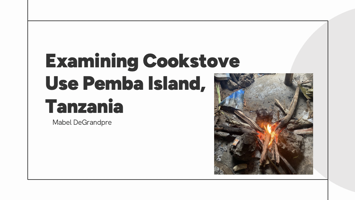
Category: Oral Presentation
Author(s): Mabel DeGrandpre
Presenter(s): Mabel DeGrandpre
This study focuses on the determinants of cookstove use and the health impacts of cookstoves on community members in Pemba, Tanzania. With a secondary focus of how these factors impact the adoption of “clean” cookstoves, specifically those introduced by the NGO Community Forest Pemba (CFP). This study was conducted in Wete District on Pemba Island, Tanzania. Using a qualitative approach with semi-structured interviews and biographical sketch methodology, 29 total interviews were conducted, which illuminated the prevalence of each of the five stove types observed and the additional considerations associated with each stove type. Interview data revealed that many households continue to use the three stone fire (TSF) due to its ability to provide large amounts of food, affordability, and familiarity across generations, despite users displaying awareness of the health risks associated with the stove type. The CFP cookstove initiative is briefly analyzed and displayed potential for reducing household fuel use and providing income to coop participants. Together these findings display the importance of analyzing historical contexts, financial barriers, labor burdens, and health perceptions when investigation the social and practical factors that complicate the widespread adoption of alternative cookstove types.

Category: Oral Presentation
Author(s): Ian Duque
Presenter(s): Ian Duque
Confidence in memory and accuracy have a unique relationship that differs across people, and contexts. Kelley (2003) conducted a study measuring confidence and accuracy using deceptive items with older adults and younger adults. Older adults showed less effective monitoring and higher levels of overconfidence than younger adults. DeSoto (2015) later showed confidence differs between item type, as in the type of words being used. Deceptive lures showed especially strong levels of overconfidence and lower accuracy. Rhodes and Tauber (2011) found that delays improve monitoring, except in the case of deceptive items. The proposed study seeks to further examine how retention interval affects confidence and accuracy using deceptive vs. control items in a cued recall task. Participants will study word pairs consisting of deceptive and control items for the cued recall task and will then rate their confidence after either a 5 or 30 minute interval. It is hypothesized that longer interval times will reduce accuracy, increase false recall with lures, and diminish the confidence accuracy relationship. This study seeks to expand on the current research surrounding monitoring, accuracy, and retention intervals to contribute to fields such as education and law.

Category: Oral Presentation
Author(s): Trey DuFauchard, Giselle Bentley
Presenter(s): Trey DuFauchard
Mentors(s): Tatiana Nekrasova-Beker
The current project focuses on understanding the implications of translanguaging within the classroom in conjunction with literacy within the United States education context. Translanguaging is broadly defined as the pedagogical practice that focuses on honoring a person’s full linguistic identity within the class. This practice can be done in all content areas, and it is not specific to just language learning classes as its initial intent is for student’s expression through language(s). As preservice teachers, we have a deep understanding of the importance of practicing culturally sustaining education within current and future classrooms. To address this overall goal, we will first explore the intersections of translanguaging and literacy because these ideas can and do impact students in various ways. The findings of this research will then inform subsequent pedagogical development, specifically on how hosting a community lead event with the goal that helps teachers, students, parents, and other members understand why sharing differences, in this case languages, creates a shared understanding of why differences are good. The main questions asked in the current project include: How can teachers supplement students’ learning/use of other languages within the classroom to develop their linguistic identities? What are the benefits of translanguaging within a classroom context? Does incorporating lessons/events surrounding pragmatics within language learning classes help students’ motivation/ understanding of the target language? If so, what are some ways that we can apply this?
Category: Oral Presentation
Author(s): Kianna Walz, Carleigh Fedorka
Presenter(s): Kianna Walz
Mentors(s): Carleigh Fedorka
Breed bias exists within many equestrian sports, including eventing, where Thoroughbreds (TBs) are often believed to be outperformed by warmbloods at the CCI5*-L level. The objective of this study was to evaluate the impact of breed on performance in CCI5*-L competition. Results from all CCI5*-L events held between 2014 and 2024 were compiled and analyzed. Penalties incurred the dressage, cross-country, and show jumping phases, as well as total competition penalties, were assessed. In addition, the likelihood of completing phases and jumping without fault was evaluated. Analyses were conducted comparing TBs to non-TBs and among the ten primary breeds represented. All statistical analyses were performed in SAS 9.4. When comparing TBs and non-TBs, an unpaired nonparametric t-test was used to assess penalties in each phase and overall penalties, while chi-squared tests evaluated the likelihood of finishing phases and jumping without fault. A one-way ANOVA was used to assess differences among primary breeds. Thoroughbreds accumulated significantly more dressage penalties than non-TBs and more than the primary breeds Hanoverian, Irish Sport Horse, KWPN, Oldenburg, and Selle Français. When assessing cross-country penalties, TBs were significantly more likely to finish without fault than non-TBs. This was also noted when comparing primary breeds, with Anglo-Arabian, Holsteiner, Selle Français, Sport Horse of Great Britain, and TB accruing significantly fewer cross-country faults than Anglo-European Studbook. Non-TBs were significantly more likely to jump clear in show jumping, and TBs accumulated greater show jumping penalties than several breeds. Overall results indicate breed does not influence overall CCI5*-L performance in eventing.

Category: Oral Presentation
Author(s): Ella Snyder
Presenter(s): Ella Snyder
Mentors(s): Laura Cole
This investigation examines socio-ecological systems thinking (SEST) among middle school students in the rural Midwestern U.S. through a place-based energy literacy unit. By utilizing the school building as a living laboratory, the unit challenges students to trace energy flows between natural and built environments, culminating in a capstone project where they participate in a simulation to design energy-efficient classrooms that balance human comfort (thermal and visual) with environmental outcomes and budgetary constraints. Using a mixed-methods approach, the research analyzes student outcomes through in-depth interviews and pre/post-unit assessments. A consensus-based coding process was employed to identify how students perceive the natural and built environments as interconnected energy systems and whether interaction with a digital simulation supported greater growth in SEST from pre to post test. Preliminary findings indicate significant growth in students' mental models, specifically in the identification of system elements and the linkages between them. Importantly, students’ own classroom environments, and the extent they used a simulation during the unit, strongly influenced their SEST. However, students largely overlooked original sources of energy (e.g., sun, wind, coal) and instead conflated energy conversion sites (e.g., power plant) as the original energy source. These results suggest that technology-enhanced place-based curricula effectively support students’ development of SEST; but students may develop alternative conceptions based on what they see regularly in their environment and may also easily overlook the original natural reservoir of energy that fuels their built environment. The presentation concludes with theoretical implications for sustainability education focused on developing students’ SEST.

Category: Oral Presentation
Author(s): Corrina Switzer
Presenter(s): Corrina Switzer
Mentors(s): John Moore
For decades, the children's media franchise "My Little Pony" has proved to be a major cultural touchstone for niche and mainstream communities alike. While existing literature extensively covers topics such as the gendered fandom of "My Little Pony," no research has explored the political messaging of the show that undergirds its unique cultural impact. "My Little Pony," through interactions between its various groups of creatures, demonstrates remarkably nuanced political commentary on issues like racism, classism. Shockingly, the show even draws explicit ties to historical events such as the Chinese Cultural Revolution. Uniquely, the show's characters work together under a feminist care ethic to resolve these scarily real issues using friendship, deliberation, and radical empathy. All the while, this complex commentary takes place in a brightly colored children's cartoon with magical ponies and unicorns. Through a textual and narrative analysis of various episodes of "My Little Pony: Friendship is Magic", I first analyze the presentation of the show's political issues, then discuss how these are resolved within the show's plot. I then examine key implications, where I argue from a post-modern frame that "My Little Pony"'s unique textual form enables the show to become a politically emancipatory fantasy world for an unexpectedly wide range of audiences. Further, I offer the show as an exemplar of political engagement in a post-truth media ecosystem.

Category: Oral Presentation
Author(s): Sophia de St Simon
Presenter(s): Sophia de St Simon
The purpose of my project is to bring awareness to the issue of sexual harassment on public transit. Women experience unwanted photos, comments, eye contact, and physical contact to a notable extent while using public transportation. This, in turn, impacts their commute, the routes they may choose to take, and even their entire day due to the stress and discomfort caused by unwanted attention.This project discusses the different ways individuals may experience sexual harassment, bringing informative facts, resources, and statistics to one’s awareness. I will be doing a presentation about sexual harassment, which will include an informative poster I created to help bring awareness to sexual harassment specifically in public transportation. By doing so, I aim to influence how people choose to act on public transit while also potentially increasing the likelihood that individuals report incidents, since resources are made readily available. I took a review-based approach, looking at statistics that were easily reportable and digestible while also researching specific support systems, forms of harassment, and ways to de-escalate situations. In the future, this project could potentially help prevent sexual harassment from occurring while also serving as a source of information and support for women.

Category: Oral Presentation
Author(s): Sofia Ambriz
Presenter(s): Sofia Ambriz
Mentors(s): Nelson Gathuku
Exploring how species respond to environmental gradients and anthropogenic pressures is a key goal in species conservation and ecology, especially at the edge of their ranges, where these factors are dynamic seasonally and/or annually. Ecological models are useful for linking presence data and environmental covariates to predict habitat use and assess shifts in space utilization across time. Using 3 years of data (2021-2023), this study aims to create annual habitat suitability maps for the Eastern Screech-Owl in Larimer County, which is severely understudied. Eastern Screech-Owls are a unique species as they adapt well to suburban areas and are considered an indicator species for the health of riparian areas. Thus, understanding what factors influence their habitat and how their distribution has changed, is critical to assessing the impact of urban development and habitat loss. Occurrence data were obtained from eBird within Larimer County, which included presence data and inferred absence data/background needed for species distribution modeling. A Random Forest approach will be used to model habitat suitability. We will process the raster data to the extent of Larimer County, and values for each variable will be extracted at presence-absence points. To assess shifts in distribution, we will extract the covariates for each year. We expect the following features to influence screech-owl distribution: distance to water, annual temperature, elevation, tree species, height, and canopy, and human settlements. Therefore, we hypothesize that Eastern Screech-Owl distribution will shift closer to Fort Collins due to increased urban development and associated land use changes.
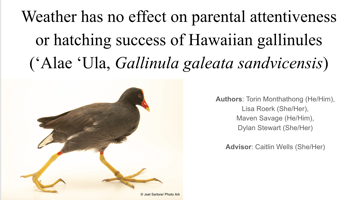
Category: Oral Presentation
Author(s): Torin Monthathong, Dylan Stewart, Madeline Savage
Presenter(s): Torin Monthathong
Mentors(s): Caitlin Wells Salerno
The Hawaiian gallinule (Gallinula galeata sandvicensis), also known as ‘Alae ‘Ula, is a waterbird endemic to the Hawaiian archipelago, and is currently listed as endangered by the U.S. Endangered Species Act. This study aims to understand the effects of short-term weather patterns on parental attentiveness during incubation and how parental attentiveness affects hatching success within the Marine Corps Base Hawai’i, Oahu. We compared weather data to off-bout durations collected from motion-detected cameras and how that affected hatching success. A generalized linear mixed-effects model (GLMER) with nest as a random effect was used to understand the relationship between weather and daily total off-bout time, along with a binomial generalized linear model (GLM) to assess the effects of mean daily off-bout on hatching success. Measured weather variables did not significantly affect daily off-bout duration, and off-bout duration did not affect hatching success, but the initiation of off-bouts strongly followed a diel pattern, peaking in the early afternoon and declining sharply overnight. However, nest identity explained the majority of the variation seen in the study. The study suggests that short-term weather conditions do not strongly affect hatching success, possibly because these birds nest in a tropical environment. This will allow future research to focus on the timing of their research based on their goals, as well as to identify other possible causes of hatch failure.

Category: Oral Presentation
Author(s): Juliette Suarez Robles
Presenter(s): Juliette Suarez Robles
Mentors(s): George Wittemyer, Nelson Gathuku, Sarah King
Infanticide is most commonly observed in species with slow life history traits, where females have long intervals between births; by killing dependent offspring, males may cause females to return to estrus sooner and thereby increase their own reproductive opportunities. Orangutans, in particular, are known for their extensive parental care, as they are characterized by having the longest gestation length among primates after humans. In species with extended gestation and lactation lengths as well as delayed weaning, such as orangutans, the incentive for infanticide is expected to be especially strong because the dependent offspring suppress female fertility for prolonged periods. Orangutans exhibit some of the longest inter-birth intervals (IBI) among mammals, making them a key system for evaluating the Sexual Selection Hypothesis of infanticide. In this study, comparative data from both great apes (Hominidae) and lesser apes (Hylobatidae) are used to test whether variation in life history traits—particularly gestation length, weaning age, and inter-birth interval (IBI)—can predict the likelihood of infanticide in orangutans, despite no occurrence having been documented in wild populations. Statistical models are applied to assess which life history traits in apes show higher probabilities of infanticide occurrence. The results aim to clarify whether the predicted relationship between longer developmental periods, reproductive timing, and infanticide risk is consistent across the ape phylogeny, providing broader insight into the evolutionary drivers of this behavior.
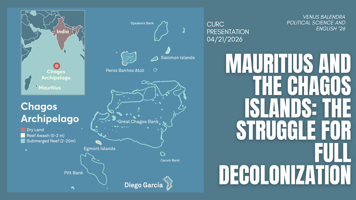
Category: Oral Presentation
Author(s): Venus Balendra
Presenter(s): Venus Balendra
Mentors(s): Peter Harris
This presentation examines the Chagos Archipelago dispute and its significance for Mauritian domestic politics and foreign policy. Although Mauritius gained independence in 1968, the detachment of the Chagos Islands in 1965 meant that decolonization remained incomplete. This unresolved issue has since evolved into a central feature of Mauritian political life. The presentation traces this development chronologically, showing how the issue moved from a constitutional contradiction at independence to a lived social and political concern. The forced displacement of the Chagossian population brought the consequences of excision directly into Mauritian society, linking the dispute to questions of inequality, marginalisation, and justice. Over time, the issue became embedded in parliamentary processes, civil society mobilisation, and electoral politics. Particular attention is given to the role of activist movements in reframing Chagos as not only a question of sovereignty, but also of militarisation, imperialism, and the right of return. The presentation also considers the international dimension of the dispute, focusing on Mauritius’s engagement with legal and diplomatic institutions. The 2019 advisory opinion of the International Court of Justice marked a turning point, providing legal validation for Mauritius’s claims and strengthening its position in negotiations. Overall, the Chagos dispute illustrates how incomplete decolonization continues to shape both domestic political identity and international strategy.

Category: Visual Art
Author(s): Lydia Paulsen
Presenter(s): Lydia Paulsen
Humans and the environment are deeply intertwined. When we destroy one, we destroy the other. My project displays a collection of original ecopoetry to explore the threads connecting ecocide and genocide in Palestine under settler colonialism. My goal is to use historical, environmental science, and poetic lenses to explore this topic. Through a historical lens, I use peer-reviewed research to build a timeline of the key events in Palestine from 1516 to present day. This history details the rule of the Ottoman Empire, Britain’s antisemitism that displaced Jews and Palestinians, the ethnic cleansing of Palestinians and destruction of their homes, and the current genocide. When we remove the indigenous peoples that have built cultural connections with the environment, we perpetuate environmental destruction. With the ecocide in Palestine, biodiversity and carbon sinks suffer, and non-native plant species replace native plant species. Despite all, resiliency persists through love. Love is a central theme in Palestinian poems, including the works of Palestine’s national poet Mahmoud Darwish and queer Palestinian-American poet George Abraham. The ecopoetry I write is in conversation with these histories, environmental data, and poets. With interdisciplinary explorations of social and environmental justice, we become empowered to advocate for meaningful change. Even when processing the grief of human and environmental destruction, art and love remind us that hope persists.

Category: Visual Art
Author(s): Chloe Martin
Presenter(s): Chloe Martin
Mentors(s): Erin Carignan
Chloe Martin designed and produced the costumes for CSU Theater's 2025 production of Paradise Lost by Erin Shields. This was a year-long process that involved a semester of collaborating with the director and other design departments to create a cohesive and inspired design. The second semester involved producing the costumes, utilizing CSU's costume stock and working with our costume shop to create one of a kind pieces tailored to a diverse group of actors. Chloe placed first in the region for this design at the American Theater College Festival and is excited to be representing CSU at the national competition. Paradise Lost (2018) by Erin Shields is a staged retelling of John Milton’s epic poem exploring Satan’s battle against Heaven and the subsequent fall of Adam and Eve. Reimagining this 17th century tale through a contemporary feminist viewpoint, Shields interrogates the nuances between good and evil, showing humanity in all. Chloe's costume design tells the story that Heaven and Hell are neither good nor bad, but beings shaped by their environment, power, and experiences. This approach is informed by aposematic animals, such as a poison dart frog, and how they evolved striking colors to warn predators. Contrast is created between Heaven, Hell, and the Garden of Eden through colors, textures, and silhouettes, with Heaven inspired by the restraint of quiet luxury, Hell by alternative styles and these aposematic animals, and Eden by the vulnerability of the natural world.
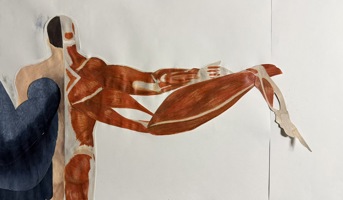
Category: Visual Art
Author(s): Elizabeth Sudduth
Presenter(s): Elizabeth Sudduth
A blending of art and anatomy, Subject 001 is a partial ecorche of an angel. This is meant to display the muscles and bone structure of a genetically-altered human-turned-angel.

Category: Visual Art
Author(s): Karyme Altamirano
Presenter(s): Karyme Altamirano
Mentors(s): Yaneli Munoz
This project is deeply rooted in my identity as a Latina woman and reflects both my personal journey and the community that has supported me along the way. Through this piece, I aim to honor my past while also representing my future as a first-generation college student. Growing up, the idea of pursuing higher education often felt uncertain and out of reach. As Latina student navigating limited resources and opportunities, I found myself constantly searching for pathways that would allow me to continue my education. Many of the doors I encountered felt closed because of my circumstances, but my mother’s encouragement remained a constant source of strength. Her simple yet powerful words, “I proud you,” reminded me that my efforts mattered and that my dreams were worth pursuing. Motivated by her support and the sacrifices made by my family, I continued knocking on every door I could find. That persistence, combined with the unwavering presence of my familia, allowed me to reach a goal that once felt distant: entering higher education. However, this moment is not the end of my journey but rather a continuation of it. The main element of this project is a meaningful garment passed down from my grandmother—her falda de danza folklórica. This skirt represents cultural inheritance, resilience, and generational strength. I have transformed and personalized the skirt by embellishing it with sequins, symbolizing both celebration and the evolving nature of identity. Its final showcase features the complete outfit, accompanied by photographs of the garment and makeup styled in the tradition of a catrina. Together, these elements highlight the beauty of cultural legacy while honoring my journey toward education and self-expression.

Category: Visual Art
Author(s): Emma Winters
Presenter(s): Emma Winters
This past summer, I spent a week in Texas, doing what every college student dreams of: chasing trains. When I went to intern with my uncle, I didn’t expect to be driving 90 miles per hour while trying to catch up with a train, but his passion for them is so strong that it led us there. For four days, we roadtripped up the Texas Panhandle, driving from Austin and almost reaching Amarillo. We followed the train tracks through small towns with my Canon EOS 6D Mark II camera by my side, stopping when we heard a train coming or saw it in the distance. The routine became simple: drive until you see a train, flip a U-turn and book it, outrunning it until the train is out of sight. You set your aperture, shutter speed and ISO, stand thirty feet away from the tracks and shoot away. If I wasn’t photographing or waiting on trains, then I was exploring small Texas towns, marveling at the grain elevators and architecture. So many times, we focus on all the science of the world that we forget to just stop and marvel at the beauty around us. In this photo essay, I display the backbone of American culture and expansion, proving that not only does our country run on trains, but it also stands as an understated line of art.

Category: Visual Art
Author(s): Matthew Grace
Presenter(s): Matthew Grace
The Range of Queer Emotion is a gallery created to highlight the feelings that many queer people experience on the daily. With anti-LGBT sentiment on the rise and inaccurate portrayals of queer individuals in the media, its more important now than ever to cement the notion that queer people are not props for politicians or entirely sexual beings designed for the enjoyment of our heterosexual counterparts. Queer people and culture are much more than entertainment. This gallery’s purpose is to bring light to those queer individuals and their deep and complex emotions.

Category: Visual Art
Author(s): Ferrin Jaudon
Presenter(s): Ferrin Jaudon
Unfortunately, in many art communities today, there is a growing expectation that every piece must carry a profound meaning along with it. The pressure for this standard often overshadows the foundational qualities that were present when we first started considering things to be art; curiosity, visual fasciation, and the creation of something that pushes boundaries. Art has historically thrived on experimentation and the freedom to explore, yet the emergence of contemporary norms increasingly suggest that work lacking an elaborate concept is somehow lesser. My work is created in order to challenge these assumptions, and look at how art can operate when freed from the demand of a narrative justification. I focus on the raw curiosities of the mind, and create pieces that invite viewers to engage with their own imaginations. Through an alternative style, I aim to abolish these narratives by leading with example. By presenting work that resists traditional meaning-making, I hope to encourage others, both artists and viewers alike, to reconnect with their own creative impulses and consider how art can be liberated from this restrictive groupthink within our communities. This project asks a central question: What happens to creativity when we remove the expectation that art must “mean” something?

Category: Visual Art
Author(s): Tess Baur
Presenter(s): Tess Baur
Do you trust yourself? Should you? We don't view the world directly, but through the windows of our senses. Unfortunately, those windows are paned with multiple layers of thick, stained glass. Humans are intrinsically fallible, and our perception (the sensory process of gaining awareness of stimuli) is limited at best and distorted at worst. In a patchwork collage of a disconnected range of imagery, if there is any meaning to be found, it's buried. What is significant and what's just there? Everything is there for a reason (or reasons), but what? Is it possible to figure everything out, and if it is, is it worth it? Does it even matter? My work challenges you to question how you know what you know, what led you to know it, and the potential flaws in your knowledge. Doubt yourself. Second-guess your assumptions and interpretations. There are no wrong answers, no right answers, no answers at all. Only options.
Category: Visual Art
Author(s): Madelyn Hendricks
Presenter(s): Madelyn Hendricks
Do you know the Chinese Zodiac? How the twelve animals race across the country to reach God, represented by the sun, the moon, and the passages of time? You probably know the order: The rat, Ox, Tiger, Rabbit, Dragon, Snake, Horse, Sheep, Monkey, Rooster, Dog, and Pig. People consider them symbolic, but the animals do not represent the new year; they carry it on their backs. It’s a silly concept: You win a race where your reward is to bear the responsibility of new life. And even after making it to the finish line, they still have to run their races. Like the fire horse under the moon who must make it before morning, or the snake which wraps itself in red luck to show new beginnings. They run with us, so at the end of the day, we are not running our race alone. But no one talks about the end of the race, or how it is even possible for a snake to come before a horse. The secret lies in what we carry and what we put forward. I believe we are all running a race, but we tend to forget the snake tied to our leg. We forget who surrounds and inspires us. Welcome to my yearly process, represented by my digital work. Thank you for giving me the opportunity to share my race with you, because not everyone gets the chance to see what I carry with me.

Category: Written Work
Author(s): Madison Toner
Presenter(s): Madison Toner
This is a collection of poems that explore themes of my childhood trauma. Many of the poems touch on the same ideas like self-harm, dysfunctional relationships between parents, and the first steps of healing. These poems focus on the trauma through imagery, free from, and other poetry elements.

Category: Written Work
Author(s): Karissa Lewis
Presenter(s): Karissa Lewis
“The Mirror Knows” is a creative nonfiction poem that explores embodiment, internalized comparison, and the psychological impact of perceived romantic displacement within intimate relationships. Through recurring imagery of mirrors, ghosts, and bodily measurement, the poem examines how self-perception can fracture under the weight of imagined ideals and unspoken desire. The speaker navigates themes of intimacy and selfhood while confronting the tension between devotion and self-erasure. By situating the body as both witness and battleground, this work invites reflection on how relational dynamics shape identity, embodiment, and the negotiation of worth.

Category: Written Work
Author(s): Melissa Chavira-nieto
Presenter(s): Melissa Chavira-nieto
Mentors(s): Yaneli Munoz
First-generation students are not defined by the challenges they face, but by who they are despite them. This written piece explores how a first-generation student’s identity can be represented outside of stereotypical narratives that focus only on struggle, hardship, or cultural tropes. First-generation students are often seen through stories of trauma and sacrifice, when our identities are much more complex. Identity is framed here as a product of exploration, imagination, and resilience rather than struggle alone. Through the story of Memo, a playful and unconventional cat, readers can see first-generation identity reframed in a more positive way. Memo challenges the narrative that identity must always be tied to hardship and instead represents curiosity, freedom, and self-expression. This small, grey, feisty cat explores his new home with joy, finding fascination in the smallest things. The story also connects to my experience as a Latina first-generation student. Memo lives in a Mexican American household and often plays with the frijoles (beans) my mom drops while cooking. While beans have historically been used as a stereotype against Mexican communities, Memo does not carry that meaning. To him, they are simply small objects to chase. Through Memo, the story encourages readers to see identity beyond stereotypes.

Category: Performing Art
Author(s): Jacqueline Urquidez, Alyssa Benik, Amethyst Aligaen, Brady McCue, Kaitlyn Tayntor, Kimberly Mayorga-Escalante, McKenna Donohue, Mikayla Carter, Nicole Genalo, Sophia Crile
Presenter(s): Jacqueline Urquidez, Alyssa Benik, Amethyst Aligaen, Brady McCue, Kaitlyn Tayntor, Kimberly Mayorga-Escalante, McKenna Donohue, Mikayla Carter, Nicole Genalo, Sophia Crile
Mentors(s): Judith Bejarano
Jacqueline’s dance capstone and senior thesis research, All Strings Attached, is focused on the “American Dream” and the idea that hard work and perseverance can lead to success and a better life. However, inequalities impact people’s ability to achieve this dream. The pursuit of the American Dream can be seen through the lens of white privilege being portrayed as the real “national fantasy” but in reality, it is unattainable and unrealistic to everyone else. Like a puppet show, the world manipulates those trying to achieve this dream by putting them on display and convincing them of a future that has only been created when excluding non-white experiences and aspirations. Jacqueline is showcasing is the last two sections of her capstone choreography. The opening section is portraying the satirical and overly happy aspect of living this dream through the lens of the idealized, conflict-free happy family privilege. The ending section portrays the persevering ones that through trying to be controlled and held back, they continue to pursue there dreams no matter the obstacles that the inequalities of our country put forth on them. This capstone was created to showcase the power of protest and advocacy through dance. Choreographer: Jacqueline Urquidez Dancers: Amethyst Aligaen, Alyssa Benik, Mikayla Carter, Sophie Crile, Nicole Genalo, Kimberly Mayorga, Brady McCue, Kaitlyn Tayntor Understudy: McKenna Donohue

Category: Performing Art
Author(s): Sasha Levy, Anushka Rao, James Andre Dumaug, Madison Soda, Malinda Normany, Melanie Normany, Nisha Srivastava
Presenter(s): Sasha Levy, Anushka Rao
CSU's K-pop Dance Club's (KDCSU) Performance Team will be performing a cover of Plot Twist by TWS Founded in 2019, KDCSU is an official CSU club that focuses on Korean dance and culture. They're best known for covering popular K-pop songs, but we also hold club meetings to play games and learn more about Korean culture. We pride themselves on being a welcoming space for dancers of all skill levels, and are looking forward to dancing for you!

Category: Film
Author(s): Maren Unwin
Presenter(s): Maren Unwin
And My Soul Shall Be Healed: Reclaiming Christianity through the Transgender Experience explores the intersections between Christianity, far-right extremist politics, and gender identity. Through interviews with a pastor, a professor, and a transgender woman, this film reveals that gender diversity and Christianity are not mutually exclusive.
Category: Film
Author(s): Makena Saber
Presenter(s): Makena Saber
"Looking West" is a reflective short film exploring the idea of time as a slippery material, something impossible to grasp yet deeply felt as it moves through our lives. The film opens with childhood footage of the filmmaker and her brother, introducing an early sense of innocence and memory. Through narration, the film meditates on the strange duality of nostalgia: how remembering can be both painful and comforting as time continues to move forward. As music fades in, the lyrics of Stairway to Heaven echo the filmmaker’s longing for home. Looking toward the mountains in the American West becomes a symbolic gesture. One that reminds her of the Pacific beyond them and the home she left behind in Hawai‘i. The landscape becomes a quiet marker of distance, memory, and the emotional pull of the past. The film ultimately shifts from loss to appreciation. While time inevitably slips away, its fleeting nature is what gives moments their meaning. Through footage of Hawai‘i and moments shared with her brother, captured during a week filled with academic pressures and obligations, the film reveals a realization: the moments that feel like interruptions to productivity often become the ones that matter most. Looking West is a meditation on nostalgia, home, and the fragile beauty of the present, encouraging viewers to recognize the value of memories not only after they pass, but while they are still being lived.

Category: Film
Author(s): Abby Burns
Presenter(s): Abby Burns
A group of Yosemite highliners seek to establish the first highline that spans the Sentinel Rock gap.

Category: Film
Author(s): Miguel Maqueda, Filiberto Talavera-Gonzalez, Liliana Lopez
Presenter(s): Miguel Maqueda, Filiberto Talavera-Gonzalez, Liliana Lopez
Mentors(s): Amanda Autobee, Sandra Castaneda, Yaneli Munoz
This short film highlights voices that are not always heard when discussing university student experiences. First generation students come from many different backgrounds, and each carries a unique story. While their journeys are deeply personal, they also share many common experiences as they navigate the unfamiliar world of higher education. Many first-generation students encounter similar doubts, pressures, and adversities when entering college. Their stories often go unnoticed by the broader public, yet they represent resilience, determination, and growth. By sharing these experiences, the film brings attention to what first generation students truly go through and why their journeys deserve recognition. One of the central themes of the film is how daunting college can feel at the beginning. Many first-generation students arrive on campus without a clear understanding of what to expect. Unlike peers who may have family members who attended college, they often do not have someone at home who can explain the systems, expectations, and hidden processes of higher education. As a result, they must learn to navigate these challenges independently while balancing academic, personal, and cultural transitions. This short film follows the experiences of three first-generation students, Filiberto Talavera-Gonzales, Liliana Lopez, and Miguel Maqueda, at Colorado State University. Through personal reflections and storytelling, each student shares moments of uncertainty, perseverance, celebration, and achievement. Their voices highlight both the challenges they faced and the victories that shaped their journeys. While their paths are different, they ultimately come together through a shared sense of community that empowers them to continue moving forward.

Category: Film
Author(s): Garrison Lazzeri
Presenter(s): Garrison Lazzeri
Mentors(s): Chung-Fu Chang
Bumblebees And Roses is a dance piece created for my Choreography class led by Chun-Fu Chan. The piece tells a coming-of-age story of a queer person in American society and the sexualization they are exposed to. The costumes represent purity and corruption, with each side of the stage reflecting these opposing forces as well. The choreography uses motifs to show the push and pull that these individuals experience. As the piece is set in a contemporary fem fusion style, the contrast in movement and technique further develops the narrative of innocence and corruption. The end of the piece shows what the reality is for many queer people, not resolution, but hope that there will be. Each expirence of life stays with us all, develops us, and changes us, and the only thing you can do is move forward and heal.