
Neuropathology and Neurotoxicological Hallmarks in Aging Felines with Cognitive Dysfunction
Category: Research Poster
Author(s): Aidan Flanagan, Carolyn Dobkins, Abdullatif Alsulami
Presenter(s): Aidan Flanagan
Mentors(s): Julie Moreno, Stephanie McGrath
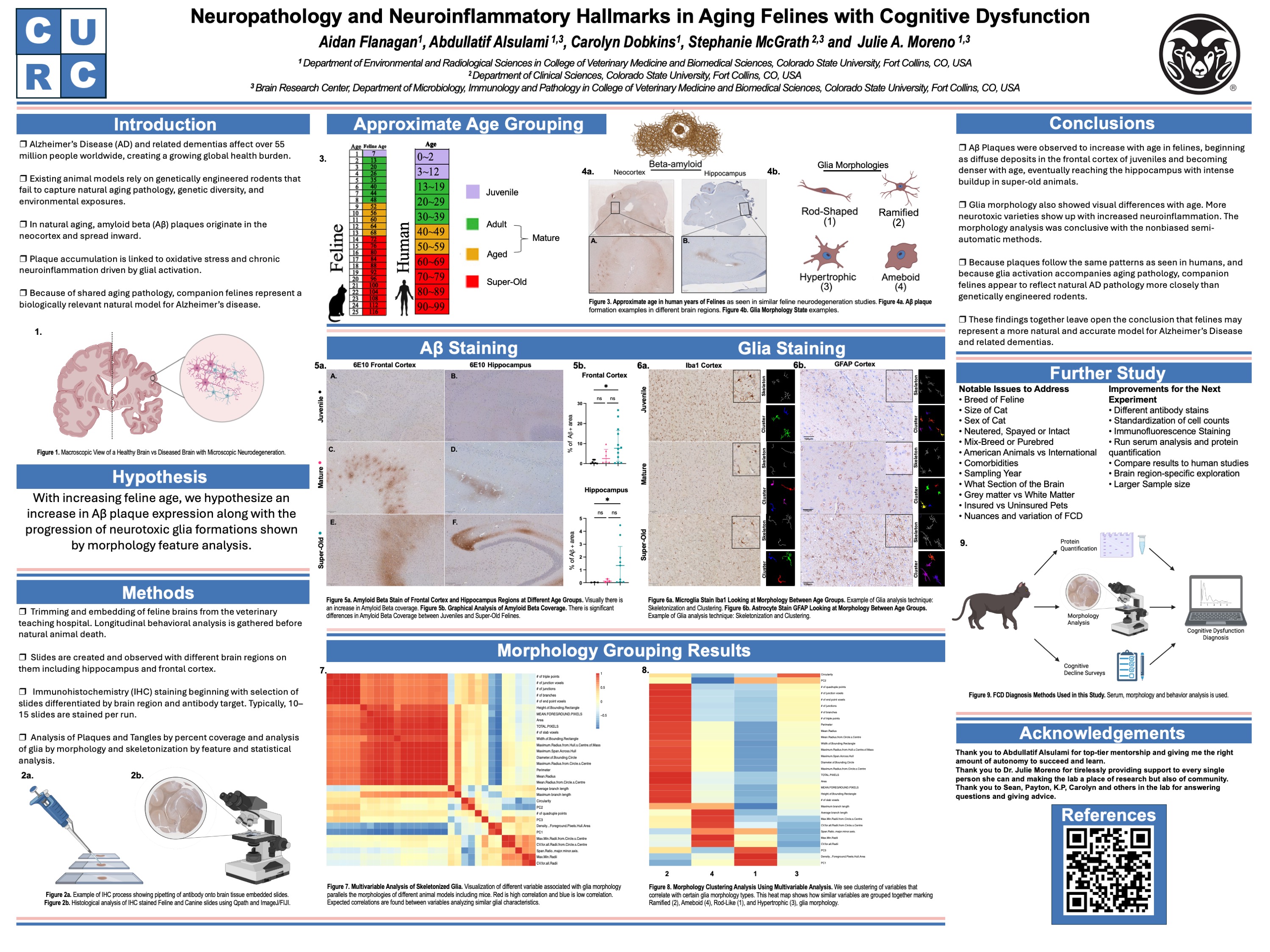
Neurodegenerative disorders like Alzheimer’s Disease (AD) are an increasing problem affecting 55 million people worldwide. Current animal models rely on genetically engineered rodents that mimic AD symptoms. What these models fail to account, are differences in environmental exposures, genetics, and natural aging pathology, main contributors to AD. Aging presents with aggregation of amyloid beta (Aβ) plaques primarily accumulating in the neocortex, spreading inward to the cerebellum. These buildups are associated with oxidative stress and inflammation seen through activation of glial support cells throughout the CNS. Specifically, microglia and astrocytes are important for upholding homeostasis, decreasing plaque buildup, and supporting the blood-brain barrier. Because of natural aging pathology, genetic diversity, and environmental exposures similar to humans, the use of companion felines is thought to be an accurate model for AD research. We hypothesize, at different age stages, and with increasing plaques, felines will show heightened levels of neuroinflammation. IHC staining was performed on coronal sections of feline brains, with histopathology used to identify brain regions. Cells were counted using software trained to differentiate cells in IHC, including QuPath and ImageJ. Glial morphology was identified using 40 variables including radius, circularity, and branching. These were grouped into four categories based on the main glial conformations. Glia grouping paralleled that of other organisms and significance was observed between plaque coverage and age. Some aged animals did not show many symptoms, paralleling humans who often do not show clear signs of brain aging.