
Nitrogen Fertilizer Impacts on Soil Carbon Levels in Semi-Arid Irrigated Systems
Category: Research Poster
Author(s): Miriam Hill, Catherine McPherson
Presenter(s): Miriam Hill
Mentors(s): Catherine Stewart
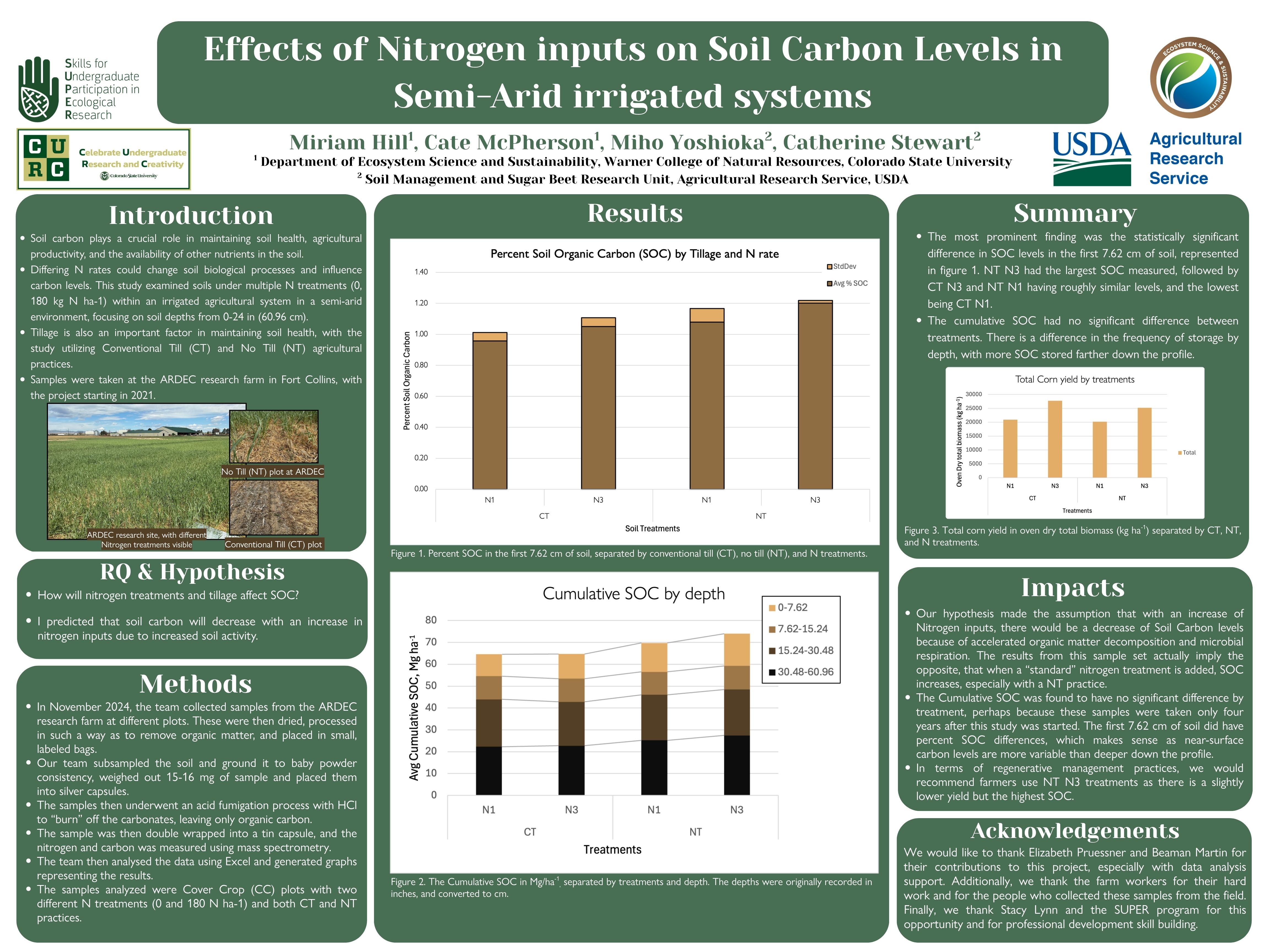
Soil carbon plays a crucial role in maintaining soil health, agricultural productivity, and the availability of other nutrients in the soil. Nitrogen (N) fertilizer is essential for crop yield and can increase both inorganic (SIC) and soil organic carbon (SOC) concentrations. Differing N rates could change soil biological processes and decrease inorganic carbon levels. This study examined soils under multiple N fertilizer treatments (0, 160, 180 kg N ha-1) within an irrigated agricultural system in a semi-arid environment, focusing on soil depths from 0-12 in (30.5 cm). To investigate these relationships, soil samples were collected from experimental plots at the ARDEC research farm in northern Fort Collins, Colorado. Samples were processed, ground, and analyzed using mass spectrometry to quantify N, SOC, and SIC concentrations. Preliminary analysis compares SOC , SIC, and TSN concentrations across N fertilizer treatments and soil depths to identify trends in soil carbon storage. I will present results on whether increasing N fertilizer additions correspond with measurable differences in SIC levels. These findings will help inform N fertilizer strategies and improve understanding of how N influences soil carbon dynamics in a semi-arid, irrigated farmland system.