
Sex Differences in Cognitive Flexibility in Domestic Rabbits
Category: Research Poster
Author(s): Natalie Filbey
Presenter(s): Natalie Filbey
Mentors(s): Sophia D'Agostino
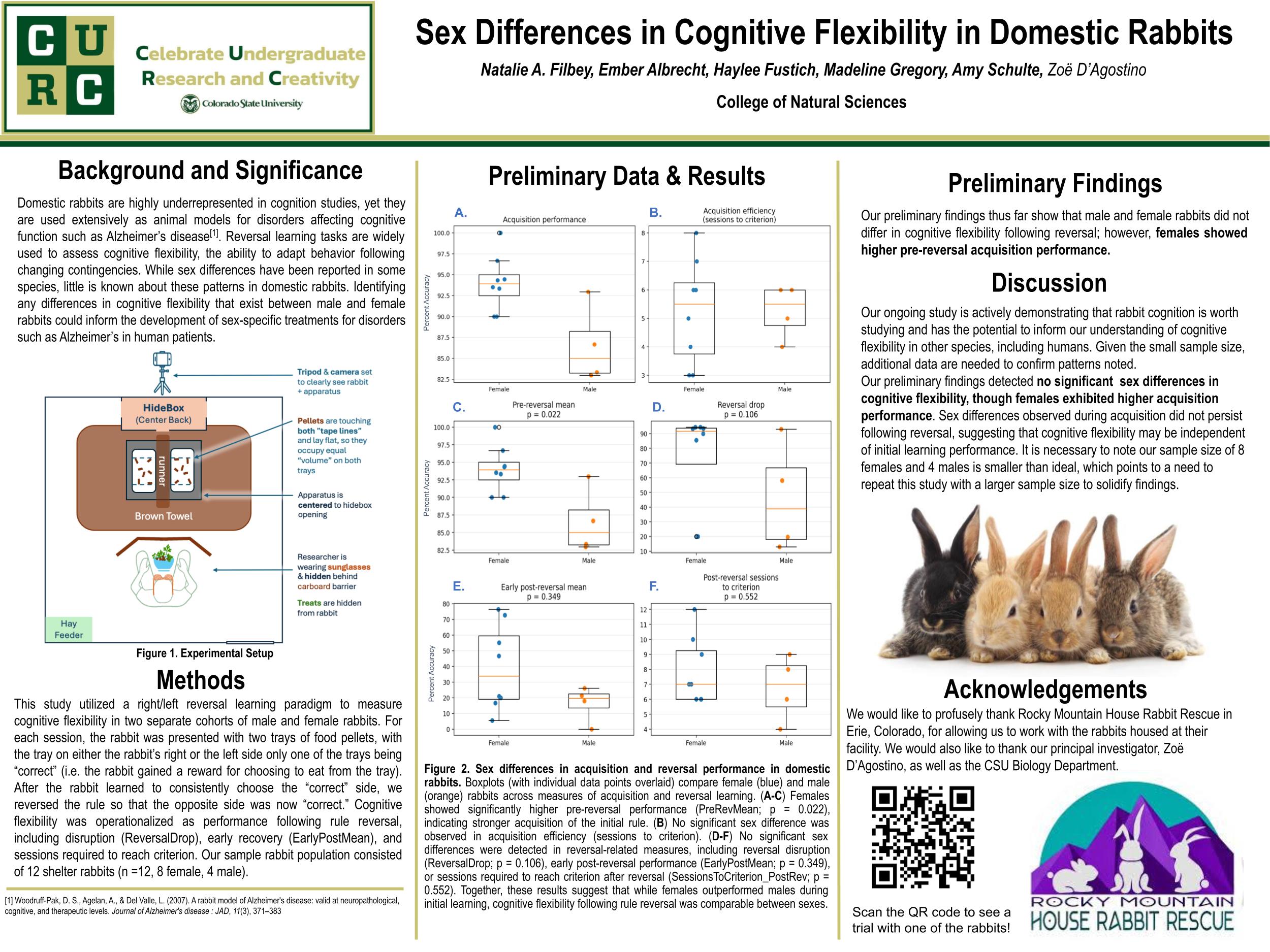
Domestic rabbits (Oryctolagus cuniculus domesticus) are frequently used as animal models for disorders affecting cognitive flexibility such as Alzheimer’s disease, yet important gaps remain in our understanding of rabbit cognition, including potential sex differences. Identifying whether sex differences exist in rabbit cognitive flexibility can inform future rabbit-model work and improve how we interpret outcomes across studies. This pilot study explores sex differences in rabbit cognitive flexibility using a reversal learning task. In this study, male (n = 5) and female (n = 5) rabbits housed at a local rabbit rescue choose between two food trays placed to their right and left; one side is deemed the “correct” side and is rewarded. After the rabbit achieves ≥80% accuracy for three consecutive sessions (6-10 trials/session), the rewarded side is reversed (i.e., the rabbit is rewarded for choosing the tray that was previously on the “incorrect” side). Based on previous research on sex differences in cognitive flexibility, it is anticipated that any differences in cognitive flexibility will appear post-reversal and will likely be context dependent. Although data collection is ongoing, any preliminary trends pointing to sex differences in cognitive flexibility, or lack thereof, will be presented.