
Determining the temporal distribution of prions shed in nasal secretions of white-tailed deer inoculated with Nordic CWD
Category: Research Poster
Author(s): Jessica Gamble
Presenter(s): Jessica Gamble
Mentors(s): Erin McNulty, Nathaniel Denkers, Candace Mathiason
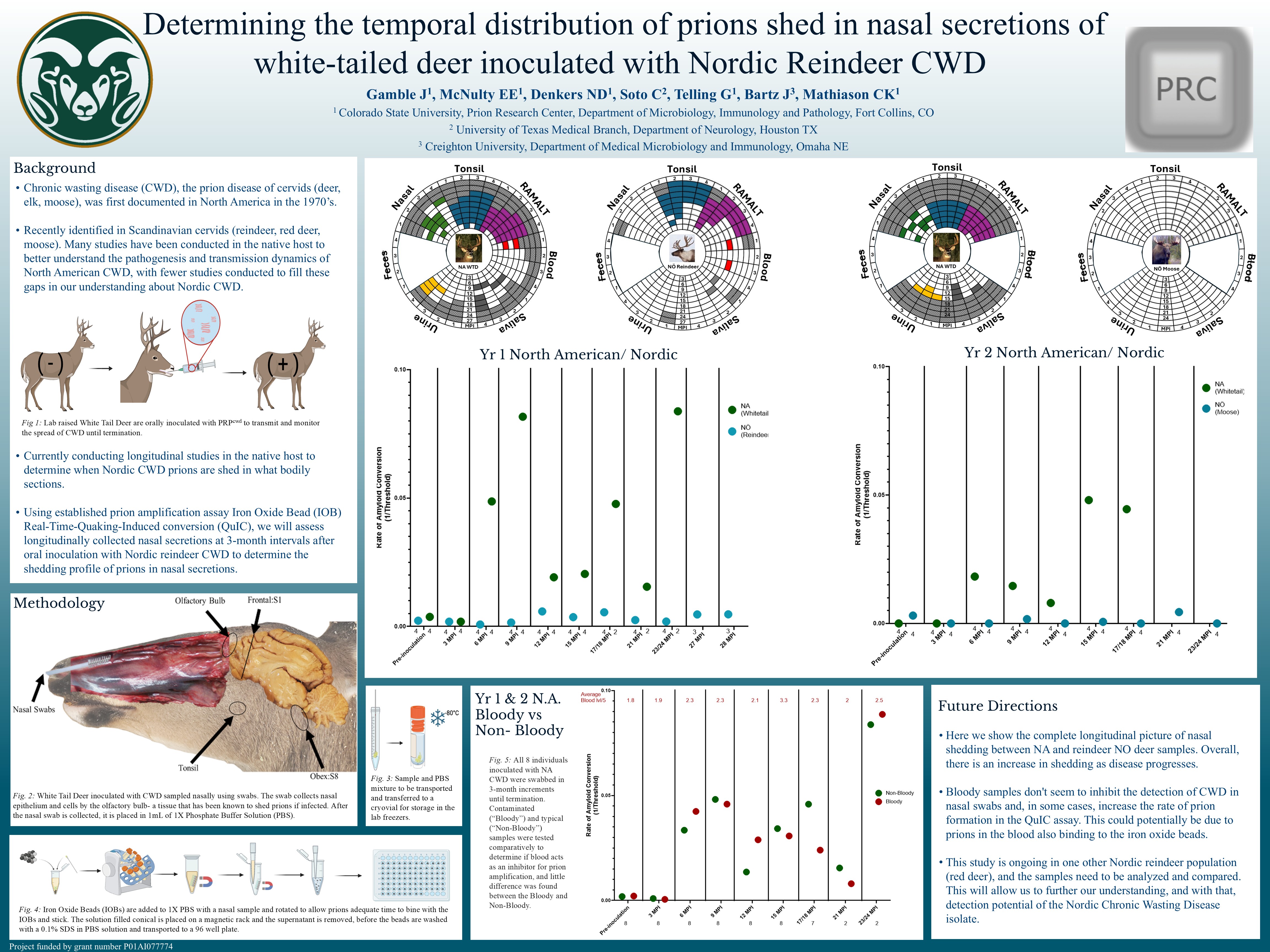
Chronic wasting disease (CWD), the prion disease of cervids (deer, elk, and moose), was first documented in North America in the 1970’s. The disease was more recently identified in Scandinavian cervids (reindeer, red deer and moose) in 2016. Many studies have been conducted in the native host to better understand the pathogenesis and transmission dynamics of North American CWD, with fewer studies conducted to date to fill these gaps in our understanding about Nordic CWD. Of particular interest is determining how and when prions are shed from Nordic CWD-infected cervids throughout disease course. Our previous studies of North American CWD have determined that the infectious agent is shed in saliva, urine, feces and blood, all of which contribute to efficient horizontal transmission of the disease from one cervid to the next. It was previously understood that blood inhibited nasal sample positivity when testing for CWD; with more recent analyses providing evidence to the contrary. We are currently conducting longitudinal studies in the native host to reveal prion shedding profiles of Nordic CWD prions, including the assessment of bloody vs non-bloody nasal sections. Longitudinally-collected nasal secretions (bloody and non-bloody), collected at 3-month intervals after oral inoculation, will be assessed for the presence of prions using the established prion amplification assay Real Time Quaking-Induced conversion (RT-QuIC) in combination with Iron Oxide Bead (IOB) extraction (IQ). Findings from this study will: (i) enhance our understanding of Nordic CWD shedding, and (ii) derive more information on the testing capabilities of bloody vs non-bloody nasal sample collections from CWD- infected cervids that will lead to enhanced diagnostics and surveillance for this and other protein misfolding diseases.