
Cloning and Expression of an LRP8-like Receptor from Ixodes scapularis for Studies of Tick-Borne Orthoflavivirus entry
Category: Research Poster
Author(s): Grayson Sokoloski, Imke Steffen, Cody Kalous
Presenter(s): Grayson Sokoloski
Mentors(s): Imke Steffen
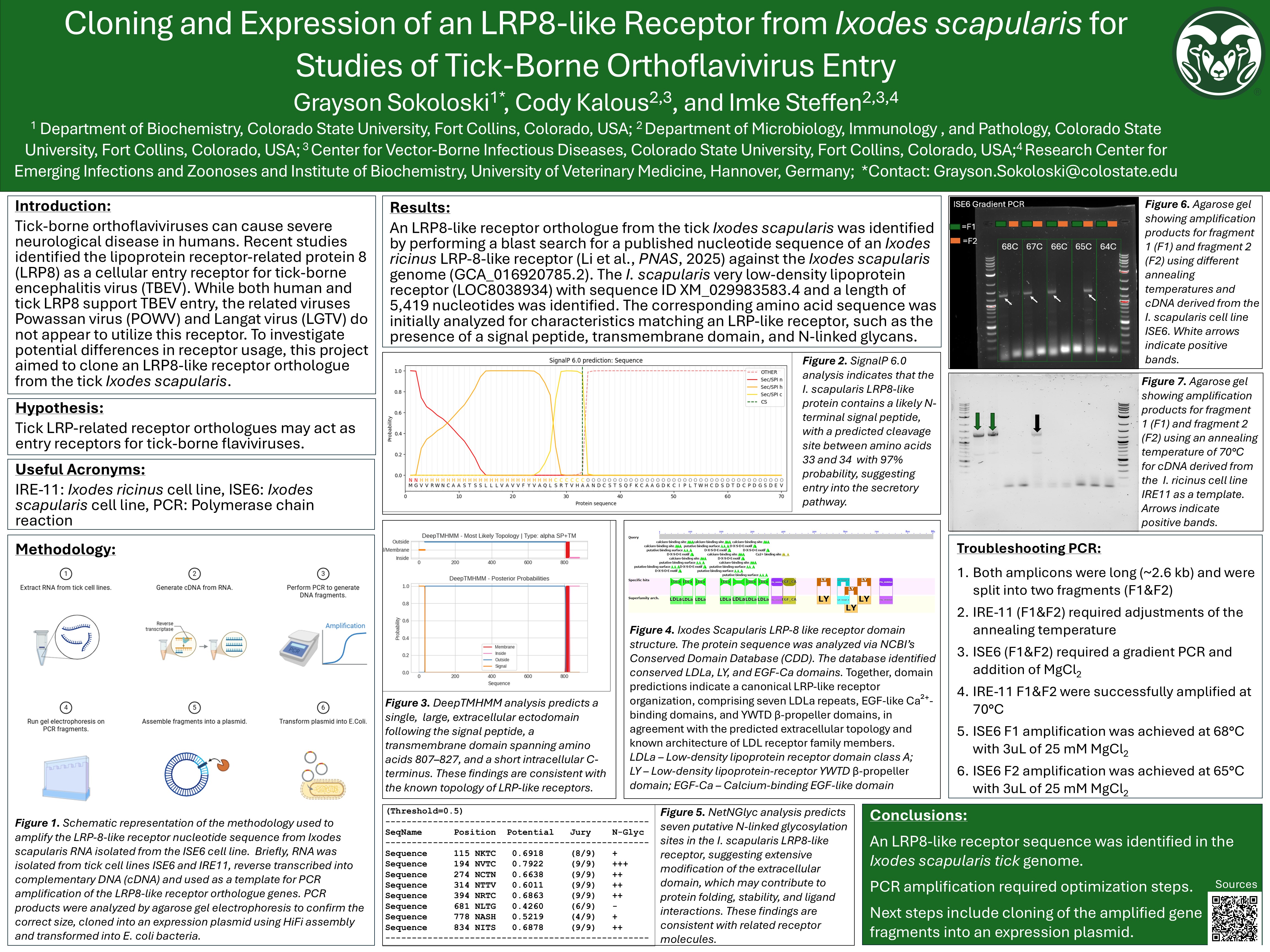
Cloning and Expression of an LRP8-like Receptor from Ixodes scapularis for Studies of Tick-Borne Orthoflavivirus Entry Grayson Sokoloski, Cody Kalous, and Imke Steffen Center for Vector-Borne Infectious Diseases, Colorado State University, Fort Collins, CO Tick-borne orthoflaviviruses can cause severe neurological disease in humans. Recent studies identified the lipoprotein receptor-related protein 8 (LRP8) as a cellular entry receptor for tick-borne encephalitis virus (TBEV). While both human and tick LRP8 support TBEV entry, the related viruses Powassan virus (POWV) and Langat virus (LGTV) do not appear to utilize this receptor. To investigate potential differences in receptor usage, this project aimed to clone an LRP8-like receptor orthologue from the tick Ixodes scapularis. Sequence comparison and BLAST analysis identified a putative LRP8 orthologue in the I. scapularis genome. In silico analysis of the predicted protein sequence revealed features characteristic of LRP-family receptors, including an N-terminal signal peptide, a transmembrane domain, and multiple predicted N-glycosylation sites. Total RNA was isolated from tick cell lines derived from Ixodes scapularis (ISE6) and Ixodes ricinus (IRE11), reverse-transcribed into cDNA, and used as a template for PCR amplification with gene-specific primers. Because the receptor coding sequence (~2.6 kb) is relatively large, the gene was amplified in two fragments. Following optimization of PCR conditions, both fragments were successfully amplified and prepared for assembly into an expression plasmid using HiFi cloning. The resulting constructs will be sequence-verified and expressed in HEK293T cells to assess receptor expression by western blot and enable future studies testing whether tick LRP-like receptors support entry of Powassan or Langat viruses.