
Colorado Growth Model Bias
Category: Research Poster
Author(s): Alison Podgorski, Juan Gonzalez
Presenter(s): Alison Podgorski
Mentors(s): Benjamin Prytherch
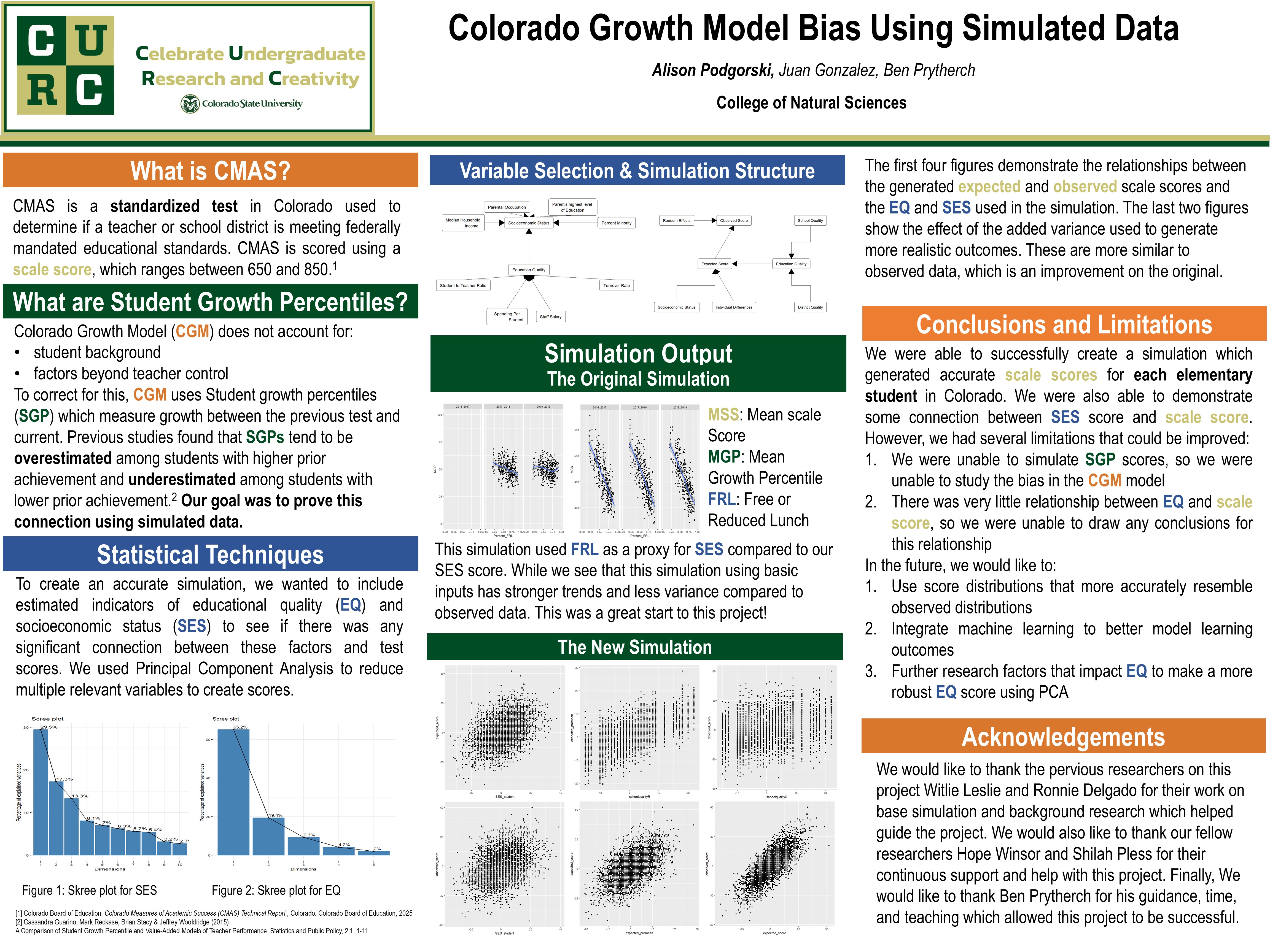
The Colorado growth model is used by several states to analyze standardized test scores to evaluate whether a district is meeting federally set educational targets. We looked to see if this model was biased against low income school districts by simulating test scores in R. Using data collected from the Colorado state technical manual, we set accurate parameters for test score distribution for the years 2021 to 2025. We then created a dataset including standardized test scores and summary statistics for each school in Colorado to use as simulation inputs. Two more datasets were then put together using US census data and Colorado school district data, which then was put through a principal component analysis to generate a socioeconomic status and educational quality score for each school district. These then transformed the input data, adding variance to account for individual differences, to simulate the next year's expected standardized testing scores for each student in each school. We then generated an observed score that added variance to simulate individuals performances on the day of testing. We compared our results with collected data to determine whether the correlation between generated data and output scores were accurate to real life observations. We found that the simulation we created was successful in accurately modeling general standardized testing trends including bias against schools that had low socioeconomic status and educational quality.