
Comparative analysis of wing morphology & bioluminescence in bat species of the Ecuadorian Amazon
Category: Research Poster
Author(s): Alisa Dolan, Elise Geno
Presenter(s): Alisa Dolan
Mentors(s): Tanya Dewey
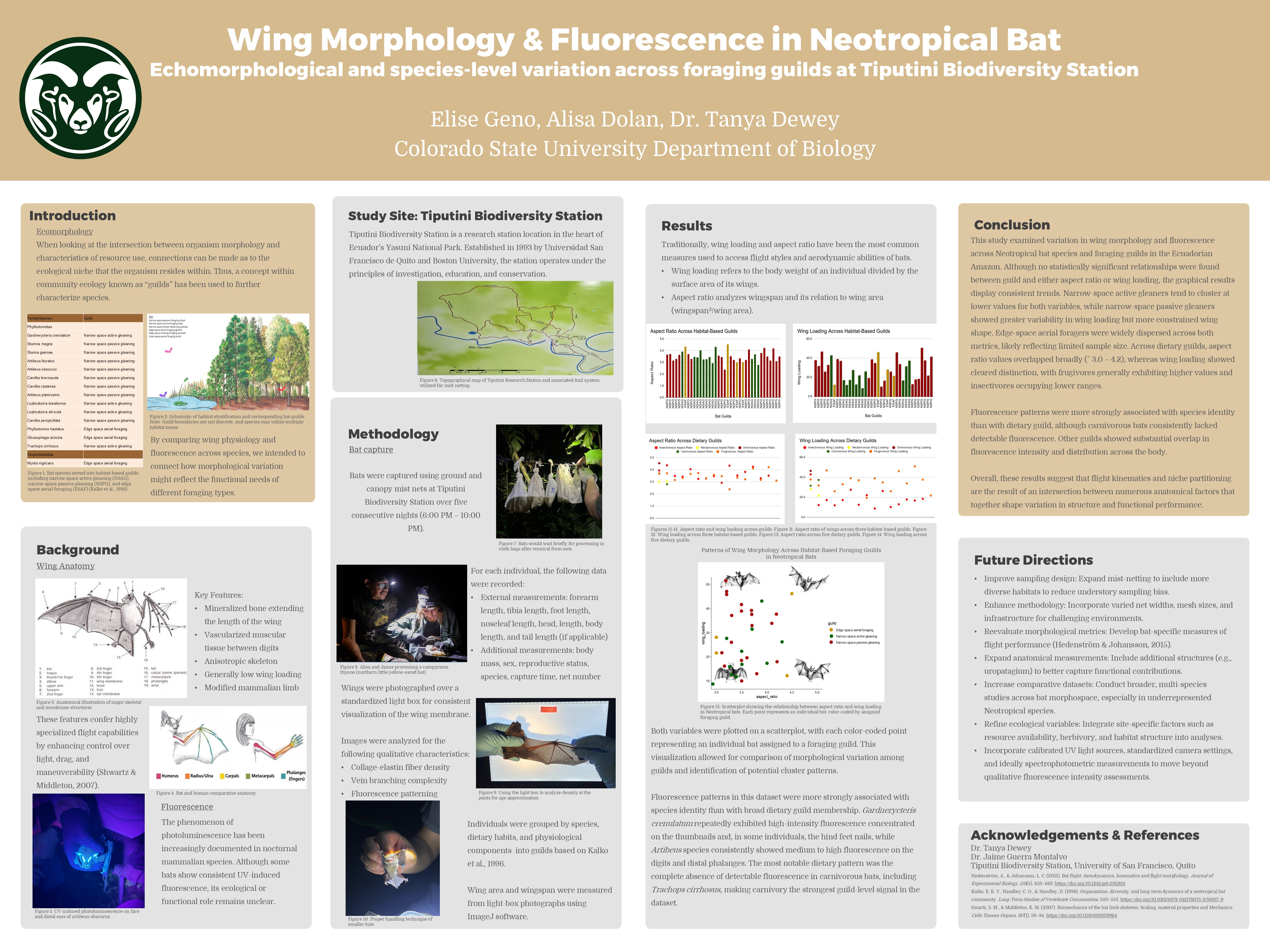
This research project investigates the relationship between wing morphology, ecological niche, and fluorescence patterns in bats captured in the neotropical region of the Ecuadorian Amazon at the Tiputini Biodiversity Station. Bats occupy an incredibly diverse range of environmental roles, allowing them to present in one of three main dietary guilds for the purposes of our research: frugivory, carnivory, and nectivory. Some species are ecological specialists, while others exist in a more generalist capacity based on food availability and behavioral/morphological flexibility. The primary objective of this study to determine whether bat species occupying correlating ecological niches exhibit convergent wing characteristics and whether fluorescence patterns show consistent similarities and variations across species and dietary groups. Bats were captured utilizing ground and canopy mist nets during evening sampling windows, and subsequentially identified using physiologic measurements consistent with known species morphological data. Wing membranes and associated skeletal features were photographed on a standardized lightbox to measure structural features such as wing area, aspect ratio, degree of ossification, and any abnormalities in the individual's physiology. From this, we hypothesize that species with similar feeding strategies will display comparable wing structures that reflect shared ecological parameters. Further, captured bats were examined under ultraviolet light to document fluorescence across body regions. Given the limited existing research on this field, fluorescence was recorded qualitatively by presence or absence, anatomical location, and apparent intensity via visual data. We anticipate that certain species or dietary guilds will exhibit consistent fluorescence patterns, while others may show minimal or no fluorescence.