
In-Vitro Effects of MYC Targeting in Canine and Human Osteosarcoma Cell Lines
Category: Research Poster
Author(s): Noelani Velasco
Presenter(s): Noelani Velasco
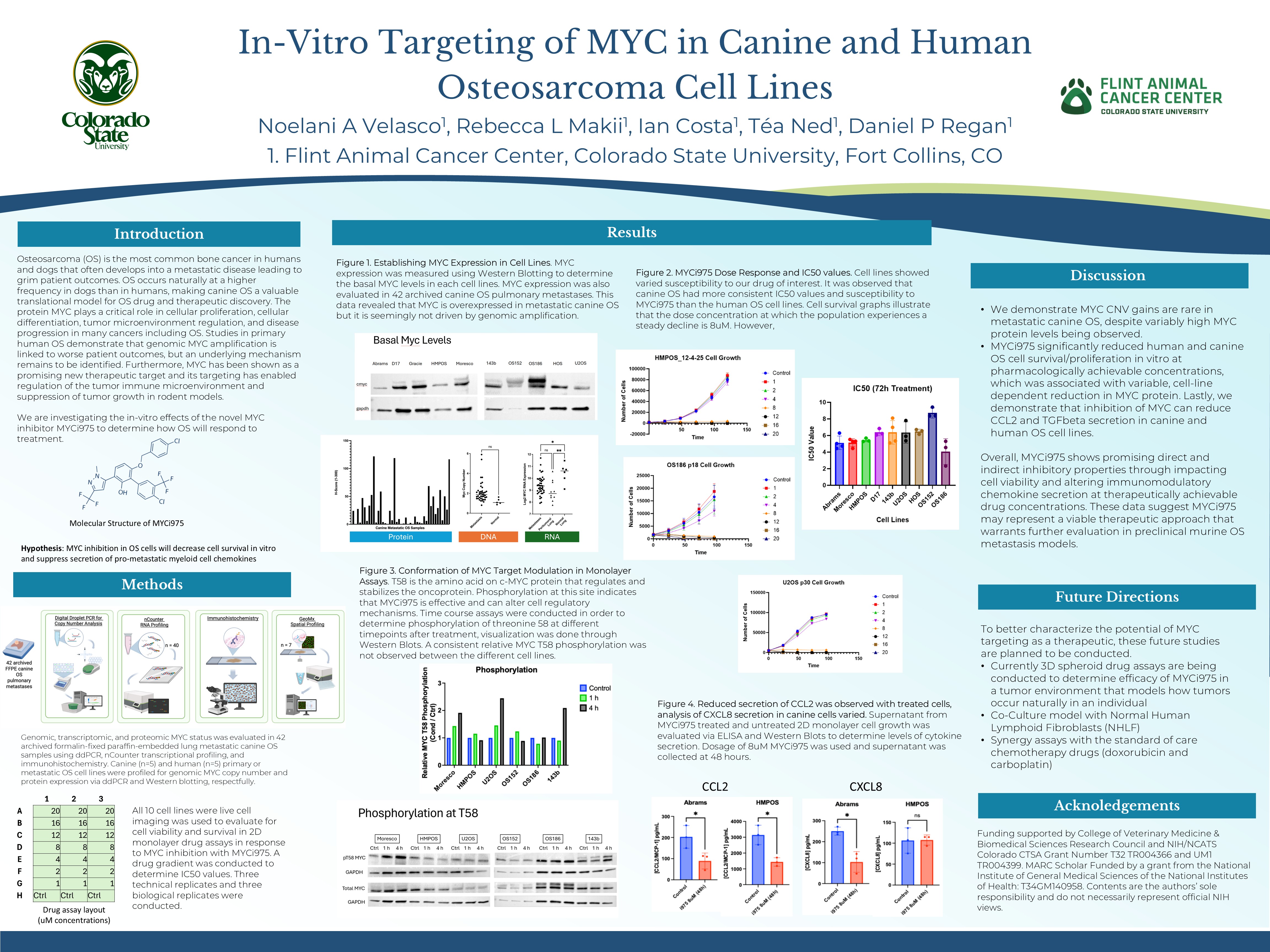
Osteosarcoma (OS) is the most common bone cancer in humans and dogs that often develops into a metastatic disease leading to grim patient outcomes. Dogs naturally acquire OS at a higher frequency than humans, making canine OS a great translational model to study human OS. The protein MYC plays a critical role in cellular proliferation, differentiation, tumor microenvironment regulation, and disease progression in many cancers including OS. Studies in primary human OS demonstrate that genomic MYC amplification is linked to worse patient outcomes. Furthermore, MYC has been shown as a promising new therapeutic target, and its targeting has enabled regulation of the tumor immune microenvironment and suppression of tumor growth in rodent models. We hypothesize that MYC inhibition in OS cell culture will decrease cell viability and proliferation in vitro and modify immunomodulatory chemokine secretion. Primary or metastatic OS cell lines (n=5 per species) were profiled for genomic MYC copy number and protein expression via ddPCR and Western blotting, respectfully. All 10 cell lines were evaluated for viability and survival in response to MYC inhibition with MYCi975 via 2D monolayer drug gradient assays. Confirmation of target modulation (c-MYC and pT58 phosphorylation) and changes to immunomodulatory chemokine secretory profiles (CCL2, CXCL8, and TGFbeta) were evaluated via Western blotting and ELISA. We demonstrate MYC CNV gains are rare in metastatic canine OS, despite variably high MYC protein levels being observed; MYCi975 can effectively reduce viability and proliferation in all OS cell lines, but specific MYC protein reduction occurs in a cell-line dependent manner; and inhibition of MYC can reduce CCL2 and TGFbeta secretion in canine and human OS cell lines. MYCi975 shows promising direct and indirect inhibitory properties through impacting cell viability and altering immunomodulatory chemokine secretion at therapeutically achievable drug concentrations.