
Tracking the Progression of Visible Ozone Injury Severity Across Growing Seasons in the NCAR Bioindicator Garden
Category: Research Poster
Author(s): Sierra Mattair
Presenter(s): Sierra Mattair
Mentors(s): Danica Lombardozzi
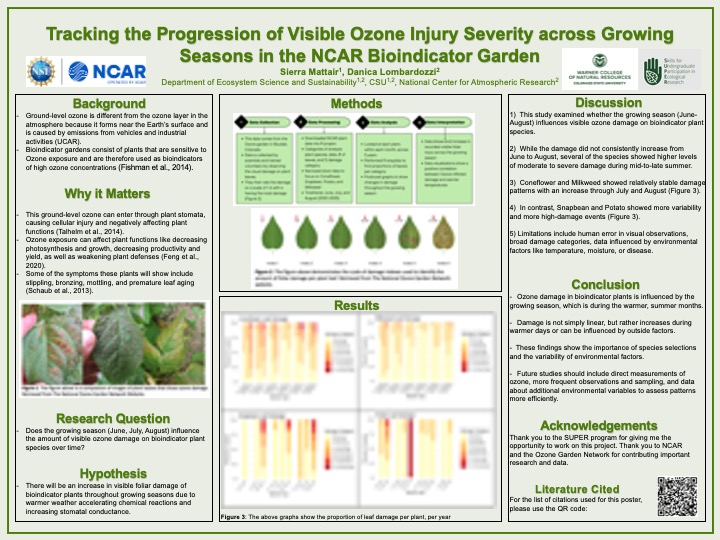
Ozone concentrations in the atmosphere are hazardous to both plant species and animals, as well as humans. Specifically, some plants develop foliar damage when ozone concentrations are high and are called bioindicator plants, which will be the observed plants of this study. We will examine four species observed over different seasons spanning five years. We used data from the NCAR Ozone Garden and used coding within RStudio to show the relationships between year, plant species, and level of damage. The results showed high levels of damage increasing during the summer due to high ozone concentrations and the severity of damage vary by plant species. The severity of damage for each plant type also varied across years due to different ozone concentrations each year. These findings would suggest that seasonal climate, specifically during summer growing seasons, influences and amplifies ozone stress in bioindicator plant species. Understanding season-specific and species-specific vulnerabilities can help monitor efforts as well as have a better ability to predict future climate-driven exposure to ozone.