
Evaluating Pesticide Efficacy and Impact on Cannabinoid Levels in Hemp
Category: Research Poster
Author(s): Claire Bara, Jacob MacWilliams
Presenter(s): Claire Bara
Mentors(s): Punya Nachappa
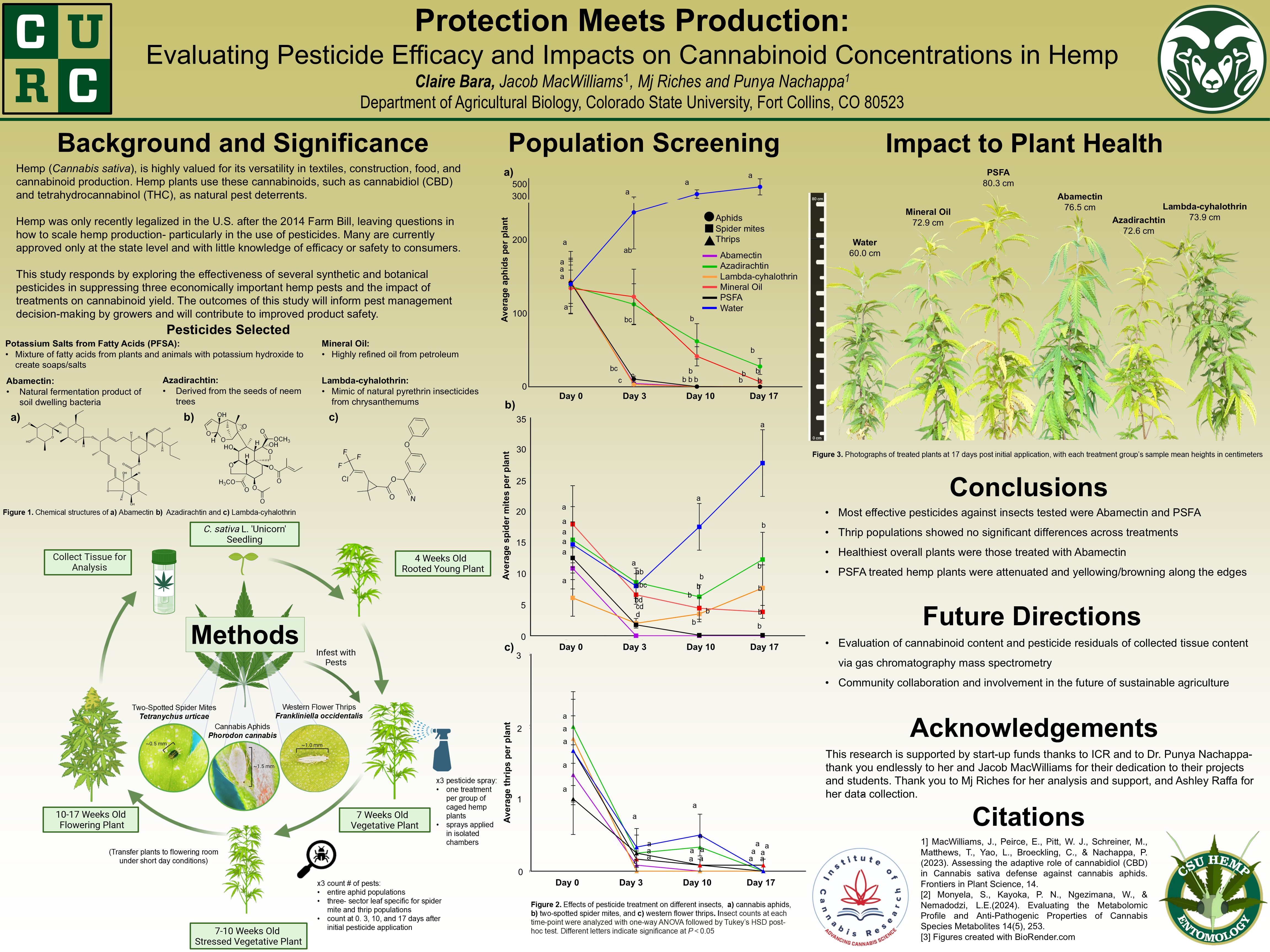
Hemp (Cannabis sativa) production is highly valued for its versatility in textiles, construction, food, and cannabinoid production. Legalization of hemp in the U.S. was only recently approved under the 2014 Farm Bill, leaving questions in scaling hemp production- particularly in pesticide use. Currently, minimal federal guidance exists on insecticides approved for use on infested hemp crops, and many are approved only at the state level with little knowledge of efficacy or safety to consumers. This study responds by exploring the effectiveness of several synthetic and botanical pesticides in suppressing three economically important hemp pests and the impact of treatments on cannabinoid yield. Hemp crops infested with cannabis aphids (Phorodon cannabis), two-spotted spider mites (Tetranychus urticae), and western flower thrips (Frankliniella occidentalis) were treated with abamectin, azadirachtin, lambda-cyhalothrin, mineral oil, or fatty acid potassium salts. Plants were sprayed three times over three weeks and pest populations were monitored weekly. Abamectin was identified as the most effective at controlling pest populations. The impact of pesticides on cannabinoid profiles in mature flowers was also measured. The outcomes of this study will inform pest management decision-making by growers and contribute to improved product safety.