
Occupational Duty Load, Habitual Sleep Disruption, and Cardiovascular Strain in First Responders: A retrospective Analysis Using Maximal Heart Rate Testing
Category: Research Poster
Author(s): Catherine Ross
Presenter(s): Catherine Ross
Mentors(s): Tiffany Lipsey
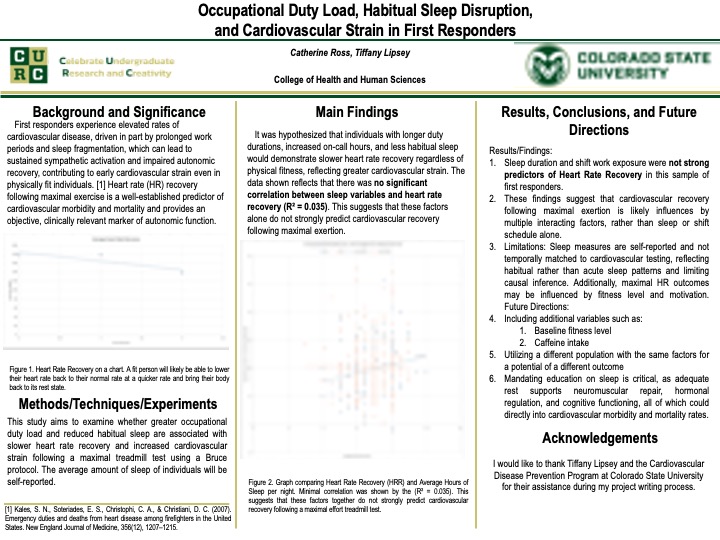
Heart rate recovery following exercise is an important indicator of cardiovascular function and autonomic nervous system regulation. Firefighters and Emergency Medical Services (EMS) personnel, in particular, face increased rates of sudden cardiac death due to cardiovascular disease. In addition to the physical demands of their work, firefighters face psychological and lifestyle stressors, such as high occupational workload and insufficient sleep, both of which may impair cardiovascular recovery. However, the relationship between sleep duration, occupational duty load, and cardiovascular strain remains unclear. This study aims to examine whether greater occupational duty load and reduced habitual sleep are associated with slower heart rate recovery and increased cardiovascular strain following a maximal treadmill test. Occupational workload will be assessed as a continuous range of factors, including on-call duty duration and job assignment, rather than strict shift categories. Participants will complete a graded exercise test using the Bruce protocol, and heart rate recovery will be measured during the post-exercise period as an indicator of autonomic recovery and cardiovascular stress. It is hypothesized that individuals with longer duty durations, increased on-call hours, and less habitual sleep will demonstrate slower heart rate recovery regardless of physical fitness, reflecting greater cardiovascular strain. By evaluating occupational workload as a spectrum of physiological stressors, this study aims to improve understanding of how sleep and work demands may contribute to early indicators of cardiovascular risk in first responders.