
Inclusive Rugby: Comparing Injury Patterns Between Below-the-Knee Amputee and Able-Bodied High School Athletes
Category: Research Poster
Author(s): Serena Carrasco
Presenter(s): Serena Carrasco
Mentors(s): Scott Burley
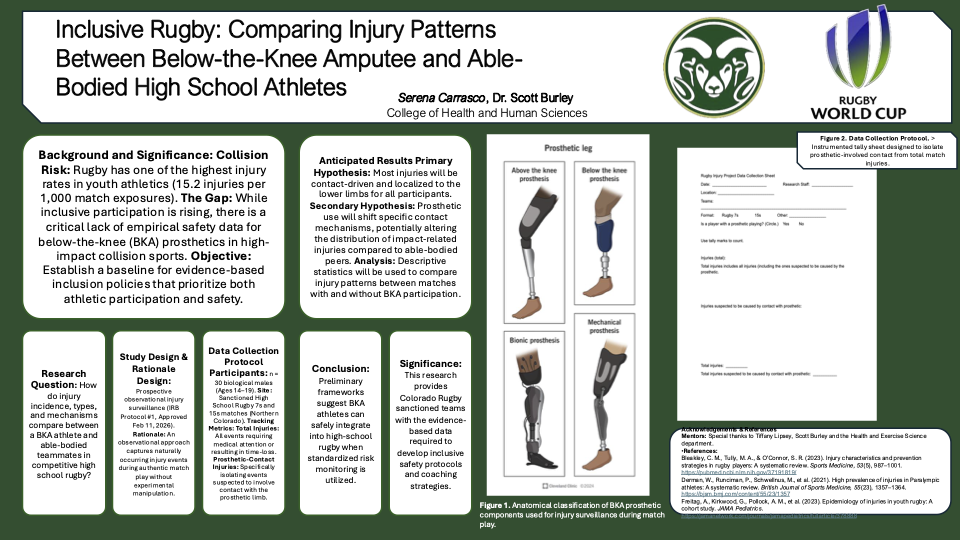
Abstract Rugby is a high-intensity collision sport with one of the highest injury rates among team sports, especially in adolescent players, yet little is known about how injury patterns may differ for below-the-knee (BKA) amputee athletes competing alongside able-bodied peers. This study aims to document and compare injury incidence, types, and mechanisms in male high school rugby players aged 14–19, including a BKA athlete using a prosthetic limb and age-matched able-bodied teammates. Using a prospective observational design, research staff will record injuries during competitive matches in Northern Colorado with a standardized injury surveillance form, noting total injuries and those suspected to involve contact with a prosthetic limb. Data will be summarized using descriptive statistics, and patterns will be compared between matches with and without prosthetic participation. It is expected that most injuries will result from contact events and involve the lower limbs, though prosthetic use may influence how and where injuries occur. By establishing preliminary data on injury patterns for BKA athletes in a collision sport, this research will provide insight into potential safety considerations and support the development of inclusive practices. Findings could guide evidence-based strategies for injury prevention, safe prosthetic use, and policy recommendations in youth rugby.