
Metabolic Dysfunction in Hybrid North American Deer Mice Suggests Altitude Adaptation can be Maintained through Imprinting Disruption
Category: Research Poster
Author(s): Taylor Szuszczewicz
Presenter(s): Taylor Szuszczewicz
Mentors(s): Kathryn Wilsterman
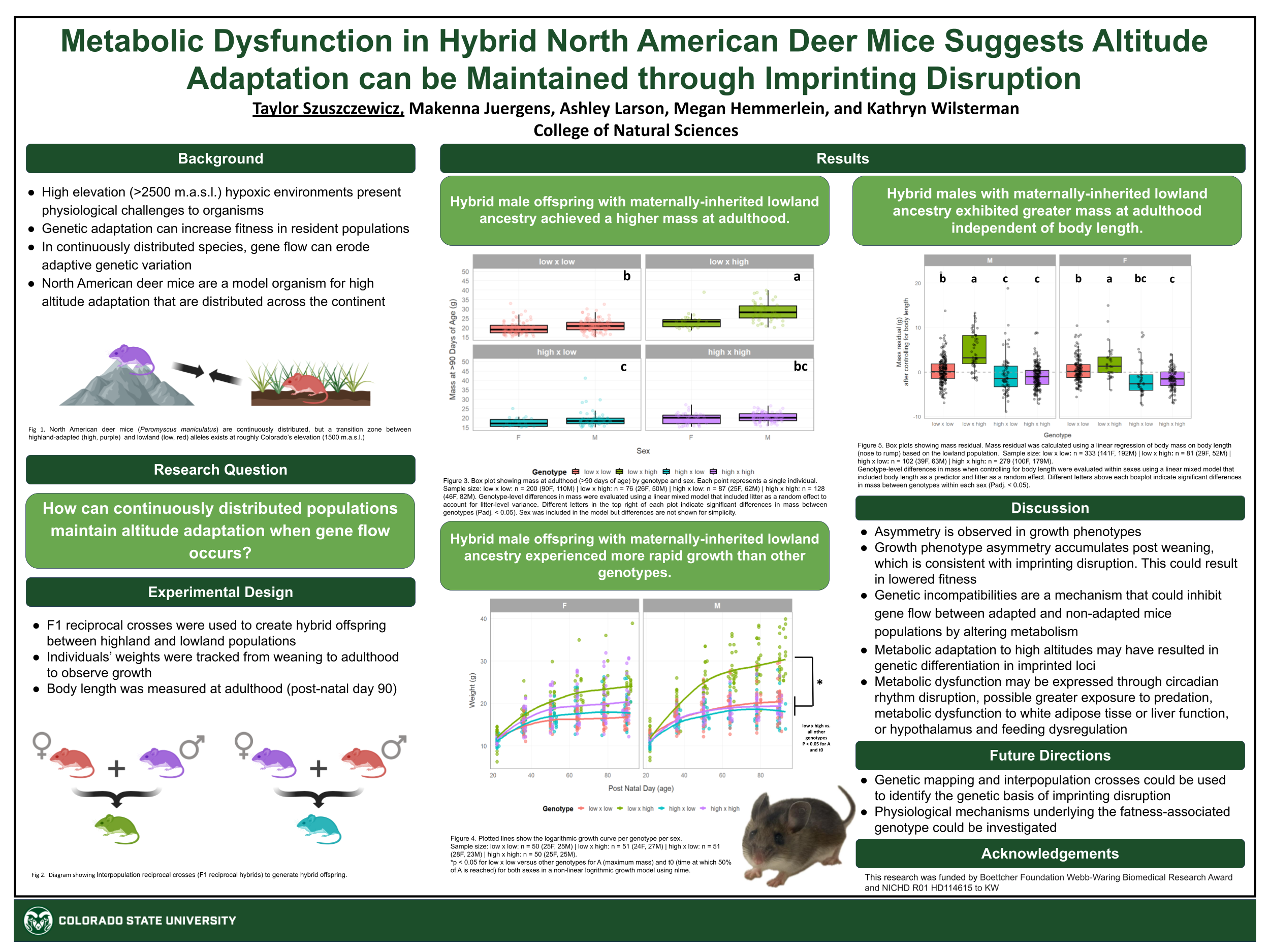
High elevation hypoxic environments present physiological challenges to organisms, which have often resulted in genetic adaptation for resident populations. Part of understanding the process of genetic adaptations to high elevations is understanding how that adaptive genetic variation is maintained in the face of gene flow when species are continuously distributed. In high altitude populations of the North American deer mouse (Peromyscus maniculatus), we know there is a narrow transition zone between highland-adapted and lowland alleles around ~1500 m.a.s.l. (Colorado's elevation) and that deer mice can be found across the front range and Midwest. One of the things that could maintain adaptive genetic variation in the high altitude population is a genetic incompatibility between highland and lowland genotypes. We investigated this by creating interpopulation reciprocal crosses (F1 reciprocal hybrids) and tracking individuals’ weights from weaning to adulthood to observe growth. We found that the hybrid male offspring with maternally-inherited lowland ancestry experienced more rapid growth and achieved a higher mass for their body size. This suggests metabolic dysregulation and/or dysfunction, which may be the result of the dysregulation of imprinted genes. Our findings point to genetic incompatibilities as a mechanism that could inhibit gene flow between adapted and non-adapted mice populations by altering metabolism.