
Fog-Fire Nexus: Conceptualizing Coastal Fog’s Influence on Wildfire and Implications for Coastal Ecosystems
Category: Oral Presentation
Author(s): Ashley Zwick, Anthony Vorster, Emily Francis
Presenter(s): Ashley Zwick
Mentors(s): Emily Francis
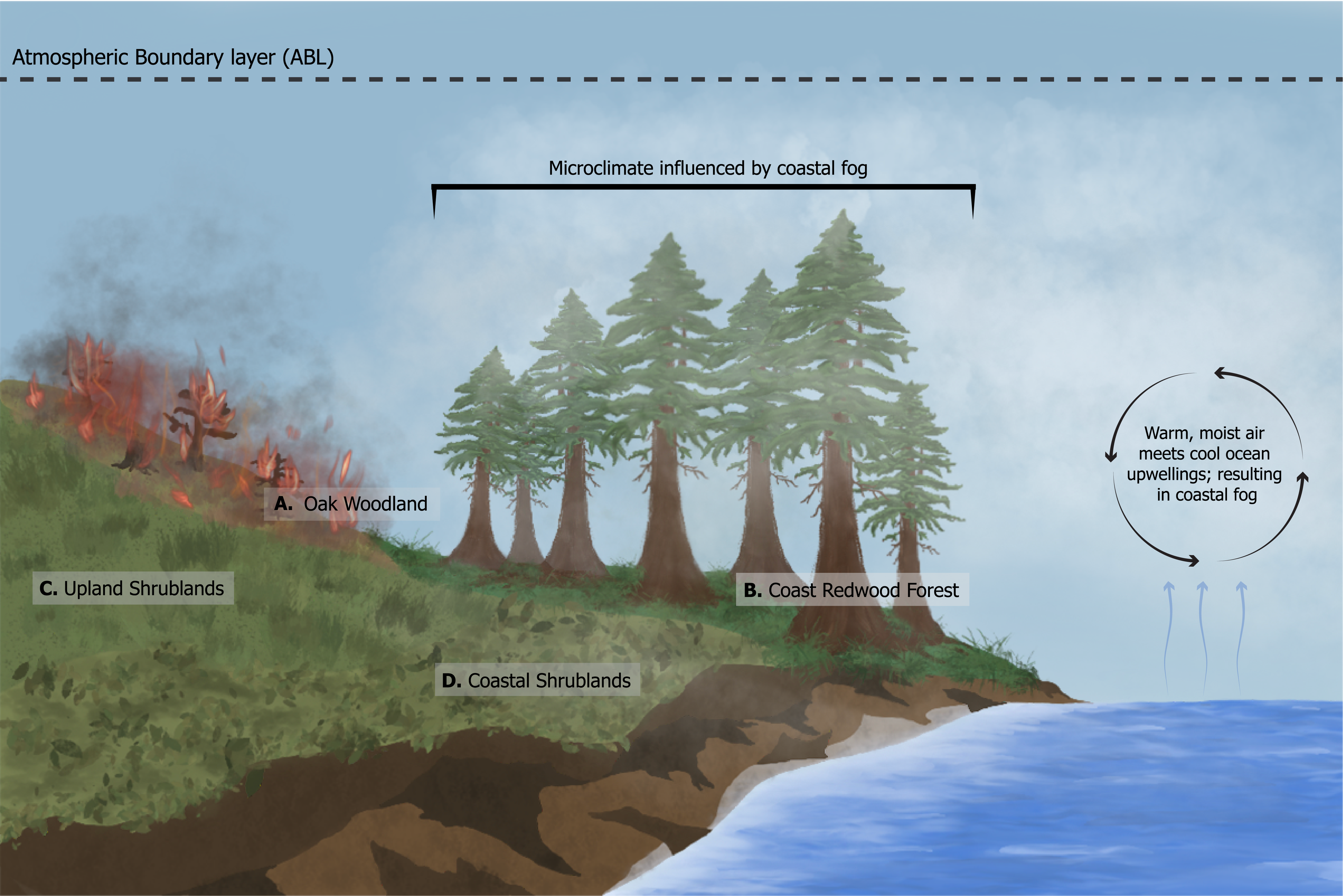
Wildfire activity across the western United States has become more intense, frequent, and is occurring outside of the typical western fire season. Yet, in western coastal regions influenced by seasonal fog, it remains unclear whether wildfire trends follow the same patterns. These regions receive vital atmospheric moisture from coastal fog during the dry season through harvesting processes like fog drip and foliar uptake. This fog-derived moisture enhances live and dead fuel moisture, reduces ignition potential, and suppresses fire spread. However, fog distribution is highly localized and shaped by marine layer dynamics, temperature inversions, and coastal orography, causing differing ecosystem dynamics and composition, which creates unique microclimates compared to inland regions. This unique climatological pattern is likely to lead to a unique fire regime in fog-influenced regions, but studies examining the influence of fog on wildfire activity on the coast of the western US, either conceptually or experimentally, are lacking. In this study, we review literature on the influence of fog on vegetation and wildfire activity in fog-influenced regions in the western US. From this review, we develop a conceptual model to describe potential impacts of fog on wildfire activity on the western US coast. The conceptual model highlights several potential pathways of fog influences on wildfire activity.