
Chlorogenic acid reverses Alzheimer’s disease-associated hyperexcitability
Category: Research Poster
Author(s): Paola Arrieta-Molinar
Presenter(s): Paola Arrieta-Molinar
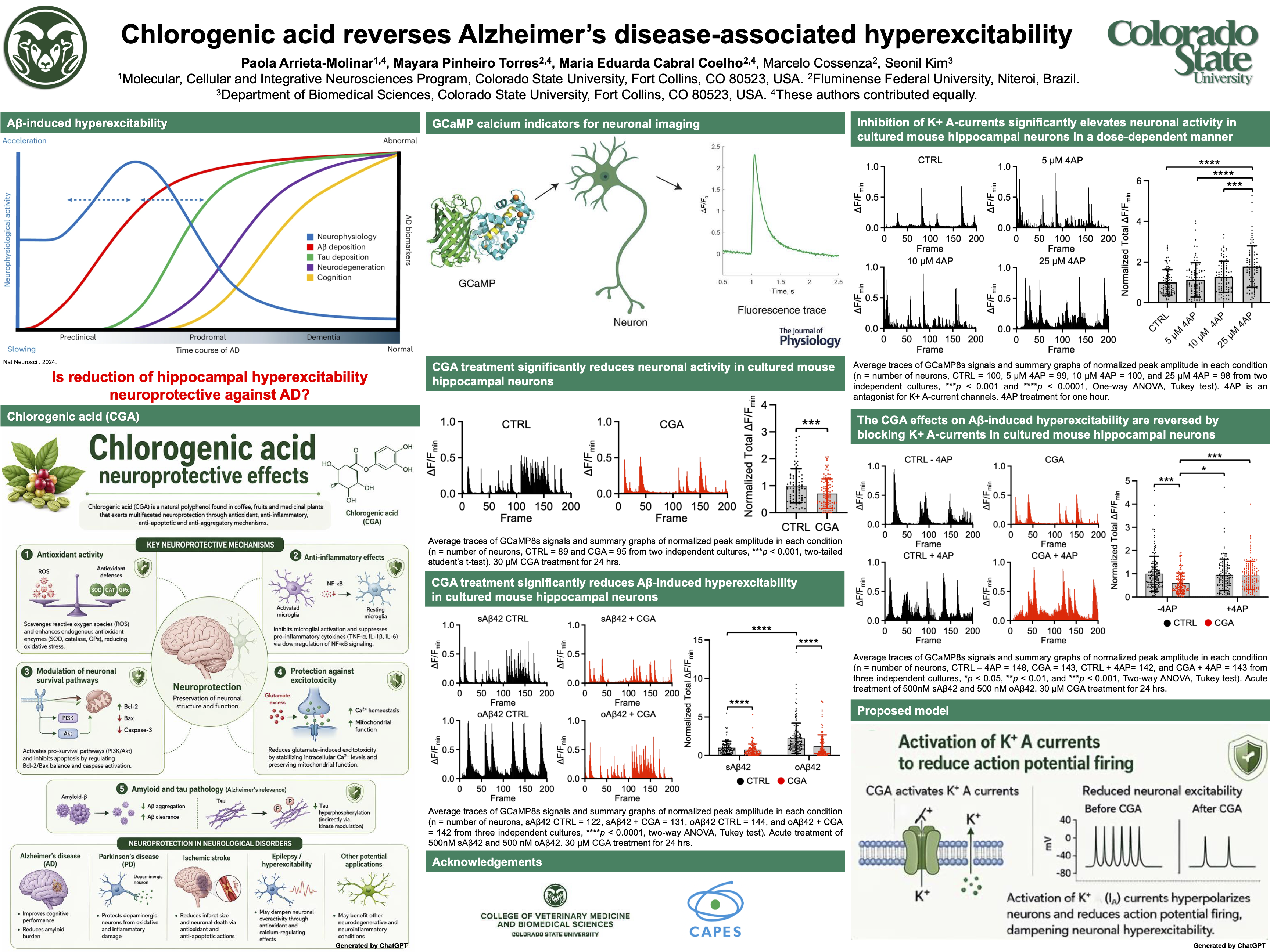
About 5.7 million Americans currently have Alzheimer’s disease (AD); that figure is projected to reach 14 million people by 2050. In 2020, the direct costs to American society of caring for those with AD and related dementias are a total of an estimated $305 billion, which makes AD the most expensive disease in America. However, there is no known cause and cure for AD. Therefore, understanding the neural mechanisms of AD pathogenesis is of the utmost importance for better diagnostic and therapeutic development. Both preclinical and clinical studies have shown that cortical and hippocampal hyperactivity is found in the early stages of AD. In patients, hyperexcitability is strongly linked to cognitive decline. Hyperactivity in the brain is thought to be a driver of AD pathology and cognitive impairment. Importantly, beta-amyloid peptide (Aβ) is a major trigger of hyperexcitability. Therefore, targeting to reverse Aβ-induced hyperexcitation can be a novel therapeutic strategy. Chlorogenic acid (CGA) is a major compound in coffee, often reported to offer neuroprotective benefits. However, the direct mechanisms are unknown. In our preliminary study, we found that CGA treatment significantly reduced neuronal activity. Therefore, we hypothesize that CGA reverses Aβ-induced hyperexcitation. To test this idea, we used live Ca2+ imaging in cultured mouse hippocampal neurons to directly measure neuronal activity. As shown previously, Aβ treatment was sufficient to induce neuronal overactivity. Importantly, CGA treatment reversed the Aβ-induced toxic effects in hippocampal neurons. Our findings thus suggest that CGA in coffee can offer neuroprotective benefits in AD via preventing neuronal hyperexcitation.