
Examining the Moderating Role of Gender in the Relation Between Emotion Dysregulation and Addictive Eating Behaviors
Category: Research Poster
Author(s): Rabha Reda, Carolyn Lorenzi, Bradley Conner
Presenter(s): Rabha Reda
Mentors(s): Bradley Conner
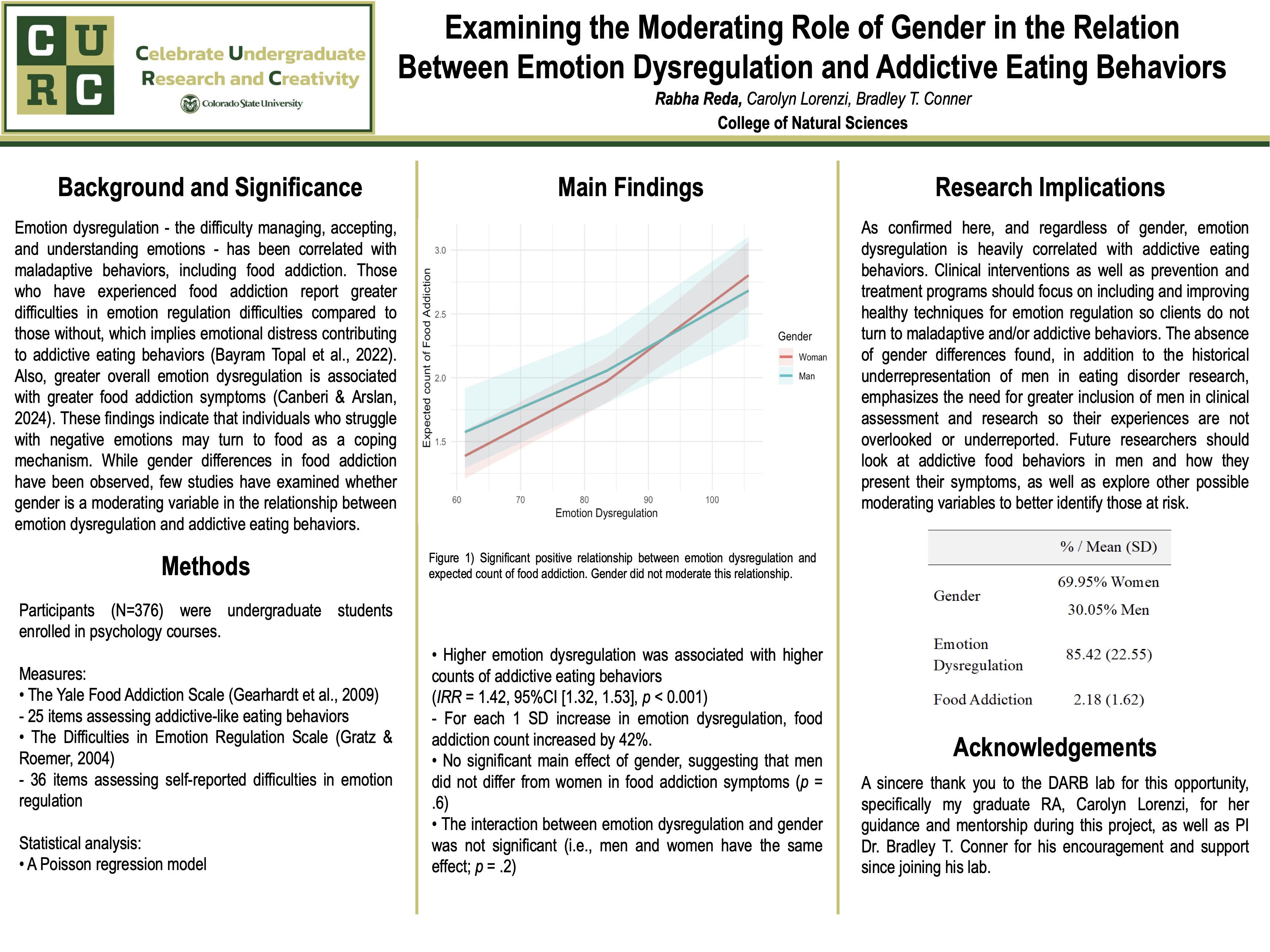
Emotion dysregulation is characterized by difficulties in accepting, managing, and understanding emotional responses. It has been linked to addictive eating behaviors, which is a pattern of compulsive consumption of highly palatable foods with difficulty controlling eating behavior. Previous research in populations such as healthcare workers and university students have shown that those with food addiction experience greater difficulties in emotion regulation compared to those without food addiction. Most prior research on gender differences in food addiction suggest that women experience food addiction more often than men; however, one study resulted in men showing greater food addictive behaviors. Few studies have investigated whether gender influences the relationship between emotional dysregulation and food addiction. The present study aims to test the moderating effect of gender in the relation between emotion dysregulation and addictive eating behaviors. The participants for this study are undergraduate students who completed the Difficulties in Emotion Regulation Scale and the Yale Food Addiction Scale. Findings from this study may help clarify the role of gender in maladaptive eating behaviors and help inform interventions aimed at reducing such behaviors.