
Characterizing the association between the prion protein and circadian rhythms in transgenic mice
Category: Research Poster
Author(s): Emily Gasowski, Kaitlyn Forrest
Presenter(s): Emily Gasowski
Mentors(s): Candace Mathiason
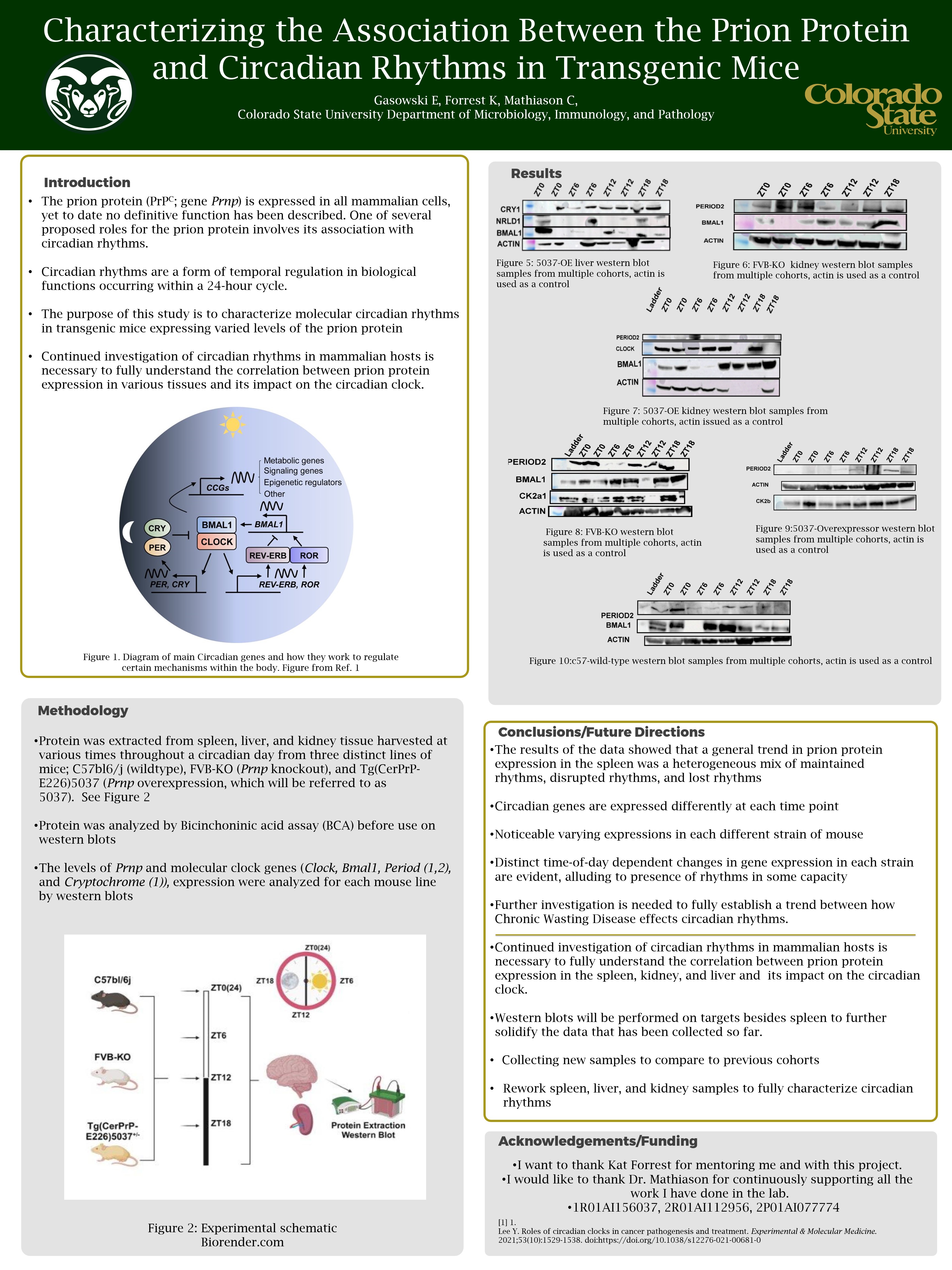
The prion protein (PrPC; gene Prnp) is expressed in all mammalian cells, yet to date no definitive function has been described. One of several proposed roles for the prion protein involves its association with circadian rhythms. Yet, few molecular studies have been performed to assess this hypothesis. Circadian rhythms are a form of temporal regulation in biological functions occurring within a 24-hour cycle. Molecularly, a family of circadian transcription factors drive the expression of these rhythms as well as the expression of downstream targets that impact cellular function. Interestingly, the casein kinase 2 (CK2) protein is known to interact independently with both the molecular clock and the prion protein. The purpose of this study is to characterize molecular circadian rhythms in transgenic mice expressing varied levels of the prion protein (C57bl6/j (wildtype 1x expression), FVB-KO (Prnp knockout 0x expression), and Tg (CerPrP-E226 5037 (Prnp 4-8x expression). The levels of Prnp and molecular clock genes (Clock, Bmal1, Period (1,2), Cryptochrome (1,2), Rev-erb (a,b) expression were analyzed for each transgenic mouse line by qPCR. Additionally, Casein Kinase II alpha (Ck2a), Casein Kinase II Beta (Ck2b) and Prnp and molecular clock gene expression were analyzed by western blot. Continued investigation of circadian rhythms in mammalian hosts is necessary to fully understand the correlation between prion protein expression in various tissues and its impact on the circadian clock. This work will help provide understanding of functional losses in molecular circadian regulation due to the progression of prion disease.