
Mitigation of Amyloid-β Toxicity in Caenorhabditis elegans
Category: Research Poster
Author(s): Megan TerLouw
Presenter(s): Megan TerLouw
Mentors(s): Julie Moreno, Samirah Alkhudaydi
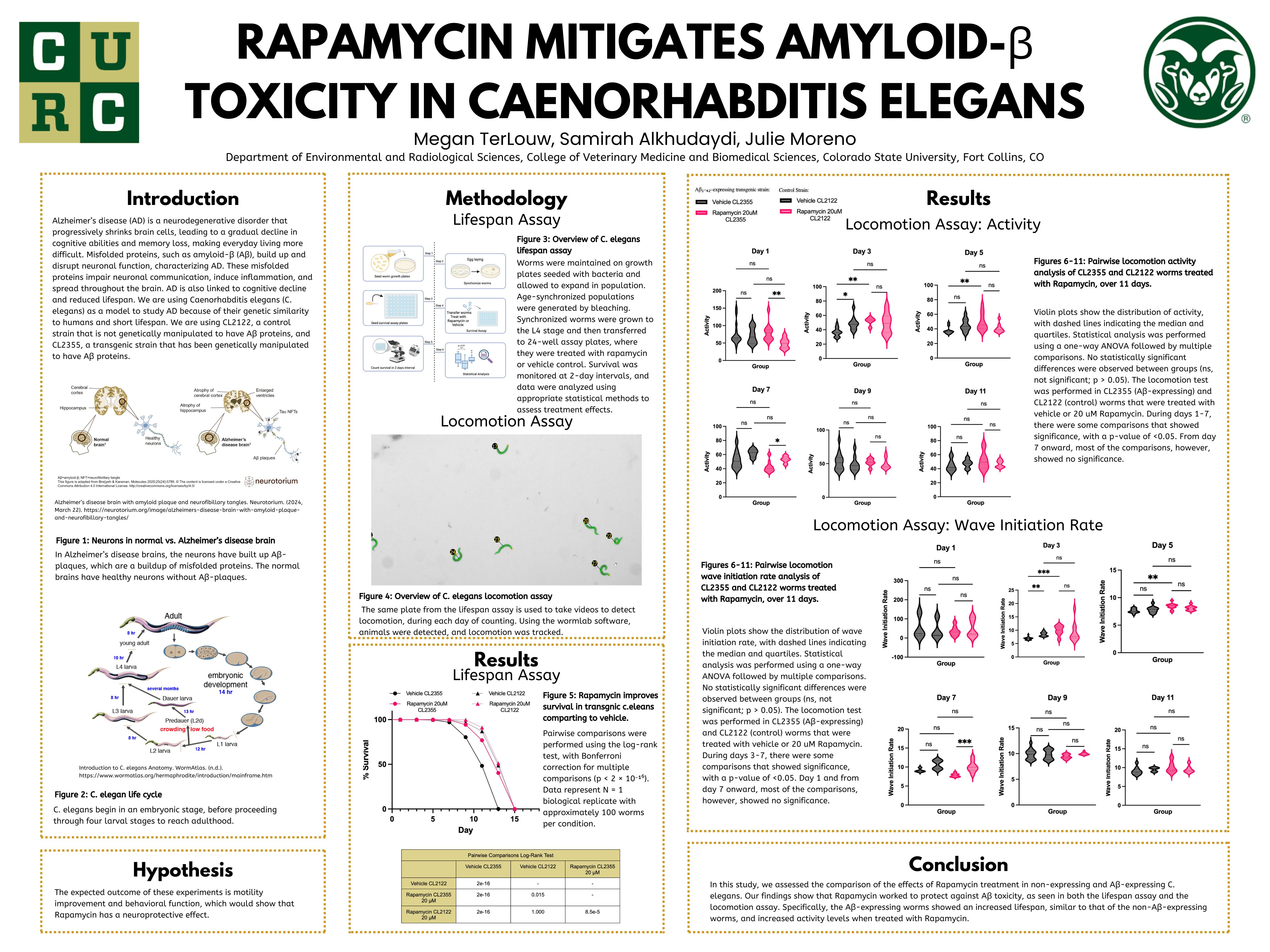
Alzheimer’s disease (AD) is a neurodegenerative disorder that progressively shrinks brain cells, leading to a gradual decline in cognitive abilities and memory loss, making everyday living more difficult. Misfolded proteins, such as amyloid-β (Aβ), build up and disrupt neuronal function, characterizing AD. AD is also linked to cognitive decline and reduced lifespan. We are using Caenorhabditis elegans as a model to study AD because of their genetic similarity to humans and short lifespan. I have been performing lifespan assays and locomotion assays to study the therapeutic potential of rapamycin (RAP) on C. elegans, which already exists as a pharmaceutical compound and has had neuroprotective effects in other models. The assays evaluate the functional and physiological effects of the treatment. The expected outcome of these experiments is motility improvement and behavioral function, which would show a neuroprotective effect. This could then support the potential of RAP being used in a therapeutic aspect for AD.