
The Gut & Bacteria: Investigating How L. casei Influences C. elegans Behavior
Category: Research Poster
Author(s): Omar Eltayeb
Presenter(s): Omar Eltayeb
Mentors(s): Jenniffer Riley
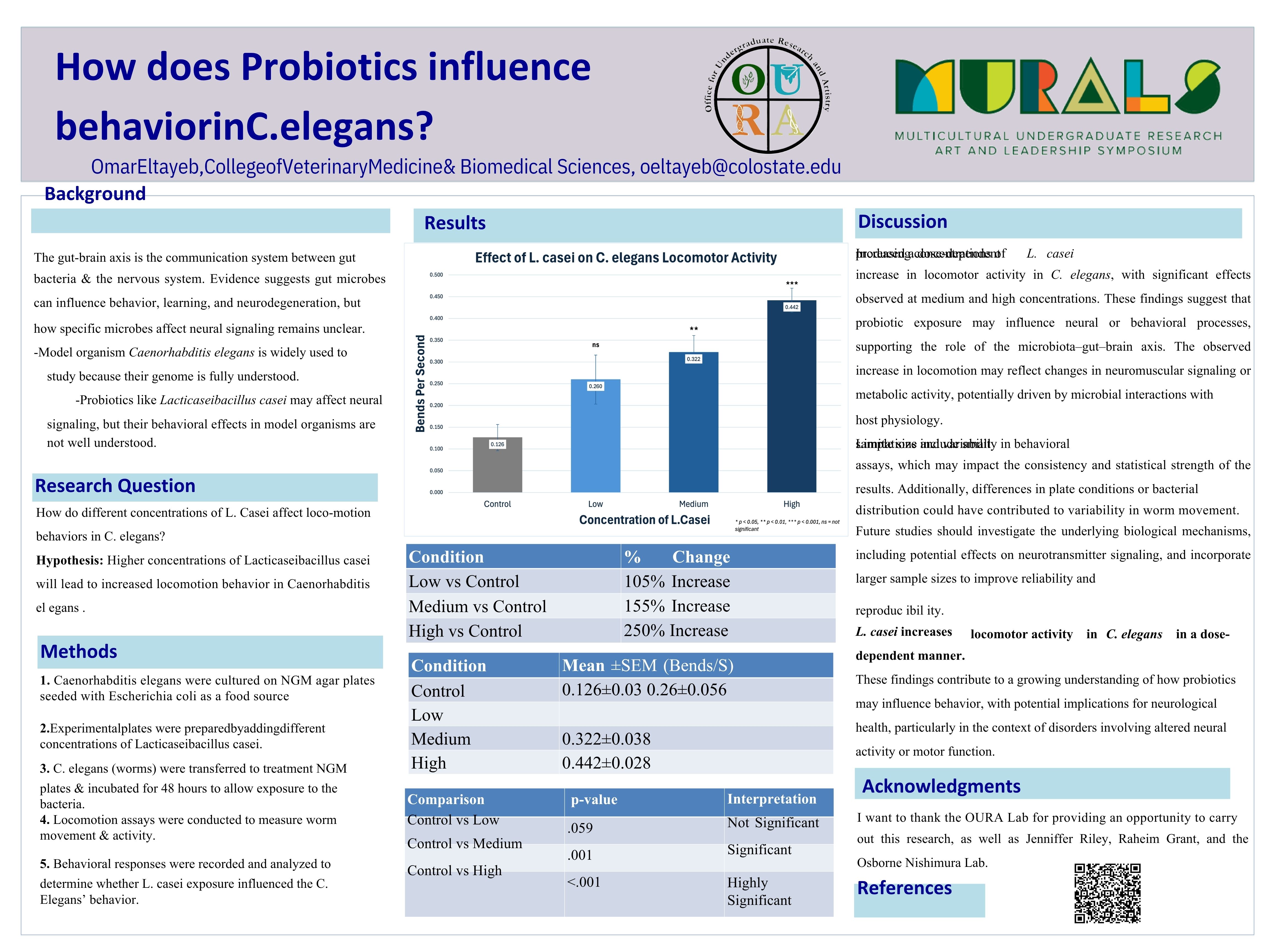
As research on the gut microbiota has progressed, growing evidence has reflected its significant influence on body functions. The question arises of the microbiota-gut-brain axis, a communication pathway between gut microbes and the nervous system. Although research has recognized that gut bacteria affect the nervous system, the mechanisms driving these effects remain unclear. By recognizing the role of gut microbes in neurological health, it becomes essential to advance microbiome-targeted therapeutic strategies for neurodegenerative disorders. Probiotic bacteria such as Lacticaseibacillus casei have been associated with improved cognitive function in organisms, but the direct effects of probiotic strains remain insufficiently characterized. This project investigates whether exposure to varying concentrations of L. casei influences locomotion and chemotaxis behaviors in Caenorhabditis elegans. Caenorhabditis elegans is a commonly used model organism because of the advantages it has over other animal models, creating a foundation for understanding how probiotic bacteria influence neuro-driven behaviors and potentially enhance cognitive or behavioral resilience, ultimately guiding the development of microbiome-targeted therapies. Specifically, this study tests whether increasing L. casei concentration in the diet alters C. elegans behavior compared to a standard E. coli control diet. It is hypothesized that higher L. casei concentrations will increase locomotion (body bends per minute) activity and chemotaxis performance. The gap in current research lies in the mechanistic and dose-dependent analysis of how probiotic strains influence measurable neurobehavioral output. This study aims to establish foundational evidence linking microbial concentration to behavioral modulation, contributing to a greater understanding of the microbiota-gut-brain axis.