
Does a mouse model of Down syndrome exhibit increased incidence of stifle abnormalities?
Category: Research Poster
Author(s): Trey Brauchler, George Brauchler
Presenter(s): Trey Brauchler
Mentors(s): Kelly Santangelo
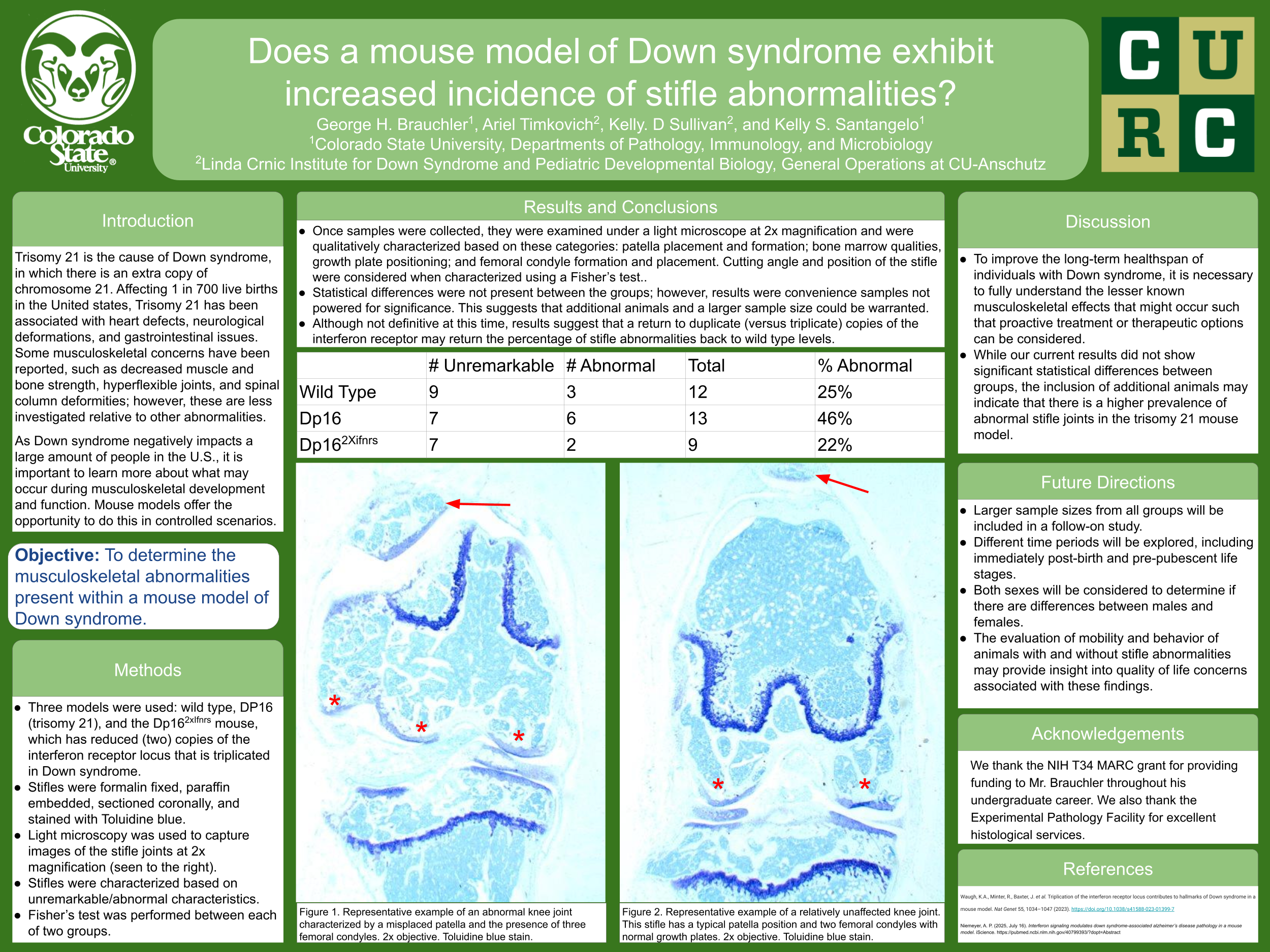
Trisomy 21, the cause of Down syndrome (DS), is a common chromosomal abnormality, wherein there is an extra copy of chromosome 21. It affects about 1 in 700 live births in the U.S. and is known to influence the musculoskeletal system via decreased muscle and bone strength, hyperflexible joints, and spinal column deformities. One common mouse model of DS is the Dp16 strain, in which a portion of the largest region of HSA2 genes is duplicated. We aimed to determine whether musculoskeletal abnormalities similar to those documented in people are present in this mouse model of DS. To begin understanding which of the genes contribute to the joint abnormalities, we also used the Dp162xIfnrs mouse model, which contains only 2 copies of the interferon receptor (Ifnr) to see if this normalization ameliorates these changes. Briefly, formalin fixed and paraffin embedded, whole knees were sectioned coronally and stained. Knee joints were characterized based on characteristics that were seen across all groups, including displaced patellas, altered growth plate structure, and condylar malformations. The percentage of abnormalities was then compared between individual groups via Fisher’s test. Out of 12 images from the wild-type control group, three showed abnormality (25%). In the 13 images in the Dp16 group, six exhibited abnormality (46%). Only two of the nine images from the Dp162xIfnrs group demonstrated abnormality (22%). While the Fisher’s test did not demonstrate statistical significance between groups, there was sufficient evidence that inclusion of additional animals across age and sex may be warranted.