
Physical Therapy Interventions to Improve Balance in Individuals with Guillain-Barré Syndrome
Category: Research Poster
Author(s): Dimitry Volchansky
Presenter(s): Dimitry Volchansky
Mentors(s): Christopher Patrick
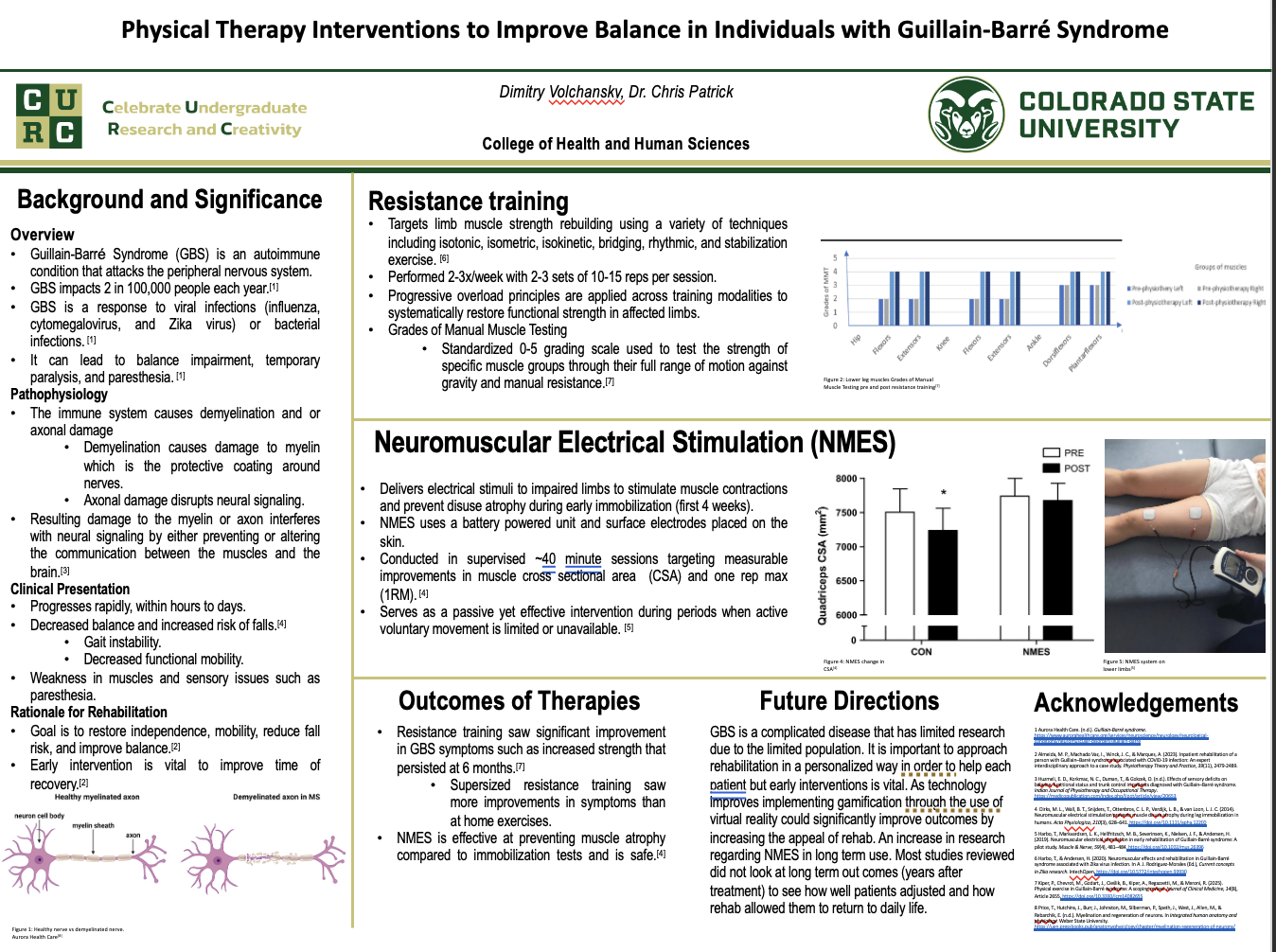
Abstract: Guillain-Barré syndrome (GBS) is a rare autoimmune condition affecting 1 in 100,000 people worldwide. While the cause of GBS is still unknown, evidence suggests that symptoms emerge following a specific type of viral or bacterial infection. GBS symptoms occur when the body’s immune system mistakenly attacks the protective coating around the nerves, called myelin, which allows electrical signals to travel quickly between the brain and muscles. Specifically, in GBS, the immune system targets myelin surrounding motor neurons in the peripheral nervous system, disrupting communication between the brain and body. Additionally, in some variants of GBS, the immune system may attack the motor neurons themselves. Whether the myelin or peripheral nerves are damaged, both mechanisms impair the transmission of neural signals to the muscles, resulting in muscle weakness and balance impairment. These impairments place patients with GBS at increased risk of falls and other adverse events. Treatment for GBS typically focuses on suppressing the immune system’s response to allow for recovery. However, in addition to pharmacological intervention, physical therapy is needed to help patients regain balance and return to everyday activities. Given the variety of rehabilitation techniques available and the different forms of GBS, questions remain about which rehabilitation approaches are best suited for each presentation. To address this, this project reviewed the existing literature on balance rehabilitation interventions for GBS to synthesize the available evidence.