
Analyzing Students Emotions Over Time Using Metacognition Reflections
Category: Research Poster
Author(s): Pavneet Kaur
Presenter(s): Pavneet Kaur
Mentors(s): Martha Mehaffy
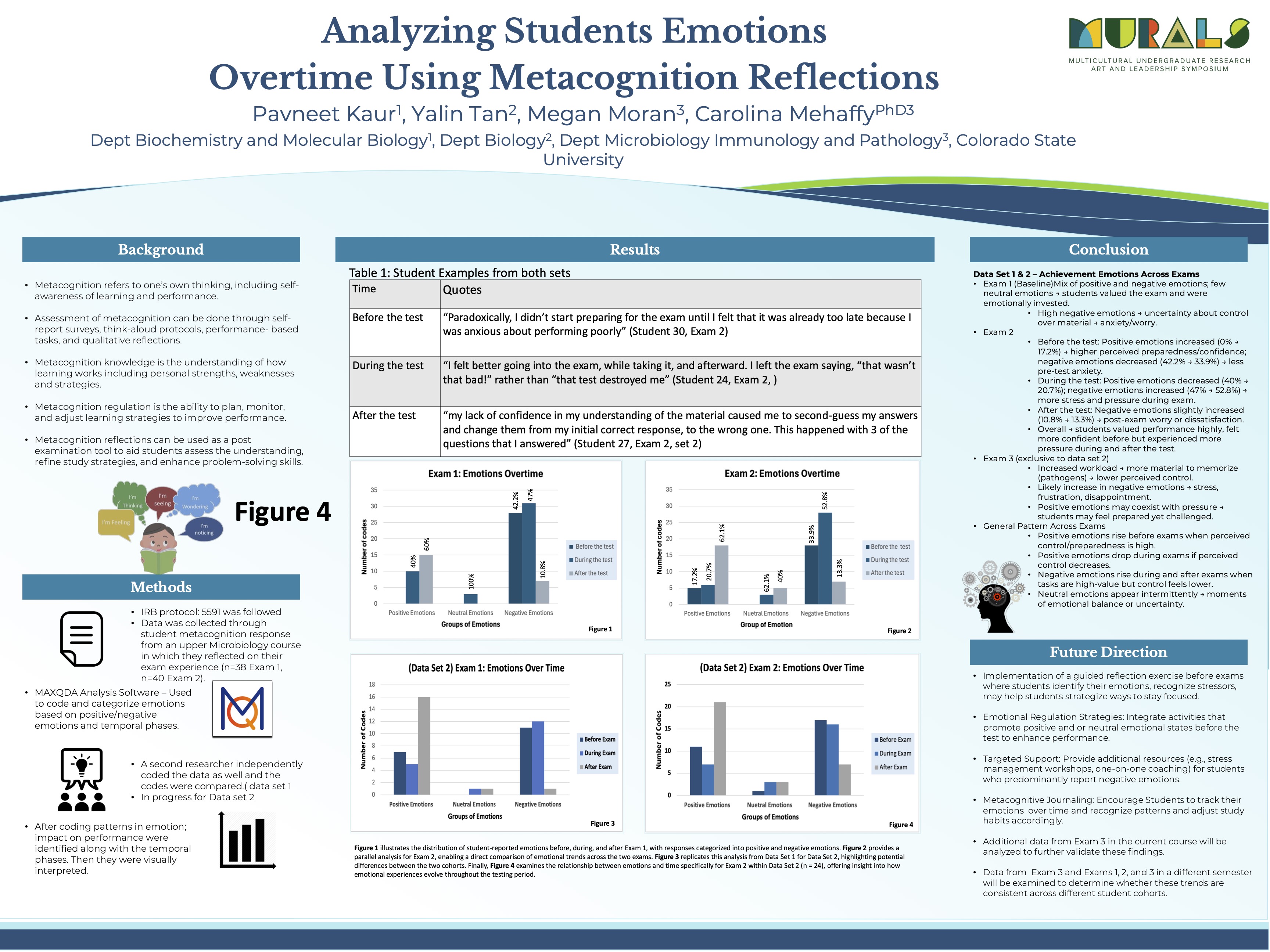
Studying and test-taking are often perceived as purely intellectual tasks; however, emotions significantly shape students’ experiences surrounding exams. This study examines how students' perceive their emotions to be before, during, and after a test. Metacognitive reflection assignments from 26 students in an upper-level microbiology course were analyzed following two midterm exams. Using MAXQDA qualitative analysis software, an inductive thematic analysis was conducted to identify and categorize emotional patterns. Responses were coded according to whether they expressed positive or negative emotions and when those emotions occurred in relation to the exam. Emotional expressions were marked and organized into thematic categories. Results revealed a clear emotional trajectory. Even though the reflection assignment occurred after the exam, students often defined emotions felt before, during and after the exam. Before the exam, anxiety and self-doubt were most common. During the exam, students described focused determination as well as moments of confusion and uncertainty. After the exam, many reported relief, while others continued to experience lingering worry. These findings suggest emotional experiences surrounding exams are dynamic and situational rather than static. According to control-value theory, students’ emotional responses to exams are shaped by their perceived control over the task and the value they assign to its outcomes. Feelings like anxiety, pride, or frustration emerge from beliefs about one’s ability to succeed and the importance of the exam. Incorporating structured reflection and mindfulness practices can help students regulate these emotions, normalize their experiences, and reduce the stigma around expressing emotions in academic settings