
Intertwined: The Threads Between Ecocide and Genocide in Palestine
Category: Visual Art
Author(s): Lydia Paulsen
Presenter(s): Lydia Paulsen
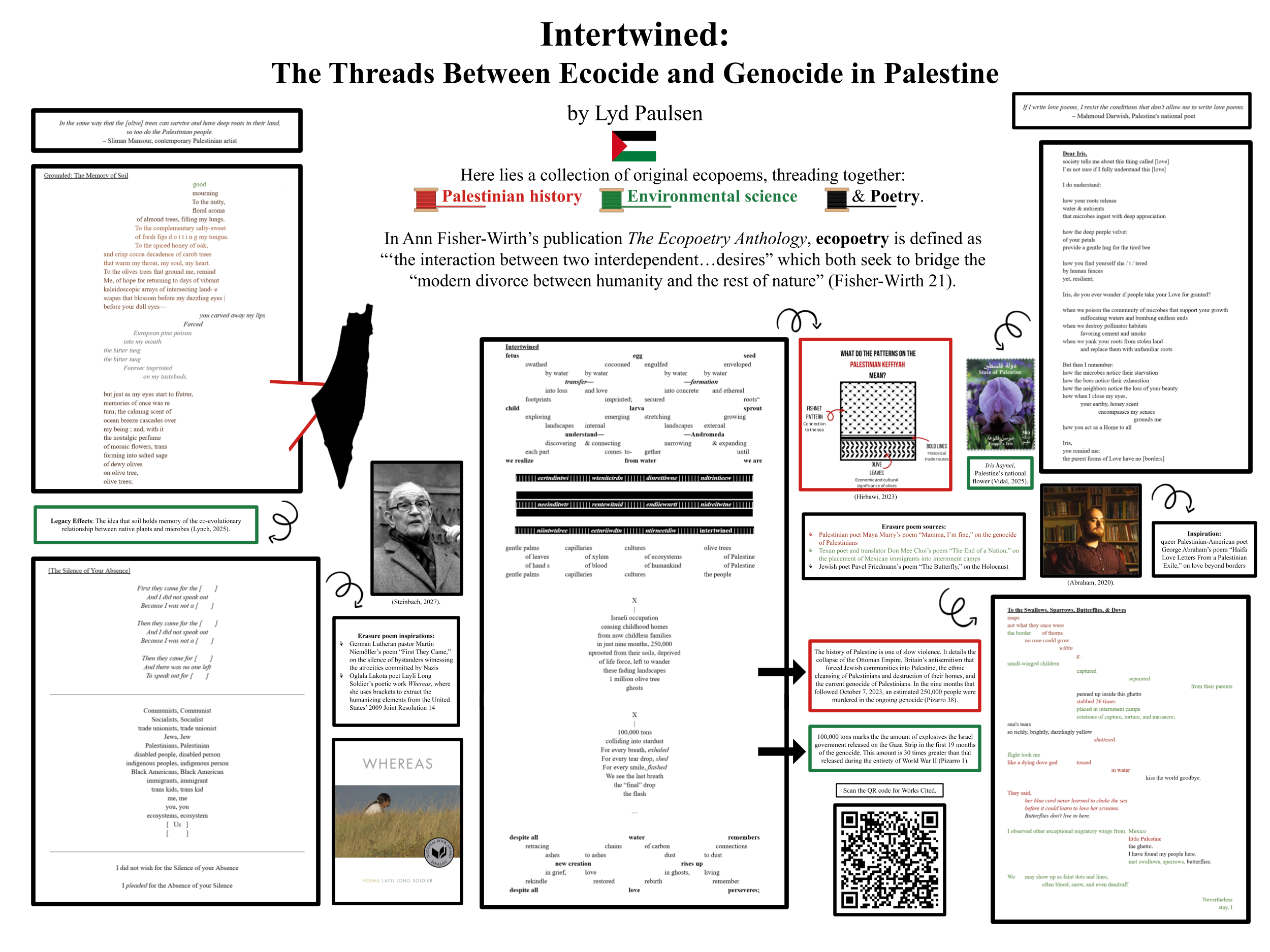
Humans and the environment are deeply intertwined. When we destroy one, we destroy the other. My project displays a collection of original ecopoetry to explore the threads connecting ecocide and genocide in Palestine under settler colonialism. My goal is to use historical, environmental science, and poetic lenses to explore this topic. Through a historical lens, I use peer-reviewed research to build a timeline of the key events in Palestine from 1516 to present day. This history details the rule of the Ottoman Empire, Britain’s antisemitism that displaced Jews and Palestinians, the ethnic cleansing of Palestinians and destruction of their homes, and the current genocide. When we remove the indigenous peoples that have built cultural connections with the environment, we perpetuate environmental destruction. With the ecocide in Palestine, biodiversity and carbon sinks suffer, and non-native plant species replace native plant species. Despite all, resiliency persists through love. Love is a central theme in Palestinian poems, including the works of Palestine’s national poet Mahmoud Darwish and queer Palestinian-American poet George Abraham. The ecopoetry I write is in conversation with these histories, environmental data, and poets. With interdisciplinary explorations of social and environmental justice, we become empowered to advocate for meaningful change. Even when processing the grief of human and environmental destruction, art and love remind us that hope persists.