
Associations Among Socioeconomic Context, Physiological Stress, and Episodic Memory in Children
Category: Research Poster
Author(s): Cristina Nava Rios, Jordan Strack, Amelie Guinee
Presenter(s): Cristina Nava Rios
Mentors(s): Emily Merz
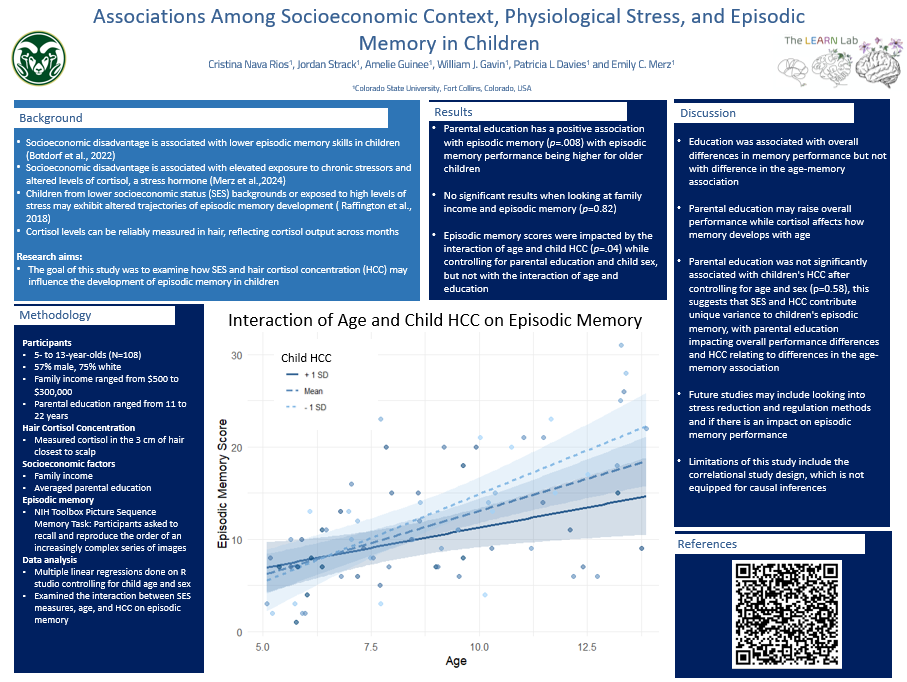
Episodic memory, stored memory of personal events, is crucial for learning and academic achievement. Episodic memory improves with age during childhood. Socioeconomic disadvantage and stress may influence episodic memory development in children. Children from lower socioeconomic status (SES) backgrounds or exposed to high levels of stress may exhibit altered trajectories of episodic memory development. Levels of cortisol, a stress hormone, can be reliably measured in hair, reflecting cortisol output across months. The goal of this study was to examine how SES and hair cortisol concentration (HCC) may influence the development of episodic memory in children. This study focused on children aged 5 to 13 years (N = 108). SES was measured using parental education and family income. Episodic memory was measured using the NIH Toolbox picture sequence memory task. Child HCC was assessed using 3 cm of hair closest to the scalp to reflect 3 months of hair growth. Multiple linear regression analyses were conducted. Covariates included child age, child sex, and parental education. As expected, children’s episodic memory significantly improved with age. Furthermore, HCC was found to significantly moderate the association between age and episodic memory while controlling for parental education and child sex. SES did not significantly moderate the association between age and episodic memory. Thus, age-related differences in episodic memory may vary as a function of HCC in children. Episodic memory development may vary in children depending on their level of physiological stress.