
Investigating the Role of the Type II Secretion System in Pseudomonas syringae Infection of Nicotiana benthamiana
Category: Research Poster
Author(s): Katelyn Meyer
Presenter(s): Katelyn Meyer
Mentors(s): Marc Nishimura, Samuel Ogden
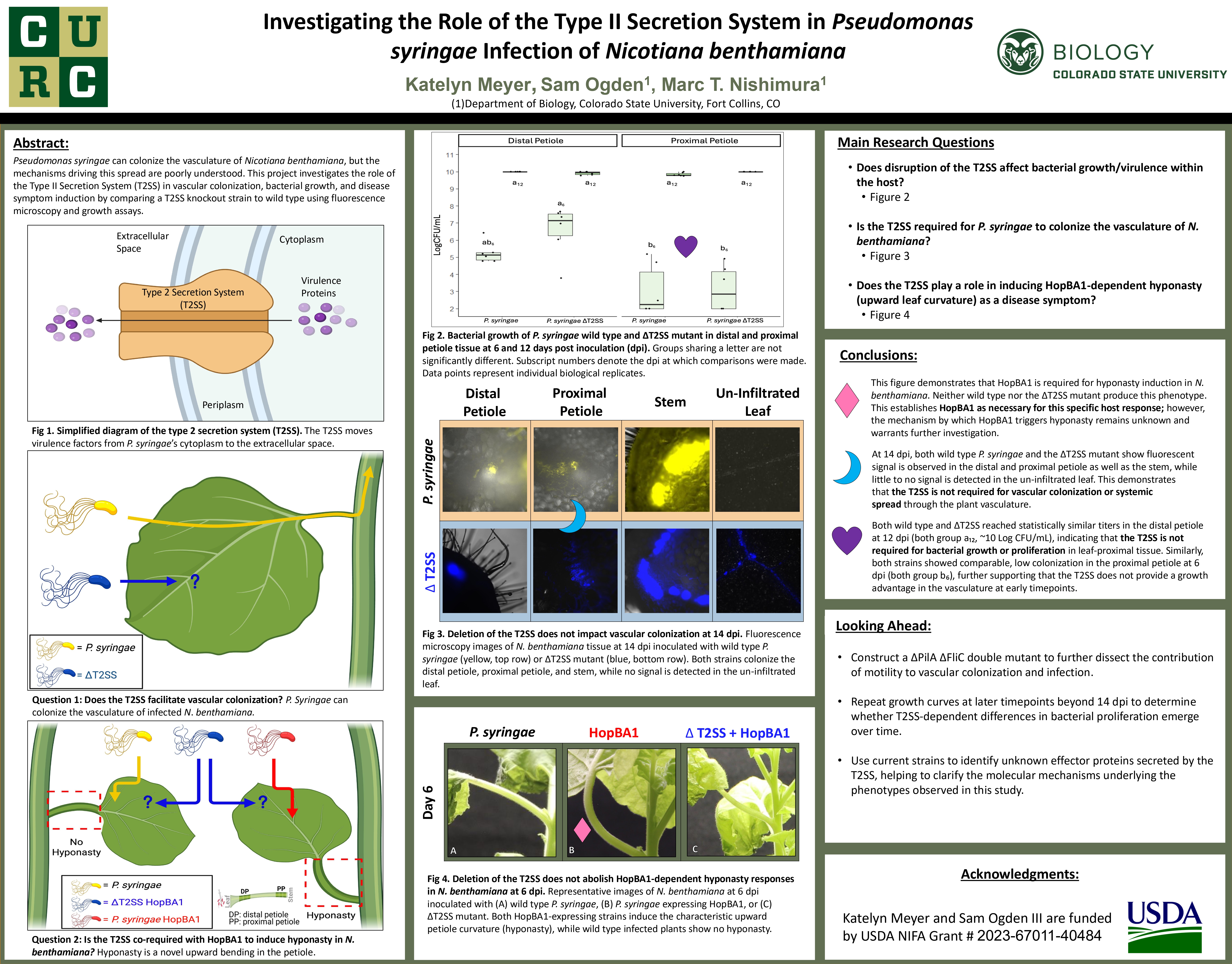
Plant immunology research is critical for protecting global food supplies because it helps scientists understand how plants defend themselves against pathogens. By identifying the genetic determinants of plant–pathogen interactions, researchers can reduce the need for chemical pest control and support more sustainable agriculture. Characterizing how pathogens spread within host tissues is especially important for developing long term disease management strategies and engineering resistant cultivars. Previous work in the Nishimura lab has shown that Pseudomonas syringae can infect the vasculature of the model plant Nicotiana benthamiana, providing a system to investigate these mechanisms. This project investigates whether the Type II secretion system (T2SS) is required for this aspect of infection. To test our hypothesis, we made a T2SS knockout (KO) strain and evaluated bacterial spread using fluorescence microscopy. We assessed the impact of T2SS disruption on virulence through growth assays and examined its role in hyponasty, a visible upward leaf curvature observed only in plants infected with a specific strain. By comparing the T2SS mutant to the wild type strain, we determined whether this system is necessary for vascular colonization, pathogen growth, and induction of disease symptoms. With this work, we have begun to dissect the role of an understudied secretion system in Pseudomonas syringae virulence and disease progression. By clarifying how this system influences spread, growth, and symptom development, we strengthen our understanding of the genetic determinants driving infection. This work contributes to the broader field of plant–microbe interactions and may inform strategies to improve crop resilience and reduce agricultural losses.