
Testing the Efficacy of Tenofovir Alafenamide (TAF) Against SIVrcm, A Potential Zoonotic Disease.
Category: Research Poster
Author(s): Raihan Zrigan, Ella Barnett, Leila Mulder
Presenter(s): Raihan Zrigan
Mentors(s): Ramesh Akkina
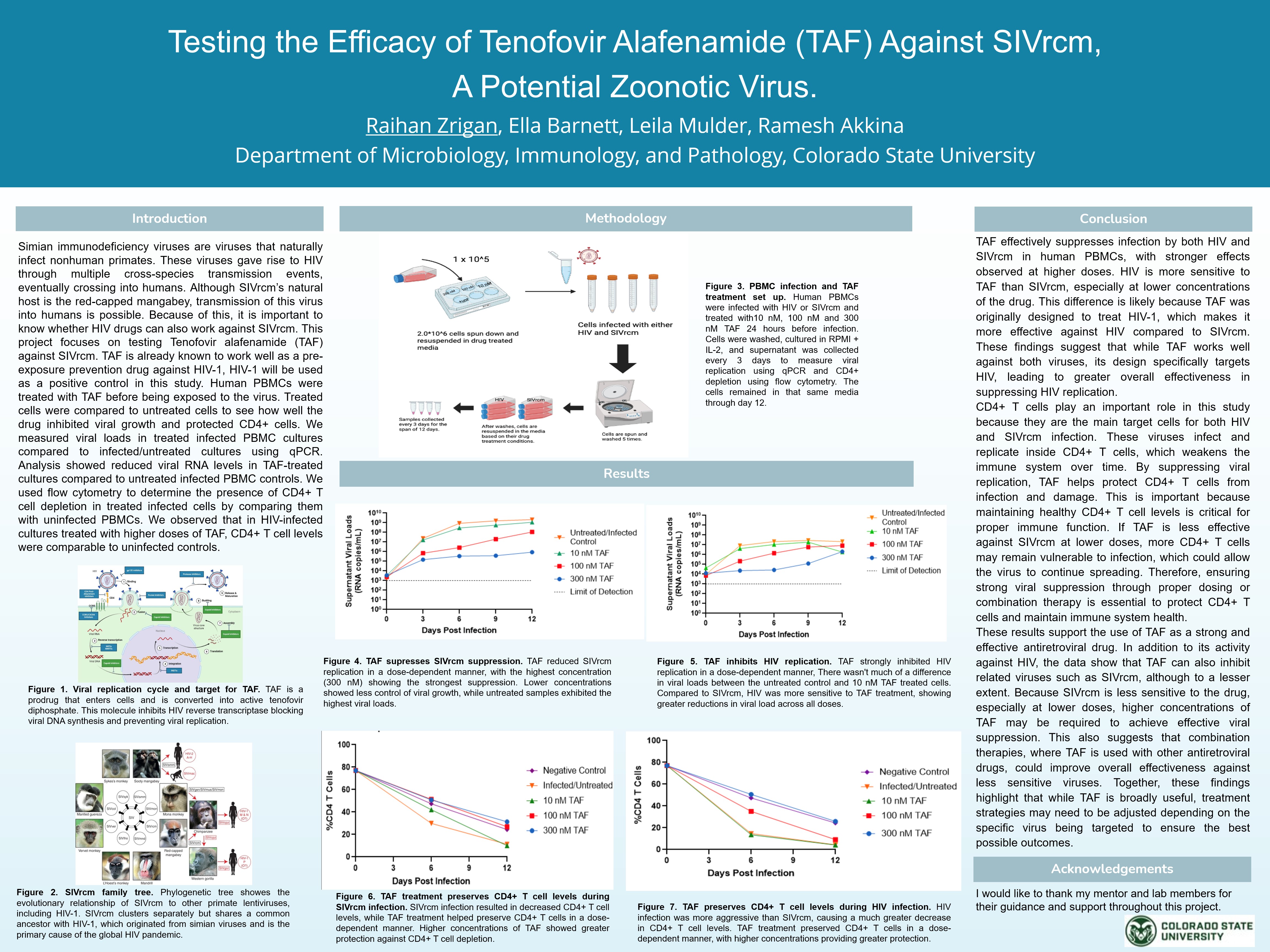
Testing the Efficacy of Tenofovir Alafenamide (TAF) Against SIVrcm, A Potential Zoonotic Disease. Raihan Zrigan, Ella Barnett, Leila Mulder, Ramesh Akkina Department of Microbiology, Immunology, and Pathology, Colorado State University Simian immunodeficiency viruses are viruses that naturally infect nonhuman primates. These viruses gave rise to HIV through multiple cross-species transmission events, eventually crossing into humans. Although SIVrcm’s natural host is the red-capped mangabey, transmission of this virus into humans is possible. Because of this, it is important to know whether HIV drugs can also work against SIVrcm. This project focuses on testing Tenofovir alafenamide (TAF) against SIVrcm. TAF is already known to work well as a pre-exposure prevention drug against HIV-1, HIV-1 will be used as a positive control in this study. Human PBMCs were treated with TAF before being exposed to the virus. Treated cells were compared to untreated cells to see how well the drug inhibited viral growth and protected CD4+ cells. We measured viral loads in treated infected PBMC cultures compared to infected/untreated cultures using qPCR. QPCR analysis showed reduced viral RNA levels in TAF-treated cultures compared to untreated infected PBMC controls. We used flow cytometry to determine the presence of CD4+ T cell depletion in treated infected cells by comparing them with uninfected PBMCs. We observed that in HIV-infected cultures treated with higher doses of TAF, CD4+ T cell levels were comparable to uninfected controls.