
Do Human Stress Hormones Influence Microbial Growth and Behavior?
Category: Research Poster
Author(s): Destiny Segovia
Presenter(s): Destiny Segovia
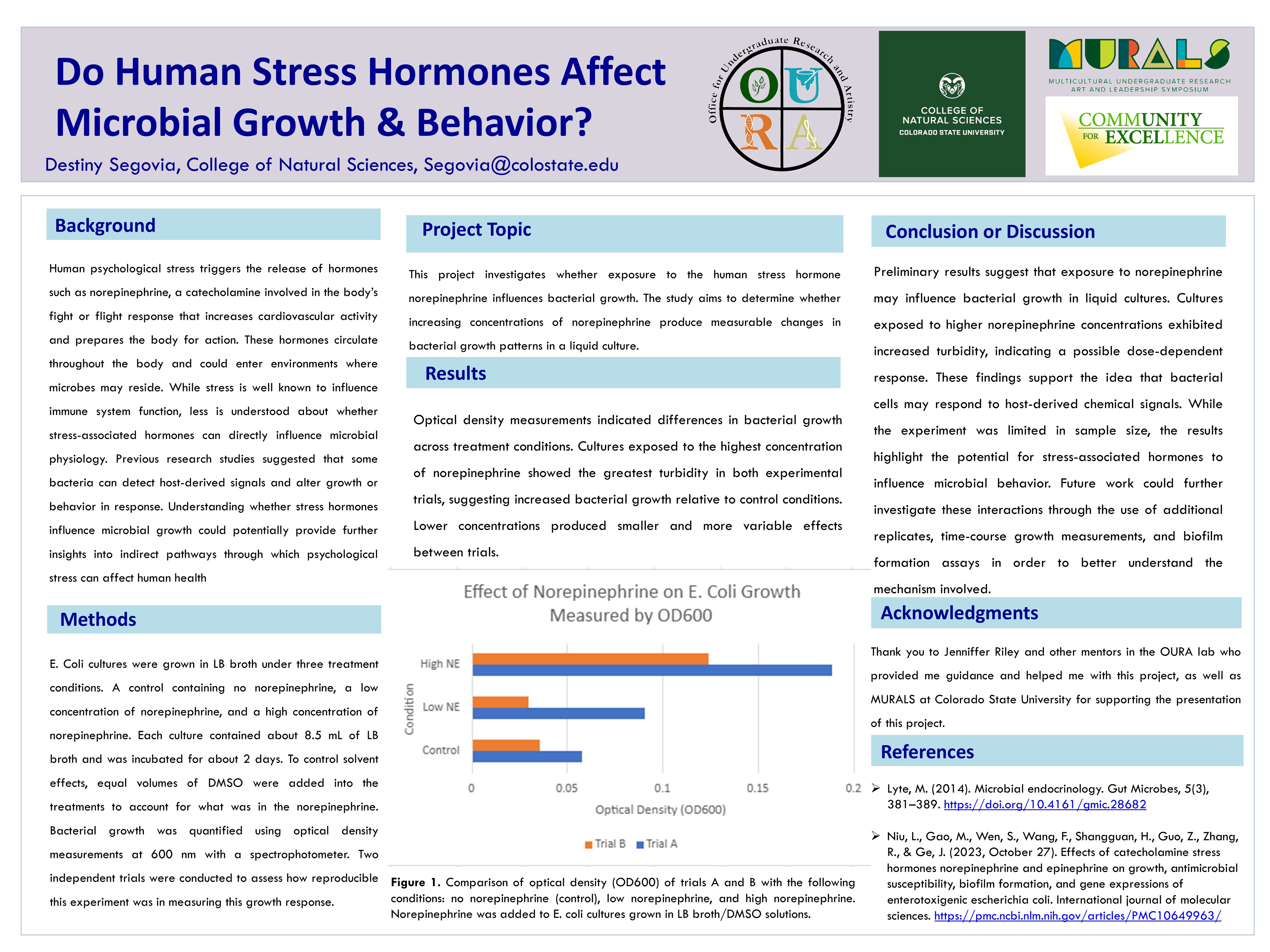
Psychological stress in humans triggers the release of multiple hormones, including catecholamines such as norepinephrine, which play a central role in the body’s fight-or-flight response. These stress-associated hormones circulate throughout the body and can enter environments where microbes reside. Stress has been shown to influence immune system function; however, less is understood about whether stress-associated hormones can directly alter microbial physiology and behavior. In this study, I investigate how exposure to norepinephrine influences bacterial growth and behavior using a non-pathogenic bacterial model. Bacterial cultures grown in liquid media were exposed to increasing concentrations of norepinephrine, alongside untreated control conditions. Growth was quantified over time using optical density measurements to generate growth curves and assess changes in growth dynamics. In addition, bacterial attachment behavior was evaluated using a biofilm formation assay to determine whether norepinephrine exposure alters surface adherence. Growth rates and behavioral responses were compared across hormone conditions to assess whether norepinephrine produces measurable, dose-dependent effects on microbial physiology. By examining bacterial responses to stress-associated chemical signals, this project explores whether human stress chemistry can function as an environmental cue that modulates microbial behavior. Understanding these interactions may provide insight into indirect biological pathways through which psychological stress influences health and disease outcomes.