
The relationships between momentary feelings of loneliness and social drinking context with subsequent alcohol consumption among young adults with SUDs
Category: Research Poster
Author(s): Emma Thompson, Rachel Longridge, Cassandra Richardson, Jayden Mather, Noah Emery
Presenter(s): Emma Thompson, Rachel Longridge
Mentors(s): Cassandra Richardson, Noah Emery
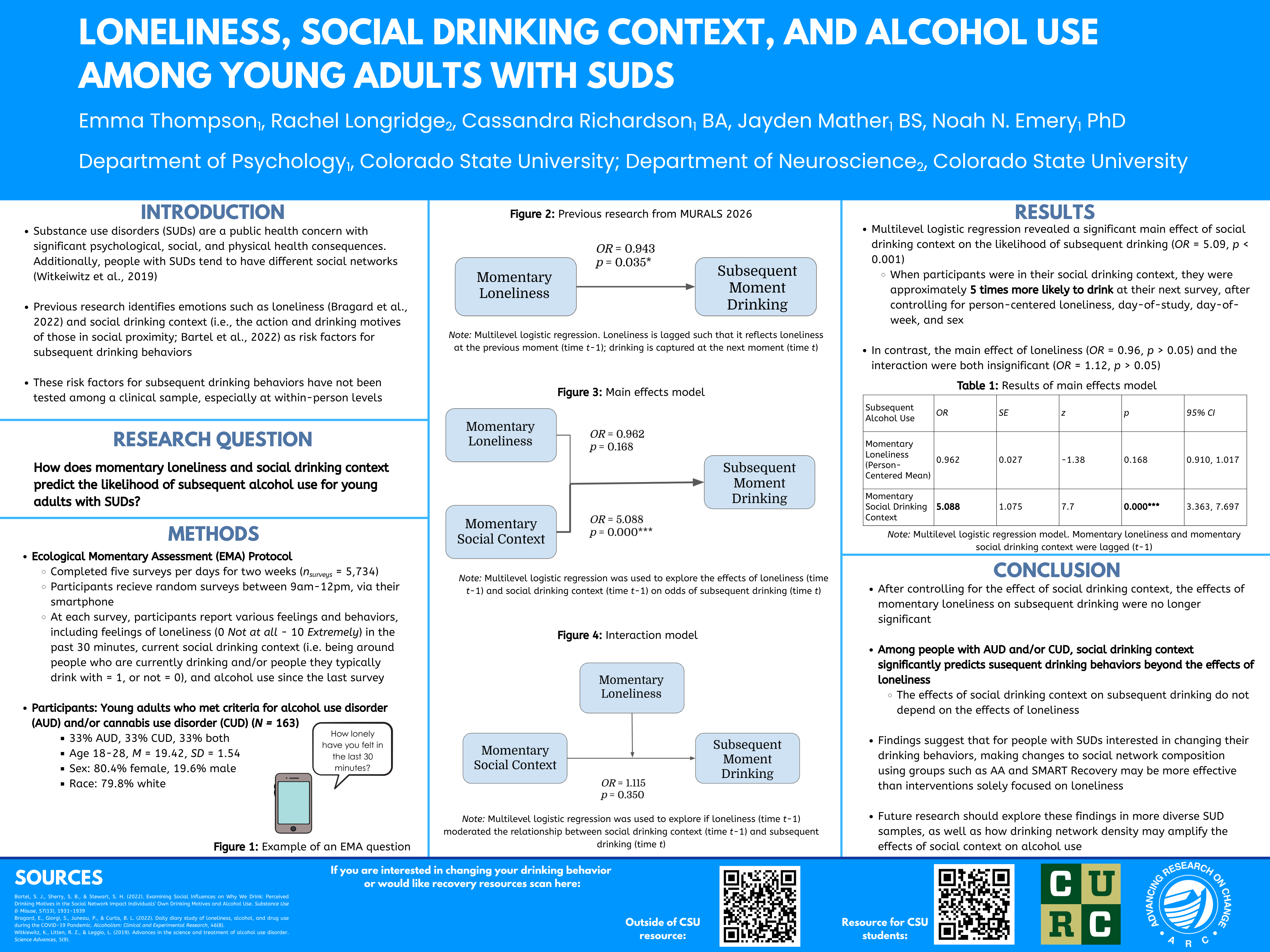
Substance use disorders are a public health concern with significant psychological, social, and physical health consequences (Witkeiwitz et al., 2019). Previous research identifies loneliness (Bragard et al., 2022) and peer drinking behaviors (Bartell et al., 2022) as risk factors for subsequent drinking. However, these relationships have not been tested among individuals with alcohol use disorder (AUD) or cannabis use disorder (CUD). This study uses ecological momentary assessment to examine within-person associations between momentary loneliness, social drinking context (i.e., being around people an individual typically drinks with and/or around people currently drinking), and subsequent alcohol use. Young adults who met criteria for AUD, CUD, or both (N=163) completed 5 surveys daily for 2 weeks (observations=5,720) where they reported feelings of loneliness in the past 30-minutes, current social context, and alcohol use since the previous survey. Multilevel logistic regression revealed a significant main effect of social drinking context on the likelihood of subsequent drinking (OR=5.09, p<.001), such that when participants were in their social drinking context, they were approximately 5 times more likely to drink in the following hours. In contrast, the main effect of loneliness (OR=0.96, p>.05) and the interaction were both insignificant (OR=1.12, p>.05). These results demonstrate that, among people with AUD and/or CUD, social drinking context significantly predicts subsequent drinking behavior beyond the effects of loneliness. Findings suggest that interventions targeting social networks may be more effective than those focused solely on negative affect.