
Evolution of Hand Anatomy, Stone Tools, & the Origin of Symbolic Thought
Category: Research Poster
Author(s): Caitlyn BucknerBackstrom
Presenter(s): Caitlyn BucknerBackstrom
Mentors(s): Kimberly Nichols
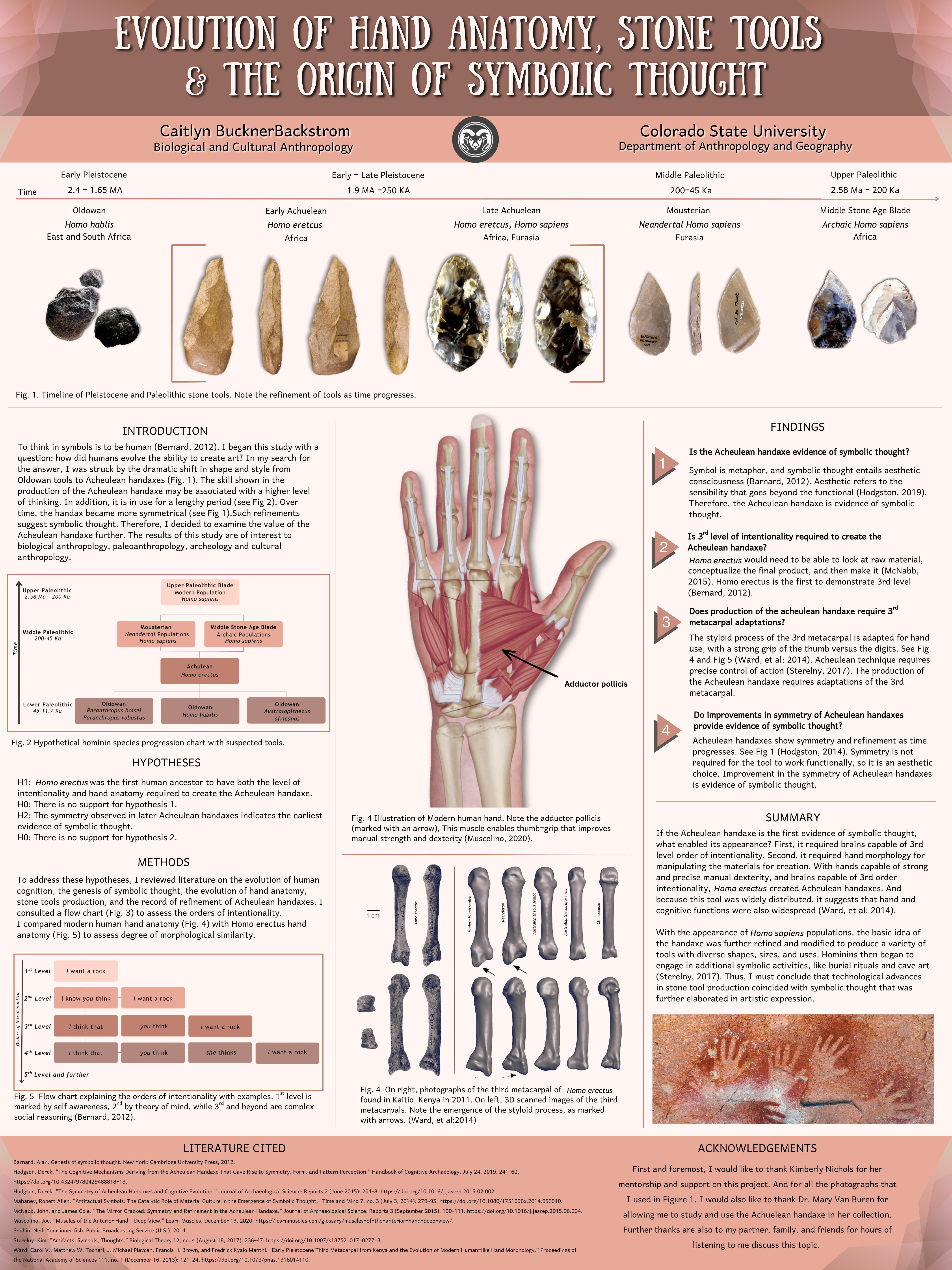
Artistic expression shapes every aspect of our modern lives, from the art we enjoy to the buildings we live in and the technology that we use. The question is, where in human evolution did artistic expression start? This work proposes that symbolic thought gave rise to artistic expression, and one of the first examples of symbolic thought in human existence is the Acheulean handaxe created by Homo erectus. This was the first human ancestor to have evolved both the brain capacity and the hand anatomy necessary to create the handaxe. In this poster, I compile information about hand anatomy, symbolic thought, and the Acheulean handaxe. Which is then combined to explain how the evolution of hand anatomy in Homo erectus enabled these human ancestors to engage in a level of creative activity that demonstrates symbolic thought. This research focuses primarily on the evolution of hand anatomy and will only briefly touch on the required brain capacity so as to take a holistic approach. This results in the finding that the artistic expression humans possess today may have arisen from evolutionary developments in the brain and hands of Homo erectus, which enabled symbolic thought and the manufacture of the Acheulean handaxe. By understanding how and why artistic expression first arose among early human ancestors, we can better understand both the trajectory of human evolution and development as well as modern human symbolic thought, how it functions in culture, and why it matters.