
The Neurodiversity Paradox: Evaluating Mindfulness Intervention Acceptability in Adolescents with Attention and Learning Differences
Category: Research Poster
Author(s): Anthony Rodby, Jonathan Najman, Rachel Graham
Presenter(s): Anthony Rodby
Mentors(s): Jonathan Najman
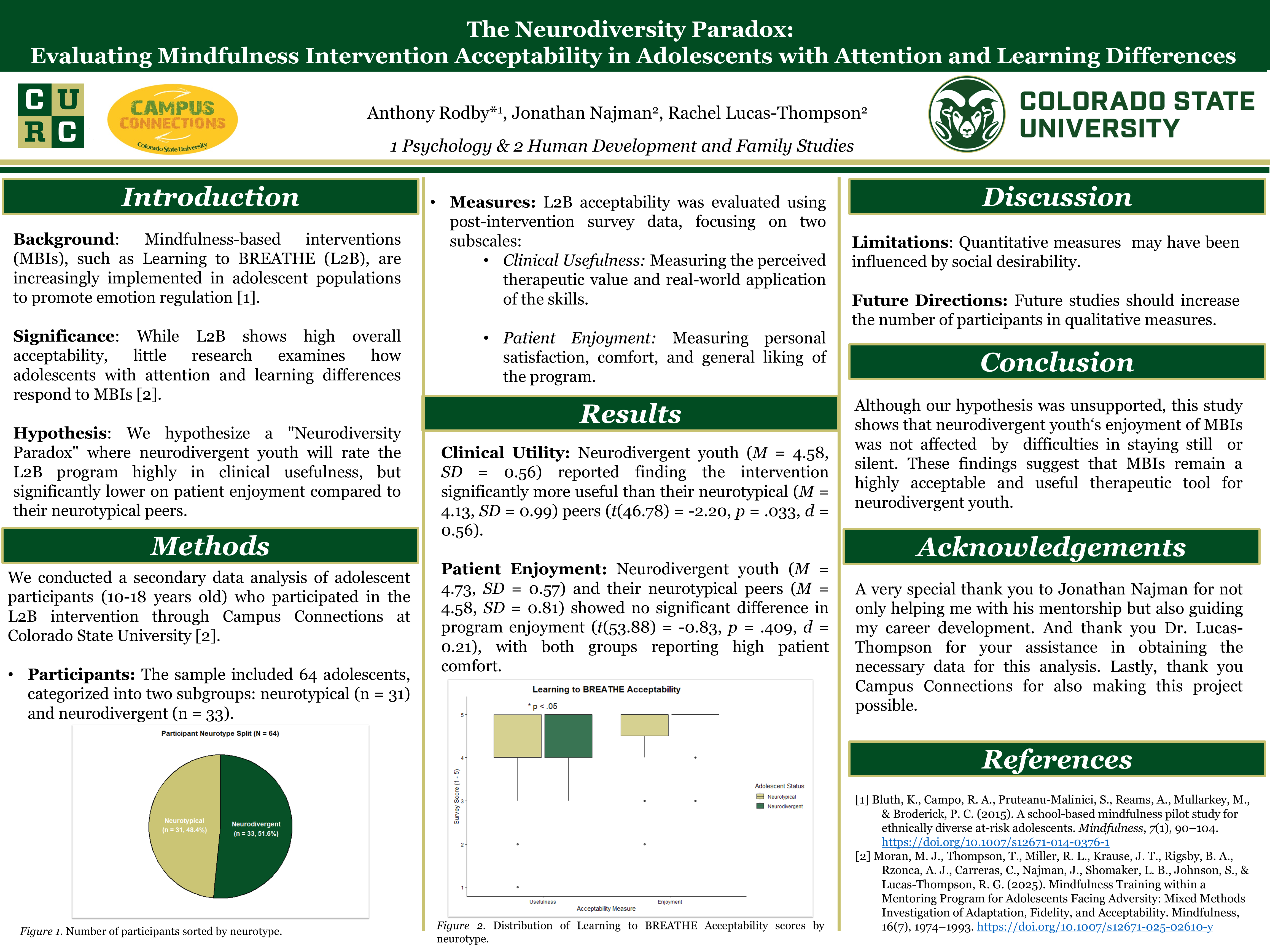
Mindfulness-based interventions (MBIs) teach valuable emotion regulation skills, but standard protocols often need adaptation for neurodivergent youth. This secondary data analysis evaluates the acceptability of the Learning to BREATHE (L2B) curriculum within a mentoring program for adolescents facing adversity. Previous mixed-methods research found that youth with conditions that impact schoolwork (like ADHD) actually reported higher overall acceptability of the program. However, qualitative data from the original study pointed to specific therapeutic barriers, such as difficulty with sustained silent practice. To investigate this clinical paradox, we plan to run independent-samples t-tests to compare neurodivergent and neurotypical subgroups across two specific acceptability subscales: clinical utility ("usefulness") and patient comfort ("enjoyment"). We hypothesize that neurodivergent youth will report high clinical utility but significantly lower enjoyment than their peers. Identifying these specific barriers is an important step for clinical practice. Ultimately, we hope these findings can inform targeted MBI accommodations, such as shorter practice times and integrating movement to make these interventions more accessible and effective for adolescents with attention and learning differences.