
Maternal prebiotic supplementation improves vagal function and diet induced obesity in offspring
Category: Research Poster
Author(s): Abby Boaz
Presenter(s): Abby Boaz
Mentors(s): Claire de La Serre
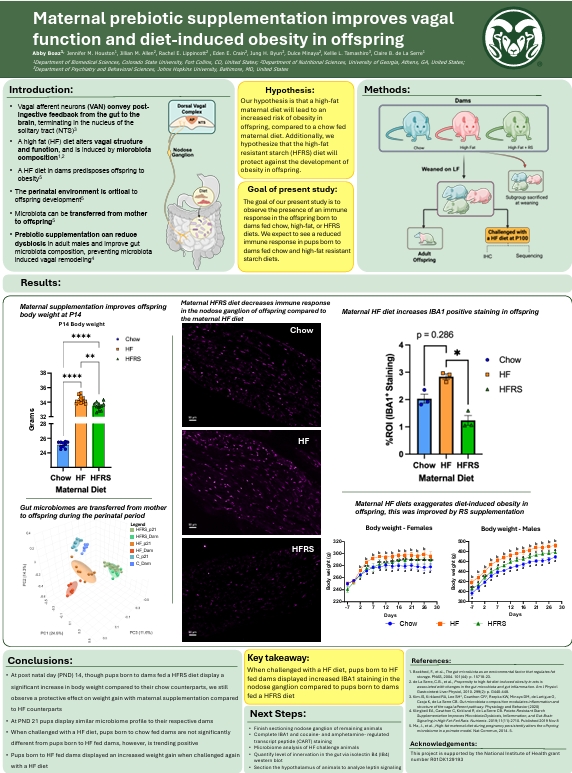
Maternal obesity increases risk for metabolic disorders in offspring. Gut-innervating vagal afferents terminate in the nucleus of the solitary tract (NTS), conveying post-ingestive cues to regulate meal size. Rat pups born to high fat (HF) diet-fed dams show reduced sensitivity to gut satiety peptides and post-prandial NTS activation linked to altered feeding. A HF-type gut microbiota is necessary and sufficient to alter vagal structure and function. We hypothesized that improving microbiota composition in HF-fed dams will enhance offspring gut-brain communication. Sprague-Dawley dams were fed a chow (LF), HF, or high fat supplemented with prebiotics (resistant starch, RS, HF+12% RS) diet during pregnancy and lactation. Offspring were weaned onto a LF diet. By post-natal day 14 (P14), HF offspring were heavier than HFRS (p<0.05) and LF (p<0.05) pups. Immunostaining of NTS at P21 showed a decrease in vagal innervation in HF pups compared to LF and HFRS offspring. This was inverted in adulthood but did not improve function, as HF offspring failed to reduce food intake in response to gut satiety peptide cholecystokinin (CCK, 1.5ug/ml/kg). This was rescued in HFRS pups, associated with a reduction in meal size and indicating improved vagal function. When challenged with a HF diet, HF pups gained significantly more weight than HFRS offspring (p<0.05), highlighting protective effects of maternal supplementation. This may be limited to gut-originating signals as both HF and HFRS offspring displayed a deficit in NTS leptin signaling compared to LF pups. We concluded that maternal HF diet alters vagal communication in offspring, increasing risk for diet-induced obesity. Some effects appear to be microbiota driven and improved with maternal RS supplementation.