
The influence of breed and copper supplementation level on performance and copper status in sheep
Category: Research Poster
Author(s): Olivia Kreutzer
Presenter(s): Olivia Kreutzer
Mentors(s): Terry Engle, Huey Yi Loh
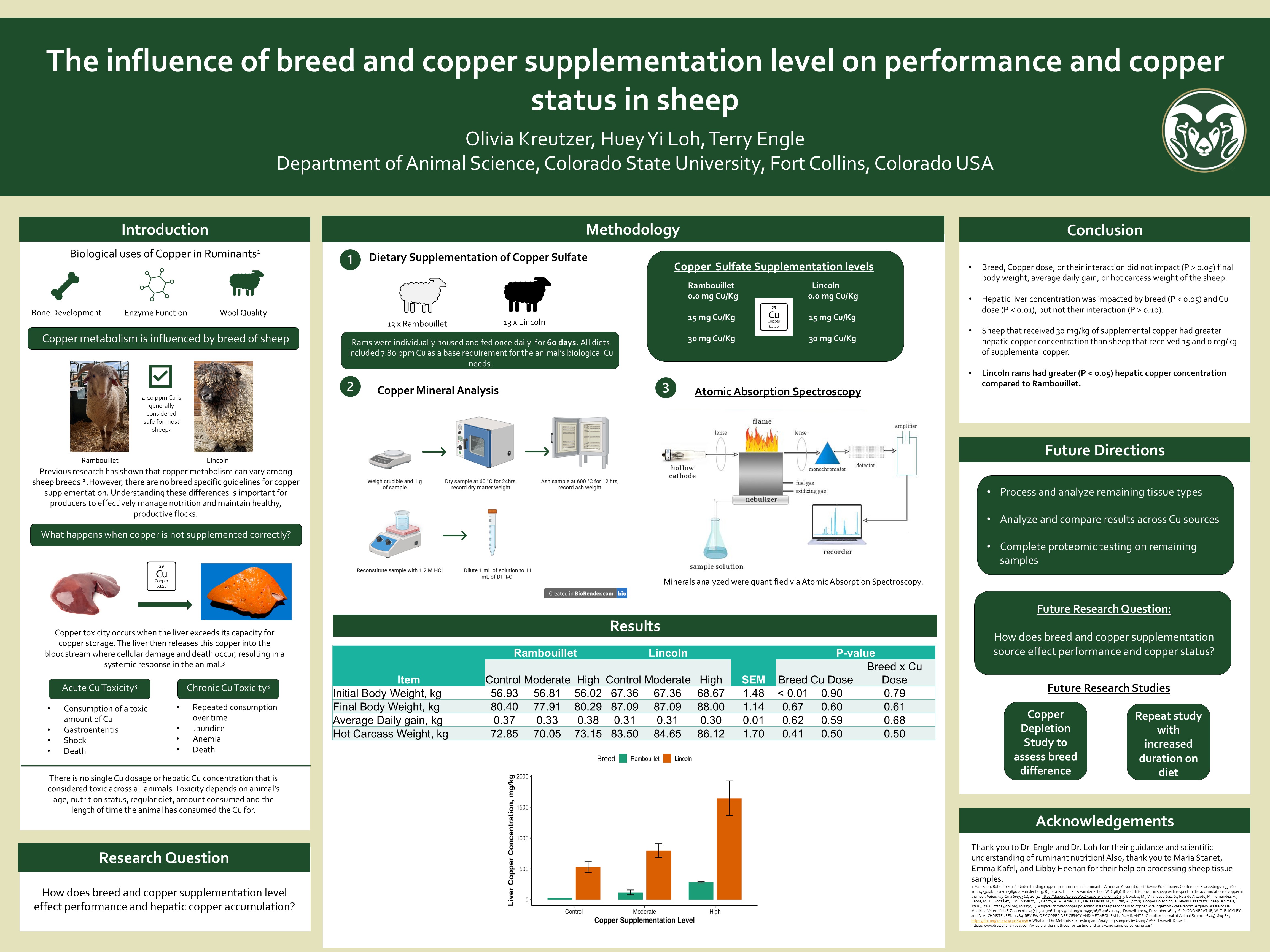
Copper is an essential element required by sheep for enzyme function, cellular homeostasis, and growth. Previous research has demonstrated that dietary copper requirements vary by breed. Therefore, it is important to understand the optimum dietary copper concentrations for different breeds of sheep to appropriately meet their needs. Hence, 26 rams were utilized in this experiment to determine the effects of breed and copper supplementation dose on animal performance and copper status. Sheep were assigned to treatment according to a 2 ´ 3 factorial arrangement. Factors included: 1) sheep breed (Lincoln and Rambouillet) and 2) copper dose (0.0, 15, or 30 mg Cu/kg diet DM). Rams were housed in individual pens and fed once daily with their respective dietary treatments. Initial body weight (BW), final BW, and average daily gain (ADG) were recorded throughout the experiment. After receiving their respective diets for 60 days, all animals were transported to a USDA-inspected abattoir and harvested. Following harvest, hot carcass weight (HCW) was recorded, and liver samples were obtained. Breed, Cu dose, or their interaction did not impact (P > 0.05) final BW, ADG, or HCW of the sheep. Hepatic liver concentration was impacted by breed (P < 0.05) and Cu dose (P < 0.01), but not their interaction (P > 0.10). Sheep that received 30 mg/kg of supplemental copper had greater hepatic copper concentration than sheep that received 15 and 0 mg/kg of supplemental copper. Lincoln rams had greater (P < 0.05) hepatic copper concentration compared to Rambouillet.