
Examining Cookstove Use Pemba Island, Tanzania
Category: Oral Presentation
Author(s): Mabel DeGrandpre
Presenter(s): Mabel DeGrandpre
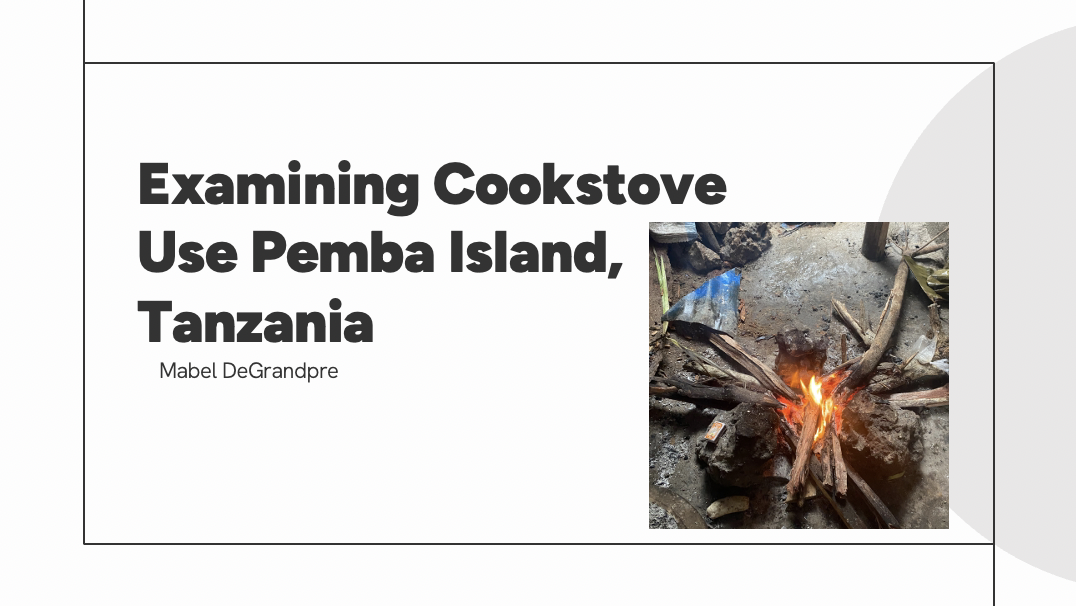
This study focuses on the determinants of cookstove use and the health impacts of cookstoves on community members in Pemba, Tanzania. With a secondary focus of how these factors impact the adoption of “clean” cookstoves, specifically those introduced by the NGO Community Forest Pemba (CFP). This study was conducted in Wete District on Pemba Island, Tanzania. Using a qualitative approach with semi-structured interviews and biographical sketch methodology, 29 total interviews were conducted, which illuminated the prevalence of each of the five stove types observed and the additional considerations associated with each stove type. Interview data revealed that many households continue to use the three stone fire (TSF) due to its ability to provide large amounts of food, affordability, and familiarity across generations, despite users displaying awareness of the health risks associated with the stove type. The CFP cookstove initiative is briefly analyzed and displayed potential for reducing household fuel use and providing income to coop participants. Together these findings display the importance of analyzing historical contexts, financial barriers, labor burdens, and health perceptions when investigation the social and practical factors that complicate the widespread adoption of alternative cookstove types.