
The Impact of Arm Swing on Movement Strategy During the Sit-to-Stand Test
Category: Research Poster
Author(s): Nathan Kelley, Brett Fling, Isaac Bast
Presenter(s): Nathan Kelley
Mentors(s): Isaac Bast
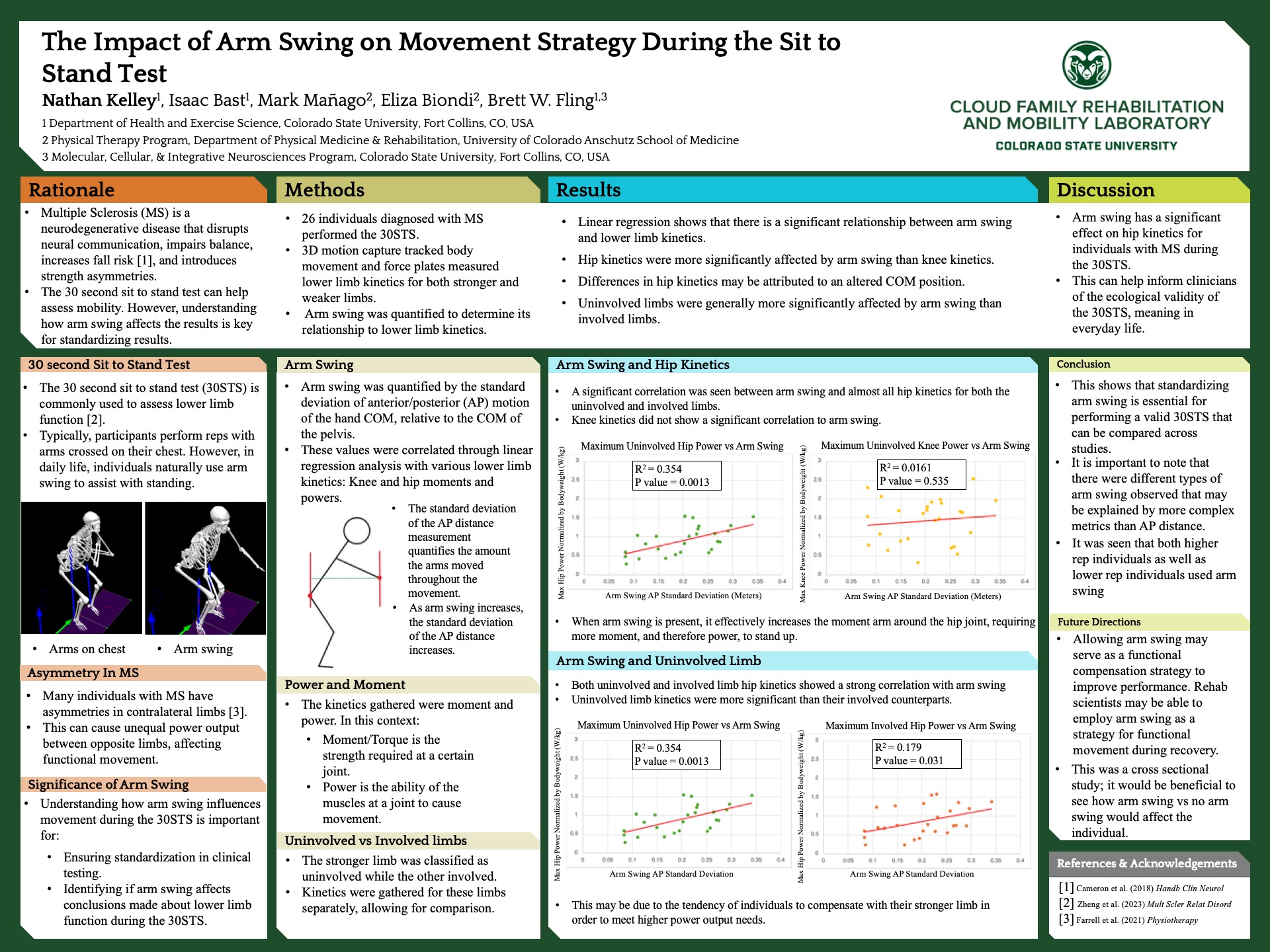
Multiple Sclerosis (MS) affects nearly 1 million individuals across the country. This neurodegenerative disease degrades the myelin sheath around axons, impairing neural communication. This can cause balance issues and increases the risk of falling. Standing up and sitting down are when many of these falls occur as rapid postural adjustments are frequently needed. The 30 second sit to stand test (30STS) requires participants to rise and sit as many times as possible over 30 seconds and is used to assess an individual’s ability to perform these transfer movements. Participants are instructed to perform the test with their arms crossed over the chest. However, individuals often swing their arms to assist with this movement in daily life. The purpose of this study was to determine whether arm swing alters 30STS transfer technique in individuals with MS. In this study, 34 participants with MS performed the 30STS while 3D motion capture and force data were collected. Relationships between arm swing and lower limb kinetic variables were assessed. Anterior/Posterior arm swing was significantly correlated with select lower limb kinetic variables, indicating altered movement strategies between participants. These findings highlight the importance of standardizing arm position to enable valid comparisons across populations. Conversely, the altered lower-limb kinetics observed as arm swing increased suggests that incorporating arm movement may be useful for clinicians to facilitate chair-rise performance.