
Feasibility and Acceptability of Latinas Integrating Fitness and Therapy (LIFT)
Category: Research Poster
Author(s): Mariela Sierra-Monarrez, Isabella Jurewicz, Heather Leach, Jessica Gonzalez-Voller
Presenter(s): Mariela Sierra-Monarrez
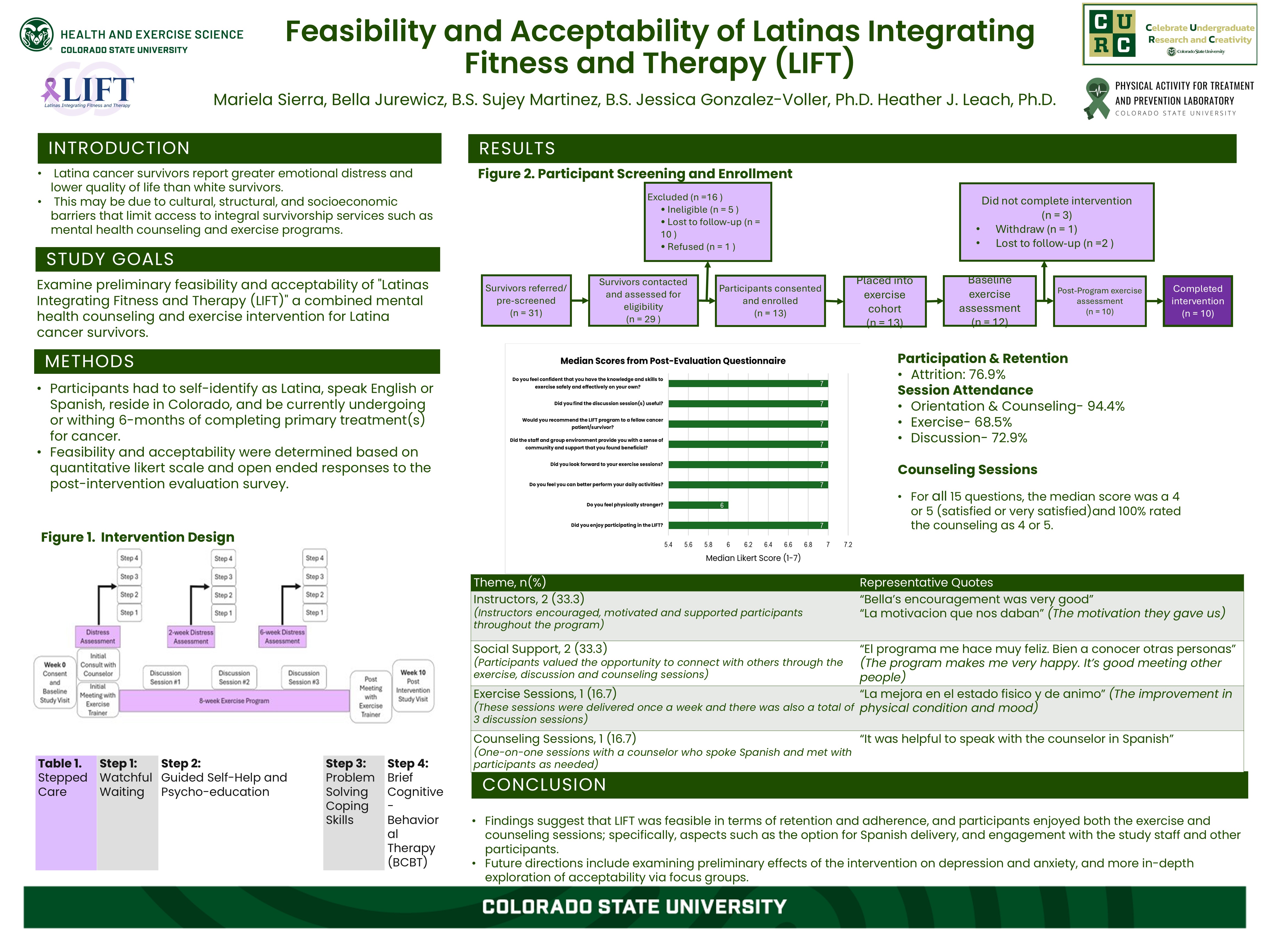
Latina cancer survivors experience higher levels of emotional distress and poorer quality of life when compared white cancer survivors. This may be due to cultural, structural or socioeconomic barriers to survivorship services such as mental health counseling or lifestyle interventions like physical activity (PA) programs. While there is strong evidence suggesting that mental health counseling and physical activity (PA) is beneficial during and after cancer treatment, Latina cancer survivors are underrepresented in cancer survivorship. Therefore, the purpose of this study was to examine the initial feasibility and acceptability of a combined mental health and PA interventions specifically designed for Latina women undergoing or recently completing their cancer treatment. Methods: This was a single-arm, pre/post design study to examine feasibility and acceptability of the Latinas Integrating Fitness and Therapy (LIFT) intervention. LIFT consisted of 8-weeks of stepped-care mental health counseling and group-based virtually delivered PA sessions once per week. Participants were Latina cancer survivors residing in Colorado who were currently undergoing or within six months of completing chemotherapy and/or radiation therapy. All study procedures were offered in English and Spanish, based on the participant’s preferred language. Feasibility outcomes consisted of the number of individuals that were accrual, retention and adherence. Acceptability was assessed using a program evaluation questionnaire. Results: At the time of the presentation, results will include recruitment and enrollment outcomes. Reasons for withdrawal if necessary, will also be included. The adherence will be reported as the number of exercise and counseling sessions attended out of the number that were scheduled. Safety will be evaluated through reported adverse events, and we will be assessing participant's acceptability and satisfaction through the post-LIFT evaluation surveys. Conclusions: These findings will help determine the effectiveness of the recruitment strategies, as well as identifying the key barriers that may present to our population of interest.