
Under pressure: hypoxia and sex-dependent fetal growth restriction in deer mice
Category: Research Poster
Author(s): Payton Moore
Presenter(s): Payton Moore
Mentors(s): Megan Hemmerlein
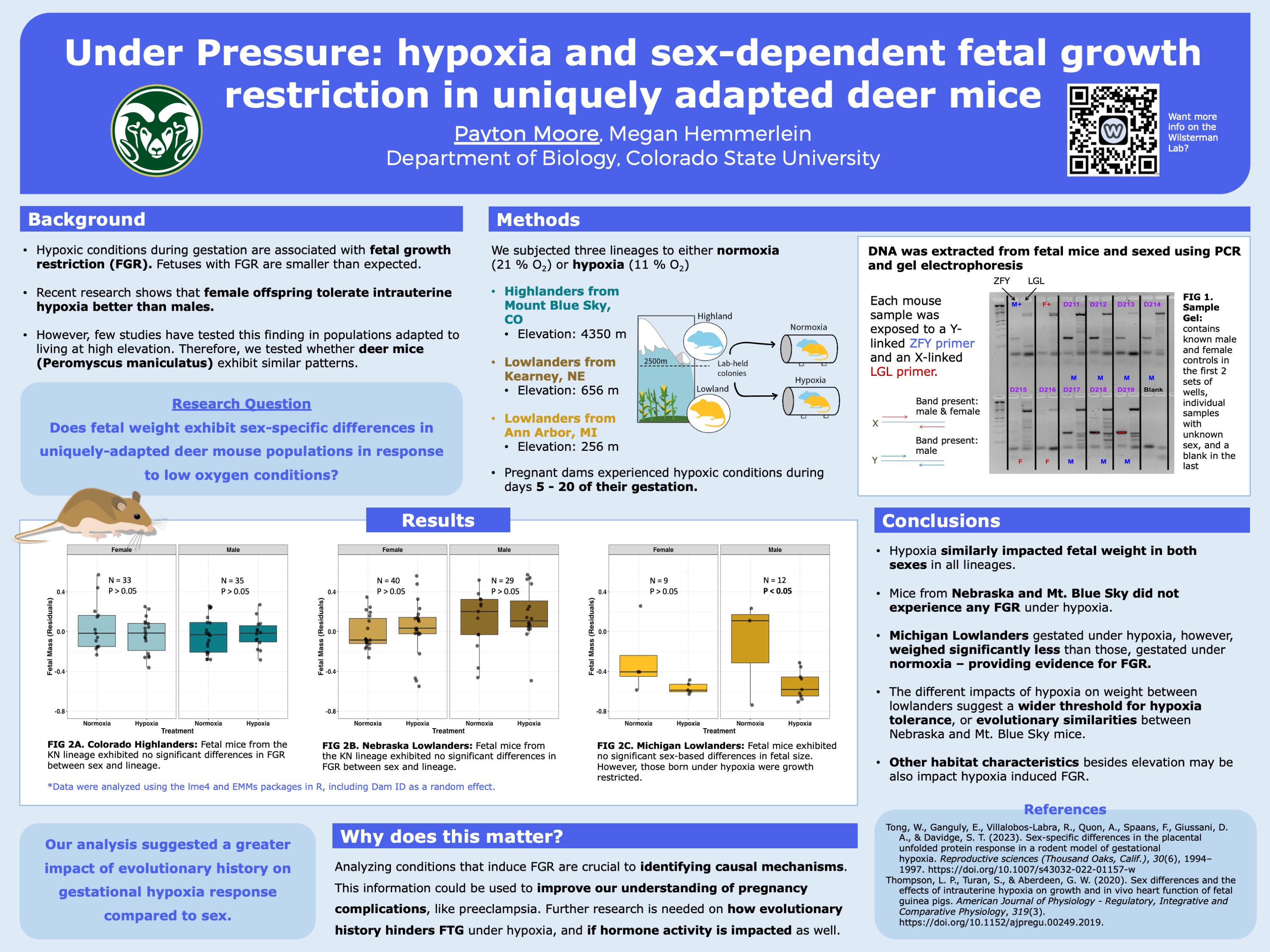
Chronic low oxygen levels – like those experienced at high altitudes – reduce fetal weight in mammals with lowland ancestry. Interestingly, highland adapted populations protect fetal weight from the consequences of limited oxygen. Previous studies have shown that males and females respond differently to hypoxia while in utero, however, this has yet to be empirically tested in a comparative model system. To understand ancestry-specific sex-based differences in fetal mass in response to gestational hypoxia, we subjected three lineages of deer mice (Peromyscus maniculatus) to either normoxia (21% O2) or hypobaric hypoxia (12% O2, simulated 4,300 m above sea level) from days 5 – 20 of their gestation. The lineages included two lowland derived populations (Kearney, NE and Ann Arbor, MI) and one highland population (Mount Blue Sky, CO). We weighed, collected, and extracted DNA from Nebraska lowland (N = 69), Michigan lowland (N = 21) and Colorado highland (N = 68) pups and determined their sex using PCR techniques. We were able to distinguish between sex using two primer sets that amplified DNA segments specific to the X and Y chromosomes. We found that fetal mass did not differ between sexes within the same groups (i.e., ancestry and treatment). However, we observed that lowland mice derived from Michigan reduced fetal size under hypoxia in comparison to other groups. These findings deepen our understanding of the impact of geographical origin on fetal size and offer a unique system for untangling factors contributing to differences in susceptibility to hypoxia.