
The Impact of Adverse Childhood Experiences on Emotion Regulation, and how Resiliency Plays a Role
Category: Research Poster
Author(s): Jane Barnhouse, Sophie Vinokurov
Presenter(s): Jane Barnhouse, Sophie Vinokurov
Mentors(s): Bradley Conner, Carolyn Lorenzi
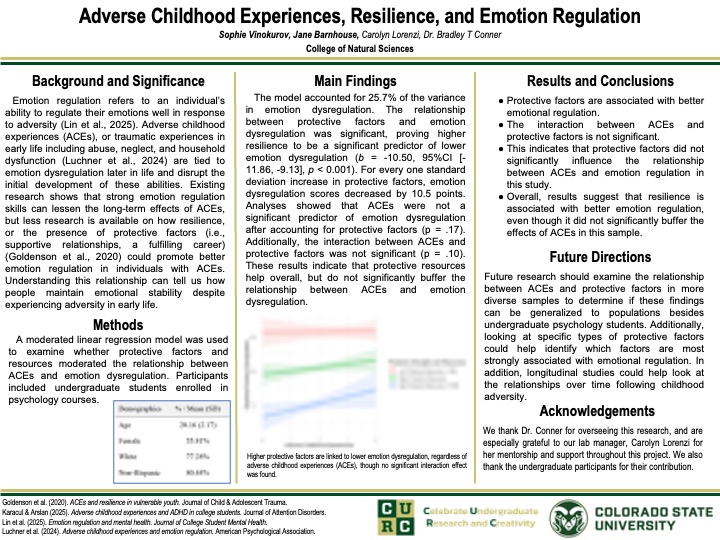
Adverse childhood experiences (ACEs) have been priorly linked to many negative long term behavioral outcomes. Exposure to adversity in childhood, including but not limited to abuse, neglect, and household dysfunction, can disrupt the typical timeline of an individual to develop emotional coping strategies, impairing their abilities to effectively manage emotional experiences later in life. Emotional regulation, which refers to the ability to manage and understand emotional responses, is especially affected by ACEs, however not all individuals who have experienced adversity in their childhood experience the same level of emotional dysregulation. Many individuals have demonstrated resilience despite exposure to significant stress early in life. This suggests that protective factors such as resilience may help limit and cushion the impact of those experiences. To examine the relationship between adverse childhood experiences and emotional regulation, ACEs were measured using the Adverse Childhood Experiences questionnaire and emotional regulation difficulties were measured using the Difficulties in Emotional Regulation Scale (DERS). Additionally, to explore the role resilience plays in emotional regulation following ACE’s, the Resilience Protective Factors Checklist (RPFC) was used to measure any resources that may have benefited emotional regulation despite early adversity. The goal is to identify if more extreme levels of childhood adversity are associated with increased difficulties with emotional regulation later in life, and the role resilience plays into it. Understanding how resilience impacts individuals who have experienced early adversity can provide insight into future directions to strengthen emotional regulation.