
Motivation Matters: Gender Differences in Conflict Management Training
Category: Research Poster
Author(s): Ruby Correa
Presenter(s): Ruby Correa
Mentors(s): Samantha Conroy
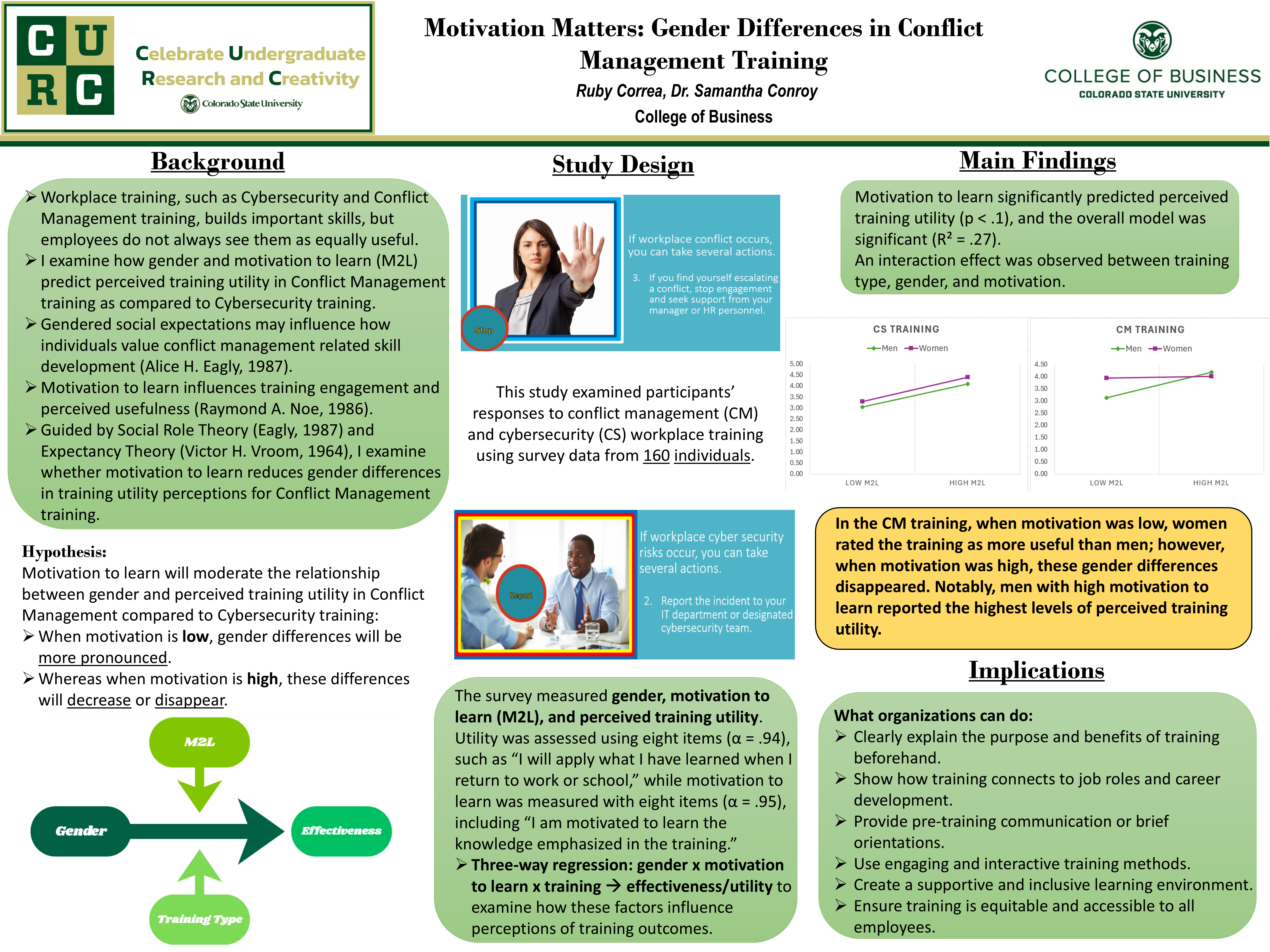
This study examines how gender and motivation to learn interact to predict perceived utility of conflict management training. Drawing from Social Role Theory and Expectancy Theory, the study proposes that motivation to learn influences how individuals evaluate the usefulness of training programs. Results indicate a significant interaction between gender and motivation to learn. When motivation to learn was high, gender differences in perceived training utility disappeared. However, when motivation was low, gender differences emerged, with women perceiving the training more positively than men. Additionally, men with high motivation to learn reported the greatest perceived utility from the training. These findings suggest that women may perceive interpersonal skill training as inherently valuable, whereas men may require higher motivation to engage with and benefit from such training. The results highlight the importance of fostering motivation to learn in training environments, particularly for participants who may not initially perceive interpersonal training as relevant or beneficial.