
Virology Student Perceptions of Science Communication Training
Category: Research Poster
Author(s): Elizabeth Williams
Presenter(s): Elizabeth Williams
Mentors(s): Nicole Kelp-Sullivan, Delaney Worthington
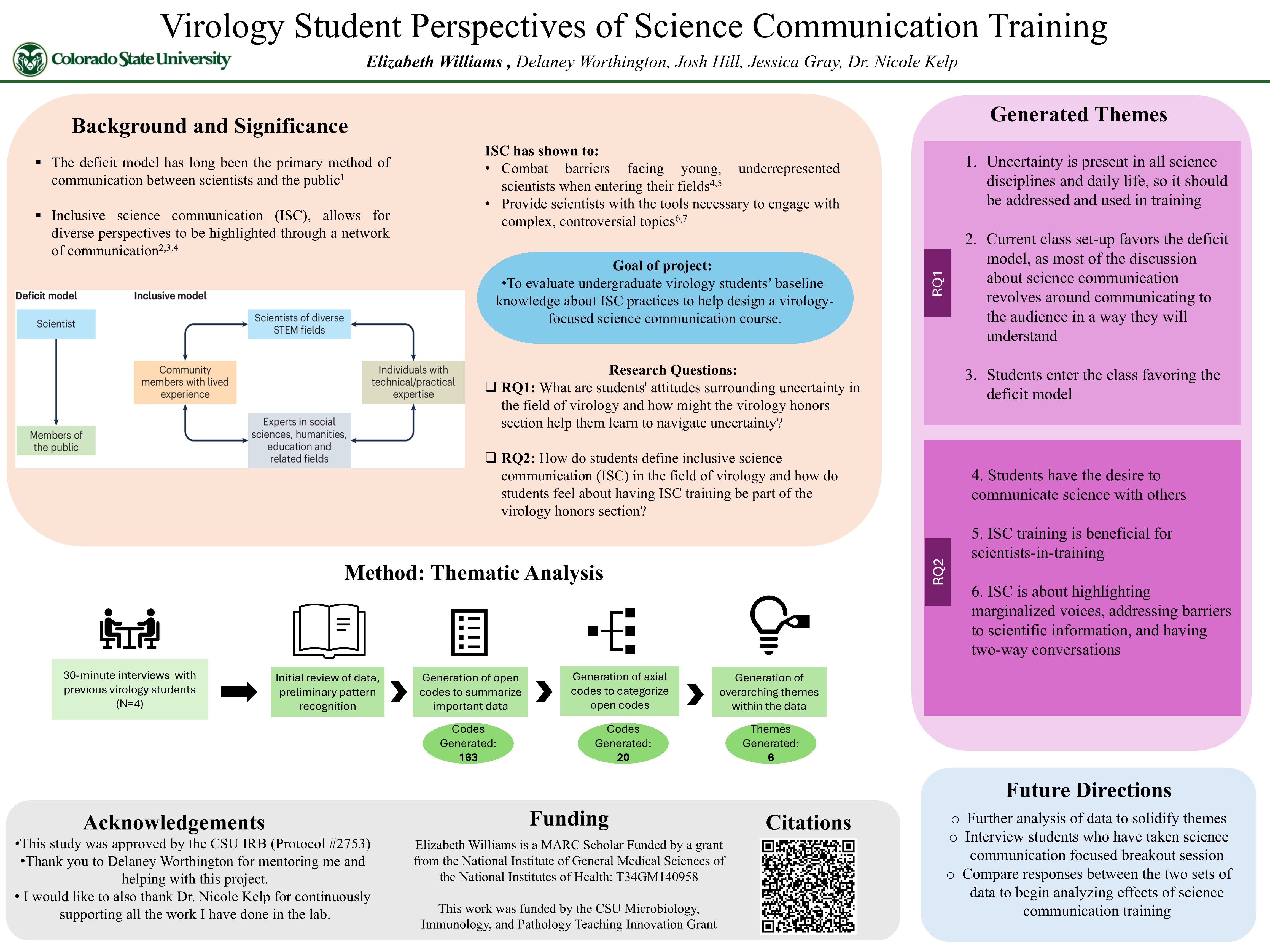
The deficit model has long been the primary method of communication between scientists and the public. However, the deficit model is ineffective and upholds harmful standards for young scientists-in-training. A new model of communication, known as inclusive science communication (ISC), is being implemented more often throughout the scientific community. ISC allows for diverse perspectives to be highlighted through a network of communication, while also combating barriers that young, underrepresented scientists face when entering their fields. This project takes a unique focus on ISC and its specific purpose within virology. Integrating ISC into undergraduate virology is crucial due to the complex, controversial topics these students must discuss outside of the classroom such as vaccines. The goal of this project is to evaluate undergraduate virology students’ baseline knowledge about ISC practices to help design a virology-focused science communication course. As part of the curriculum design process, 30-minute interviews were conducted with previous virology students (n=4). Thematic analysis was used to generate themes from the interviews, through identifying patterns in the interviewees' responses and categorizing them into overarching ideas. Our analysis revealed that the students most often engage with science communication when presenting their research posters and have a desire to learn more about ISC for their future career aspirations. Overall, our data suggests that virology students have a desire to learn more about ISC to tackle subjects with high levels of scientific uncertainty or controversy.