
Novel small mammal trapping techniques in the Ecuadorian Amazon
Category: Research Poster
Author(s): Emily Niese, Merit Willey, Zoe White
Presenter(s): Emily Niese, Merit Willey, Zoe White
Mentors(s): Tanya Dewey
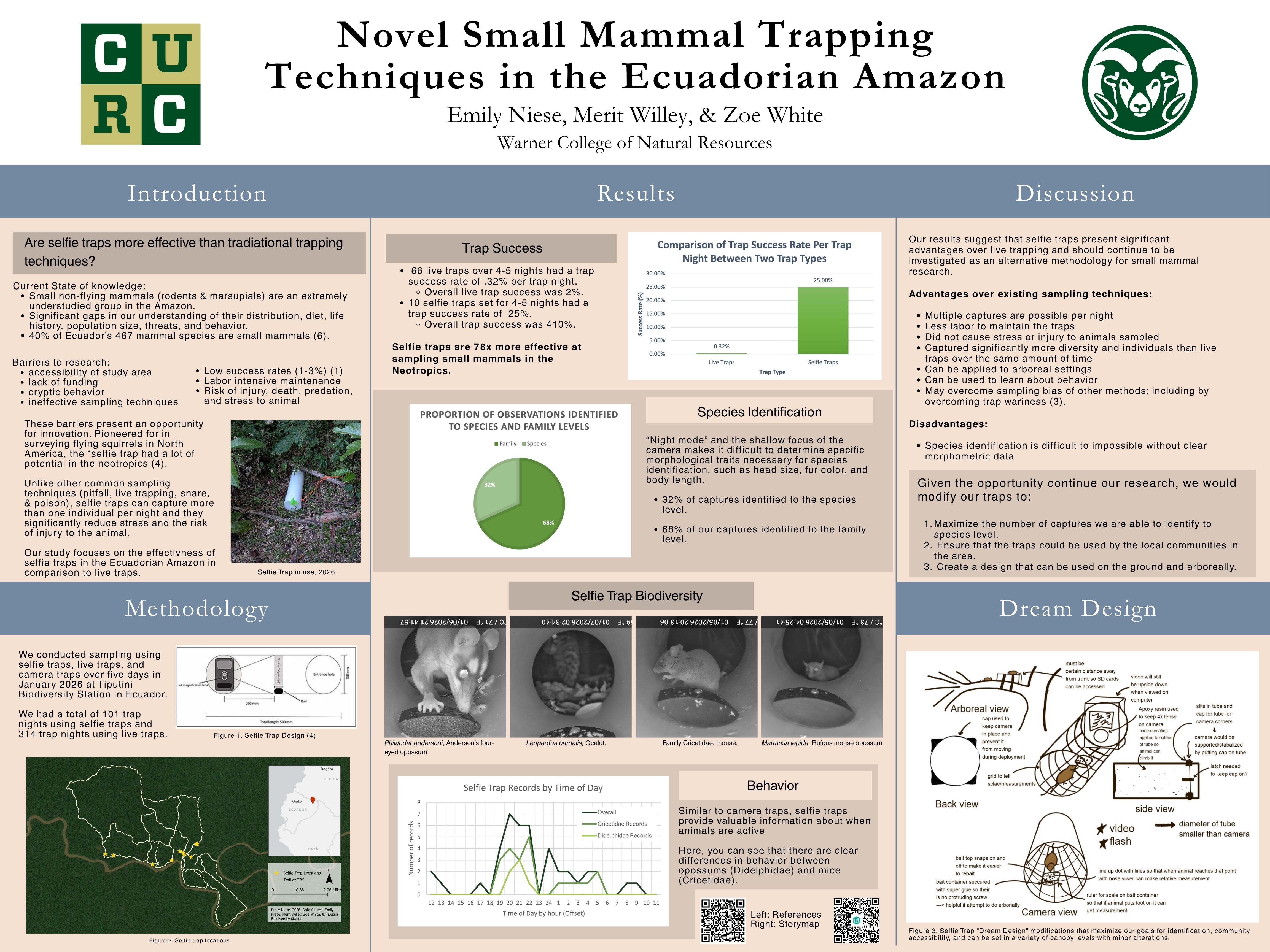
Small non-volant mammals are one of the most diverse and simultaneously understudied taxa in the Amazon. The Ecuadorian Amazon has an estimated 180 species of small rodents and marsupials, for which little scientific research exists. Specific knowledge gaps include distribution, diet, life history, population size, and behavior. Our understanding of these animals is limited by accessibility, lack of funding, ineffective trapping techniques, and cryptic behavior. There is a significant need to create or adapt trapping techniques, especially non-invasive techniques, to the Amazon. We compared Sherman and Tomahawk live traps against the “selfie” trap, a baited camera trap which has never been used in the Neotropics. We also experimented with trap placement and with different bait types to determine which methods captured the greatest mammalian diversity. Sampling occurred over five nights in the Ecuadorian lowland Amazon rainforest at Tiputini Biodiversity Station in January 2026. We did identify differences between the two methods; selfie traps captured significantly more biodiversity than live traps, required less maintenance, and presented less risk to the animals. Our results suggest that selfie traps present significant advantages over live trapping and should continue to be investigated as an alternative methodology for small mammal research. While there are limitations to our specific methodology, our experimental design can easily be refined in future research.