
Effects of Varying Polyunsaturated Fatty Acid Diets on the Mobility from ACL Rupture in a Mice Model
Category: Research Poster
Author(s): Maya Falick, Katie Sikes, Ashley Potter, Casey Gries, Julia Hilliard
Presenter(s): Maya Falick
Mentors(s): Ashley Potter
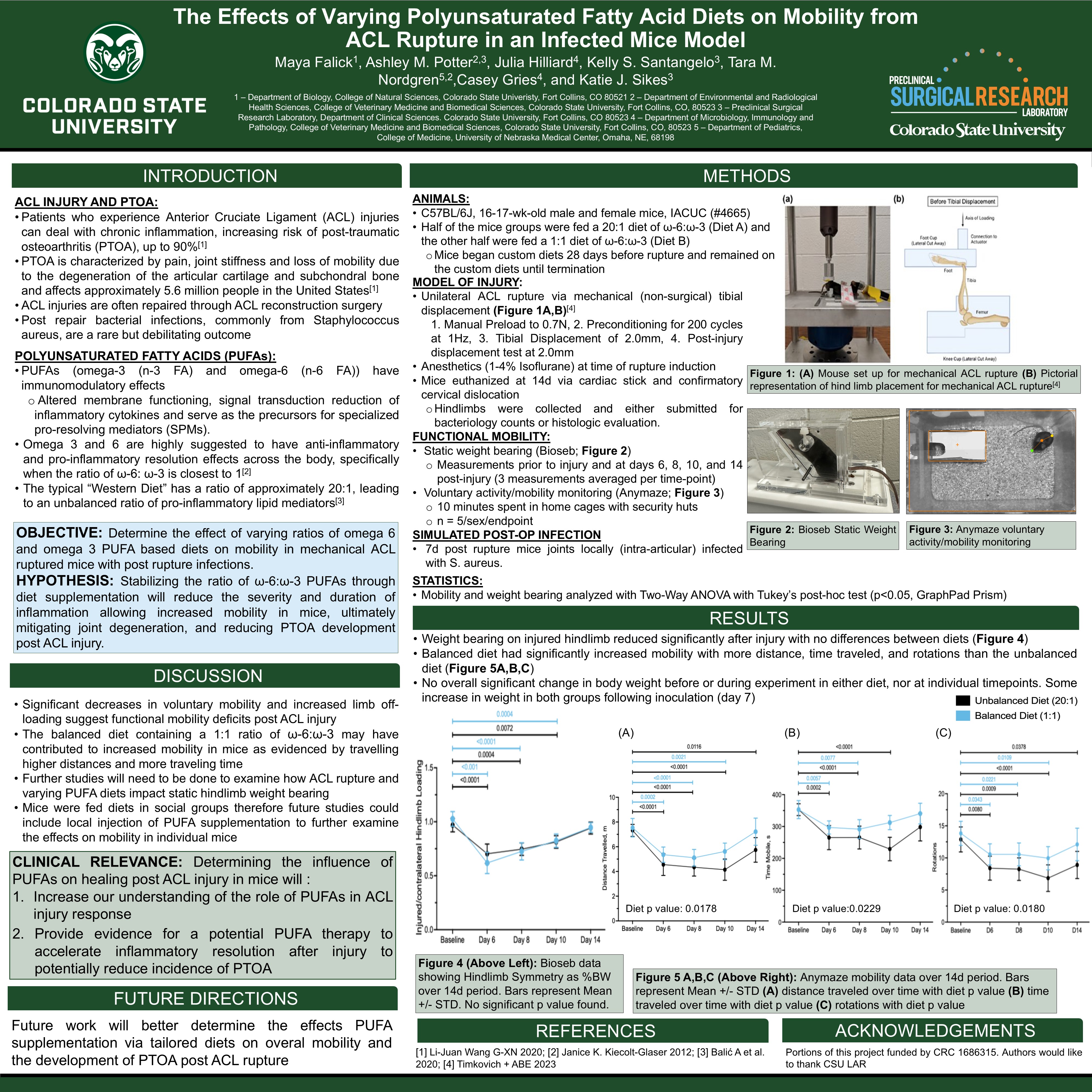
ACL ruptures cause chronic inflammation leading to post traumatic osteoarthritis (PTOA), resulting in pain, reduction of motion, and possibly knee replacements. Post-repair bacterial infections, commonly from S. aureus, are rare but cause debilitating outcomes. Polyunsaturated fatty acids (PUFAs) are dietary fatty acids naturally released by cell membranes to combat inflammation. Omega 6’s are generally considered to have pro-inflammatory properties and Omega 3’s are considered more pro-resolution. In this study, the effects of varying omega diets on mobility were examined on mice with mechanically ruptured ACLs and post-rupture infections. Mice were fed either a 20:1 (unbalanced) or 1:1 (balanced) ratio of Omega 6 and 3. The unbalanced diet supported a more pro-inflammatory environment while the balanced diet supported a more pro-resolution environment. Mobility and static weight bearing were measured throughout the study. 7 days post rupture, the ruptured joint was locally infected with S. aureus. Weight bearing reduced significantly after injury with no differences between diets. Mobility overall decreased with injury but increased in 1:1 diet with more distance and time traveled compared to those on the 20:1 diet. Future studies will draw greater conclusions about the supplementation of PUFAs to treat PTOA and S. aureus infection after acute ACL injury.