
Assessing the Economic Value of Ecosystem Services Across Land Cover Types within the High Plains Sentinel Landscape
Category: Research Poster
Author(s): Brittany Bobb
Presenter(s): Brittany Bobb
Mentors(s): Jennie Anderson, Thomas Lawrence, Cole Crossett
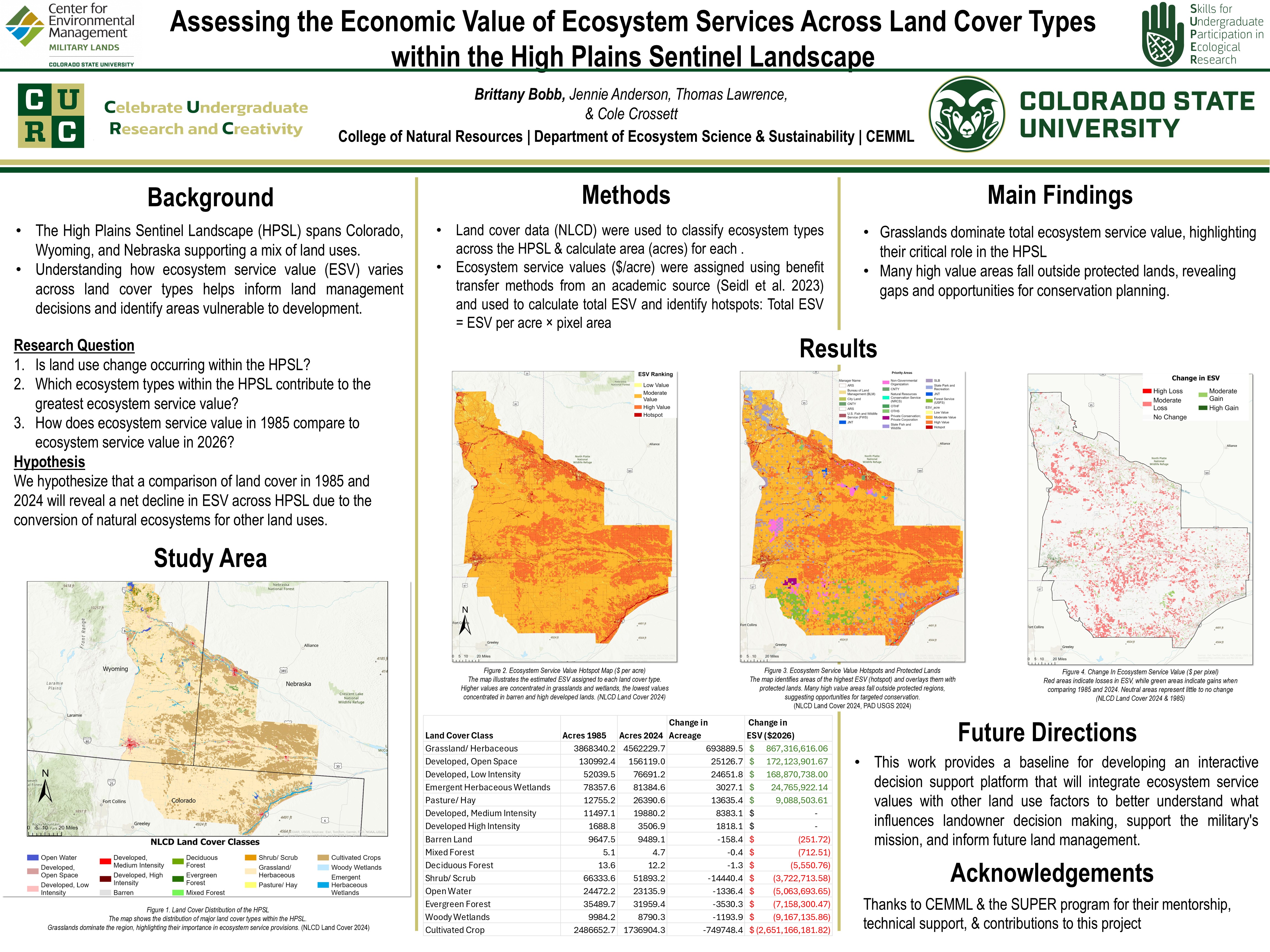
Ecosystems provide a wide range of services that support human well-being, including water regulation, carbon storage, habitat provision, and recreation. Estimating the value of ecosystem services within the High Plains Sentinel Landscape (HPSL), a multi-state region spanning Wyoming, Nebraska, and Colorado that includes working lands, conservation areas, and military uses, can guide land management decisions and support partnerships that maintain infrastructure compatible with the military mission. The study assesses the economic value of ecosystem services across multiple land cover types within the High Plains Sentinel Landscape using a benefit transfer approach. Land cover data derived from the National Land Cover Database (NLCD) were used to identify dominant ecosystem types including forests, grasslands, wetlands, agricultural lands, and developed areas. Per-acre ecosystem service values from existing valuation studies were applied to each land cover class to estimate the total annual value of ecosystem services provided within the study area. An additional landscape variable, protected land status, was incorporated as contextual multipliers to better reflect conservation opportunities within the area. The results provide an estimate of the total ecosystem service value of the region and highlight how different land cover types contribute to ecological and economic benefits. This analysis demonstrates the importance of natural and seminatural landscapes in supporting ecosystem services and provides a framework for integrating ecological value into land use planning and resource management.