
Characterization of OGG1-Deficient V79 Cells Reveals Enhanced Sensitivity to Cisplatin a DNA Cross-Linking Agent
Category: Research Poster
Author(s): Alyssa Walker
Presenter(s): Alyssa Walker
Mentors(s): Takamitsu Kato
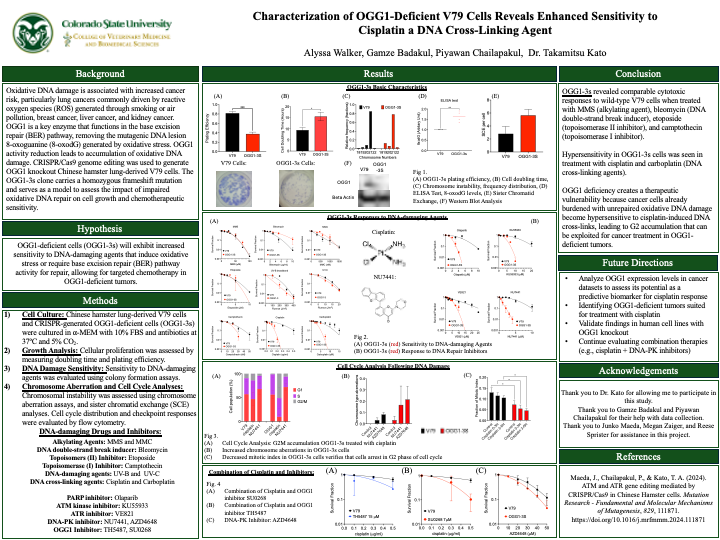
OGG1 (8-oxoguanine DNA glycosylase 1) is a critical enzyme for DNA repair that removes oxidized guanine from DNA. OGG1 functions in the base excision repair (BER) pathway by removing 8-oxoguanine, a mutagenic DNA lesion occurring from reactive oxygen species (ROS). Oxidative stress originates from endogenous mitochondrial respiration and exogenous stimuli such as ionizing radiation leading to DNA damage accumulation. Reduced activity in the OGG1 gene has been linked to an increased risk in developing various cancers, such as lung cancers, commonly driven by ROS generated through smoking or air pollution. Chinese hamster lung-derived V79 cells were used to establish OGG1 knockout clones using CRISPR/Cas9 genome editing. OGG1-3s, a clone, harbors a homozygous 62 base-pair insertion resulting in a frameshift mutation. OGG1-3s cells were characterized in terms of cellular proliferation and cytotoxic responses to various DNA-damaging agents. OGG1-3s cells exhibited severe growth defects with reduced plating efficiency compared to their isogenic parental V79 cells. Baseline levels of 8-oxodG were significantly elevated in OGG1-3s cells, consistent with impaired repair of oxidative DNA damage. OGG1-3s cells displayed comparable cytotoxic responses to methyl methanesulfonate (alkylating agent), bleomycin (DNA double-strand break inducer), etoposide (topoisomerase II inhibitor), and camptothecin (topoisomerase I inhibitor), however they showed hypersensitivity to cisplatin (DNA crosslinking agent). Results suggest that tumors with reduced OGG1 expression may exhibit enhanced sensitivity to cisplatin and related antitumor agents, emphasizing a potential therapeutic vulnerability associated with OGG1 deficiency.