
Biofertilizer: Does it Work? Is it Better?
Category: Research Poster
Author(s): Colten Blake
Presenter(s): Colten Blake
Mentors(s): Meenakshi Santra
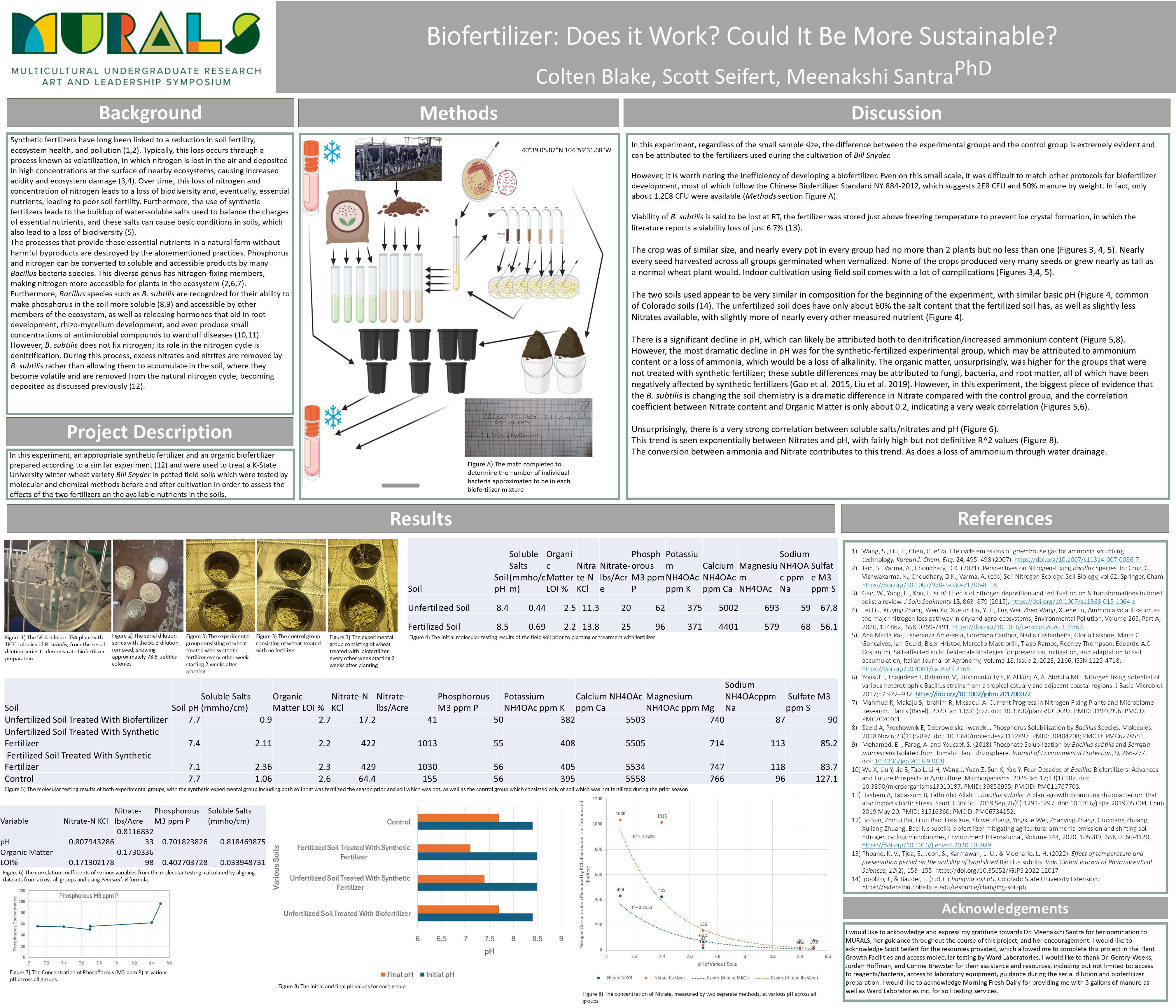
A decline in soil fertility and general ecosystem health over time can often be attributed to farming practices. Synthetic fertilizers, for example, can be linked to microbiome damage and a decline in nutrients in the soil, which are essential for crop growth. In this project, the effects of two general categories of fertilizer were compared by growing winter wheat in field soil in a greenhouse environment, watering lightly and frequently, and mixing in appropriate amounts fertilizer. Common synthetic fertilizer curated for field soil and a biofertilizer prepared with diluted manure and nitrogen-fixing bacteria concentrated to the appropriate titer according to available literature based on relevant biofertilizer studies. The resulting winter wheat seeds were then vernalized and germinated, and all seeds germinated well. The individual plants were all similar in both quality and quantity across all groups, including the control group, which received no fertilizer. The soil was tested for composition and presence of essential nutrients, both before and after planting and harvest, with fertilization occurring in between. The results suggested a difference in the soil between the fertilizer categories.