
Perceived Stress as a Mediator for Nicotine use and Inflammatory response in Firefighters
Category: Research Poster
Author(s): Caden Anderson
Presenter(s): Caden Anderson
Mentors(s): Tiffany Lipsey
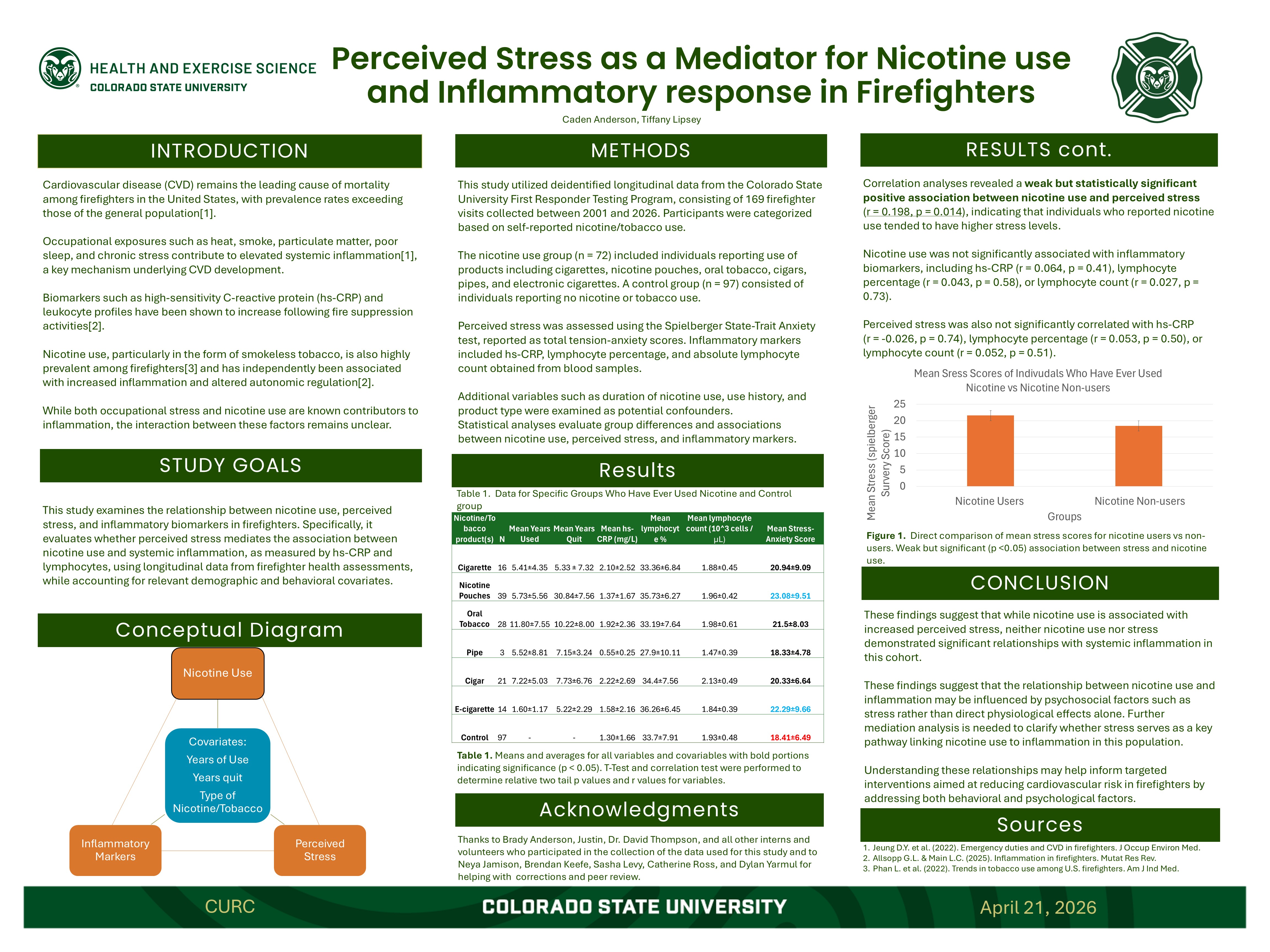
Cardiovascular disease (CVD) has remained the leading cause of mortality among firefighters in the United States over the past couple decades. CVD is also at a higher prevalence rate in firefighters as compared to the general populous [1]. Many occupational hazards have been linked to this increased risk of CVD in the profession, such as poor sleep and occupational stress, as well as repeated exposure to hazardous particulates, smoke, and extreme heat [2,3]. Exposure to these stressors has been linked with chronic inflammation in firefighters, which is linked to increased chances of developing chronic disease. Specifically atherosclerosis and other cardiovascular conditions, which lead to cardiac events [4]. Occupational fire suppression activities have been shown to increase levels of biological inflammation markers such as leukocytes, otherwise known as white blood cells (immune response cells) and high sensitivity C-reactive protein (hsCRP). Recent evidence has shown that elevated levels of these biomarkers may lead to chronic inflammation, leading to dysregulation in the body’s immune response [5]. While exposure to inflammation in isolation has been examined, psychosocial and behavioral factors may influence inflammatory profiles in conjunction with the firefighting occupational exposures. One such behavioral factor is nicotine use which has a high prevalence in the firefighting industry. While smoking in the firefighting profession is lower in the general population, the use of smokeless tobacco is much higher compared to the general populous [6]. Nicotine is frequently used as a coping strategy for stress and anxiety. It also has well documented effects on autonomic regulation and immune function, leading to increased levels of inflammatory activity. Although inflammatory stress response is well documented[7,8], the interaction between stress induced and nicotine induced inflammation in firefighters has limited research. Even though occupational stress is underlying in all firefighters, psychological stress may represent an important link between inflammation response and nicotine use. Nicotine use may be a response to the occupational stressors, which may in turn amplify inflammatory response through dysregulation of sympathetic nervous system activity. Clarification on the association between psychological stress of firefighters and nicotine use could close the gap on behavioral and psychosocial pathways. Occupational stress may act as a mediator for the interaction between nicotine use and inflammatory biomarkers, contributing to high inflammatory burden in an already high-risk occupation. Therefore, the purpose of this study is to explore the relationship between nicotine use, perceived stress, and inflammatory biomarkers in firefighters. Specifically, this study will examine if perceived stress acts as a mediator in the association between nicotine use and markers of systemic inflammation including CRP and white blood cell count subpopulations, while controlling demographic and health related covariates.