
Characterization of Primary Cervid Fibroblasts to Model Chronic Wasting Disease Cellular Mechanisms
Category: Research Poster
Author(s): Carolyn Dobkins
Presenter(s): Carolyn Dobkins
Mentors(s): Julie Moreno, Katriana Popichak
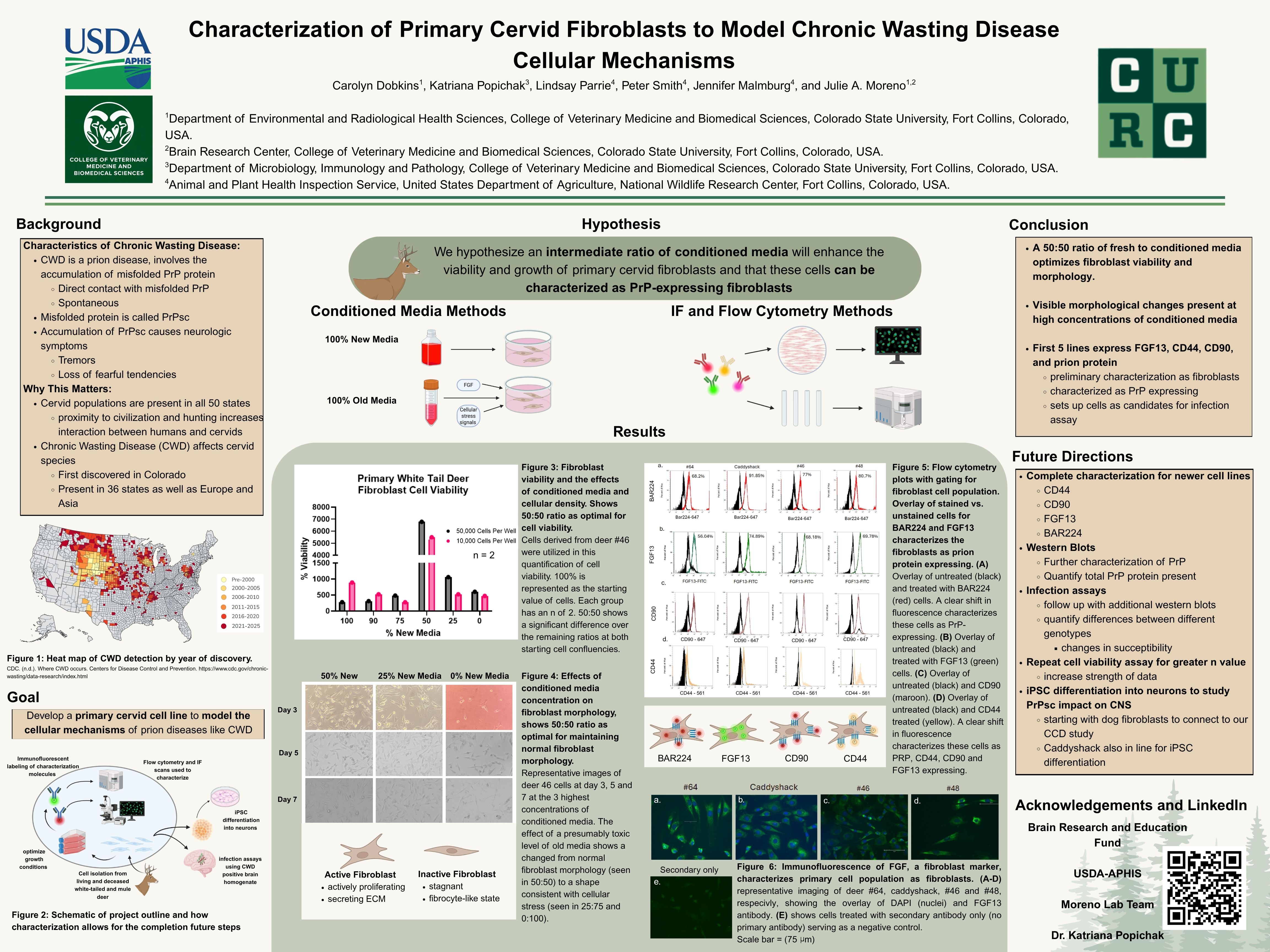
The United States maintains large cervid populations across all 50 states with a strong hunting culture throughout. Last year Colorado alone handed out over 83,000 hunting tags. Increasing proximity between humans and wild cervids raises concern about zoonotic diseases such as Chronic Wasting Disease (CWD). First identified in captive deer in Colorado, CWD has since spread across the United States and into Europe and Asia. CWD is a prion disease caused by misfolding of the normal cellular prion protein (PrP), which is expressed in the central nervous system and peripheral tissues. Misfolding can occur through interaction with already misfolded PrP (PrPSc) or through poorly understood spontaneous mechanisms. Accumulation of PrPSc leads to progressive neurological decline in cervids, including tremors, poor coordination, drooling, and behavioral changes. The aim of this study is to establish a primary fibroblast cell model isolated from cheek and ear tissue samples from white-tailed and mule deer. Because these cells are not immortalized, growth conditions were optimized by testing fresh-to-conditioned media ratios ranging from 100:0 to 0:100. Cells were incubated for ten days at two different densities and analyzed for morphology and viability. Results showed that 50:50 media ratio predicted optimal growth and viability. Subsequent characterization using immunofluorescence and flow cytometry confirmed fibroblast identity and prion protein expression, supporting the development of a model system to study the mechanisms of prion infection.