
Radiotelemetry in the Rainforest: Using Technology to Model Neotropical Bat Habitat at Tiputini Biodiversity Station, Ecuador
Category: Research Poster
Author(s): Margaret Monaghan
Presenter(s): Margaret Monaghan
Mentors(s): Tanya Dewey
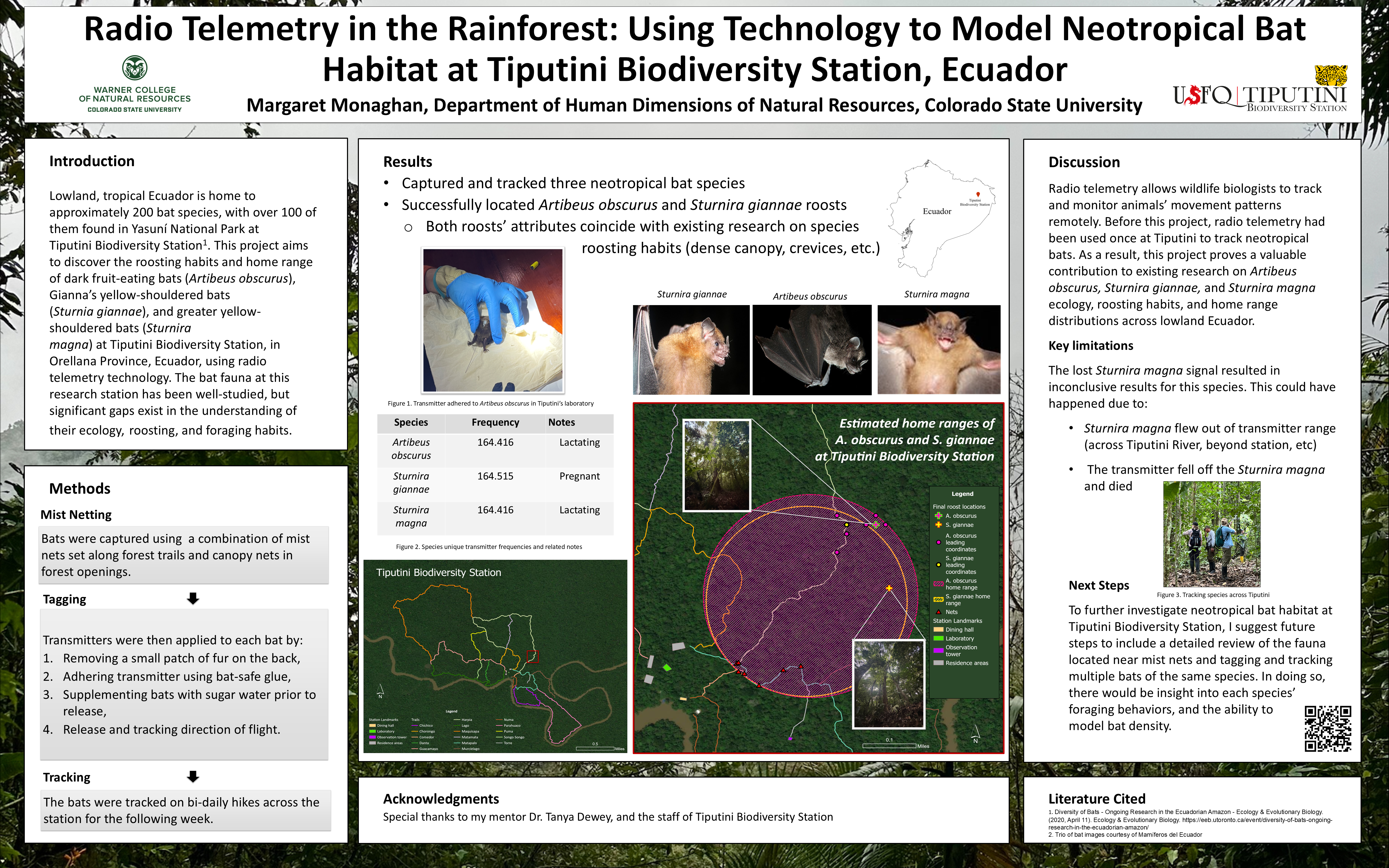
Around the globe, bats play a fundamental role in maintaining ecosystem health through ecosystem services, including pollination, pest control, nutrient cycling, and seed dispersal. Bat species diversity is highest in tropical areas, including Ecuador's Amazon Basin. Lowland, tropical Ecuador is home to approximately 200 bat species, with over 100 of them residing in Yasuni National Park at Tiputini Biodiversity Station. The bat fauna at this research station has been well-studied, but significant gaps exist in understanding of their ecology, roosting, and foraging habits. This project aims to understand the roosting and foraging habits of dark fruit-eating bats (Artibeus obscurus), Gianna’s yellow-shouldered bats (Sturnia giannae), and greater yellow-shouldered bats (Sturnira magna) at Tiputini Biodiversity Station, in Orellena Province, Ecuador. Before this project, only two studies had used radiotelemetry to study bats at this station, highlighting a gap in research on bats in the neotropics.