
Intrinsic Factors Drive Feline Gut Microbiome Diversity
Category: Research Poster
Author(s): Sophie Renner
Presenter(s): Sophie Renner
Mentors(s): Macy Ricketts
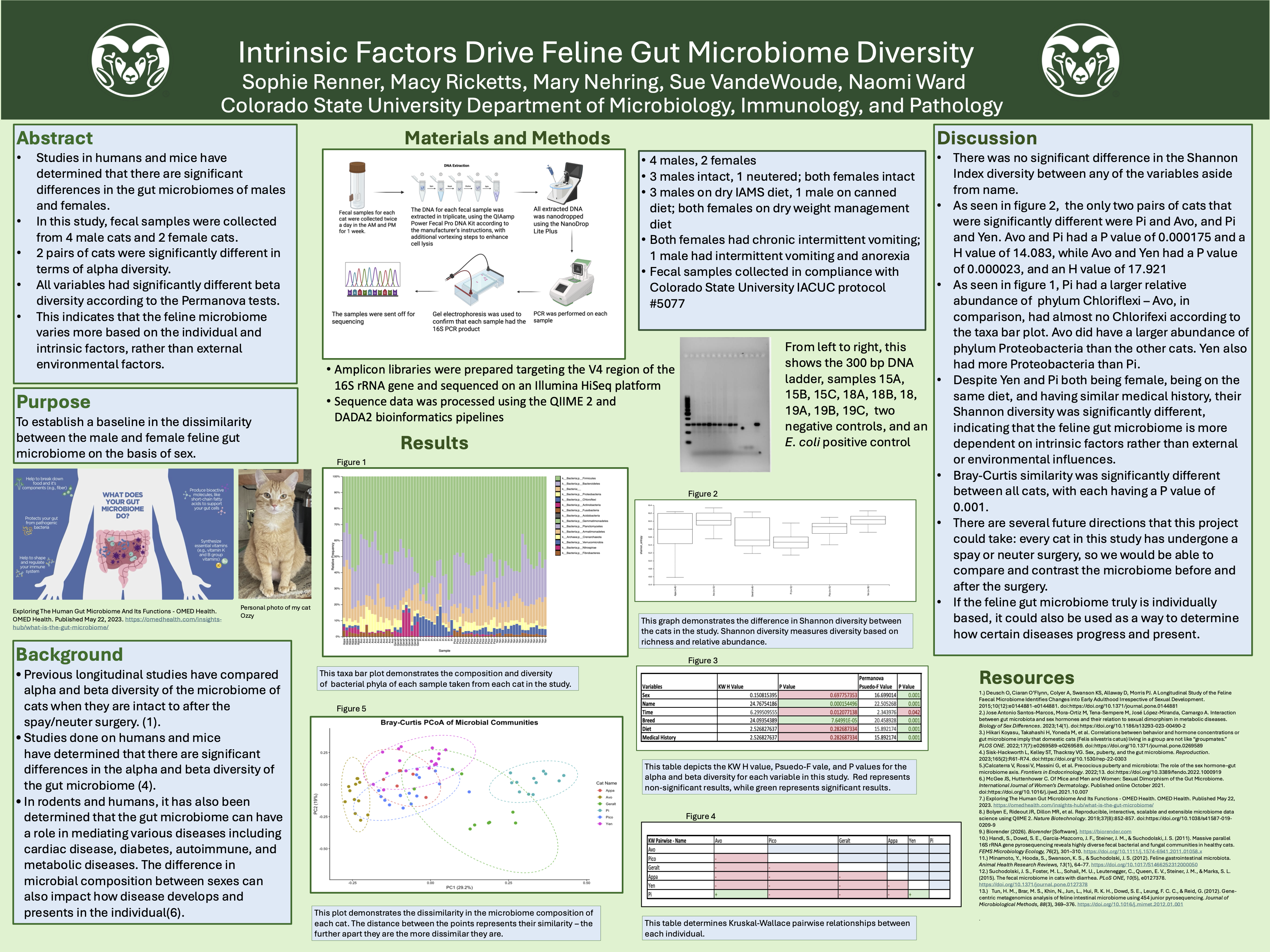
The feline gut microbiome remains an understudied area of microbiome research. Current data supports that diet and environment are the largest factors influencing differences in the composition of the feline microbiome, but there is little research detailing the impact of sex. This study serves to establish a baseline in the differences between the male and female feline gut microbiome. This information could aid in determining how spay and neuter surgeries affect the gut microbiome, as well as provide insight on sex-based differences in the presentation of gastrointestinal diseases mediated by microbiome dysbiosis. DNA was extracted in triplicate from the fecal samples of 4 adult males, 1 of whom was neutered, and 2 intact females, all of whom were single housed, then sequenced for the 16S rRNA gene. The fecal samples were taken twice a day for 5 days. The Shannon diversity index, measuring alpha diversity, demonstrated that the cats had similar microbiome diversity and species richness, but significantly different relative abundance, or beta diversity when comparing sex, diet, and medical history. The beta diversity of the microbiome was more heavily influenced by diet and medical history. Though there was a significant difference in the composition of the microbiome between sexes, the female cats were on a different diet and had recent medical history compared to their male counterparts, making it difficult to determine if sex was the determining factor. This study demonstrated that the gut microbiome composition in felines is variable between individuals, and that composition depends on multiple factors.