
Global Recycled Standard (GRS)
Category: Research Poster
Author(s): Riley Schlender, Kelbi Hall, Magdalene Marcelo
Presenter(s): Riley Schlender
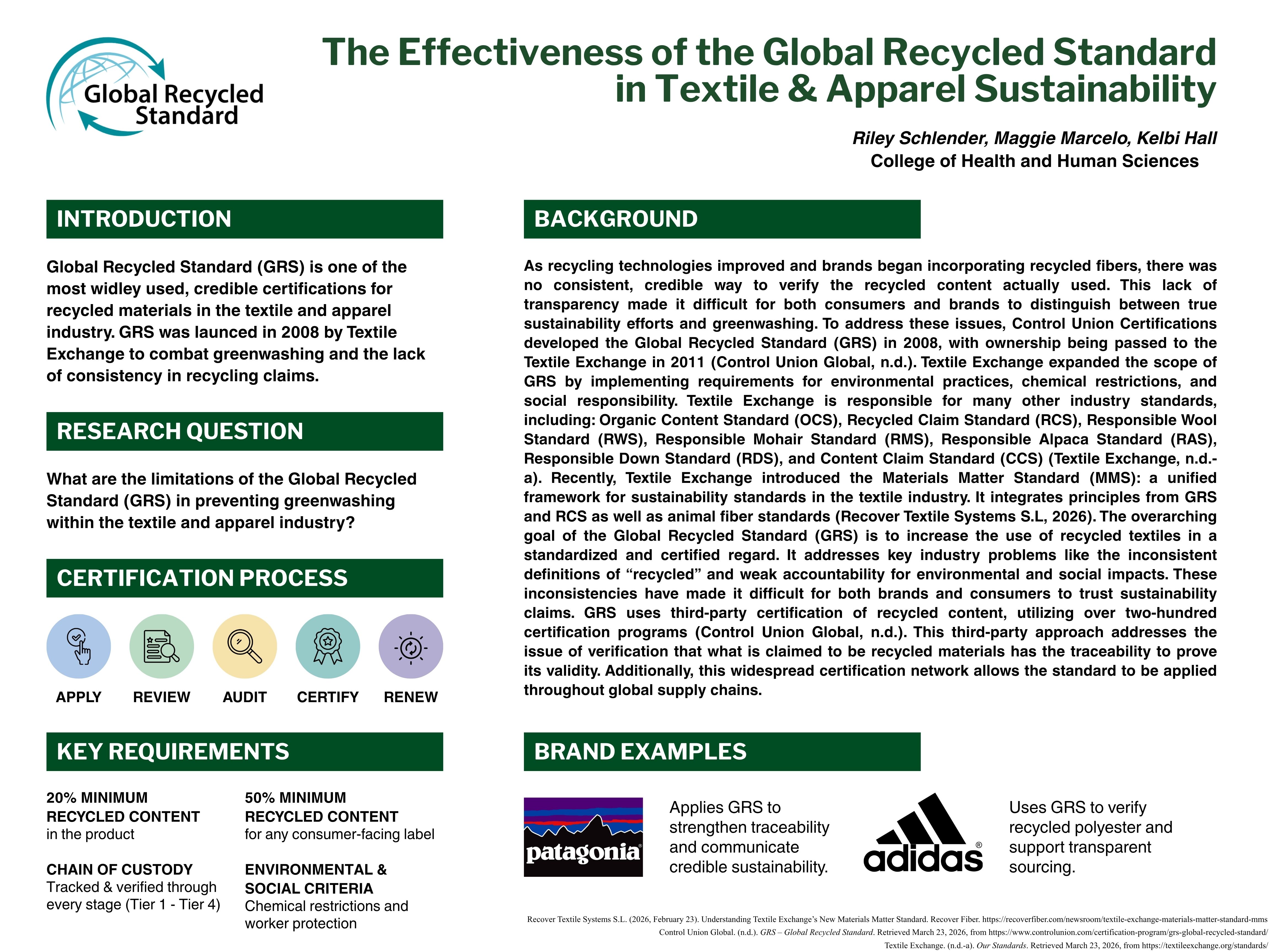
The Global Recycled Standard (GRS) is a widely used certification designed to verify recycled material content, ensure supply train traceability, and promote responsible social and environmental practices in textile production. Sustainability claims are increasingly used in marketing within the apparel industry, so certifications such as GRS play an important role in building transparency and consumer trust. However, questions remain about whether such standards can effectively prevent misleading sustainability claims. The guiding research question for this study is: What are the limitations of the Global Recycled Standard (GRS) in preventing greenwashing within the apparel industry? The research focuses on evaluating how this certification’s verification processes and communication practices may allow brands to make misleading claims about sustainability that are technically compliant, but possibly misleading to consumers. To investigate this question, the study will analyze the structure, requirements, and verification processes of the GRS certification. The research will involve a review of academic literature, industry reports, certification documents, and media sources discussing recycled material standards. It is also important to consider critiques from scholars and industry experts regarding certification credibility. Reviewing a multitude of sources will help identify gaps between the certification requirements and how sustainability claims are communicated in both marketing and product labeling. This research seeks to contribute a better understanding of the effectiveness of third-party sustainability certifications, like GRS, within the apparel industry. By identifying these limitations and challenges, this study helps clarify broader issues, like greenwashing, related to the role of third-party certifications and their transparency.